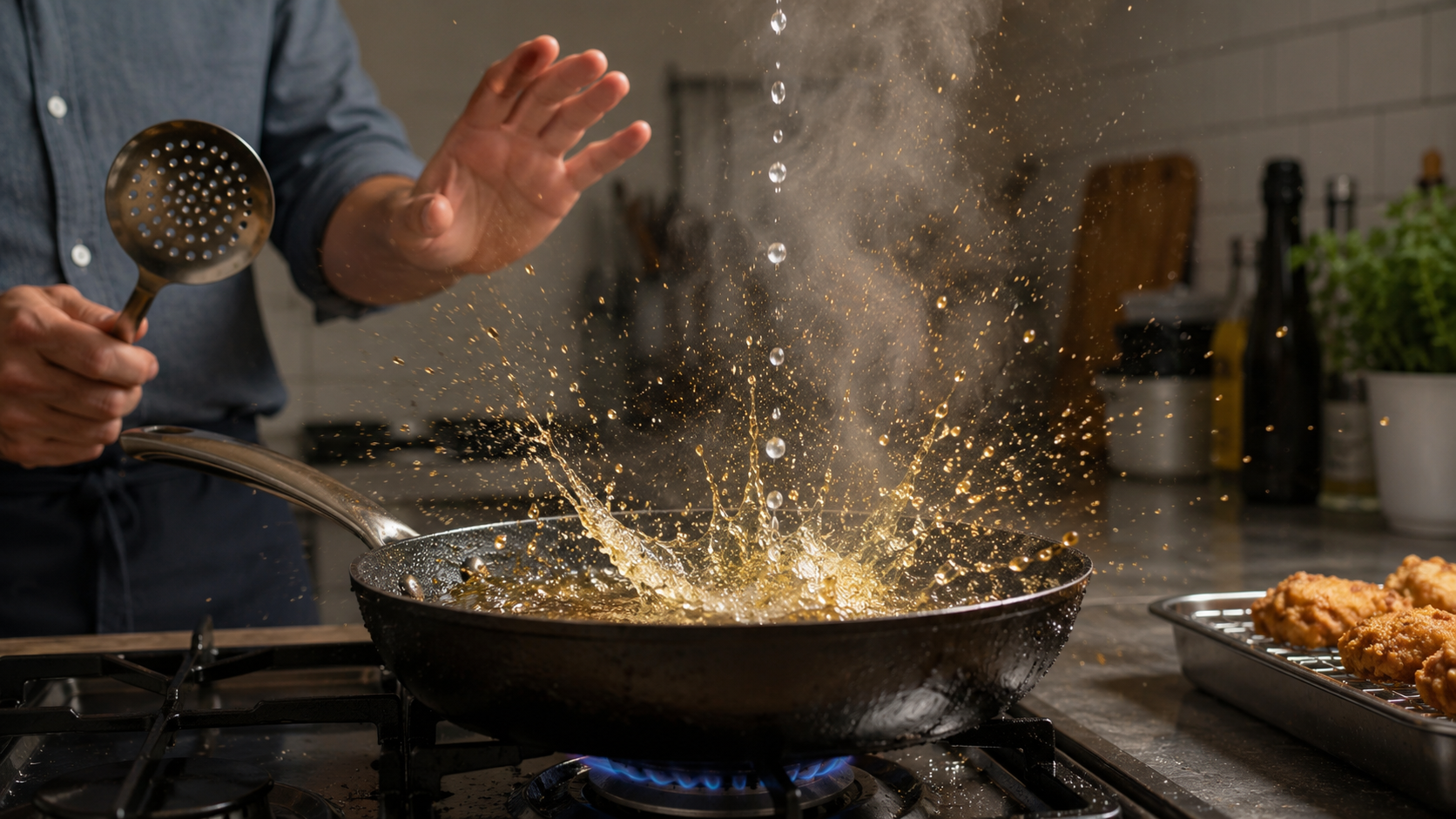
Why Water in Hot Frying Oil Can Be Dangerous: A Simple Kitchen Safety Guide
Minjin Park
·
Water and hot frying oil do not mix well. Learn why splattering happens, what common kitchen mistakes make it worse, and how to fry food more safely at home.
Frying food at home can feel simple enough. You heat a pan of oil, add chicken, fries, fish, vegetables, or dough, and wait for that crisp golden texture.
Then one drop of water hits the oil.
Suddenly, the pan snaps, pops, and spits tiny hot droplets across the stovetop. Maybe you jump back. Maybe a bit of oil lands on your hand. Maybe the sound is enough to make you nervous for the rest of dinner.
That reaction is not random. Water and hot oil behave very differently when heated, and water can turn into steam so quickly that it pushes oil outward. That is why adding wet food, dripping water, ice crystals, or a damp utensil into hot oil can cause splattering.
Most of the time, this kind of splatter is small and manageable. But it can still cause burns, make a mess, or create a bigger fire risk if oil spills onto a burner. The good news is that a few calm kitchen habits can lower the risk a lot.
This guide explains why water in frying oil can be dangerous, where the risk usually comes from, and what you can do before, during, and after frying to keep your kitchen safer.
Why Water and Hot Oil React So Strongly
Water sinks below oil
Oil and water do not mix. Oil is lighter than water, so when water enters a pan of hot oil, the water tends to sink below the oil instead of blending into it.
That creates a problem.
The water is now trapped under or inside very hot oil. If the oil is hot enough for frying, it is usually much hotter than water’s boiling point.
Water turns into steam fast
Water boils at 212°F. Frying oil is often much hotter than that, commonly around 325°F to 375°F depending on the food.
So when water falls into hot oil, it does not slowly warm up. It can turn into steam very quickly.
Steam takes up much more space than liquid water. As that steam expands, it pushes the surrounding oil up and outward. That is the popping and splattering you see.
A tiny bit of water can make a surprising amount of steam, and the oil goes along for the ride.
The danger is not just the water — it is the oil being thrown
Steam itself can burn, but in this situation, the bigger issue is usually the hot oil being pushed out of the pan.
Hot oil sticks to skin more than water does. It can also land on towels, paper packaging, wooden utensils, stovetops, or nearby clutter. If enough oil spills or sprays near a flame or hot burner, the situation can become more serious.
This is why frying safety is less about being scared of cooking and more about respecting how hot oil moves.
Everyday Ways Water Gets Into Frying Oil
Most people do not pour water into oil on purpose. The problem usually happens through small, ordinary kitchen habits.
Wet food
Freshly washed vegetables, thawed shrimp, rinsed potatoes, or marinated chicken can carry more water than you realize.
Even when food looks only slightly damp, moisture can be sitting in folds, crevices, breading, skin, or between pieces.
For example, sliced potatoes that were soaked in water may still hold moisture on the surface. If they go straight into hot oil, they can cause heavy bubbling and splatter.
Ice crystals on frozen food
Frozen fries, frozen nuggets, dumplings, fish sticks, and other frozen foods often have ice crystals on the outside.
When those ice crystals hit hot oil, they melt and flash into steam. This is one reason frozen food can splatter more than fresh food.
Some frozen foods are designed to be cooked from frozen, but that does not mean every frozen item is safe for deep frying. Always check the package directions.
Damp utensils
A spoon, tongs, spider strainer, slotted spoon, or frying basket may look clean but still have water droplets on it.
If you rinse a utensil and immediately put it into hot oil, the water on the utensil can pop and spit.
A wet pan
This is a common mistake.
Someone washes a pan, wipes it quickly, adds oil, and turns on the heat. A few hidden water droplets remain near the edges, under rivets, or around the bottom curve of the pan.
As the oil heats, those droplets can suddenly pop.
Before adding oil, the pan should be fully dry.
Condensation from lids
Covering hot oil with a lid can create condensation. Water droplets form on the inside of the lid. If you lift the lid and those droplets fall back into the oil, the pan can splatter.
This is why covering a frying pan can be tricky. A lid may seem like it will control splatter, but it can also collect moisture that drips into the oil.
Wet hands near the pan
Even shaking water off your hands near a frying pan can send droplets into the oil.
It sounds small, but hot oil reacts to small drops.
Common Mistakes That Make Splattering Worse
Dropping food from too high
When food is dropped into oil from several inches above the pan, it can splash oil upward.
Instead, lower food gently into the oil using tongs or a slotted spoon. Place it away from yourself so any splash moves toward the back of the pan, not toward your body.
Crowding the pan
Adding too much food at once lowers the oil temperature and releases a lot of moisture at the same time. This can make the oil bubble heavily and unevenly.
Crowding also makes food harder to turn safely. Pieces stick together, break apart, and splash when moved.
Fry in smaller batches. The food cooks better, and the pan is easier to control.
Using a shallow pan with too much oil
A shallow skillet can be fine for pan-frying, but filling it too high gives the oil less room to bubble safely.
If oil is close to the rim, bubbling food can cause it to spill over. That is especially risky on a gas stove, where oil could reach the flame.
A good habit is to leave plenty of space at the top of the pan.
Oil can become too hot before you realize it. Overheated oil splatters more aggressively, smokes, breaks down faster, and can become a fire hazard.
Use moderate heat and give the oil time to warm gradually. If you fry often, a clip-on thermometer is a simple tool that removes guesswork.
Moving the pan while the oil is hot
Carrying a pan of hot oil to the sink, counter, or another burner is risky. A small bump can splash oil, and any water in the sink can make things worse.
Sharp, repeated popping may mean there is too much moisture in the food or the oil is too hot.
Step back slightly, lower the heat if needed, and avoid leaning over the pan.
Heavy bubbling that rises quickly
When food is added, bubbling is expected. But if bubbles rise fast toward the top of the pan, the pan may be too full, the food may be too wet, or too much food was added at once.
Do not add more food until the bubbling settles.
Smoke from the oil
A little steam from food is different from oil smoke.
If the oil is smoking, it is too hot. Turn off or reduce the heat carefully and let the oil cool. Do not add wet food to smoking oil.
Oil reaching the pan edge
If bubbling oil gets close to the rim, stop adding food. Reduce the heat and let things calm down.
Overflowing oil is one of the situations you want to avoid most.
How to Prepare Food Before Frying
Dry food well
Pat food dry with paper towels or a clean kitchen towel before frying. This is especially useful for potatoes, tofu, fish, shrimp, chicken, and vegetables.
You do not need to remove every molecule of moisture. Food naturally contains water. But removing surface water makes a big difference.
Shake off ice crystals
For frozen foods that are meant to be fried, shake off loose ice crystals before adding them to oil.
Do not rinse frozen food before frying. That only adds more water.
Let excess marinade drip off
Marinades can contain water, juice, vinegar, soy sauce, buttermilk, or other liquids. If heavily marinated food goes straight into oil, it can splatter.
Lift the food, let excess liquid drip off, and pat lightly if the recipe allows.
Use dry breading
Wet batter and breading can fry safely when handled correctly, but loose liquid dripping into the pan can cause splatter.
Let excess batter drip back into the bowl before lowering food into the oil.
Safer Frying Habits at the Stove
Keep the area around the stove clear
Before frying, move paper towels, food packaging, plastic bags, dish towels, wooden boards, and oven mitts away from the burner.
This matters because splattered oil can land farther than expected.
Use the right pan
Choose a heavy pan with higher sides when possible. A Dutch oven, deep skillet, or deep saucepan is often easier to manage than a very shallow pan.
Avoid filling the pan too high with oil. Leave room for bubbling.
Lower food gently
Use tongs, a slotted spoon, or a spider strainer. Lower the food slowly and carefully.
You do not have to stand across the room, but do not lean your face directly over the pan. Turn food gently and keep your hands out of the steam path.
Fry in batches
Smaller batches reduce splatter, help food crisp better, and make the cooking process calmer.
This is one of the simplest improvements you can make.
Keep children and pets away
Kids and pets move unpredictably. During frying, keep them out of the immediate cooking area.
A small bump at the wrong moment can spill hot oil.
What Not to Do If Water Gets Into Hot Oil
Do not add more water
Never try to calm hot oil with water. Water can make splattering much worse.
This is especially important if oil catches fire. Water should not be used on a grease fire. General safety guidance recommends turning off the heat if it can be done safely, covering the pan with a metal lid or baking sheet, and using an appropriate fire extinguisher if needed. For any situation that feels out of control, leave and call emergency services.
The main everyday habit is simple: water does not fix hot oil problems.
Do not carry the pan to the sink
If oil is popping or smoking, your instinct may be to move the pan to the sink.
Do not carry hot oil across the kitchen. The pan can spill, and sinks often contain water droplets. Hot oil and water in a sink can create more splattering.
Turn off the heat if you can do so safely, step back, and let the oil settle.
Do not cover the pan with a wet lid or towel
A dry metal lid or baking sheet can sometimes help smother flames in a grease-fire situation, but a wet towel or wet lid can introduce water.
For regular splattering, use a dry splatter screen if you have one. Avoid anything wet near the oil.
Do not panic and start grabbing things
Fast, nervous movements can lead to spills.
Pause, step back, lower or turn off the heat if it is safe, and let the oil calm down.
Helpful Tools for Home Frying
You do not need a professional setup, but a few tools make frying easier and safer.
A splatter screen helps reduce oil droplets while still letting steam escape.
A clip-on thermometer helps you avoid overheating the oil.
Long tongs or a spider strainer let you lower and remove food with more control.
A heavy pot or deep skillet gives oil room to bubble.
A dry metal lid or baking sheet can be useful to have nearby when cooking with oil.
A kitchen timer keeps you from walking away and forgetting the pan.
None of these tools replace attention, but they help create a calmer cooking setup.
Cleaning Up After Frying
Let oil cool completely before handling it. This can take longer than people expect.
Once cool, strain and store reusable oil if it is still in good condition and appropriate for reuse. Otherwise, pour it into a sealed non-recyclable container and throw it away according to your local waste guidelines.
Do not pour oil down the sink. It can clog pipes and create plumbing problems.
Wipe greasy surfaces carefully. Oil residue on the stovetop can smoke or burn the next time you cook.
Small Habits That Make a Big Difference
Before frying, ask yourself:
Is the pan dry?
Is the food patted dry?
Are there ice crystals on frozen food?
Is the oil level low enough to allow bubbling?
Is the stove area clear?
Do I have dry tools ready?
Can I stay near the pan while it cooks?
This quick mental checklist takes less than a minute, but it prevents many common frying problems.
Final Thoughts: Respect the Sizzle, Don’t Fear It
Frying at home does not have to feel intimidating. Plenty of people safely fry foods every day. The key is understanding one simple fact: water turns into steam quickly in hot oil, and that steam can push oil out of the pan.
That is why wet food, damp utensils, ice crystals, and water droplets can cause sudden popping and splattering.
The best prevention is practical and simple. Dry your food, dry your tools, use a pan with enough room, lower food gently, avoid crowding, and keep water away from hot oil. If splattering starts, slow down, step back, and reduce the heat if it is safe.
A calmer frying setup usually leads to better food, less mess, and a safer kitchen.
Hi, I’m the creator and editor behind ZestyHabit. I research everyday safety, first aid, and practical wellness topics using official guidance and reliable public sources, then turn that information into clear, realistic steps for daily life.
My goal is to help readers make safer, better-informed choices at home and beyond.