What Can Happen When You Reuse Frying Oil Too Many Times?
Minjin Park
·
Reusing frying oil may seem practical, but old oil can affect taste, smoke more easily, break down over time, and make food less appealing. Learn the warning signs and safer kitchen habits for handling used frying oil.
If you have ever fried chicken, French fries, onion rings, doughnuts, or homemade tempura, you know one thing right away: frying uses a lot of oil.
After cooking, it can feel wasteful to throw all that oil away. It may still look usable. It may not smell terrible. And if you only fried one small batch of food, saving the oil for another meal seems like common sense.
Many home cooks reuse frying oil at least once. Restaurants often filter and manage frying oil too, but they usually have equipment, temperature controls, and routines that most home kitchens do not.
At home, the problem is not simply reusing oil one time. The bigger issue is reusing oil too many times, storing it poorly, overheating it, or using it even after it shows signs of breaking down.
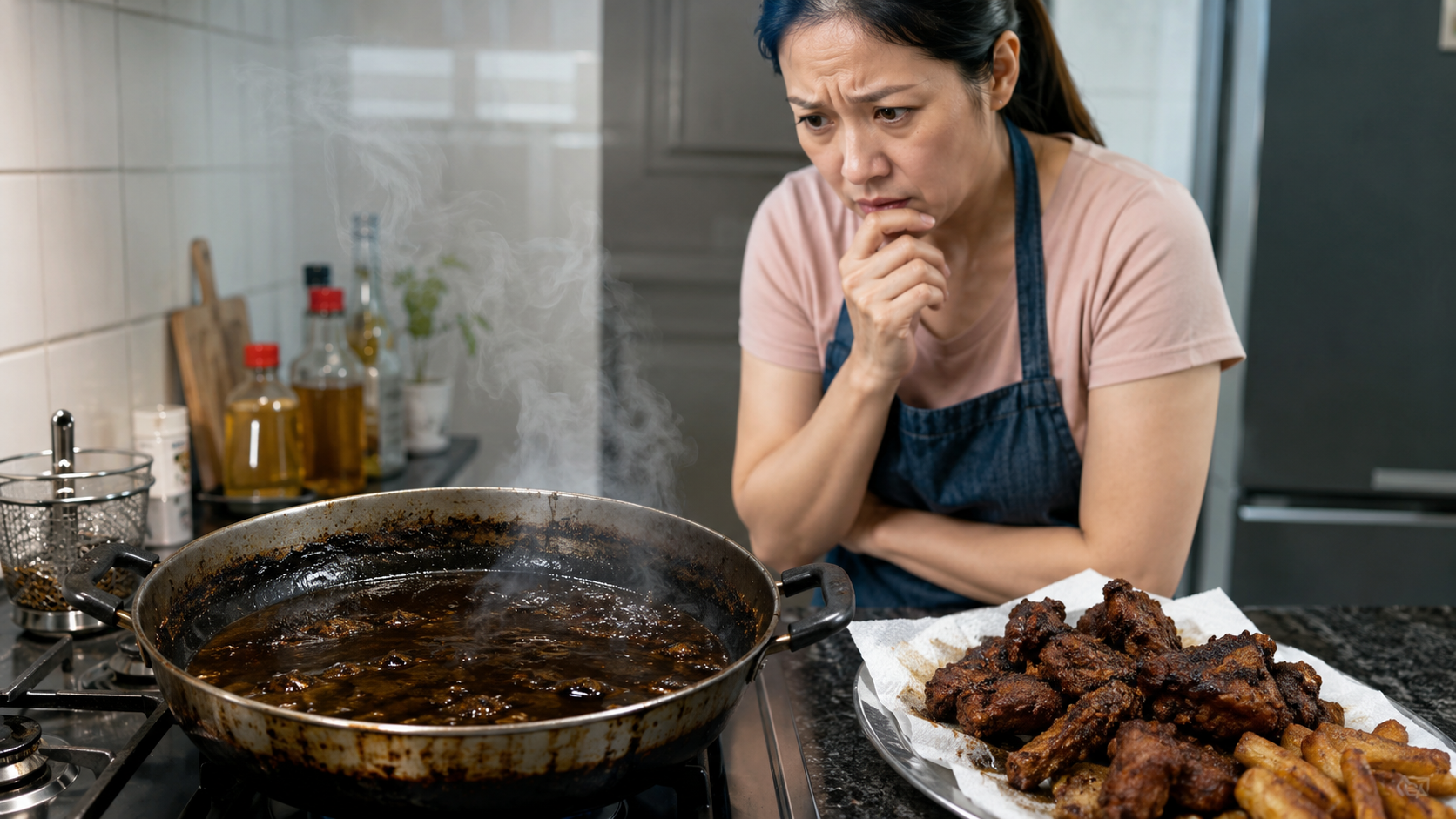
Old frying oil can affect the flavor of your food, make your kitchen smoky, create unpleasant odors, and cause fried foods to turn greasy or overly dark. It can also become harder to cook with because it no longer behaves like fresh oil.
The goal is not to make frying sound frightening. Plenty of people enjoy fried foods occasionally as part of normal home cooking. But if you are going to reuse oil, it helps to know what changes over time and when it is better to start fresh.
What Happens to Oil When You Fry Food?
Frying oil does not stay the same after you use it.
When oil is heated, exposed to air, and mixed with food particles, moisture, breading, salt, and seasonings, it slowly breaks down. Each frying session adds more stress to the oil.
Several things happen at once:
Heat changes the oil’s structure
Food crumbs burn and darken the oil
Moisture from food causes bubbling and splattering
Oxygen exposure contributes to rancid odors
Seasonings and coatings leave residue behind
The oil’s smoke point may become less predictable
This is why oil that was clear and light when new may become darker, thicker, sticky, foamy, or strong-smelling after repeated use.
Fresh oil usually cooks food more cleanly. Old oil may make food taste heavy, stale, or bitter.
The Biggest Problem: Oil Breaks Down Over Time
The main concern with reusing frying oil is that oil degrades with heat and repeated use.
Every time oil is heated, it goes through chemical changes. The hotter the oil gets, and the longer it stays hot, the faster those changes happen. If oil is heated beyond its ideal frying range or allowed to smoke, it breaks down even more quickly.
This breakdown affects the way oil looks, smells, and cooks.
Once oil reaches that point, saving it is usually not worth it.
Why Old Frying Oil Can Make Food Taste Bad
One of the first signs of tired oil is flavor transfer.
If you fry fish on Friday and then use the same oil for doughnuts on Saturday, the doughnuts may pick up a faint fishy flavor. Even if the oil looks fine, flavor compounds from the first food can remain in the oil.
Strongly seasoned foods can do the same thing. Garlic, onion powder, chili powder, seafood, sausage, and heavily breaded foods can all leave flavors behind.
Even neutral foods may taste stale when fried in old oil. Instead of tasting crisp and clean, the food may have a heavy, slightly bitter, or “old diner fryer” flavor.
A Common Kitchen Example
You fry chicken tenders in a pot of oil and save the oil in a jar. A few days later, you use it for homemade fries.
The fries cook, but they taste oddly savory, slightly burnt, and not as fresh as expected. You may think the potatoes were the problem, but the oil likely carried old crumbs, seasoning, and cooked flavor from the chicken.
This is one reason many cooks keep oil use separate by food type if they plan to reuse it at all.
Old Oil Can Smoke More Easily
Fresh cooking oil has a smoke point, which is the temperature where it begins to smoke and break down more noticeably. Different oils have different smoke points.
Used oil may smoke more easily because it has already been heated and contaminated with tiny food particles. Those little crumbs and residues can burn, darken, and create smoke even if the oil itself has not reached extreme temperatures.
A smoky kitchen is unpleasant, but it is also a sign that the oil is no longer performing well.
If your oil starts smoking before the food is added, or smokes heavily during normal frying, it is time to turn off the heat and let it cool. That oil should not be reused again.
Reused Oil Can Make Food Greasier
Good fried food should not feel soaked with oil. It should be crisp on the outside and cooked properly inside.
Old oil can make that harder.
As oil breaks down, it may become thicker and less effective at frying cleanly. Food can absorb more oil, especially if the temperature drops too much or if crumbs are floating around and burning.
This can leave fried foods tasting heavy instead of crisp.
You may notice:
Fries that feel limp and oily
Chicken coating that turns dark but stays greasy
Onion rings that taste heavy
Fried dough that absorbs too much oil
A sticky coating on the surface of food
Sometimes the issue is cooking temperature. But if your technique has not changed and the results are getting worse, the oil may be too old.
Food Particles Are a Big Part of the Problem
One of the most overlooked problems with reused oil is leftover food debris.
Tiny bits of flour, batter, bread crumbs, potato starch, spices, and herbs often fall off during frying. These particles sink to the bottom or float through the oil. When reheated, they continue cooking until they burn.
Burnt crumbs can make the oil dark, bitter, and smoky.
This is why filtering oil matters if you plan to reuse it. Straining out visible debris does not make the oil new again, but it can slow down the decline and improve the next cooking session.
Simple Filtering Tip
After frying, let the oil cool completely. Then strain it through a fine mesh strainer lined with a coffee filter, paper towel, or cheesecloth into a clean container.
Do not pour hot oil through thin plastic or into a container that cannot handle warmth. Let it cool first for safety and easier handling.
Moisture Makes Oil Age Faster
Water and hot oil do not mix well.
Foods naturally release moisture as they fry. Frozen foods release even more. Wet foods, icy foods, or foods that were not dried properly can cause bubbling, splattering, and faster oil breakdown.
That moisture affects the oil’s quality. It also makes frying messier and less predictable.
For better results, pat foods dry before frying. Shake off excess ice crystals from frozen foods. Avoid dropping wet vegetables or freshly rinsed foods directly into hot oil.
This helps reduce splatter and keeps the oil cleaner for longer.
How Many Times Can You Reuse Frying Oil?
There is no perfect number that works for every situation.
Oil used for lightly fried, low-residue foods may last longer than oil used for heavily breaded chicken or fish. Oil that was kept at the right temperature and filtered carefully may hold up better than oil that was overheated or left uncovered.
As a general home kitchen rule, it is better to judge by condition rather than by a fixed number.
Oil may be reasonable to reuse if it:
Still smells neutral
Is not very dark
Is not thick or sticky
Does not foam excessively
Does not smoke at normal frying temperatures
Has been strained and stored properly
Was not used for strong-smelling foods
Oil should be discarded if it shows warning signs, even if you have only used it once or twice.
Warning Signs That Frying Oil Should Be Thrown Out
Used oil gives you clues when it is no longer worth saving.
It Smells Rancid, Sour, or Stale
Fresh oil usually smells mild or neutral. Used oil may smell like the food cooked in it, but it should not smell sharp, sour, musty, fishy, metallic, or stale.
If the smell is unpleasant before heating, do not use it.
It Looks Very Dark
Some darkening is normal after frying. But if the oil is deep brown, murky, or nearly black, it has likely broken down too much.
Dark oil often makes food brown too quickly and taste bitter.
It Feels Thick or Sticky
Oil that pours slowly, feels tacky, or leaves a sticky coating on the container is past its best.
It Foams Excessively
A little bubbling around food is normal. But if the oil foams heavily or does not settle, that is a warning sign.
It Smokes Quickly
If oil smokes at a normal cooking temperature, discard it.
It Has Lots of Debris
If the oil is full of burnt crumbs or sediment and cannot be filtered cleanly, it is better to replace it.
Common Mistakes When Reusing Frying Oil
Many problems come from small habits that seem harmless at first.
Mistake 1: Leaving Oil in the Pan Overnight
After frying, some people leave oil sitting in the pot or skillet until the next day. This exposes it to air, crumbs, moisture, dust, and kitchen odors.
Let the oil cool, strain it, and store it properly instead.
Mistake 2: Mixing Old Oil With Fresh Oil
Adding fresh oil to old, worn-out oil does not fix the problem. It may improve the volume, but the old oil still brings burnt flavors, residue, and breakdown products into the mix.
If the old oil smells bad or looks poor, discard it rather than stretching it.
Mistake 3: Reusing Oil From Strong Foods
Oil used for fish, seafood, heavily seasoned chicken, or spicy foods may not be suitable for neutral foods later.
If you reuse oil, keep it for similar foods. For example, oil used for fries may be reused for another potato dish, but fish oil should not become doughnut oil.
Mistake 4: Overheating the Oil
Oil that reaches the smoking point breaks down faster. Using a thermometer can help you keep frying temperatures more consistent.
Most deep-frying happens around 325°F to 375°F, depending on the food. If you do not use a thermometer, watch the oil carefully and avoid letting it smoke.
If you decide to reuse frying oil, storage matters.
First, let the oil cool completely. Never handle or pour hot oil casually. Hot oil can cause serious burns and can damage containers.
Once cooled, strain the oil to remove food particles. Pour it into a clean, dry, airtight container. Label it if needed, especially if you used it for a strong-flavored food.
Store it in a cool, dark place. Some people refrigerate used oil to slow rancidity, but it may become cloudy or thick when cold. That is usually not a problem if it clears as it warms, but always check the smell and appearance before using it again.
Labeling Tip
Write the date and food type on the container.
For example:
“Used once — fries — May 12”
This helps you avoid guessing later. If you find a jar of mystery oil in the back of a cabinet, it is usually better to discard it.
Choosing Better Foods for Oil Reuse
Some foods are easier on oil than others.
Foods that may leave oil cleaner include:
Plain potatoes
Tortilla chips
Simple vegetable fritters with minimal batter
Lightly fried dough without strong seasoning
Foods that make oil degrade faster include:
Breaded chicken
Fish or seafood
Heavily seasoned foods
Battered onion rings
Cheese-filled foods
Foods with loose flour coatings
Frozen foods with ice crystals
This does not mean you cannot fry these foods. It simply means the oil may not be worth saving afterward.
Practical Tips to Make Frying Oil Last a Little Longer
If you want to reuse oil once or twice, a few habits can help keep it cleaner.
Keep the Temperature Steady
Use a kitchen thermometer if possible. Oil that is too cool makes food greasy. Oil that is too hot breaks down faster and may burn crumbs.
Fry in Small Batches
Adding too much food at once drops the oil temperature. This can lead to greasy food and longer cooking times.
Dry Food Before Frying
Pat food dry and remove ice crystals. Less moisture means less splattering and cleaner oil.
Remove Crumbs Between Batches
Use a skimmer to remove loose bits of batter or breading while frying.
Strain Oil After Cooking
Filtering out debris helps prevent burnt flavors next time.
Store It Properly
Use a clean, dry, covered container and keep it away from light and heat.
How to Dispose of Old Frying Oil
Never pour frying oil down the sink, toilet, or storm drain. Oil can clog pipes and cause plumbing problems.
Instead, let the oil cool completely. Pour it into a non-recyclable container with a lid, such as an old jar, carton, or disposable bottle, then place it in the trash according to your local waste guidelines.
For larger amounts, check whether your city or county has cooking oil recycling options. Some communities collect used cooking oil, especially around holidays.
You can also wipe small amounts of leftover grease from pans with paper towels before washing.
What About Saving Bacon Grease?
Bacon grease is a little different from neutral frying oil because people often save it intentionally for flavor.
But the same basic ideas apply: strain it, store it in a clean container, refrigerate it, and discard it if it smells off, grows mold, or looks unusual.
Because bacon grease contains food particles and has a strong flavor, it should be used thoughtfully and not kept indefinitely.
A Simple Home Rule for Reusing Frying Oil
Here is a practical rule that works for many households:
Reuse oil only if it still looks, smells, and performs well.
That means the oil should not smell rancid, smoke easily, look very dark, feel sticky, foam heavily, or contain lots of burnt debris.
If you have to wonder whether the oil is still okay, it may be better to start fresh.
Frying already takes time and effort. Using bad oil can ruin the flavor of the food you worked hard to make.
Final Thoughts: Reusing Oil Is About Paying Attention
Reusing frying oil can feel practical, especially when you have used a large amount for one meal. In some cases, oil can be reused carefully. But it should not be reused endlessly.
Each frying session changes the oil. Heat, moisture, oxygen, crumbs, and seasonings all affect its quality. Over time, oil can become dark, smoky, sticky, stale-smelling, and unpleasant to cook with.
The best approach is calm and simple.
Use the right temperature. Avoid overheating. Strain oil after frying. Store it in a clean, dry container. Keep track of what it was used for. Most importantly, check the oil before using it again.
If it smells off, looks too dark, foams too much, smokes quickly, or makes food taste stale, throw it out.
Good frying oil helps food cook evenly, taste better, and feel lighter. A little attention to oil quality can make your kitchen safer, cleaner, and more pleasant without making cooking feel complicated.
Hi, I’m the creator and editor behind ZestyHabit. I research everyday safety, first aid, and practical wellness topics using official guidance and reliable public sources, then turn that information into clear, realistic steps for daily life.
My goal is to help readers make safer, better-informed choices at home and beyond.