
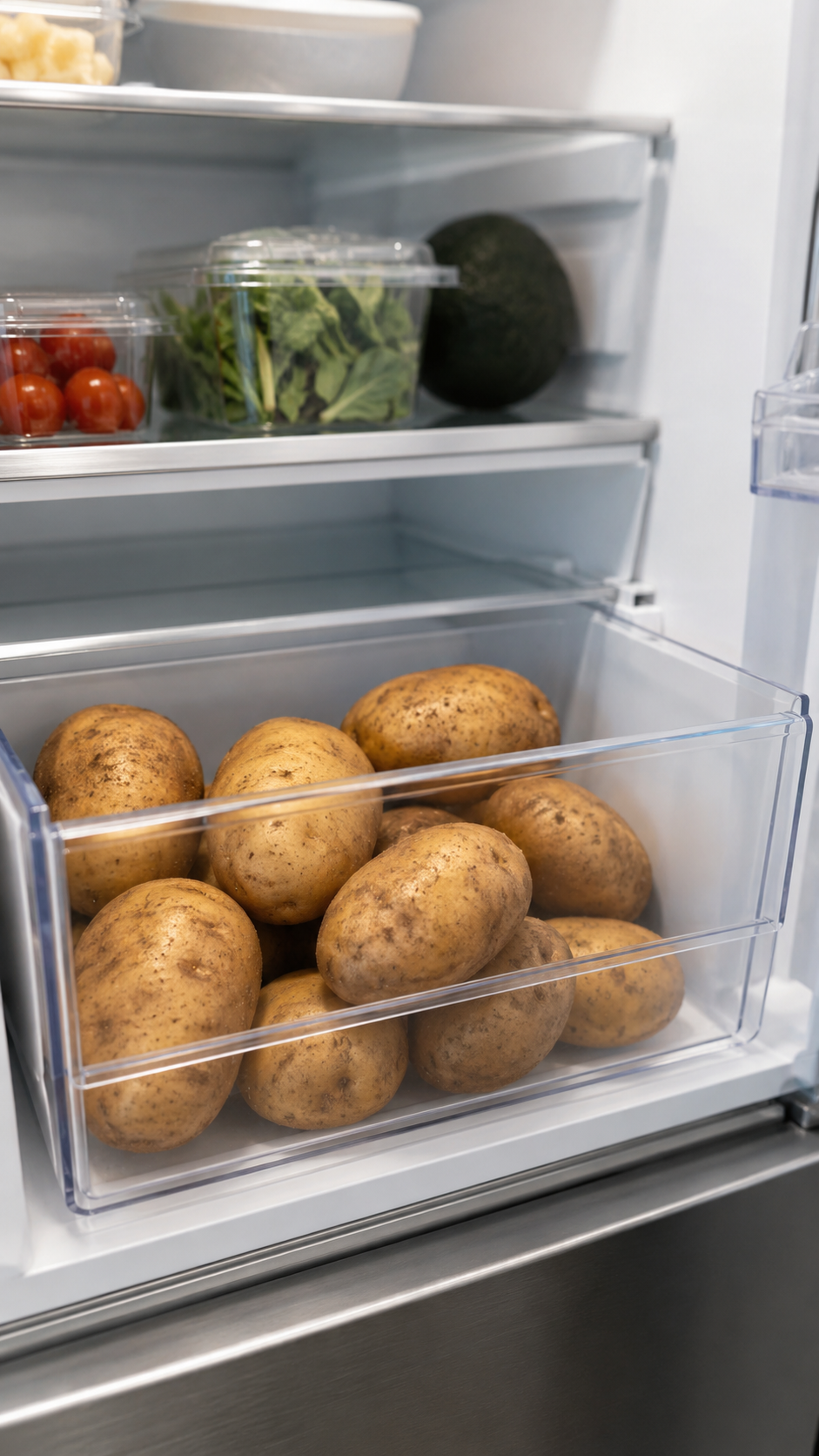
Storing potatoes in the refrigerator may seem like a smart way to keep them fresh, but cold temperatures can affect their taste, texture, cooking quality, and safety. Learn the best way to store potatoes at home.

Why Potato Storage Matters More Than You Might Think
Potatoes are one of those kitchen staples many of us keep around without thinking too much about them. They sit in a bag in the pantry, under the sink, in a cabinet, or sometimes in the refrigerator because we assume cold storage keeps everything fresher for longer.
That logic works for many foods, but potatoes are a little different.
Unlike leafy greens, berries, milk, or leftovers, potatoes do not always benefit from being chilled. In fact, storing raw potatoes in the refrigerator can change their natural chemistry in ways that affect how they taste, how they cook, and how they brown when fried, roasted, or baked.
This does not mean potatoes are scary or unsafe by default. It simply means they need the right storage conditions.
For everyday home cooks, this matters because potatoes are often used in family meals: baked potatoes, mashed potatoes, breakfast hash, potato wedges, soups, stews, casseroles, and fries. When potatoes are stored poorly, you may notice they taste oddly sweet, darken too much during cooking, sprout faster than expected, or become soft and unpleasant.
The good news is that potato storage is simple once you know what to avoid.
The Main Problem: Refrigerators Are Too Cold for Raw Potatoes
Most home refrigerators are kept around 37°F to 40°F. That temperature is ideal for many perishable foods, but it is colder than what raw potatoes prefer.
Potatoes do best in a cool, dark, well-ventilated place. Cool does not mean refrigerator-cold. It means somewhere cooler than a warm kitchen counter but not as cold as the fridge.
When potatoes are stored at refrigerator temperatures, the starches inside the potato can begin converting into sugars. This process is sometimes called cold-induced sweetening.
That may sound harmless at first. After all, a little sweetness does not seem like a big problem. But this change can affect both flavor and cooking results.
A refrigerated potato may taste sweeter than normal. It may also brown too quickly when cooked at high heat, especially if you fry, roast, or bake it.
How Cold Storage Changes the Taste of Potatoes
One of the first things people notice with refrigerated potatoes is a strange sweetness.
Potatoes naturally contain starch. When they are exposed to cold temperatures for too long, some of that starch can turn into sugar. This can make the potato taste less earthy and more sweet than expected.
For some dishes, this may not ruin the meal. In a soup or stew, you may barely notice it. But in simple dishes like baked potatoes, roasted potatoes, homemade fries, or hash browns, the flavor change can stand out.
You might think the potatoes are old, poor quality, or from a bad batch. But the real issue could simply be where they were stored.
A Common Kitchen Example
Imagine you buy a bag of russet potatoes for baked potatoes. You place them in the refrigerator because you do not plan to use them right away.
A week later, you bake them. The texture seems a little off, and the flavor has a faint sweetness that does not match the buttery, savory toppings you added.
The potatoes may not be spoiled. They may just have changed because they were kept too cold.
Why Refrigerated Potatoes Can Brown Too Much During Cooking
The sugar change matters most when potatoes are cooked at high heat.
When potatoes with higher sugar content are fried, roasted, or baked, they can brown faster than expected. Instead of becoming evenly golden, they may turn very dark in spots or develop a slightly bitter flavor.
This is especially noticeable with:
- French fries
- Hash browns
- Potato chips
- Roasted potato wedges
- Crispy breakfast potatoes
- Air fryer potatoes
If you have ever made homemade fries that looked too dark before they were fully crisp, cold storage may have been one of the reasons.
Why This Happens
When sugars are exposed to high heat, they brown. That browning is part of what gives cooked foods color and flavor. But too much sugar can cause potatoes to darken too quickly.
This can make it harder to cook them properly. The outside may brown before the inside has the texture you want.
For everyday cooking, that means refrigerated potatoes may be less predictable. You may follow the same recipe as usual and still get a darker, less appealing result.
What About Acrylamide?
When starchy foods like potatoes are cooked at high temperatures, a compound called acrylamide can form. This is most associated with frying, roasting, baking, and other dry high-heat cooking methods.
Cold storage can increase the sugar content in potatoes, and higher sugar levels can contribute to more browning during high-heat cooking. Because acrylamide formation is connected to browning in starchy foods, many food safety sources recommend not storing raw potatoes in the refrigerator.
This does not mean you need to panic over one serving of roasted potatoes or fries. Food safety is usually about patterns and habits, not one single meal.
A practical approach is simple: store raw potatoes correctly, avoid over-browning them when cooking, and aim for golden yellow rather than very dark brown when frying or roasting.
The Best Place to Store Potatoes at Home
The best place for potatoes is usually a cool, dark, dry, well-ventilated spot.
For many homes, that might be:
- A pantry shelf
- A basement storage area
- A cool cabinet away from the oven
- A ventilated basket in a dark corner
- A paper bag kept away from sunlight
The goal is to protect potatoes from three main problems: cold, heat, and light.
Ideal Potato Storage Conditions
Potatoes generally keep best in a place that is:
Cool, but not cold: Avoid the refrigerator. A cool room or pantry is usually better.
Dark: Light can encourage greening.
Dry: Moisture can lead to mold or soft spots.
Ventilated: Potatoes need airflow. A sealed plastic bag can trap moisture.
Away from heat: Do not store potatoes near the stove, dishwasher, oven, heating vents, or sunny windows.
Why Light Is Also a Problem
Cold storage is not the only issue. Light can also affect potatoes.
When potatoes are exposed to light, they may develop green areas on the skin. This greening can be a sign that the potato has produced more chlorophyll. It may also indicate increased levels of natural compounds called glycoalkaloids, including solanine.
Small green spots can often be cut away generously, but potatoes that are very green, bitter, or heavily sprouted are better discarded.
Again, this is not about fear. It is about paying attention to simple warning signs.
Warning Signs to Watch For
Before cooking potatoes, take a moment to check them. Look for:
- Green skin or green patches
- A bitter smell or bitter taste
- Heavy sprouting
- Soft, mushy texture
- Wet or slimy areas
- Mold
- Deep black spots or rotting sections
- A strong unpleasant odor
If a potato is firm with just a small sprout, you can usually remove the sprout and use the potato. But if it is shriveled, soft, green, or smells bad, it is better to throw it away.
Should Potatoes Be Stored in Plastic Bags?
Many potatoes are sold in plastic bags, but plastic is not always the best long-term storage option.
Plastic can trap moisture, especially if the potatoes are stored in a warm place. Moisture encourages spoilage and can make potatoes soften faster.
If your potatoes came in a plastic bag with ventilation holes, they may be fine for a short time. But once you bring them home, it is often better to transfer them to something more breathable.
Good options include:
- A paper bag
- A cardboard box
- A basket
- A mesh produce bag
- A breathable storage bin
Avoid sealing potatoes in an airtight container. They need airflow.
Common Potato Storage Mistakes
Most potato storage problems come from small habits that seem reasonable at first. Here are a few common ones.
Mistake 1: Putting Raw Potatoes in the Refrigerator
This is the big one. It seems practical, especially during summer, but the fridge is usually too cold for raw potatoes.
If your kitchen is very hot, look for the coolest non-refrigerated spot you have. A lower cabinet away from appliances may work better than the countertop.
Mistake 2: Storing Potatoes Near Onions
Potatoes and onions are often stored together because they are both pantry staples. But they are not the best storage partners.
Onions release gases and moisture that may encourage potatoes to sprout or spoil faster. It is better to store them separately.
You can keep them in the same general pantry area, but avoid placing them in the same bag, basket, or bin.
Mistake 3: Keeping Potatoes Near the Stove
A cabinet beside the oven may seem convenient, but heat shortens potato shelf life. Warmth can encourage sprouting, softening, and spoilage.
Try to keep potatoes away from heat-producing appliances.
Mistake 4: Leaving Potatoes in Sunlight
A bowl of potatoes on the counter may look rustic and cozy, but sunlight is not ideal. Light exposure can lead to greening.
If you like keeping a few potatoes handy, use a covered basket or place them in a darker spot.
Mistake 5: Buying More Than You Can Use
Bulk bags can be a good deal, but only if you use them before they spoil.
If you live alone or cook potatoes only occasionally, a smaller bag may actually save money because less food gets wasted.
What If You Already Stored Potatoes in the Fridge?
If you accidentally put raw potatoes in the refrigerator, do not automatically assume they are ruined.
First, inspect them.
If they are firm, not green, not moldy, and do not smell bad, they may still be usable. However, they may taste sweeter or brown more quickly during cooking.
For best results, you can take them out of the fridge and let them sit at room temperature for a few days before cooking. This may help reduce some of the excess sugar, though results can vary.
When cooking, avoid letting them get overly dark. Aim for a golden color rather than deep brown.
Are Cooked Potatoes Different?
Yes. Cooked potatoes are different from raw potatoes.
Raw potatoes should generally not be stored in the refrigerator for the reasons discussed above. But cooked potatoes should be refrigerated if you are saving leftovers.
For example, leftover mashed potatoes, baked potatoes, boiled potatoes, potato soup, or roasted potatoes should not sit out for long periods. Once cooled, they should be stored in the refrigerator in a covered container.
This is an important distinction:
Raw potatoes: Store in a cool, dark, ventilated place outside the fridge.
Cooked potatoes: Store in the refrigerator as leftovers.
A Simple Leftover Tip
If you bake potatoes for dinner and have extras, let them cool for a short time, then refrigerate them in a shallow container.
Do not leave foil-wrapped baked potatoes sitting on the counter for hours. Once potatoes are cooked, they should be treated like other cooked foods.
How to Store Different Types of Potatoes
Most common potatoes follow the same basic storage rules, but there are a few practical differences.
Russet Potatoes
Russets are often used for baked potatoes, fries, and mashed potatoes. They are especially noticeable when cold storage changes their sugar content because they are commonly cooked at high heat.
Store them in a dark pantry or breathable bag.
Yukon Gold Potatoes
Yukon Gold potatoes are creamy and versatile. They work well for boiling, roasting, and mashing.
Like russets, they should be kept out of the fridge when raw.
Red Potatoes
Red potatoes are often used in soups, salads, and roasted dishes. They may hold their texture well, but they still need cool, dark, ventilated storage.
Fingerling Potatoes
Fingerlings are smaller and may dry out or soften faster than larger potatoes. Buy only what you can use within a reasonable time.
Sweet Potatoes
Sweet potatoes are not the same as regular potatoes, but they also do not love refrigerator storage when raw. Cold temperatures can affect their texture and flavor.
Store sweet potatoes in a cool, dark, dry place as well.
How Long Do Potatoes Last?
Potato shelf life depends on the freshness of the potatoes when you buy them and the conditions in your home.
In a cool, dark, well-ventilated place, potatoes may last several weeks. In a warm kitchen, they may sprout or soften much faster.
During summer, potatoes often do not last as long because indoor temperatures are higher. During winter, a cool pantry or basement may help them keep longer.
The best habit is to check your potatoes every few days.
Remove any potato that is soft, moldy, leaking, or rotten. One spoiled potato can affect the others nearby.
Simple Steps for Better Potato Storage
Here is an easy routine you can follow after grocery shopping.
Step 1: Take Potatoes Out of Tight Plastic
If the bag is not breathable, move the potatoes to a paper bag, basket, mesh bag, or cardboard box.
Step 2: Choose a Dark Place
Pick a cabinet, pantry shelf, or storage area away from sunlight.
Step 3: Keep Them Away From Heat
Avoid storing potatoes near the oven, stove, dishwasher, refrigerator coils, or sunny windows.
Step 4: Keep Them Away From Onions
Store onions separately to help reduce sprouting and moisture problems.
Step 5: Check Weekly
Look for sprouts, green spots, softness, mold, or odors. Use older potatoes first.
What to Do With Potatoes That Are Starting to Sprout
A small sprout does not always mean the potato is unusable.
If the potato is still firm and the sprout is small, you can cut out the sprout and any surrounding area before cooking.
But if the potato is heavily sprouted, wrinkled, soft, or green, it is better to discard it.
Sprouting is a sign the potato is aging. Once the texture changes too much, the eating quality drops.
How to Prevent Food Waste
Good potato storage is not just about safety. It also helps reduce food waste.
Potatoes are affordable and filling, but they are still frustrating to throw away. A few small habits can help you use them before they go bad.
Try planning meals around the potatoes you already have. For example:
- Use firm older potatoes in soup or stew
- Roast small potatoes as a side dish
- Make mashed potatoes before the bag gets too old
- Dice potatoes for breakfast hash
- Add cooked potatoes to casseroles or frittatas
When potatoes are stored correctly, you get more time to use them and better results when you cook.
A Practical Potato Storage Setup for a Typical Kitchen
You do not need special equipment to store potatoes well.
A simple setup might look like this:
Place potatoes in a paper bag or open basket. Keep them in a lower pantry shelf or cabinet away from the stove. Store onions in a different basket on another shelf. Check the potatoes once a week and use any that are starting to sprout first.
That is enough for most households.
If your home runs warm, buy smaller amounts more often instead of trying to store a large bag for weeks.
Quick Potato Safety Checklist
Before cooking potatoes, ask yourself:
- Were they stored outside the refrigerator?
- Are they firm?
- Are they free from mold?
- Are there no large green areas?
- Do they smell normal?
- Are sprouts small enough to remove?
- Are they not wet, slimy, or leaking?
If the answer is yes, they are likely fine for normal cooking.
If the potato looks or smells questionable, do not try to save it. Potatoes are inexpensive compared with the risk of eating spoiled food.
Final Thoughts: Keep Potatoes Cool, Dark, and Out of the Fridge
Storing potatoes in the refrigerator may seem like a harmless shortcut, but it can change the way they taste and cook. Cold temperatures can turn some of the potato’s starch into sugar, which may lead to sweeter flavor and excessive browning during frying, roasting, or baking.
The better habit is simple: keep raw potatoes in a cool, dark, dry, well-ventilated place.
Avoid the fridge, avoid sunlight, keep them away from heat, and do not store them right next to onions. Check them regularly for sprouts, green spots, softness, mold, or bad smells.
You do not need to overthink it. A paper bag in a dark pantry or a breathable basket in a cool cabinet is often enough.
With just a little attention, your potatoes will last longer, cook better, taste more like they should, and help you avoid unnecessary food waste.

Hi, I’m the creator and editor behind ZestyHabit. I research everyday safety, first aid, and practical wellness topics using official guidance and reliable public sources, then turn that information into clear, realistic steps for daily life.
My goal is to help readers make safer, better-informed choices at home and beyond.


