
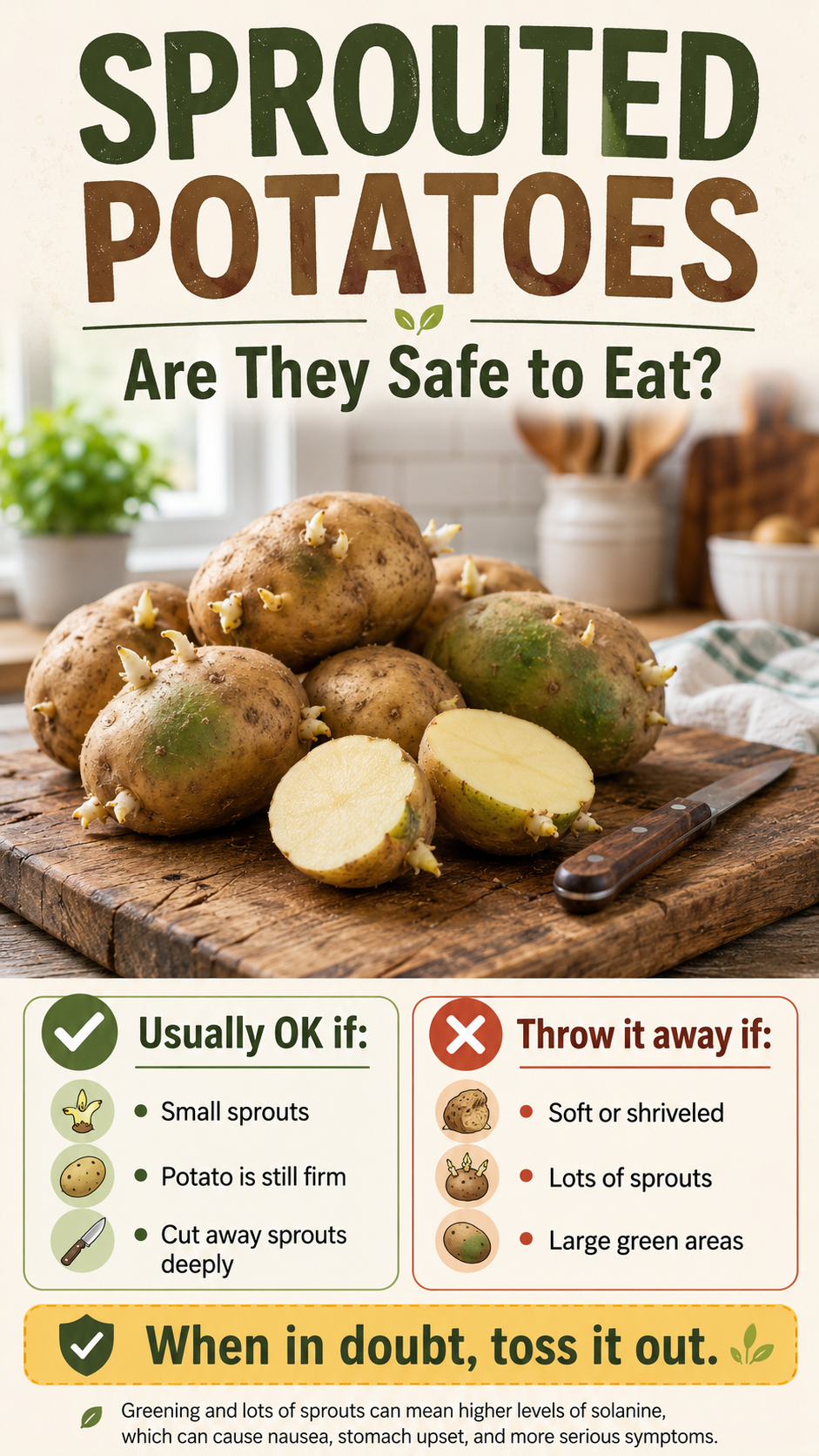

Learn why sprouted potatoes can be risky, when to toss them, and how to store potatoes safely to prevent spoilage.
Introduction: When the Potatoes Start Growing
You reach into the pantry for a few potatoes, expecting a quick side dish, and instead you find little white sprouts poking out from the eyes.
It happens easily. Potatoes get pushed to the back of a cabinet. A bag sits a little too long after a grocery trip. The kitchen warms up. A little light sneaks in. Before you know it, the potatoes look like they are trying to become houseplants.
The first question is usually practical: “Can I just break off the sprouts and cook them?”
Sometimes, yes. Sometimes, no.
Sprouted potatoes are not automatically dangerous the second a tiny sprout appears. But sprouting can be a sign that natural compounds inside the potato are increasing, especially around the sprouts, skin, and green areas. Those compounds can make potatoes taste bitter and may cause illness if eaten in larger amounts.
The good news is that this is one of those kitchen safety issues that becomes much easier once you know what to look for. You do not need to panic over every small sprout. You just need a simple way to judge the potato, store it better next time, and know when it is not worth the risk.
Why Potatoes Sprout in the First Place
Potatoes are living plant tubers. They are not just “stored food” in the way a box of pasta is stored food.
Given the right conditions, a potato will try to grow.
Warmth, light, moisture, and time all encourage sprouting. That is why potatoes often sprout faster in a warm kitchen cabinet, on a sunny counter, or inside a plastic bag with poor airflow.
Those little sprouts usually grow from the “eyes” of the potato. At first they may look like tiny bumps or pale nubs. Later, they can become long, thin shoots.
Sprouting by itself tells you the potato is aging. It also tells you to inspect it more carefully before cooking.
A firm potato with one or two tiny sprouts is different from a soft, wrinkled potato covered in long sprouts.
That difference matters.
The Main Concern: Natural Potato Toxins
The reason sprouted potatoes can be risky is because potatoes naturally contain compounds called glycoalkaloids. The two most discussed ones are solanine and chaconine.
These compounds help protect the potato plant from pests and disease. They are not added chemicals. They are naturally present in potatoes.
The problem is that glycoalkaloid levels can increase when potatoes are exposed to light, turn green, become damaged, or start sprouting. The highest levels are often found in the sprouts, green areas, peel, and just under the skin.
Michigan State University Extension explains that potato sprouts and the potato plant contain solanine, and eating the sprouts or plant is not recommended. It also notes that a firm potato with small sprouts may be used if the sprouts are removed. (canr.msu.edu)
In everyday terms: the sprout is not the part you want to eat. And if the potato looks far along in the sprouting process, the whole potato may no longer be a good choice.
Green Potatoes Are a Bigger Warning Sign
A sprout is one clue. Green color is another.
Potatoes can turn green when exposed to light. The green color itself comes from chlorophyll, which is not the main safety problem. But greening is a sign that the potato may also have higher levels of glycoalkaloids.
So if a potato is both sprouted and green, be more cautious.
A small green patch on an otherwise firm potato may be cut away generously. But if the potato is heavily green, bitter-smelling, soft, or covered in sprouts, it is better to discard it.
Poison Control advises that people are better off tossing potatoes that have turned green or grown sprouts because eating them can put people at risk from solanine and chaconine. (poison.org)
That advice may sound strict, but it is useful when you are uncertain. When the potato gives you multiple warning signs, do not try to rescue it.
Can You Eat a Potato With Small Sprouts?
This is the part most home cooks want to know.
If the potato is still firm, not green, not shriveled, and has only small sprouts, many food safety and extension sources say you can remove the sprouts and use the rest.
But remove them well. Do not just brush them off and toss the potato in the pot. Use a knife or peeler to cut out the sprouted eyes. Peel the potato if the skin looks aged or you are unsure. Remove any green areas completely.
Then cook the potato normally.
This is a practical approach for a potato that is just beginning to sprout. It is not permission to use potatoes that look old, soft, wrinkled, green, or strange.
A good everyday rule is this:
Small sprouts on a firm potato may be manageable.
Long sprouts, green skin, softness, bitterness, or shriveling mean it is time to toss.
When You Should Throw Sprouted Potatoes Away
There are times when cutting off the sprouts is not enough.
Throw away sprouted potatoes if they are:
Soft or mushy
Wrinkled or shriveled
Heavily sprouted
Green over a large area
Bitter-smelling or bitter-tasting
Moldy
Leaking liquid
Dark, rotten, or slimy
Stored in questionable conditions for too long
The texture is especially important. A firm potato still has structure. A soft, shriveled potato has already lost a lot of quality and may have higher levels of unwanted compounds.
Michigan State University Extension recommends throwing away green-skinned and sprouted potatoes to prevent possible stomach upset, especially when the potato is clearly affected. (canr.msu.edu)
If you are cooking for children, older adults, pregnant people, guests, or anyone with a weakened immune system, choose the safest option and discard questionable potatoes.
Cooking Does Not Fix Everything
One common kitchen mistake is assuming heat makes questionable food safe.
Cooking is helpful for many food safety concerns, but it does not remove every risk. Glycoalkaloids are not something you should count on cooking away.
Boiling, baking, frying, or microwaving a badly sprouted or green potato is not a reliable way to make it safe.
That is why the decision needs to happen before cooking. Inspect the potato first. Remove small sprouts and green patches only when the potato is otherwise firm and normal. Toss potatoes that are clearly past their prime.
This is also why bitter taste matters.
If you cook potatoes and they taste unusually bitter or cause a burning sensation in the mouth, stop eating them. Do not try to cover the taste with butter, salt, cheese, or sauce.
Food should not feel like a negotiation.
What Symptoms Are People Usually Worried About?
This article is not here to diagnose anyone or make potatoes sound scary. Potatoes are a normal, useful food in many kitchens.
The concern with high levels of potato glycoalkaloids is that they may cause symptoms such as stomach upset, nausea, vomiting, diarrhea, headache, or other unpleasant reactions in some situations.
The European Food Safety Authority identifies alpha-solanine and alpha-chaconine as the main glycoalkaloids of concern in potatoes and notes that they are found in potato tubers, peel, sprouts, and other parts of the plant. (pmc.ncbi.nlm.nih.gov)
If someone eats sprouted or green potatoes and develops symptoms that are severe, persistent, or concerning, contact a healthcare professional, Poison Control, or local medical services for guidance. This is especially important for children, older adults, pregnant people, and people with underlying health conditions.
For normal home prevention, the simpler goal is to avoid eating potatoes that are clearly sprouted, green, soft, or bitter in the first place.
How to Store Potatoes So They Do Not Sprout Quickly
Good storage is the easiest way to prevent this problem.
Potatoes prefer a cool, dark, dry, well-ventilated place. A pantry, basement shelf, dark cabinet, or breathable storage bin can work if the area is not too warm.
Avoid storing potatoes in direct sunlight. Light encourages greening.
Avoid warm spots, like near the oven, dishwasher, refrigerator motor, heating vent, or sunny window.
Avoid sealed plastic bags. They can trap moisture and reduce airflow, which encourages spoilage.
Use a paper bag, mesh bag, cardboard box, basket, or ventilated container instead.
Check the bag before putting it away. If one potato is already soft, wet, or moldy, remove it so it does not affect the others.
This is not about creating a perfect root cellar. It is about giving potatoes a better chance to stay firm and usable.
Should Potatoes Go in the Refrigerator?
For most home kitchens, raw potatoes are usually better stored in a cool pantry-style location rather than the refrigerator.
Cold refrigerator temperatures can change the starches and sugars in potatoes, affecting taste, texture, and how they brown during cooking. Many food storage guides recommend cool, dark storage, but not freezing or overly cold storage.
If your kitchen is very warm and you have no cool storage spot, you may have to balance quality and practicality. But in general, do not automatically put raw potatoes in the fridge just because you refrigerate most produce.
Cooked potatoes are different.
Once potatoes are cooked, they should be handled like leftovers. Cool them properly, refrigerate them in a covered container, and use them within a reasonable time. Do not leave cooked potatoes sitting out for long periods, especially in warm conditions.
Raw potato storage and cooked potato storage are not the same thing.
Keep Potatoes Away From Onions and Some Fruits
A lot of people store potatoes and onions together because they both seem like pantry staples.
It is better to separate them.
Onions can release moisture and gases that may encourage potatoes to spoil or sprout faster. Apples and bananas can also release ethylene, a natural ripening gas that can affect nearby produce.
You do not need to build separate rooms for every vegetable. Just avoid tossing potatoes, onions, apples, and bananas into one crowded bin.
Give potatoes their own breathable space.
That small change can make a noticeable difference, especially if you buy potatoes in larger bags.
Buy the Amount You Can Actually Use
A big bag of potatoes often looks like the better deal. But if half of them sprout before you cook them, it is not saving you much.
Think about how often you actually use potatoes.
If you cook them several times a week, a larger bag may make sense. If you only make potatoes once in a while, a smaller bag or individual potatoes may be better.
At the store, choose potatoes that are firm, dry, and free of large sprouts, green patches, cuts, soft spots, or mold.
When you get home, take them out of any tight plastic packaging if it traps moisture. Store them somewhere dark and ventilated.
A little attention at the beginning prevents a lot of waste later.
A Simple Potato Check Before Cooking
Before peeling or cooking potatoes, take ten seconds to inspect them.
Look at the skin. Is it green? Wrinkled? Moldy? Wet?
Feel the potato. Is it firm or soft?
Check the eyes. Are there tiny sprouts or long shoots?
Smell it from a normal distance. Does it smell earthy and normal, or rotten and unpleasant?
Cut away small sprouts and green areas only if the potato is firm and otherwise normal.
Throw it away if it has several warning signs.
This routine is quick, and it keeps you from discovering problems after the potatoes are already in the pot.
What About Sweet Potatoes?
Sweet potatoes are different from regular white, yellow, or red potatoes.
Regular potatoes belong to the nightshade family and are the ones associated with solanine and chaconine concerns. Sweet potatoes are from a different plant family.
A sprouted sweet potato is not the same issue as a sprouted regular potato. However, sweet potatoes can still spoil. If they are moldy, mushy, leaking, badly shriveled, or smell rotten, throw them away.
For storage, sweet potatoes also do best in a cool, dark, dry, ventilated place. They usually should not be stored in the refrigerator raw because cold can negatively affect texture and flavor.
So the safety details are different, but the basic storage habit is similar: cool, dark, dry, and not forgotten.
Can You Plant Sprouted Potatoes Instead?
If you garden, you may wonder whether sprouted potatoes can be planted.
Sometimes they can, depending on the potato and your local growing conditions. But do not plant potatoes that are moldy, rotten, or diseased-looking.
Also keep in mind that grocery store potatoes may have been treated to reduce sprouting, and they may not perform like certified seed potatoes.
For a home gardener, sprouted potatoes are more of a garden question than a kitchen question. For cooking, the decision should still be based on firmness, greening, sprout size, and overall condition.
And keep potato plants away from children and pets. The sprouts, leaves, stems, and green parts of the plant are not food.
What If a Pet Eats Sprouted Potato or Potato Plants?
Pets can get into pantry bags, compost bins, or garden plants.
If a pet eats a sprouted potato, green potato, potato leaves, or potato plant material, contact your veterinarian or a pet poison helpline for guidance. Do not assume the advice for people and pets is the same.
To prevent problems, store potatoes where pets cannot chew them. Keep compost secure. If you grow potatoes, make sure curious pets are not eating the plants.
This is a simple household safety step, especially if you have a dog that treats everything like a snack.
Reducing Waste Without Taking Unnecessary Risks
The goal is not to throw away food for no reason. It is to know the difference between a potato that can still be used and one that is past the line.
If you notice tiny sprouts early, use those potatoes soon. Remove the sprouts and peel if needed. Choose a cooked dish where texture matters less, like mashed potatoes, soup, or roasted potatoes.
If you buy a bag and see a few potatoes starting to age, plan them into meals right away.
Make a potato soup.
Roast a tray for dinner.
Make breakfast potatoes.
Boil and mash them.
Cook and freeze portions if that fits your routine.
But do not turn food waste prevention into food safety gambling. A soft, green, bitter, heavily sprouted potato is not a budget win. It is trash or compost.
A Calm Rule to Remember
Here is the easiest way to decide.
A firm potato with a few tiny sprouts may be usable after careful trimming.
A potato that is green, soft, shriveled, bitter, moldy, or covered in sprouts should be discarded.
That rule handles most everyday situations.
If you are unsure, think about who will eat it. If you are cooking for someone more vulnerable, toss questionable potatoes and use fresh ones.
There is no shame in throwing away one old potato. The real habit to build is checking your storage area more often so you catch potatoes before they reach that stage.
Final Thoughts
Sprouted potatoes are common, especially when a bag sits too long in a warm or bright kitchen. A tiny sprout on a firm potato does not have to ruin dinner, but it does mean you should slow down and inspect the potato before cooking.
Remove small sprouts and green areas only when the potato is otherwise firm and normal. Toss potatoes that are soft, heavily sprouted, green, bitter, moldy, or unpleasant-smelling.
The best prevention is simple storage: cool, dark, dry, and ventilated. Keep potatoes away from light, heat, sealed plastic, onions, and fruit that may speed aging.
It is a small kitchen habit, but it saves food, prevents awkward guesswork, and makes everyday cooking feel a little more under control.

Hi, I’m the creator and editor behind ZestyHabit. I research everyday safety, first aid, and practical wellness topics using official guidance and reliable public sources, then turn that information into clear, realistic steps for daily life.
My goal is to help readers make safer, better-informed choices at home and beyond.


