
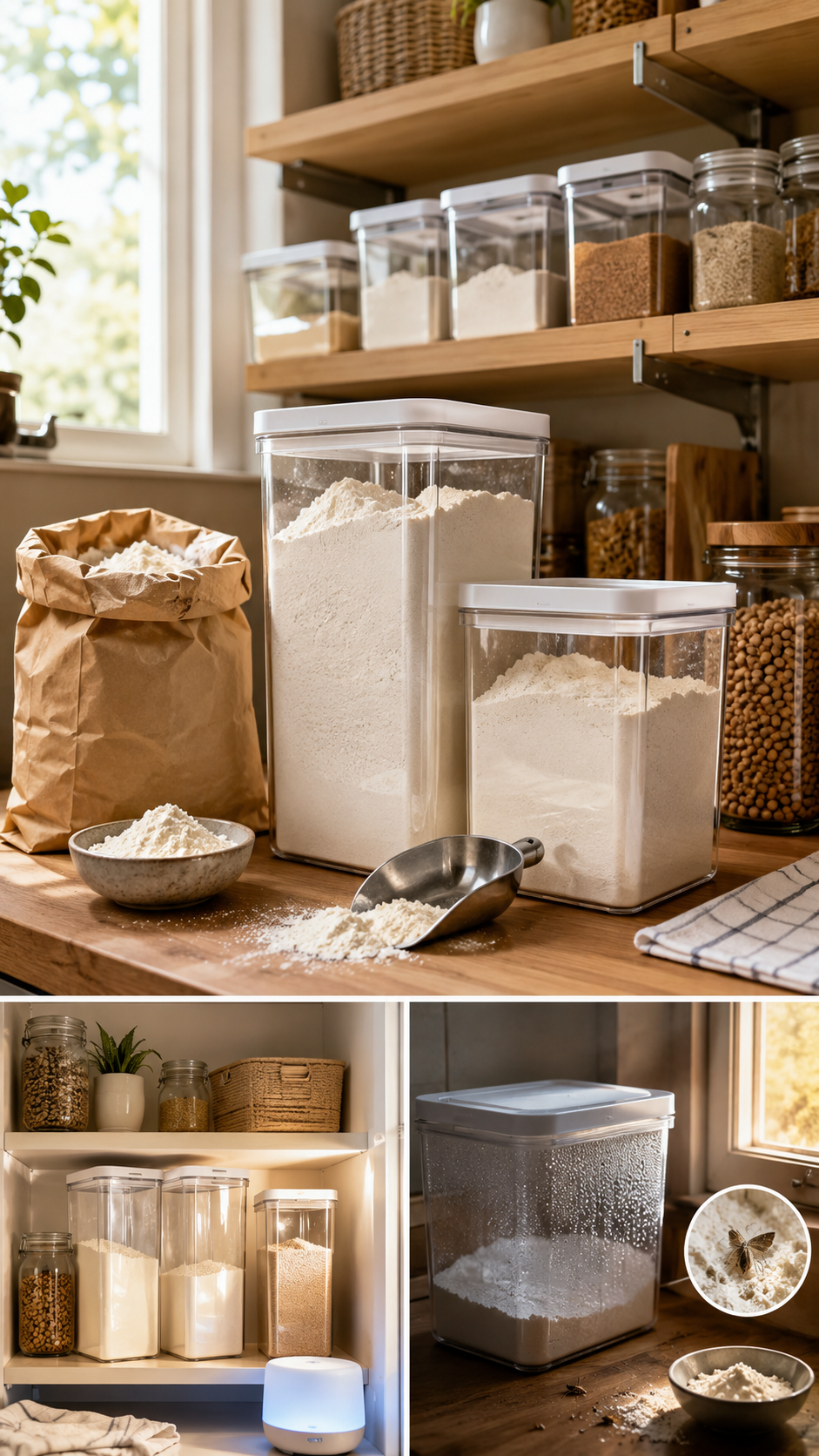

Learn how to store flour in the pantry while protecting it from humidity, pantry pests, odors, and rancidity. Includes container tips, shelf-life guidance, and signs that flour has spoiled.
Flour may look like one of the easiest pantry staples to store. It is dry, inexpensive, and usually sold in a neatly folded paper bag. But once flour enters a warm or humid kitchen, several problems can shorten its useful life.
Moisture can cause clumping and mold growth. Pantry insects may arrive inside the package or find their way into an opened bag. Whole-grain flour can also become rancid much sooner than refined white flour because it contains more natural oils.
Fortunately, storing flour properly does not require expensive equipment. A clean airtight container, a cool pantry, sensible purchasing habits, and occasional inspection can protect most household flour supplies.
This guide explains how to store flour in the pantry, how long different types of flour last, and what to do if you discover moisture, insects, or an unpleasant odor.
Why Proper Flour Storage Matters
Flour is a low-moisture food, which is one reason it can remain usable for months. However, “dry” does not mean indestructible.
Flour is finely ground and readily absorbs moisture and odors from its surroundings. Its paper packaging is useful for transportation and ventilation, but it provides limited protection once the bag has been opened. Insects can enter through small gaps, while humid air may slowly affect the flour’s quality.
Storage conditions also influence flavor. Refined white flour consists mainly of the grain’s endosperm and contains relatively little fat. Whole-wheat flour includes the bran and germ, which provide additional nutrients, flavor, and natural oils. Those oils oxidize over time and may eventually produce a stale, bitter, or rancid taste.
Proper storage therefore protects flour from four main enemies:
- Moisture
- Heat
- Pantry pests
- Air and strong odors
The Best Way to Store Flour in a Pantry
For everyday pantry storage, place flour in a clean, dry, airtight food-storage container and keep it in the coolest, darkest section of the pantry.
A good container should have a tight-fitting lid and be large enough to hold the flour without creating a mess every time you measure it. Food-grade plastic, glass, and metal containers can all work. The seal matters more than the material.
If you prefer to retain the original packaging, place the entire flour bag inside a larger airtight container. This approach keeps the product name, lot number, expiration date, and baking information readily available. Those details may be important if the flour is later recalled.
If you pour the flour directly into another container, label it with:
- The type of flour
- The brand
- The purchase or opening date
- The best-by date
- The lot number, if possible
Avoid repeatedly adding new flour on top of old flour. Empty the container first, wash it, dry it completely, and then refill it. Otherwise, old residue may remain at the bottom, making it difficult to track freshness and potentially carrying pantry-pest eggs into the new supply.
Keep Flour Away From Moisture
Humidity is one of the biggest threats to flour stored in a pantry. Flour can pull moisture from the air, especially when kept in a loosely folded paper bag or a container that does not close properly.
Small, soft lumps do not always mean that flour has spoiled. Flour can compact during shipping or storage and may break apart easily when sifted. However, hard clumps, damp patches, visible growth, discoloration, or a musty smell suggest that moisture has entered the package.
Do not try to salvage visibly moldy or damp flour by removing the affected portion. Because flour is a loose, finely divided food, contamination may extend beyond the area you can see. Discard the entire package and clean the surrounding shelf.
To reduce moisture exposure:
- Never measure flour with a wet or greasy cup.
- Keep the container closed except when measuring.
- Do not store flour beside the stove, dishwasher, sink, or kettle.
- Avoid shelves affected by leaking pipes or condensation.
- Make sure containers are completely dry before filling them.
- Do not store flour directly on a damp basement or pantry floor.
If your kitchen becomes extremely humid during summer, refrigeration or freezing may offer more dependable protection than pantry storage.
How to Prevent Bugs in Flour
Flour can attract several stored-food pests, including flour beetles, grain weevils, sawtoothed grain beetles, and Indianmeal moths. Depending on the species, you may notice small beetles, pale larvae, webbing, shed skins, or tiny holes in nearby packages.
An infestation does not necessarily mean your kitchen is dirty. Pantry pests may enter the home inside flour, grains, cereal, pasta, nuts, dried fruit, pet food, birdseed, or other dry products. Once established, they can move between packages.
Airtight containers help contain an infestation and prevent pests from spreading, although they cannot reverse an infestation that was already present in the flour.
Inspect flour before storing it. Look for:
- Crawling insects
- Small larvae
- Fine webbing
- Unusual movement in the flour
- Holes or damage in the package
- Flour stuck together in odd strands
For additional protection, newly purchased flour can be frozen at 0°F (-18°C) for at least four days. University extension guidance indicates that this treatment can kill pantry-pest eggs and insects that may be present in dry foods. After freezing, allow the unopened or tightly sealed package to return to room temperature before opening it. This prevents warm, humid air from condensing on cold flour. University of Minnesota Extension
Freezing flour for pest control does not make it safe to eat raw. Cold treatment may kill insects, but it is not a reliable way to eliminate disease-causing bacteria.
What to Do If You Find Flour Bugs
If insects appear in one bag of flour, inspect the entire pantry rather than treating it as an isolated problem.
Check all susceptible dry foods, including:
- Rice and other grains
- Pasta
- Cereal
- Baking mixes
- Cornmeal
- Nuts and seeds
- Dried beans
- Dried fruit
- Spices
- Pet food and birdseed
Discard heavily infested products in a sealed bag and remove them from the home. Vacuum shelves, corners, shelf-pin holes, and cracks where flour or insects may collect. Empty the vacuum afterward so surviving pests cannot return.
Wash the shelves and allow them to dry before replacing food. Transfer unaffected foods into clean, tightly sealed containers. Do not spray household insecticide directly on food-storage surfaces or use it as a substitute for locating and removing the infestation source.
Some extension services describe freezing lightly affected dry products, but most households will find disposal more practical for inexpensive flour. Dead insects and their debris remain in the product even after freezing.
How Rancidity Develops in Flour
Rancidity is different from mold growth or insect infestation. It occurs when the natural fats in flour deteriorate through oxidation or other chemical changes.
Whole-wheat flour is particularly vulnerable because it retains the oil-rich germ. Other whole-grain and high-fat flours—including almond, coconut, oat, brown rice, and some seed flours—may also lose freshness relatively quickly.
Rancid flour may smell:
- Bitter
- Sour
- Stale
- Waxy
- Paint-like
- Similar to old cooking oil, crayons, or modeling clay
Fresh wheat flour should have a mild, neutral, slightly wheaty aroma. Whole-grain flour may smell nuttier, but it should not smell sharp, greasy, or unpleasant.
Rancid flour is unlikely to produce good-tasting baked goods. Cooking cannot restore its flavor, so the best option is to discard it. When uncertain, compare its aroma with a newly opened bag of the same flour. Do not taste raw flour to test its freshness.
How Long Does Flour Last in the Pantry?
Shelf life depends on the type of flour, packaging, temperature, and humidity. A printed best-by date is primarily a quality guide, not a guarantee that flour will suddenly spoil on that exact day.
As a general household guide:
| Type of flour | Approximate pantry quality period after opening | Better long-term location |
|---|---|---|
| All-purpose or white flour | About 6–8 months | Refrigerator or freezer |
| Bread flour | About 6–8 months | Refrigerator or freezer |
| Cake or pastry flour | About 6–8 months | Refrigerator or freezer |
| Whole-wheat flour | About 1–3 months in a warm pantry; sometimes longer under ideal conditions | Refrigerator or freezer |
| Nut or seed flour | Follow the package; often only a few months after opening | Refrigerator or freezer |
| Gluten-free flour blends | Varies with ingredients | Follow the package directions |
These are practical quality estimates rather than strict safety deadlines. New Mexico State University lists approximately six to eight months for opened white flour and three to six months for opened whole-wheat flour under appropriate storage conditions. Warmer kitchens may shorten those periods. New Mexico State University Extension
Always follow the manufacturer’s directions when they differ, particularly for specialty flours containing nuts, seeds, or whole grains.
Pantry, Refrigerator, or Freezer?
Pantry storage is convenient for white flour that you use regularly. Refrigeration or freezing is better for whole-grain flour, specialty flour, bulk purchases, and homes with hot or humid kitchens.
Pantry
Choose the pantry when you expect to finish refined flour within several months. Store it in an airtight container away from heat and sunlight.
Refrigerator
Refrigeration slows oxidation and protects flour during warm weather. Use an airtight container because flour can absorb refrigerator odors and moisture.
Freezer
Freezing is generally the best option for long-term quality. Flour does not usually freeze into a solid block because it contains little water, so you can often measure it directly from the freezer.
For the most consistent baking results, let the amount you need approach room temperature before mixing it into temperature-sensitive doughs. Keep the main container sealed while it warms to prevent condensation.
Virginia Cooperative Extension notes that refrigeration or freezing can extend the shelf life of whole-wheat flour by protecting its naturally occurring oils from rancidity. Virginia Cooperative Extension
Should You Store Flour in Its Original Paper Bag?
The original paper bag is acceptable for short-term storage in a cool, dry, pest-free pantry. However, it is not the best barrier against humidity, odors, spills, or insects.
A practical compromise is to place the paper bag inside an airtight bin. You retain the label while gaining extra protection.
If you decant the flour, avoid choosing a decorative container solely for appearance. A loose wooden lid or a poorly fitted cover may not provide a true seal. Check the gasket periodically for flour buildup, warping, or damage.
Does Flour Need Oxygen Absorbers?
For ordinary household storage, flour does not need oxygen absorbers. Airtight containers, reasonable purchase quantities, and cool temperatures are usually sufficient.
Long-term emergency storage requires different packaging methods and careful attention to flour type, moisture, and food-storage recommendations. Whole-grain flour is generally a poor candidate for very long pantry storage because its oils remain prone to rancidity.
Avoid untested “dry canning” methods in which flour-filled jars are heated in a home oven. Illinois Extension warns that oven canning flour is not a recommended safe preservation practice. Illinois Extension
Remember That Flour Is a Raw Food
Fresh-looking flour can still contain harmful bacteria. Milling grain into flour does not include a step guaranteed to destroy pathogens.
The FDA and CDC advise against eating raw flour, cookie dough, cake batter, pizza dough, or other uncooked flour mixtures. Bake or cook flour-containing foods according to the recipe, wash your hands after handling raw flour, and clean bowls, utensils, and countertops. FDA flour safety guidance
Do not rely on smell, freezing, or pantry storage to make raw flour safe. A normal smell only helps assess quality; it cannot confirm the absence of bacteria.
A Simple Flour-Storage Routine
You can prevent most flour problems with a straightforward routine:
- Buy only as much flour as you can reasonably use.
- Inspect the bag for damage or insects.
- Freeze it for four days if pantry pests are a recurring problem.
- Transfer the bag or flour to an airtight container.
- Label the container with the flour type and date.
- Store it in a cool, dark, dry location.
- Use older flour before opening newer packages.
- Check the smell and appearance before baking.
- Refrigerate or freeze whole-grain and high-fat flours.
- Wash and completely dry the container before refilling it.
Frequently Asked Questions
Can flour go bad without visible mold?
Yes. Flour may become rancid without developing visible mold. An oily, bitter, sour, or paint-like odor is a reason to discard it.
Are small lumps in flour dangerous?
Not necessarily. Soft lumps may simply result from compression and should break apart easily. Hard, damp, discolored, or musty clumps suggest moisture exposure and should not be ignored.
Can bay leaves keep bugs out of flour?
Bay leaves are sometimes promoted as a home remedy, but they should not replace airtight containers, inspection, cleaning, and removal of infested foods. Physical exclusion and proper pantry management are more dependable.
Is it safe to use flour after its best-by date?
It may still be usable if it has remained dry, pest-free, and fresh-smelling. The best-by date generally concerns quality. Inspect the flour carefully and discard it if you notice moisture, insects, mold, or an abnormal odor.
Should flour be refrigerated after opening?
Refined white flour does not always require refrigeration if it will be used promptly and the pantry is cool and dry. Whole-wheat, nut, seed, and other high-fat flours benefit much more from cold storage.
Final Thoughts
The best flour-storage system is simple: keep flour cool, dry, dark, and tightly sealed. Use an airtight container for everyday protection, refrigerate or freeze flour that is rich in natural oils, and inspect nearby dry foods immediately if you find insects. Most importantly, remember that properly stored flour is still a raw ingredient and must be thoroughly cooked before eating.
How do you currently store flour—in its original bag, a pantry container, the refrigerator, or the freezer? Have you ever dealt with flour beetles, moisture, or rancid whole-wheat flour? Share your experience and favorite storage tips in the comments so other home bakers can learn from them.

Hi, I’m the creator and editor behind ZestyHabit. I research everyday safety, first aid, and practical wellness topics using official guidance and reliable public sources, then turn that information into clear, realistic steps for daily life.
My goal is to help readers make safer, better-informed choices at home and beyond.


