
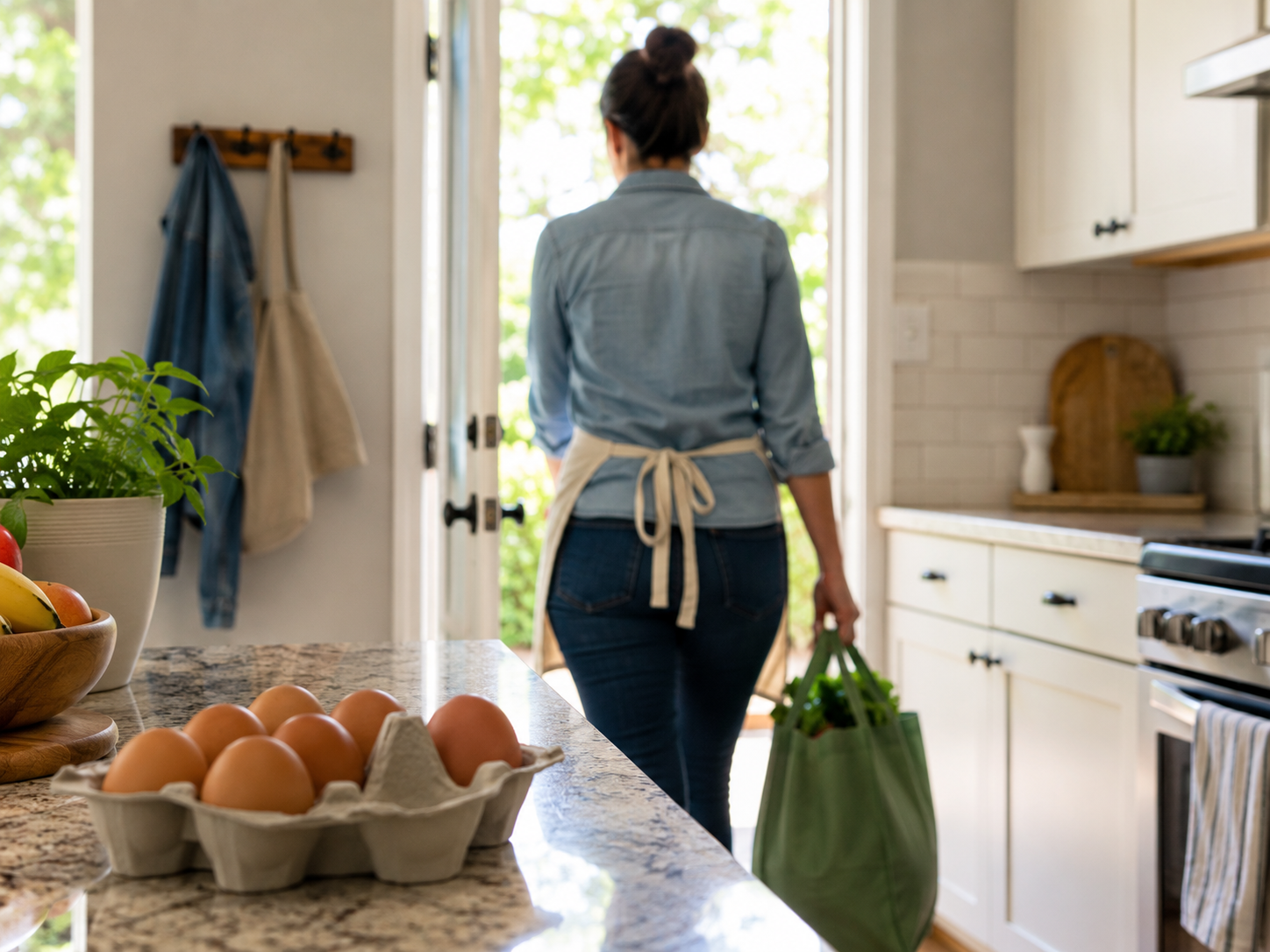
Wondering if eggs can sit out on the counter? Here’s what U.S. households should know about room-temperature eggs, food safety, cooking habits, and when to throw eggs away.
That Little Egg Bowl on the Counter Looks Innocent

There is something oddly charming about eggs sitting in a bowl on the kitchen counter.
They look homey. A little farmhouse. Maybe even a little European, if we are being generous. You come home from the grocery store, set the carton down while unloading bags, make lunch, answer a text, forget about the eggs, and suddenly they have been sitting there for half the afternoon.
Then comes the small kitchen debate.
Are they still fine?
For people in the U.S., the safest answer is usually more boring than we want it to be: eggs should go back in the refrigerator, and they should not be left out at room temperature for more than about two hours. The FDA gives the same two-hour rule for cooked eggs and egg dishes, or one hour when the temperature is above 90°F. Bacteria that cause illness can grow quickly between 40°F and 140°F.
That does not mean every egg left on the counter is instantly dangerous the second the clock passes two hours. Real life is not that dramatic. But food safety rules are written to lower risk, not to guess which egg might be unlucky.
And eggs are one of those foods where the risk is quiet. They do not always smell bad when something is wrong. They do not necessarily look suspicious. A perfectly normal-looking egg can still carry bacteria.
Annoying, I know.
Why U.S. Eggs Usually Need Refrigeration
A lot of confusion comes from travel, food blogs, and photos of pretty kitchens overseas.
People see eggs sold unrefrigerated in parts of Europe or Asia and wonder why Americans are told to keep eggs cold. It feels inconsistent until you look at how eggs are handled before they reach the store.
In the U.S., commercial eggs are typically washed and sanitized before sale. That helps remove dirt and contamination from the shell, but it also affects the egg’s natural protective coating. After that, refrigeration becomes part of the safety system. USDA information explains that after washing, eggs are stored at refrigerated temperatures, and refrigerated eggs should not be left out for more than two hours.
So the issue is not that American eggs are “weaker” or European eggs are “magical.” They are handled differently.
Once eggs have been kept cold, they should stay cold. Taking a cold egg out into warm air can cause condensation, a kind of sweating on the shell. That moisture can make it easier for bacteria to move around on the shell surface. The USDA Agricultural Research Service notes this as one reason refrigerated eggs should not sit out too long.
This is also why the cute ceramic egg tray on the counter is not the best everyday storage idea for most U.S. grocery-store eggs. Pretty, yes. Practical for food safety, not really.
The Two-Hour Rule Is Not Just for Raw Eggs
People often think about raw eggs first, but cooked eggs matter too.
Scrambled eggs left in the pan after breakfast. Deviled eggs at a party. A breakfast casserole cooling on the stove. Egg salad that sat out while everyone slowly made sandwiches.
These are all foods that should be treated with the same basic caution.
The FDA says cooked eggs and egg dishes should not be left out of the refrigerator for more than two hours, or more than one hour when temperatures are above 90°F. FoodSafety.gov gives the same practical advice: eat or refrigerate eggs and foods containing eggs promptly after cooking, within two hours, or one hour in hot conditions.
This matters because cooked food can still grow bacteria after cooking if it sits in the wrong temperature range long enough. Cooking reduces risk, but it does not give food a free pass to lounge around all day.
I have definitely left a pan of scrambled eggs on the stove “just for a minute” and then wandered off into laundry, emails, and whatever else. It happens. But it is not a habit worth keeping.
What About Baking? Don’t Recipes Say Room-Temperature Eggs Are Better?
Yes, many baking recipes ask for room-temperature eggs.
That does not mean they should sit on the counter all morning.
Room-temperature eggs can blend more smoothly into butter, sugar, batters, and doughs. For cakes, cookies, and some custards, this can make a difference. But you only need to take the chill off, not turn your eggs into a room-temperature decoration.
A simple habit works well: take the eggs out when you start gathering ingredients, then use them within a reasonable window. If you want a faster method, place the eggs in a bowl of warm—not hot—water for a few minutes. That gently brings them closer to room temperature without leaving them forgotten near the coffee maker until dinner.
For U.S. refrigerated eggs, try to stay within the two-hour limit. If your kitchen is hot, especially in summer, be more conservative.
“But My Grandma Always Left Eggs Out”
This is where food safety conversations get tricky, because many of us grew up watching someone do something that seemed perfectly fine.
A grandmother left eggs on the counter. An uncle ate cookie dough. A neighbor thawed meat in the sink all day. Nobody remembers getting sick, so the habit starts to feel safe.
But “I have done this before and nothing happened” is not quite the same as “this is a low-risk habit.”
Foodborne illness is partly a numbers game. Most of the time, you may get away with a risky habit. Then one day the conditions line up badly: a warmer kitchen, a contaminated egg, a person with a weaker immune system, a dish that sits too long.
That is the part people do not see coming.
Eggs can be linked to Salmonella, which can cause diarrhea, fever, stomach cramps, and vomiting. Most healthy adults recover, but the illness can be more serious for young children, older adults, pregnant people, and people with weakened immune systems. FoodSafety.gov specifically recommends safer handling practices for eggs because of Salmonella risk.
So no, you do not need to panic about every egg. But it is sensible to build safer habits, especially when feeding other people.
Raw Eggs, Cracked Eggs, and Other Small Red Flags
Some egg situations deserve extra caution.
Cracked eggs
If an egg is cracked when you buy it or you notice a crack later, do not treat it like a normal intact egg. Cracks can let bacteria in more easily.
If you accidentally crack an egg on the way home and the inside stays clean, you can break it into a clean container, cover it, refrigerate it, and use it soon. But if the egg looks dirty, smells odd, or you are unsure how long it has been cracked, tossing it is the safer choice.
Dirty shells
Do not wash grocery-store eggs at home before storing them. In the U.S., commercial eggs have already been washed and processed. Washing them again can introduce moisture and create more opportunity for contamination.
For farm-fresh eggs, the situation depends on how they were handled. Some small farms sell unwashed eggs with the bloom intact, and storage practices can differ. But if you are buying regular supermarket eggs in the U.S., refrigerate them.
Raw or lightly cooked eggs
Homemade Caesar dressing, tiramisu, hollandaise, runny yolks, cookie dough, and homemade mayo all come with more risk than fully cooked eggs.
That does not mean everyone avoids them completely. But if you are making food for someone pregnant, elderly, immunocompromised, or very young, use pasteurized eggs for recipes that are raw or lightly cooked. FoodSafety.gov recommends pasteurized eggs for foods containing raw or lightly cooked eggs.
Where Eggs Should Go in the Fridge
The fridge door feels convenient, especially when it has a little egg-shaped compartment. Unfortunately, the door is usually the warmest and most temperature-fluctuating part of the refrigerator.
Eggs do better in their original carton, on an interior shelf.
The carton protects them from absorbing odors and helps reduce moisture loss. It also keeps the date information handy, which is useful if you are the kind of person who opens the fridge and thinks, “Wait, when did I buy these?”
Same.
USDA guidance also recommends keeping eggs in the carton and placing them in the coldest part of the refrigerator, not the door.
A small habit change here can make egg storage easier: when you unpack groceries, put the egg carton directly on a middle or lower shelf. Do not set it on the counter “for later.” Later is where food safety plans go to disappear.
How Long Do Eggs Last in the Refrigerator?
Refrigerated raw shell eggs usually keep well for several weeks, especially when stored properly.
A date on the carton helps, but it can be confusing because you may see a sell-by date, expiration date, or pack date. The main point for everyday use is simple: keep eggs refrigerated, avoid cracked or dirty eggs, and use your senses only as a backup—not as your main safety test.
The float test gets mentioned a lot online. An older egg may float because air builds up inside the shell over time. That can tell you something about freshness, but it is not a perfect safety test. A floating egg is old, not automatically poisonous. A sinking egg is fresher, not automatically safe if it has been mishandled.
If an egg smells bad after cracking, throw it out. No debate. Rotten egg smell is not subtle. But again, bacteria that cause illness do not always announce themselves with a dramatic smell.
What If You Forgot Eggs on the Counter?
This is probably the most practical question.
You bought groceries, got distracted, and the eggs sat out.
Here is a reasonable way to think about it:
If refrigerated eggs sat out for less than two hours, put them back in the fridge.
If they sat out longer than two hours, especially in a warm kitchen, the safest choice is to throw them away.
If they sat in a hot car, near a sunny window, beside the oven, or outside during summer, use the shorter one-hour rule. Heat speeds everything up, including bacterial growth.
Is it painful to throw away a full carton? Yes. Eggs are not as cheap as they used to be, and wasting food feels terrible. But food poisoning is a much worse bargain.
A good prevention trick is to unpack eggs first. Before pantry items, before snacks, before you start reorganizing the fridge like a tiny home makeover project. Cold foods go cold first.
Egg Dishes at Brunch, Picnics, and Potlucks
Egg safety gets harder when food is served casually.
At home, you can put the carton back in the fridge. At a brunch table, people graze. Someone brings deviled eggs, someone else brings quiche, and the food sits there while everyone talks for three hours.
That is where the two-hour rule becomes useful. Not because anyone wants to be the food police, but because time disappears during gatherings.
For deviled eggs, egg salad, and cold egg dishes, keep them refrigerated until serving. If they need to stay out longer, place the serving dish over ice. For hot egg dishes, keep them hot until serving and refrigerate leftovers promptly.
A smaller serving dish helps. Put out half the deviled eggs and keep the rest cold. Refill later. It feels a little fussy the first time, then it becomes normal.
And honestly, cold deviled eggs taste better than lukewarm ones anyway.
Why the Habit Matters More Than the One-Time Mistake
Leaving eggs out once is usually not the end of the world. The bigger issue is the habit.
A carton on the counter every week. Cooked eggs left in the pan after breakfast. Egg salad sitting out through lunch. Grocery bags lingering on the floor while you answer messages.
Small repeated habits create more chances for something to go wrong.
The better habit is simple and not very glamorous: buy eggs cold, bring them home soon, refrigerate them in the carton, take out only what you need, and put egg dishes away within two hours.
That is it. No complicated system. No special container. No kitchen gadgets.
Just keeping cold eggs cold.
A Simple Egg Safety Routine That Actually Fits Real Life
Here is the routine I would keep:
Bring eggs home and refrigerate them right away.
Store them in the original carton on an inside shelf.
Take eggs out shortly before cooking or baking.
Use the warm-water trick if you need room-temperature eggs for baking.
Do not leave raw, cooked, or peeled eggs sitting out for more than two hours.
Use one hour as the limit in hot weather or outdoor settings.
Throw away eggs that have been left out too long, even if they look fine.
That may sound a little strict at first, but after a while it becomes automatic. Like putting milk back in the fridge. Nobody needs to emotionally process that one; we just do it.
So, Is It Okay to Leave Eggs at Room Temperature for a Long Time?
For most U.S. households using grocery-store eggs, no. It is not a good habit.
A short time on the counter while cooking or baking is fine. A long stretch at room temperature is where the risk creeps in. The two-hour rule is a practical line to remember, and hot weather shortens that window.
Eggs are everyday food, which makes them easy to underestimate. But the safest kitchen habits are often the plain ones: keep cold foods cold, cook eggs properly, wash hands and surfaces after handling raw eggs, and do not rely on smell or appearance to judge safety.
Not dramatic. Not fancy. Just a small bit of care before breakfast, baking, or brunch. That is usually enough.

Hi, I’m the creator and editor behind ZestyHabit. I research everyday safety, first aid, and practical wellness topics using official guidance and reliable public sources, then turn that information into clear, realistic steps for daily life.
My goal is to help readers make safer, better-informed choices at home and beyond.


[…] the food has been commercially heat-processed and sealed, an unopened pouch can often remain at room temperature for months or even […]
[…] be present in dry foods. After freezing, allow the unopened or tightly sealed package to return to room temperature before opening it. This prevents warm, humid air from condensing on cold flour. University of […]