
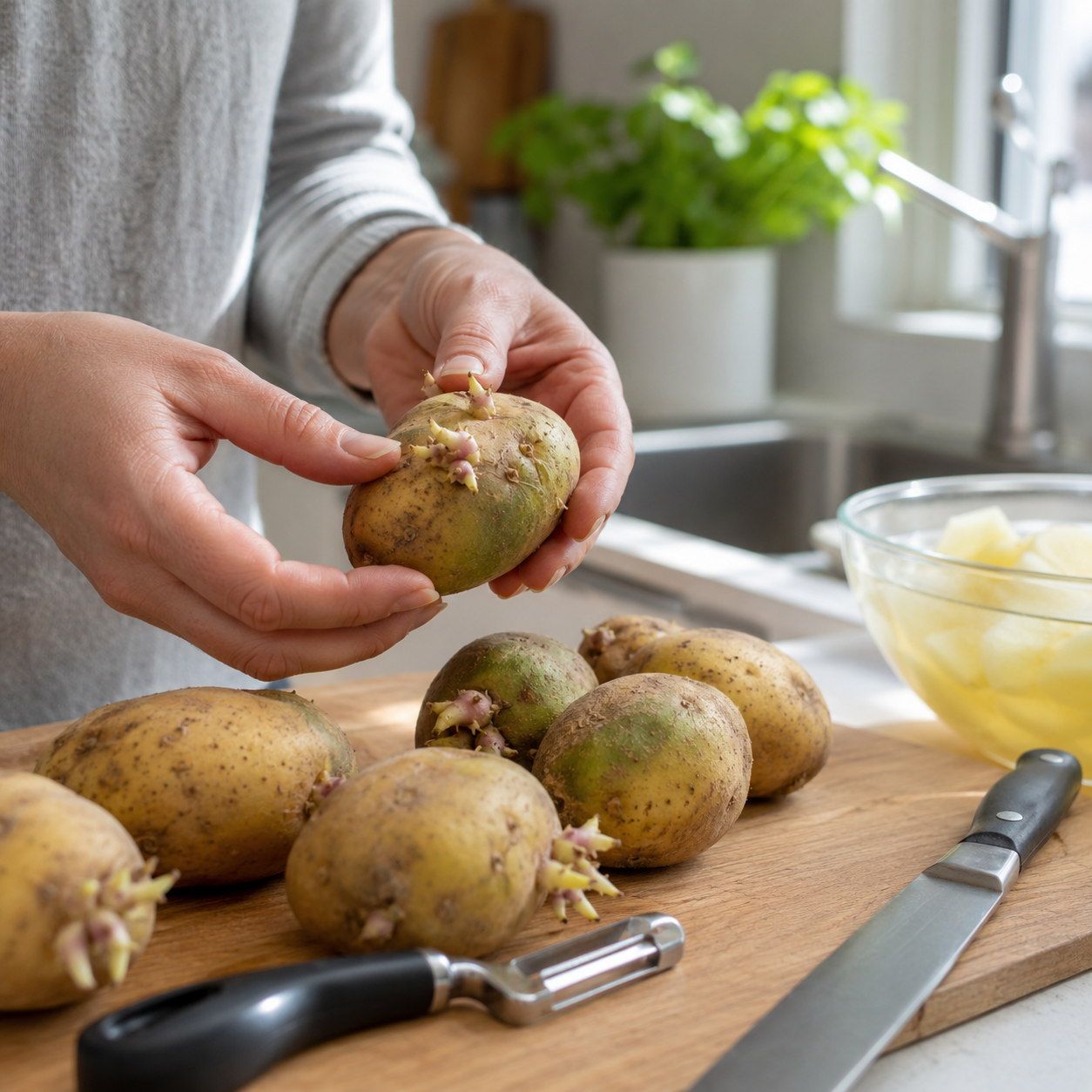

Learn why sprouted potatoes can sometimes be unsafe to eat, how to check for green spots, softness, bitterness, and spoilage, and simple storage habits to keep potatoes fresher longer.
Why Sprouted Potatoes Make People Pause
Most of us have found a forgotten bag of potatoes in the pantry.
You reach in to make mashed potatoes, fries, soup, or roasted potatoes, and there they are: little sprouts poking out from the eyes. Sometimes the potatoes still look firm and normal. Other times they are soft, wrinkled, greenish, or starting to smell musty.
At that moment, the question is simple: “Can I still eat these?”
Sprouted potatoes are confusing because they are not always automatically dangerous. A firm potato with one or two tiny sprouts may still be usable after careful trimming. But a potato with long sprouts, green skin, soft texture, bitterness, or signs of spoilage is a different story.
The reason this matters is that potatoes naturally contain compounds called glycoalkaloids, mainly solanine and chaconine. These compounds help protect the potato plant from pests and disease. They are normally present in small amounts, but levels can rise when potatoes are exposed to light, stored too long, damaged, or begin sprouting.
That does not mean you need to panic over every potato eye. It means you should know how to inspect potatoes before cooking and when it is better to throw them away.
What Happens When a Potato Sprouts?
A potato is not just a simple pantry item. It is a living plant part.
When conditions are right, the potato tries to grow into a new plant. The “eyes” on the potato begin producing sprouts. This usually happens when potatoes are stored too long, kept in a warm place, exposed to light, or stored in a way that encourages growth.
Sprouting is a sign that the potato is using its stored energy. As this happens, the potato may lose moisture, become wrinkled, soften, and develop stronger flavors.
The sprouts themselves are not the only concern. Sprouting often happens along with other changes, including higher levels of natural bitter compounds, green patches, and texture breakdown.
Sprouts Are a Warning Sign, Not the Whole Story
A tiny sprout does not always mean the entire potato must be thrown away.
But sprouts should make you stop and inspect the potato more carefully.
Think of sprouts as a signal: “This potato is aging. Check it before you eat it.”
The Main Concern: Natural Toxins Can Increase
Potatoes contain natural plant compounds called glycoalkaloids. In small amounts, these are part of the potato’s normal defense system. But when levels become too high, they can cause unpleasant symptoms if eaten.
Higher glycoalkaloid levels are more likely in green areas, sprouts, eyes, damaged spots, and potatoes that have been stored poorly.
This is why food safety guidance often tells people to remove sprouts, cut away green areas, and avoid eating potatoes that are heavily sprouted, bitter, green, soft, or spoiled.
Cooking Does Not Completely Solve the Problem
One common mistake is thinking, “I’ll just cook it really well.”
Cooking potatoes can make them taste better and easier to digest, but it does not reliably remove all glycoalkaloids. Boiling, baking, frying, or microwaving is not a magic reset button for a badly sprouted or green potato.
If the potato looks questionable before cooking, it is better to deal with the problem before it goes into the pot.
Green Potatoes Are a Bigger Warning Sign
A green color on potatoes is one of the most important things to look for.
The green color itself comes from chlorophyll, which is not the problem. But green areas usually mean the potato has been exposed to light, and light exposure can also increase glycoalkaloids.
So when you see green skin or green flesh under the skin, treat it as a warning sign.
Small Green Spots
If the green area is small and shallow, some people cut it away generously and use the rest of the potato if it is firm, smells normal, and has no other warning signs.
But be generous when trimming. Do not just scrape the thinnest layer.
Large Green Areas
If a potato is green over a large area, green deep into the flesh, bitter-smelling, soft, or heavily sprouted, it is better to throw it away.
A potato is inexpensive compared with the discomfort that can come from eating one that is clearly past its best.
Check the Sprouts: Small, Long, or Many?
The size and number of sprouts matter.
Tiny Sprouts
If the potato is firm, not green, not wrinkled, and only has a few tiny sprouts, it may still be usable. Remove the sprouts completely, including the eyes around them, and peel or trim any questionable areas.
Use the potato soon. Do not put it back in the pantry for another week.
Long Sprouts
Long sprouts are a stronger sign that the potato has been sitting too long. The potato may have lost moisture and nutrients, and the sprouts and surrounding areas may contain higher levels of compounds you do not want to eat.
If the sprouts are long and the potato is also soft, shriveled, green, or bitter, toss it.
Many Sprouts
A potato covered in sprouts is usually not worth saving, especially if it feels light, wrinkled, or rubbery. Even if you remove all the sprouts, the potato may taste unpleasant and have poor texture.
When the whole potato looks like it is trying to become a plant, it is time to let it go.
Texture Tells You a Lot
A fresh potato should feel firm and heavy for its size.
When potatoes age, they may become soft, wrinkled, rubbery, or spongy. That does not always mean they are dangerous, but it does mean the quality is declining.
Firm Potatoes
A firm potato with a small sprout and no green areas may be usable after trimming.
Slightly Wrinkled Potatoes
A potato that is a little wrinkled but still firm may be okay for cooked dishes after careful inspection. It may not be ideal for crispy fries or baked potatoes, but it could still work in soup or mashed potatoes if it has no green areas, mold, bad smell, or bitterness.
Soft or Mushy Potatoes
A soft, mushy potato should be thrown away. Softness can mean moisture loss, breakdown, or spoilage. If the potato feels wet, slimy, collapsed, or smells bad, do not try to rescue it.
Smell Before You Cook
Your nose is a useful tool.
A normal potato should smell earthy or mild. It should not smell rotten, sour, moldy, musty, or fermented.
If a potato smells unpleasant before cooking, discard it. Do not assume peeling or boiling will fix the problem.
A Bad Smell Is Not “Just Dirt”
Potatoes grow underground, so a mild earthy smell is normal. But a rotten or moldy smell is different.
If you open a bag and the smell makes you pause, check the entire bag. One rotten potato can affect nearby potatoes and create moisture that encourages spoilage.
Watch for Mold, Wet Spots, and Leaking
Sprouting is not the only issue. Potatoes can also rot.
Throw away potatoes that have:
- Mold
- Wet spots
- Leaking liquid
- Slimy skin
- Black or sunken areas
- A rotten smell
- Soft collapsed sections
- White fuzzy growth
- Deep cracks with discoloration
If one potato in the bag is rotten, remove it right away and check the others. Do not let spoiled potatoes sit in the bag with good ones.
Do Sprouted Potatoes Taste Different?
Yes, they can.
Sprouted or green potatoes may taste bitter. Bitterness is a warning sign. Potatoes should not taste sharp, intensely bitter, or unpleasantly chemical.
If you cook a potato and notice a bitter taste, stop eating it. Do not cover the taste with butter, salt, sauce, or curry spices.
Taste is not the only safety test, but bitterness is something to take seriously.
How to Decide Whether to Keep or Toss
Here is a practical way to decide.
Usually Okay to Use After Trimming
A potato may be usable if:
- It has only tiny sprouts
- It is still firm
- The skin is not green
- There is no mold
- It smells normal
- It is not slimy or wet
- The flesh looks normal when cut
- You remove sprouts and eyes completely
Use it soon and cook it thoroughly for normal food quality.
Better to Throw Away
Throw away the potato if:
- It has long sprouts
- It has many sprouts
- It is green over a large area
- Green color goes deep into the flesh
- It is soft, shriveled, or spongy
- It smells rotten or musty
- It has mold
- It is wet, slimy, or leaking
- It tastes bitter
- You feel unsure after cutting it open
When several warning signs appear together, do not try to save it.
How to Trim a Slightly Sprouted Potato
If the potato passes inspection and only has small sprouts, trim it carefully.
Step 1: Wash the Potato
Rinse dirt from the outside so you are not dragging soil into the flesh when cutting.
Step 2: Remove the Sprouts
Use a knife or vegetable peeler tip to remove the sprouts completely. Do not just break off the visible sprout. Cut out the eye area where the sprout grew.
Step 3: Peel If Needed
If the potato has any questionable skin, peel it. If there are green areas, cut them away generously.
Step 4: Cut It Open
Look inside. The flesh should look normal for the variety. If you see dark, rotten, green, or strange-looking areas, discard the potato.
Step 5: Cook and Eat Soon
Do not trim a sprouted potato and store it for days. Use it right away.
Why Children and Sensitive People Need Extra Caution
For most healthy adults, a tiny trimmed sprout on an otherwise good potato is not usually a dramatic concern. But it is still wise to be more cautious when cooking for children, older adults, pregnant people, or anyone who may be more sensitive to food-related illness.
If a potato looks questionable, choose a better one.
You do not need to announce a crisis. Just avoid serving potatoes with clear warning signs to people who may be more vulnerable.
Common Mistakes People Make With Sprouted Potatoes
Mistake 1: Only Breaking Off the Sprout
Snapping off the sprout is not the same as removing the sprout area. The eye and surrounding tissue should be cut out.
Mistake 2: Ignoring Green Skin
Green patches are not just cosmetic. They are a sign that the potato needs careful trimming or disposal.
Mistake 3: Using Bitter Potatoes Anyway
A bitter potato is not worth eating. Strong bitterness is a warning sign.
Mistake 4: Saving Potatoes That Are Soft and Wet
Soft, wet, or slimy potatoes are not good candidates for trimming. Throw them away.
Mistake 5: Buying More Potatoes Than You Can Use
Bulk bags are tempting, but they are not a bargain if half the bag sprouts or rots before you cook them.
Buy an amount your household can use within a reasonable time.
How to Store Potatoes to Prevent Sprouting
Good storage is the best way to avoid this problem in the first place.
Keep Potatoes Cool
Potatoes last longer in a cool place. A warm kitchen, sunny countertop, or cabinet near the oven can encourage sprouting.
Choose a cool pantry, basement storage area, or cupboard away from heat.
Keep Them Dark
Light exposure can lead to greening. Store potatoes in a dark place or in a breathable bag that blocks light.
Avoid leaving potatoes on the counter in direct sunlight.
Keep Them Dry
Moisture encourages spoilage. Do not wash potatoes before storing them. Wash them right before cooking instead.
If potatoes come home damp from the store, let them dry before storing.
Give Them Airflow
Potatoes need ventilation. Avoid sealing them in airtight plastic bags for long storage. A paper bag, mesh bag, basket, or ventilated bin is usually better.
Keep Them Away From Onions
Potatoes and onions are often stored together, but it is better to keep them separate. Both release moisture and gases that can affect storage life.
A pantry may have room for both, but not in the same bag or tightly packed basket.
Should Potatoes Go in the Refrigerator?
Many people wonder whether refrigeration prevents sprouting.
Cold temperatures can slow sprouting, but refrigerators are not always ideal for raw potatoes because very cold storage can affect their sugars and cooking quality. In everyday home kitchens, a cool, dark, dry pantry is usually a better first choice.
If your home is very warm and potatoes sprout quickly, buy smaller amounts more often rather than relying on long storage.
What About Sweet Potatoes?
Sweet potatoes are different from regular potatoes, but many of the same practical storage ideas apply.
Store sweet potatoes in a cool, dark, dry, ventilated place. Do not eat them if they are moldy, slimy, rotten-smelling, or badly shriveled.
Small sprouts on sweet potatoes are usually handled differently than green potatoes, because sweet potatoes do not have the same solanine issue as regular potatoes. Still, if the sweet potato looks spoiled or smells bad, throw it away.
A Simple Potato Check Before Cooking
Before cooking potatoes, take ten seconds to check them.
Ask yourself:
Are there sprouts?
Tiny sprouts may be trimmed. Long or many sprouts are a warning sign.
Is there green color?
Small green spots need generous trimming. Large green areas are better discarded.
Is the potato firm?
Firm is good. Soft, mushy, or slimy is not.
Does it smell normal?
Earthy is normal. Rotten, sour, or moldy is not.
Does the inside look okay?
Cut it open if you are unsure.
This quick check can prevent most problems.
Final Thoughts: A Tiny Sprout Is Not Always a Disaster, But Warning Signs Matter
Sprouted potatoes are common, especially when a bag sits in the pantry a little too long. A firm potato with one or two tiny sprouts may still be usable if you remove the sprouts, cut out the eyes, trim any questionable areas, and cook it soon.
But potatoes with long sprouts, green skin, softness, mold, wet spots, bad smells, or bitterness should not be treated as normal food. Those signs suggest the potato is too far gone or may contain higher levels of natural compounds you do not want to eat.
The easiest solution is prevention. Store potatoes in a cool, dark, dry, ventilated place. Keep them away from heat, sunlight, moisture, and onions. Buy only what you can use before they begin to age.
Potatoes are simple, affordable, and useful in so many meals. With a quick inspection and a few smart storage habits, you can enjoy them safely without wasting good food or taking chances with potatoes that should be tossed.

Hi, I’m the creator and editor behind ZestyHabit. I research everyday safety, first aid, and practical wellness topics using official guidance and reliable public sources, then turn that information into clear, realistic steps for daily life.
My goal is to help readers make safer, better-informed choices at home and beyond.


