Microwaving Food Covered With Plastic Wrap: What to Watch Out For
Minjin Park
·
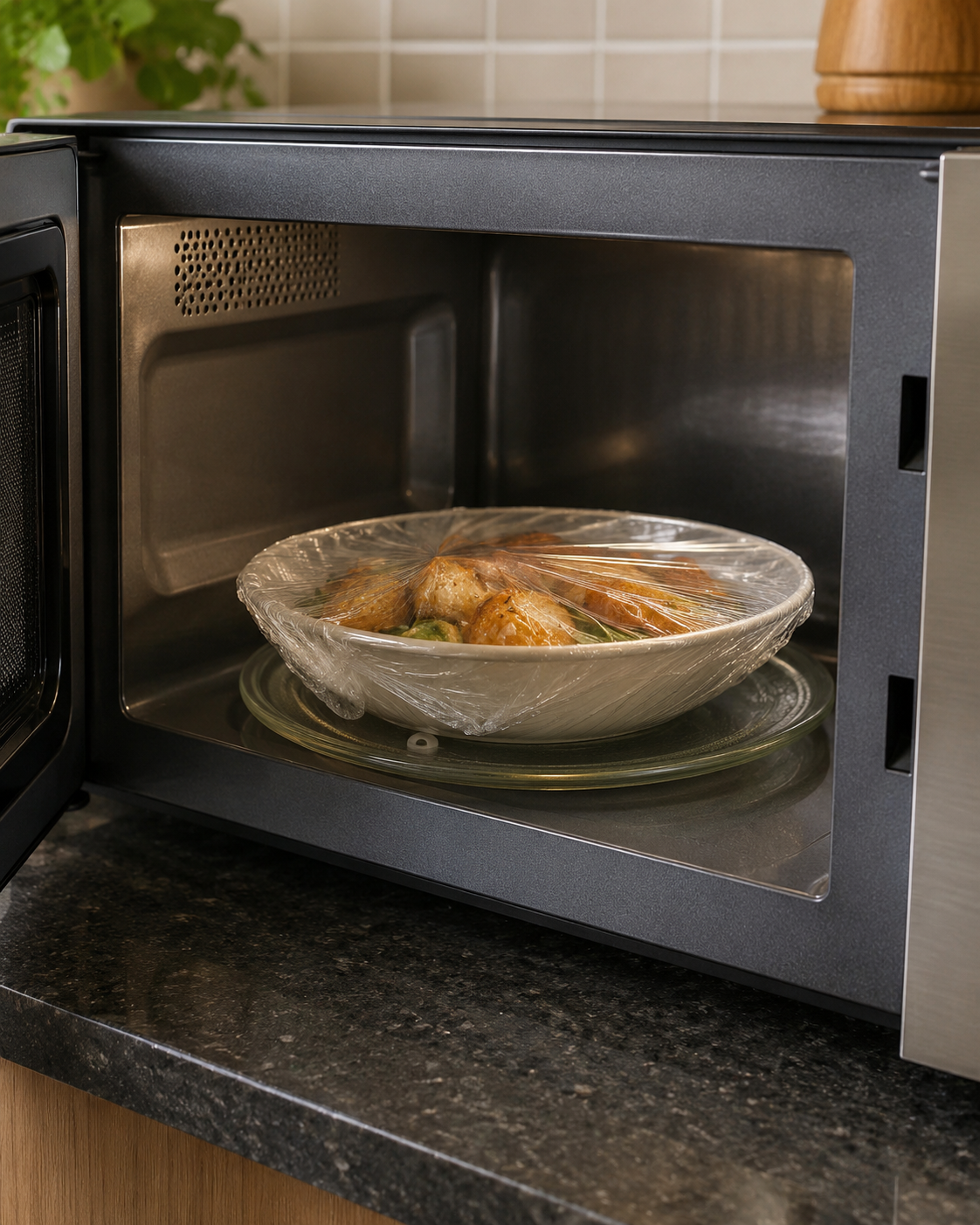
Microwaving food with plastic wrap can help prevent splatters, but it needs to be done carefully. Learn how to use microwave-safe wrap, vent steam, avoid melting, and reheat food safely.
The Everyday Microwave Habit That Deserves a Little Attention
Covering food with plastic wrap before microwaving feels like a small kitchen habit. You put leftovers in a bowl, stretch a piece of wrap over the top, press start, and hope you do not end up cleaning sauce off the microwave walls.
It is convenient. It helps trap steam. It can keep rice, pasta, vegetables, and leftovers from drying out. It also prevents splattering, which is why so many people do it without thinking twice.
But plastic wrap in the microwave needs a little care.
The main concerns are simple: the wrap should be labeled microwave-safe, it should not touch the food, and it should be vented so steam can escape. If the wrap melts, sags into hot food, seals tightly, or is used on very oily foods for too long, the situation can become messy and less safe.
This does not mean you need to panic every time you cover a bowl. It just means plastic wrap should be used like a tool with instructions, not like any random piece of plastic.
Before talking about what can go wrong, it helps to understand why covering food is useful.
Microwaves heat food by causing water molecules in the food to move and generate heat. As the food warms, steam forms. A cover helps keep some of that steam near the food, which can make reheating more even and prevent the top from drying out.
A cover also catches splatters. Anyone who has reheated tomato sauce, beans, curry, oatmeal, or soup uncovered knows how quickly a microwave can become messy.
So the issue is not that covering food is bad. In fact, covering food can be helpful. The issue is choosing the right cover and using it properly.
Plastic wrap can be one option, but it is not the only one. Microwave-safe lids, glass covers, ceramic plates, wax paper, parchment paper, and paper towels may work better depending on the food.
The First Rule: Use Only Microwave-Safe Plastic Wrap
Not all plastic wrap is designed for microwave use.
Some wraps are meant only for cold storage, wrapping sandwiches, covering bowls in the refrigerator, or keeping food fresh on the counter for a short time. These products may soften, warp, melt, or break down when exposed to microwave heat and steam.
Before using plastic wrap in the microwave, check the box or packaging. Look for wording such as “microwave-safe” or microwave-use instructions.
Do not assume all clear plastic wrap is the same. Different brands and products may have different heat tolerances and instructions.
“Microwave-Safe” Still Has Conditions
Microwave-safe does not mean “use any way you want.”
It usually means the product has been made for microwave conditions when used according to the package directions. Those directions may include leaving space between the wrap and the food, venting the wrap, avoiding direct contact with fatty foods, or using shorter heating times.
If the package says not to use it in certain ways, follow that guidance.
A good rule is this: microwave-safe wrap is meant to cover the dish, not melt into dinner.
Do Not Let Plastic Wrap Touch the Food
This is one of the most important habits.
Plastic wrap should be stretched over the top of the container with enough space between the wrap and the food. If the food is piled high and the wrap is resting directly on it, choose a deeper bowl or a different cover.
When plastic wrap touches hot food, especially oily, fatty, or sugary food, it may soften or melt. Fatty foods can get very hot in spots, and those hot spots can affect plastic more than steam alone.
Think of the wrap as a loose roof over the food, not a blanket lying on top of it.
Foods Most Likely to Cause Problems
Plastic wrap contact is especially worth avoiding with:
Cheesy casseroles. Oily pasta. Bacon or sausage. Creamy sauces. Tomato sauce with oil. Leftover pizza. Fried foods. Meat with rendered fat. Sugary syrups or desserts.
These foods can become very hot on the surface. If plastic wrap sags down and touches them, melting is more likely.
Use a Deeper Bowl When Needed
If your food is close to the top of the dish, do not stretch wrap tightly across it. Move the food to a deeper microwave-safe bowl.
This gives steam room to circulate and helps keep the plastic from touching the food.
It also reduces the chance of sauce bubbling over the side.
Always Vent the Plastic Wrap
Steam needs a way out.
If plastic wrap is sealed tightly over a bowl, pressure can build as the food heats. The wrap may balloon upward, collapse into the food, burst open suddenly, or release hot steam when you pull it back.
To prevent this, leave a small corner open or poke a few small vents according to the wrap’s instructions. Some people loosely drape the wrap instead of sealing it tightly.
The goal is to keep splatter under control while still letting steam escape.
Be Careful When Removing the Wrap
Even when wrap is vented, steam can collect underneath. When you remove the cover, lift it away from your face and hands.
Hot steam can burn quickly. This is especially true with soup, rice, potatoes, oatmeal, and casseroles that hold heat well.
Let the dish sit for a minute if it is very hot. Then open the cover slowly.
Avoid Long, High-Heat Microwaving With Plastic Wrap
Plastic wrap is better suited for short reheating than long, intense cooking.
A 30-second or 1-minute reheat is very different from heating something for 8 or 10 minutes. Long heating times create more steam, more heat, and more chances for the wrap to sag, soften, or contact food.
If you are cooking a dish from scratch, steaming vegetables for a long time, or reheating a large dense meal, a microwave-safe lid or glass cover may be a better choice.
Use Short Intervals
Instead of heating leftovers for several minutes at once, try shorter intervals.
Heat for a minute. Pause. Stir if appropriate. Check whether the wrap is sagging. Continue heating if needed.
This helps reduce uneven hot spots and gives you a chance to adjust before the food overheats or splatters.
Microwave Heating Can Be Uneven
Microwaves are convenient, but they do not always heat food evenly. Some areas can be very hot while others remain cool.
This matters for two reasons. First, uneven heating can create hot spots that make plastic wrap more likely to soften if it touches food. Second, uneven heating can leave leftovers less safely reheated than they appear.
Stirring, rotating, and letting food stand briefly after heating can help distribute heat more evenly.
Stir Foods When You Can
Soups, stews, rice bowls, pasta, beans, oatmeal, and casseroles often reheat better when stirred halfway through.
If the dish is covered with plastic wrap, pause the microwave, carefully lift a vented edge away from your face, stir, replace the cover loosely, and continue heating.
Let Food Stand Before Eating
Standing time is not just waiting for the food to cool. It allows heat to continue moving through the dish.
This can improve texture and reduce the chance of finding one cold bite and one scorching-hot bite.
Do Not Microwave Plastic Wrap From Store Packaging
Food from the grocery store may come wrapped in plastic film, placed on a foam tray, or sealed in packaging meant for display and transport. That does not mean the packaging is safe for microwave heating.
For example, raw meat trays, deli wrap, bakery wrap, produce wrap, and takeout packaging may not be designed for microwave use.
Before microwaving, remove food from store packaging unless the label clearly says the package is microwave-safe and gives microwave instructions.
Transfer the food to a microwave-safe glass, ceramic, or labeled microwave-safe container.
The film on a microwave meal is not always the same as household plastic wrap. It may be designed for that product and that heating method. But it still usually needs venting.
Do not add your own tight layer of plastic wrap over a frozen meal unless the instructions say to do so.
If the packaging is damaged, melted, or unclear, transfer the food to a microwave-safe dish and cover it with a safer option.
Signs You Should Stop Using the Wrap
While microwaving, pay attention to what the wrap is doing.
Stop and switch covers if you notice:
The wrap sagging into the food. The wrap melting or shrinking. A strong plastic smell. The wrap sticking to food. The wrap ballooning tightly with steam. Food bubbling up and touching the wrap. The container warping. The wrap tearing open suddenly.
If plastic melts onto food, it is safest to discard the affected food rather than trying to peel it off and eat around it.
Better Alternatives to Plastic Wrap
Plastic wrap is not the only way to cover food in the microwave. In many cases, another option is easier and more reusable.
Microwave-Safe Glass Lid
A microwave-safe glass lid is sturdy, reusable, and less likely to sag into food. It is a great option for bowls and storage containers.
Make sure it is vented or slightly offset so steam can escape.
Microwave-Safe Plate
A ceramic or glass plate can work well as a cover for bowls. Place it loosely on top rather than sealing it tightly.
Be careful when removing it because it can get hot.
Microwave-Safe Splatter Cover
A vented microwave splatter cover is one of the simplest tools for everyday reheating. It keeps the microwave cleaner and allows steam to escape.
Choose one labeled microwave-safe and clean it regularly.
Parchment Paper or Wax Paper
Depending on the food, parchment paper or wax paper can be useful for covering dishes. They are often good for preventing splatter without creating a tight seal.
Do not confuse wax paper with parchment paper for every cooking use, though. Follow product directions.
Paper Towels
A plain white paper towel can help cover foods that splatter lightly, such as reheated bread, some vegetables, or small leftovers.
Avoid printed, recycled, or decorative paper towels unless the packaging says they are safe for microwave use.
Common Mistakes With Plastic Wrap in the Microwave
Mistake 1: Sealing the Bowl Tight
A tight seal traps steam. Always vent.
Mistake 2: Letting Wrap Touch Hot Food
Plastic wrap should not lie directly on the food. Leave space.
Mistake 3: Using Any Random Plastic Wrap
Only use wrap labeled microwave-safe. Cold-storage wrap or unknown plastic film may not be appropriate.
Mistake 4: Reheating Greasy Food Under Wrap
Greasy and oily foods can become very hot. Use a microwave-safe lid or plate instead, especially for pizza, bacon, fried foods, or oily leftovers.
Mistake 5: Pulling the Wrap Off Toward Your Face
Steam can rush out. Open the wrap away from you.
Mistake 6: Ignoring Package Instructions
Both plastic wrap and microwave meals may have specific directions. Read them before heating.
Practical Examples for Everyday Foods
Soup or Stew
Use a deep microwave-safe bowl. Cover with a vented lid or loosely vented plastic wrap. Leave space at the top. Stir halfway through heating.
Open carefully because steam can be intense.
Rice or Pasta
Rice and pasta often dry out in the microwave. Add a small splash of water, cover loosely, and heat in short intervals. Stir before eating.
Make sure plastic wrap does not sag onto the food.
Tomato Sauce
Tomato sauce splatters easily. A vented microwave cover or plate is often better than plastic wrap because sauce can bubble up and touch the cover.
If using wrap, use a deep bowl and leave plenty of space.
Pizza
Plastic wrap is not the best choice for pizza. Cheese and oil can get hot and touch the wrap. Use a microwave-safe plate and a paper towel or microwave-safe cover instead.
Vegetables
A loose cover can help steam vegetables. Use a microwave-safe lid or wrap that does not touch the vegetables. Leave a vent and avoid overheating.
Oatmeal
Oatmeal can bubble over quickly. Use a larger bowl than you think you need. Cover loosely or use a vented lid. Stop and stir if it rises.
How to Reheat Leftovers More Safely
Good microwave habits go beyond the cover.
Use microwave-safe containers. Arrange food evenly. Cover loosely. Vent steam. Stir or rotate when possible. Heat in shorter intervals. Let food stand briefly. Check that leftovers are hot throughout. Open covers away from your face.
For leftovers such as casseroles, meat dishes, soups, and mixed meals, even heating matters. A food thermometer can be useful if you want a more reliable check, especially for dense leftovers.
What to Teach Kids and Teens
Kids and teens often use the microwave before they learn more advanced cooking skills. Plastic wrap rules should be simple.
Teach them:
Use only microwave-safe containers and covers. Do not microwave store packaging unless the label says to. Do not let plastic wrap touch food. Always leave a vent. Be careful of steam. Ask before reheating oily or messy foods. Do not eat food if plastic melted onto it.
These habits are easy to remember and help prevent both messes and burns.
A Simple Plastic Wrap Microwave Checklist
Before pressing start, ask:
Is the plastic wrap labeled microwave-safe? Is the container microwave-safe? Is there space between the food and the wrap? Is the wrap vented? Is the food low enough that it will not bubble up and touch the wrap? Is this a short reheat rather than long cooking? Would a glass lid, plate, or splatter cover be better?
If any answer makes you unsure, choose a different cover.
Final Thoughts: Cover Food, But Let It Breathe
Plastic wrap can be useful in the microwave, but only when used carefully. It should be microwave-safe, kept from touching the food, and vented so steam can escape.
The biggest problems happen when wrap is sealed tightly, used on oily foods, allowed to sag into hot food, or pulled off carelessly while steam is trapped underneath.
For many everyday reheats, a microwave-safe plate, vented lid, glass cover, or splatter cover may be easier and more reliable. Plastic wrap is just one option, not the only option.
Microwave safety does not need to feel complicated. Give steam a way out. Keep plastic away from direct contact with hot food. Use short heating intervals. Open covers away from your face.
A clean microwave is nice, but a safe reheating habit matters more. With a few simple changes, you can warm leftovers without splatters, melted wrap, or unnecessary worry.
Hi, I’m the creator and editor behind ZestyHabit. I research everyday safety, first aid, and practical wellness topics using official guidance and reliable public sources, then turn that information into clear, realistic steps for daily life.
My goal is to help readers make safer, better-informed choices at home and beyond.