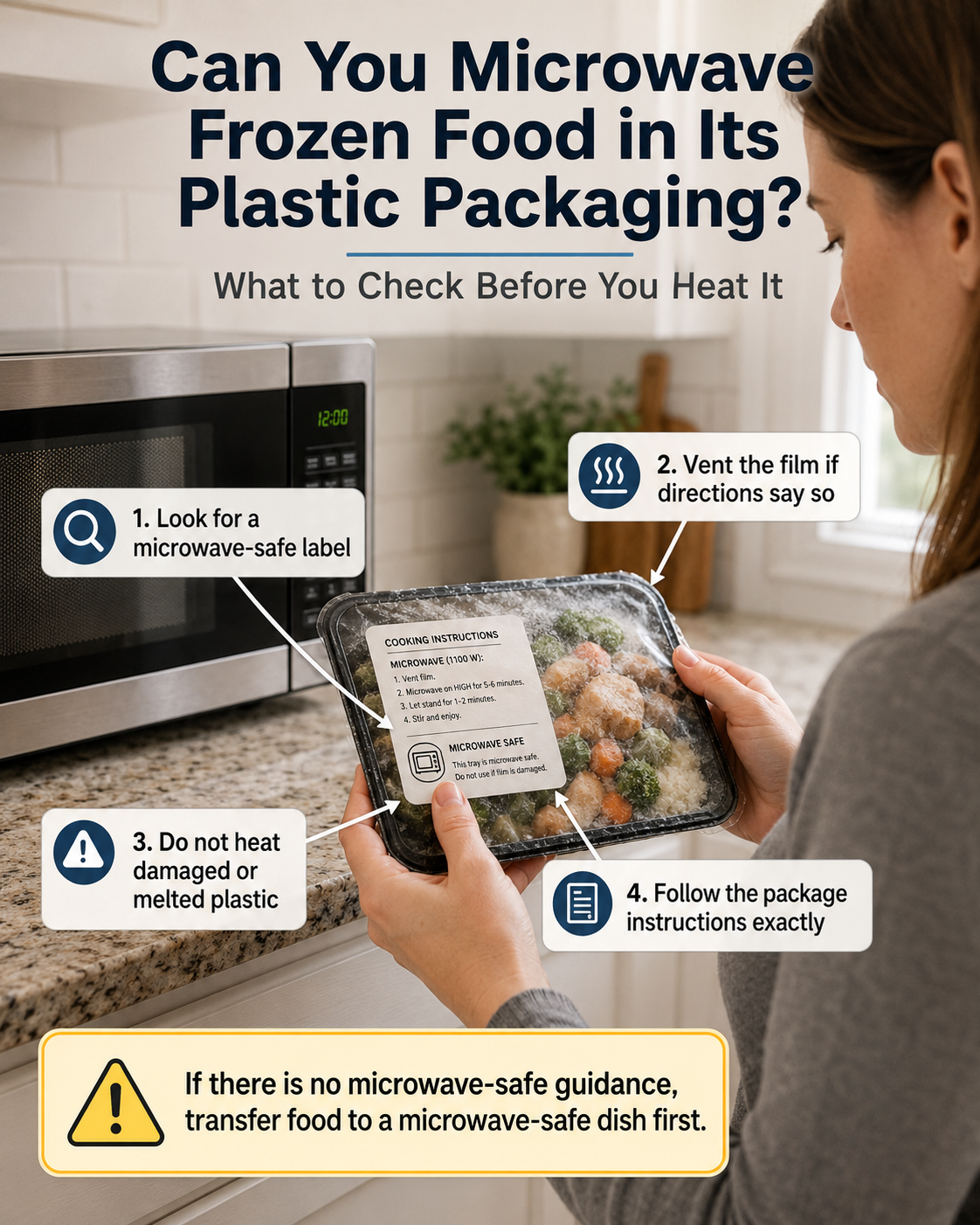
Can You Microwave Frozen Food in Its Plastic Packaging? What to Check Before You Heat It
Minjin Park
·
Can you microwave frozen food in the plastic bag or tray it came in? Learn when it may be safe, when to transfer it, and simple microwave habits that help reduce everyday food and packaging risks.
You come home tired, open the freezer, grab a frozen meal, and see the words “microwaveable” somewhere on the box. The food is still sealed in plastic, the instructions are tiny, and you just want dinner.
So the question is simple: Can you microwave frozen food in the plastic packaging it came in?
The practical answer is: only if the package specifically says it is microwave-safe and the cooking instructions tell you to heat it that way. If the plastic bag, film, pouch, or tray does not clearly say it is meant for microwave use, the safer everyday habit is to transfer the food to a microwave-safe glass, ceramic, or clearly labeled microwave-safe container.
This matters because frozen food packaging is not all the same. Some plastic trays and steamable bags are designed to handle microwave heating. Others are meant only for storage, shipping, or keeping food fresh in the freezer. Heat, steam, oil, and direct contact with hot food can change how packaging behaves.
The goal is not to panic over one frozen dinner. It is to build a simple kitchen habit: read the package, follow the instructions, and when in doubt, move the food to a safer dish.
The problem is that convenience can make us skip the small details.
Maybe you toss the whole plastic pouch into the microwave without checking. Maybe you leave the plastic film completely sealed because you assume it will cook faster. Maybe you reuse a frozen meal tray later for leftovers. Or maybe you microwave food in a regular freezer bag because it looks sturdy enough.
These are small habits, but they can increase the chance of problems like melted plastic, steam burns, uneven heating, damaged packaging, or food that stays cold in the middle.
The USDA notes that microwave cooking can leave cold spots where bacteria may survive, so standing time, stirring, rotating, and checking temperature matter for food safety, especially with meat, poultry, eggs, and casseroles.
Not All Frozen Food Plastic Is the Same
Some packaging is designed for microwave cooking
Many frozen foods are packaged in materials made for a specific cooking method. For example, some frozen vegetables come in “steam-in-bag” packaging. Some frozen meals come in trays with a plastic film that should be peeled back, vented, or left on during part of the heating process.
In these cases, the packaging is part of the cooking design. It may help trap steam, heat the food more evenly, or prevent drying.
But that only applies when the package instructions say so.
Some plastic is only meant for freezing and storage
A plastic bag that works well in the freezer is not automatically safe for microwave heating. Freezer packaging may be designed to resist cold, moisture, and freezer burn, not high heat.
This is especially important with plain plastic wrap, thin produce bags, bread bags, zip-top storage bags, and packaging from foods that are meant to be removed before cooking.
If the label does not mention microwave use, do not treat it like microwave-safe packaging.
What “Microwave-Safe” Really Means
A “microwave-safe” label generally means the product is intended to be used in the microwave under certain conditions. It does not mean the plastic is indestructible, and it does not mean every heating situation is fine.
Microwave-safe packaging still needs to be used according to the instructions. That may include venting the film, heating for a limited time, using a certain power level, stirring halfway through, or letting the food stand after cooking.
That detail matters. A plastic film hovering above a bowl to hold in steam is different from plastic pressed directly against hot cheese, sauce, oil, or meat.
The Biggest Mistake: Assuming the Bag Is Fine Because the Food Is Frozen
One of the most common kitchen mistakes is thinking, “It came in this bag, so I can cook it in this bag.”
That is not always true.
Some frozen foods are packaged for storage only. The cooking instructions may say:
“Remove from plastic pouch.”
“Do not microwave in wrapper.”
“Remove film before cooking.”
“Place food on microwave-safe plate.”
“Cook from frozen after removing packaging.”
If the instructions say to remove the plastic, take that seriously. The manufacturer is telling you that the packaging was not meant to be part of the heating process.
A good rule: the food being microwaveable does not automatically mean the packaging is microwaveable.
When It Is Usually Okay to Microwave Frozen Food in Plastic
Microwaving frozen food in its plastic packaging is generally reasonable when all of these are true:
The packaging clearly says microwave-safe.
The cooking directions specifically tell you to microwave it in the bag, pouch, tray, or film.
You follow the venting instructions.
You use the recommended time and power level.
The plastic does not melt, warp, split, or touch food in a way the package warns against.
Examples include many steam-in-bag vegetables, some frozen rice pouches, and certain frozen meal trays.
Even then, be careful when opening the package. Steam can build quickly and escape toward your hand or face.
When You Should Transfer the Food First
It is better to move frozen food to a microwave-safe dish when:
The packaging has no microwave-safe label.
The instructions say to remove the food from the pouch or wrapper.
The plastic looks thin, crinkly, damaged, or not intended for heating.
The food is oily, cheesy, sugary, or saucy and will touch the plastic directly.
The plastic has already warped or melted before.
You are reheating leftovers in a tray that was meant for one-time use.
You threw away the box and no longer have the cooking directions.
In these cases, use a microwave-safe glass or ceramic bowl or plate. Cover it with a microwave-safe lid, a vented cover, wax paper, or another suitable microwave-safe cover.
What About Steam-in-Bag Vegetables?
Steam-in-bag vegetables are one of the most common examples where people wonder if the plastic is okay.
If the bag says it is designed for microwave steaming, follow the package directions. Usually, the bag is engineered to vent steam during cooking. Some bags tell you not to pierce them. Others tell you to place a certain side up. Some have a marked vent area.
Do not assume all frozen vegetable bags are steam-in-bag bags. A regular frozen broccoli bag and a microwave steam bag may look similar at a glance, but they may not be designed the same way.
If there are no microwave directions, pour the vegetables into a microwave-safe bowl, add a small splash of water if needed, cover loosely, and cook.
What About Frozen Meals with Plastic Film?
Frozen meals often come with a plastic film over a tray. The instructions may say to cut a slit, peel back one corner, remove the film halfway through, or leave it on during cooking.
That film helps manage steam and moisture. But if the directions say to vent it, vent it. A fully sealed film can balloon, split, or release a burst of steam when opened.
Also, avoid letting loose plastic film collapse into the food unless the product instructions clearly allow it. Hot sauces, cheese, oils, and fats can become very hot in the microwave, and direct contact with plastic is something many safety guidelines recommend avoiding when possible.
What About Plastic Wrap?
Plastic wrap can be used in the microwave only if it is labeled microwave-safe and used correctly.
The safer habit is to keep a gap between the wrap and the food. Leave a corner open or create a vent so steam can escape. Do not stretch plastic wrap tightly over a bowl in a way that lets it sag onto the food as it heats.
Plastic wrap is more likely to soften or melt when it touches very hot foods, especially foods high in fat or sugar. A bowl of broth is one thing. A cheesy, oily casserole is another.
Warning Signs to Watch For
Stop heating and transfer the food if you notice:
Plastic melting or sagging into the food.
A sharp chemical-like smell.
The tray warping badly.
The bag puffing up with no vent.
Plastic sticking to the food.
The film splitting unpredictably.
Food still frozen in the center after the listed cooking time.
Uneven cooking is not just annoying. With some foods, especially meat, poultry, seafood, egg dishes, and casseroles, cold spots can be a food safety issue. USDA guidance recommends cooking leftovers reheated in a microwave to 165°F and using a food thermometer when needed.
Simple Steps Before Microwaving Frozen Food
1. Read the cooking directions before opening
This sounds obvious, but it is the step people skip most. Frozen food instructions are often specific for a reason.
Look for phrases like:
“Cook in pouch.”
“Do not remove film.”
“Peel back corner to vent.”
“Remove from wrapper.”
“Place on microwave-safe plate.”
“Let stand for 1–2 minutes.”
The standing time is part of the cooking process, not just a suggestion. It allows heat to continue moving through the food.
2. Look for microwave-safe wording
Do not rely only on the recycling number. A recycling symbol tells you the type of plastic, not necessarily whether that exact package is designed for microwave cooking.
Look for actual microwave-use language on the package.
3. Vent carefully
Steam needs somewhere to go. If the instructions say to pierce, slit, peel, or vent, do it.
When opening after heating, point the opening away from your face and hands. Steam burns can happen fast.
4. Stir or rotate when instructed
Microwaves do not always heat evenly. Stirring, rotating, and rearranging food helps reduce cold spots.
This is especially useful for rice bowls, pasta, soups, stews, frozen vegetables, and meals with dense sections.
5. Let it stand
Letting food sit for a minute or two after microwaving helps the temperature even out. For thicker frozen meals, it can make a big difference.
6. Use a food thermometer for higher-risk foods
For frozen meals with poultry, meat, seafood, eggs, or mixed casseroles, a food thermometer is the most reliable way to know whether the center is hot enough. The USDA recommends safe minimum internal temperatures for different foods and notes that microwave cooking times can vary because ovens differ in power and efficiency.
Common Household Examples
Frozen burritos
Many frozen burritos are wrapped in plastic or paper. Some instructions say to remove the wrapper and wrap the burrito in a paper towel. Others may use a crisping sleeve or special packaging.
Do not microwave a burrito in a plastic wrapper unless the instructions specifically say to.
Frozen dumplings or potstickers
If they come in a plastic tray, check whether the tray is only for packaging or also for cooking. Many dumplings are better transferred to a microwave-safe dish with a little water and a loose cover if microwave instructions are provided.
Frozen chicken nuggets
These usually should be removed from the plastic bag and placed on a microwave-safe plate if microwaving is allowed. The outer bag is typically not a cooking bag.
Frozen rice pouches
Some rice pouches are designed to be microwaved directly. Others are not. Always check the pouch instructions, especially for whether to tear, vent, or stand upright.
Frozen family-size meals
Large frozen meals may have more complicated instructions because they heat unevenly. Follow the film, stirring, and standing directions carefully. If the tray warps or the center stays cold, transfer to a microwave-safe dish and continue heating as directed.
Is It Dangerous If You Did It Once?
If you accidentally microwaved food in plastic packaging once, it does not mean you need to panic.
Check the food and packaging. If the plastic melted into the food, stuck to it, or gave off an unusual odor, it is reasonable to discard that portion. If the packaging stayed intact and the food was heated according to directions, the risk from a single event is usually not something to obsess over.
The better approach is to adjust the habit going forward. Keep microwave-safe bowls available. Save the cooking directions until the food is done. When the package is unclear, transfer the food.
Better Everyday Alternatives
For a lower-stress kitchen routine, keep these nearby:
A microwave-safe glass bowl.
A ceramic plate.
A vented microwave cover.
Wax paper or parchment paper when appropriate.
A basic food thermometer.
A pair of tongs or oven mitts for hot trays.
You do not need a complicated system. Just having one or two reliable microwave-safe dishes makes it easier to avoid questionable plastic packaging.
A Simple Rule to Remember
Here is the easiest version:
If the package says to microwave it in the plastic, follow the directions. If it does not clearly say that, transfer the food to a microwave-safe dish.
That one rule covers most situations.
You do not have to memorize plastic types, packaging chemistry, or every symbol. Just check the label, vent steam properly, avoid plastic touching hot food when possible, and make sure the food is heated evenly.
Final Takeaway
Microwaving frozen food in plastic is not automatically unsafe, but it is not automatically safe either. The difference is whether that specific packaging was designed and labeled for microwave use.
In everyday life, the safest habit is simple: read the instructions before heating, use only microwave-safe packaging as directed, vent carefully, stir or rotate when needed, and let the food stand before eating.
When the packaging is unclear, damaged, thin, or not labeled for microwave use, transfer the food to glass, ceramic, or a clearly microwave-safe container. It takes a few extra seconds, but it removes a lot of guesswork from a very common kitchen routine.
Hi, I’m the creator and editor behind ZestyHabit. I research everyday safety, first aid, and practical wellness topics using official guidance and reliable public sources, then turn that information into clear, realistic steps for daily life.
My goal is to help readers make safer, better-informed choices at home and beyond.