
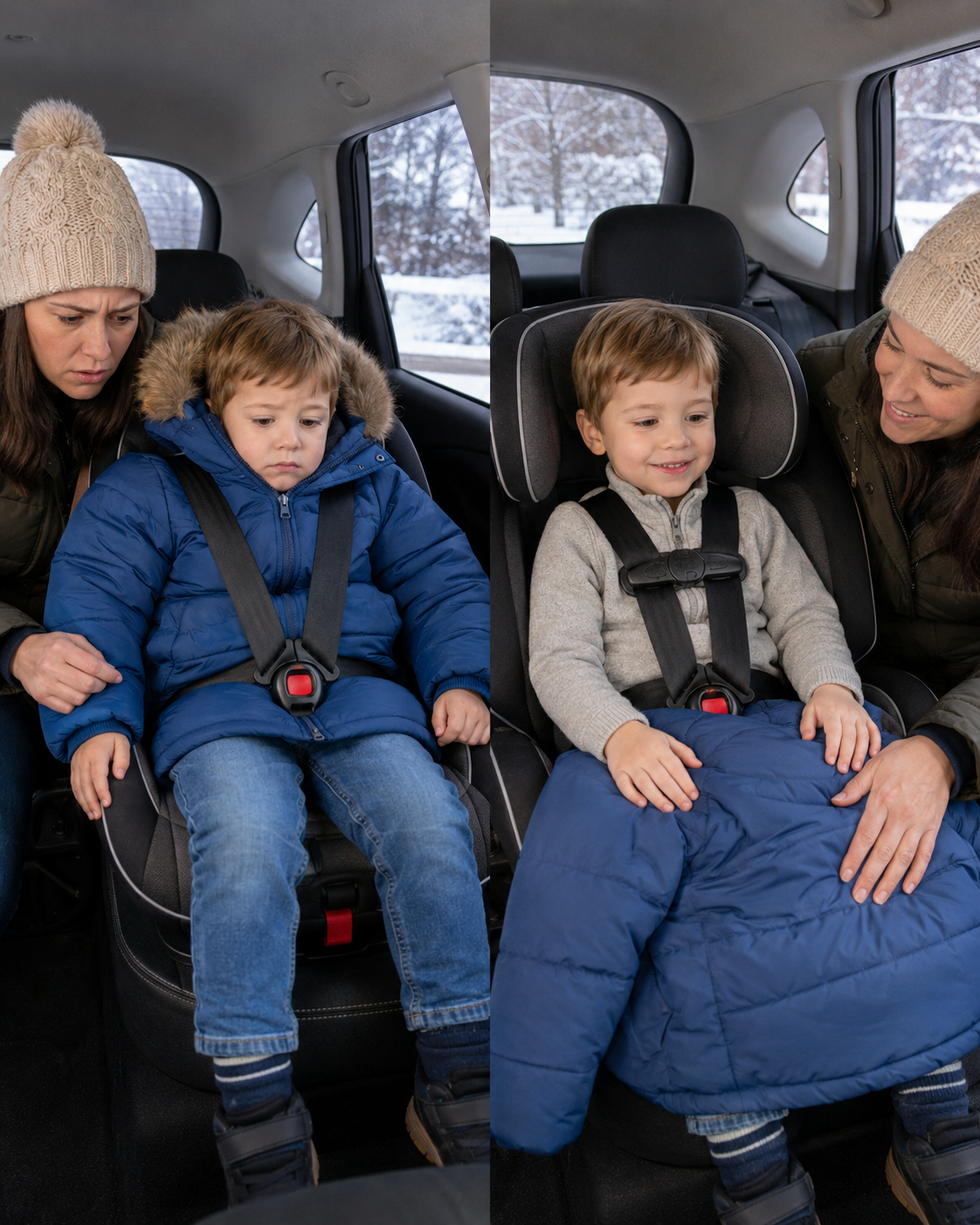

Bulky winter coats can make car seat harnesses fit too loosely. Learn why this matters, how to check the fit, and simple ways to keep children warm and safer in the car.
The Winter Car Seat Mistake Many Parents Don’t Realize
Winter mornings can be chaotic. The car is cold, the child is bundled up, and everyone is trying to get out the door on time. It feels natural to zip your child into a thick winter coat, place them in the car seat, buckle the harness, and go.
After all, the coat is warm. The child looks comfortable. The straps seem buckled. What could be wrong?
The problem is that a bulky winter coat can make a car seat harness fit less securely than it appears. Puffy coats, thick snowsuits, and heavily padded jackets can add a layer of soft bulk between the child’s body and the harness. In a crash, that fluffy padding can compress, leaving extra space under the straps.
That extra space matters.
A car seat harness is designed to sit snugly against the child’s body. When a thick coat is under the harness, the straps may look tight on top of the coat but still be too loose against the child.
This does not mean parents are doing something careless on purpose. Most families simply want their kids to stay warm. The safer approach is learning how to keep children warm without putting bulky padding under the harness.
Why Bulky Coats Can Affect Car Seat Safety
Puffy Coats Create Hidden Slack
A winter coat can make the harness feel tight because the straps are pressing against the outside of the coat. But the coat itself is full of air, padding, or fluffy insulation.
During normal sitting, that padding stays puffed up. During a sudden stop or crash, the padding can flatten quickly.
When that happens, the harness may no longer be as snug as it should be. The space that used to be filled by the coat becomes empty slack.
That is the main concern. The harness may not hold the child as closely as it was designed to.
The Harness Needs to Fit the Child, Not the Coat
Car seat harnesses work best when they are adjusted to the child’s actual body. The straps should be close to the shoulders, chest, and hips, depending on the type of seat and harness system.
A thick coat changes the shape of the child in the seat. It makes the child look bigger than they are, which can lead adults to loosen the straps.
Once the coat comes off, you may notice how much extra room was really there.
A good rule is simple: the harness should be snug over normal clothing, not over thick outerwear.
A Loose Harness Can Let a Child Move Too Much
The purpose of a car seat is to help manage crash forces and keep the child positioned correctly. A loose harness may allow too much movement.
Even a little extra slack can reduce how well the car seat does its job.
That is why winter coat safety is not just a comfort issue. It is a fit issue.
Why This Happens More Often in Cold Weather
Parents Are Trying to Avoid the Cold
No parent wants to put a child into a freezing car wearing only thin clothes. It feels wrong, especially during snow, wind, or icy mornings.
The challenge is that the safest car seat setup and the warmest outdoor outfit are not always the same thing.
A child may need a thick coat for walking outside, but that does not mean the same coat belongs under the car seat harness.
Short Trips Feel Harmless
Many families think, “We’re only driving five minutes.” That is understandable. But car seat fit matters on every trip, not only long highway drives.
Most routines happen close to home: daycare drop-off, school pickup, grocery runs, doctor visits, and quick errands.
Because these short drives happen so often, they are exactly when good habits matter.
Kids Resist Taking Coats Off
Children may not understand why they have to remove a coat just to sit in the car. They may be tired, cold, or frustrated.
This is where a simple routine helps. When the same steps happen every time, children get used to them: coat off, buckle snugly, blanket or coat over the top.
It may take a few extra seconds, but it becomes easier with practice.
Common Mistakes Parents Make
Tightening the Harness Over a Puffy Coat
The harness may feel tight if you pull hard enough over a bulky coat. But the problem is not just whether the straps move. The issue is what happens when the coat compresses.
If you have to loosen the harness a lot to fit the coat, the coat is probably too bulky for the car seat.
Using a Snowsuit in the Car Seat
Snowsuits are especially bulky because they add padding around the shoulders, chest, back, hips, and legs. They can make it very hard for the child to sit properly and for the harness to lie flat.
A snowsuit may be fine for outdoor play, but it is usually not a good choice under a car seat harness.
Adding Thick Aftermarket Inserts
Some parents add thick padding, head supports, bunting bags, or covers that go behind the child. These can interfere with the way the car seat was tested and designed.
As a general safety habit, avoid adding products between the child and the car seat unless they came with the seat or are specifically allowed by the car seat manufacturer.
Placing Blankets Under the Harness
A blanket under the child or under the harness can create the same kind of slack problem as a coat.
Blankets are better used over the buckled harness, not underneath it.
Forgetting to Adjust Straps After Removing the Coat
If you buckle a child with a coat one day and without a coat the next, the harness may need adjustment.
Do not assume the same strap setting works for every outfit. Bulky sweaters, hoodies, and layers can all change fit.
How to Check Whether a Coat Is Too Bulky
The Simple Coat Fit Test
There is a practical way to see the problem for yourself.
First, put your child in the car seat wearing the coat. Buckle and tighten the harness as you normally would.
Then, without loosening the straps, unbuckle the child and take the coat off.
Put the child back in the car seat without the coat and buckle the harness again.
If the straps are now loose, the coat was adding too much bulk.
This test can be eye-opening because it shows the hidden space that the coat was creating.
Try the Pinch Test
Once your child is buckled without bulky outerwear, check the harness fit. At the shoulder strap area, try to pinch extra harness webbing between your fingers.
If you can pinch a fold of strap, it may be too loose. If the strap lies snugly and you cannot pinch excess webbing, the fit is better.
Always follow your car seat manual, because seat designs can vary.
Watch the Chest Clip Position
For harnessed car seats, the chest clip should usually be at armpit level. If it is too low, the harness may not sit correctly.
A bulky coat can make the clip look positioned while still affecting how the straps sit on the child’s body.
Safer Ways to Keep Kids Warm in the Car
Dress in Thin, Warm Layers
Instead of one thick coat, use thinner layers that fit close to the body.
Good options may include a long-sleeve shirt, thin fleece, thermal layer, or lightweight jacket that does not create much bulk.
Thin layers trap warmth without interfering as much with the harness.
Use Hats, Mittens, and Warm Socks
A child can lose warmth quickly through exposed areas. Hats, mittens, socks, and boots can help keep them comfortable without adding bulk under the harness.
These items do not usually interfere with the harness fit the way a puffy coat does.
Buckle First, Then Add Warmth
After the child is buckled snugly, place a blanket over them. Make sure the blanket is over the harness, not under it.
You can also put the child’s coat on backward over the buckled harness. The arms go into the sleeves, but the coat rests over the front like a warm cover.
This keeps the harness close to the child’s body while still adding warmth.
Warm the Car When Possible
When it is safe and practical, warming the car before loading children can make the process easier. Follow local laws and common-sense safety rules about unattended vehicles.
Even a slightly warmer car can reduce the struggle over removing a coat.
Keep a Car Blanket Available
A dedicated car blanket can make winter routines smoother. Keep one in the car for each child if needed.
Choose a blanket that is easy to wash and not so thick that it becomes hard to manage.
What About Babies in Infant Car Seats?
Babies need special attention because they cannot tell you if they are too hot, too cold, or uncomfortable.
Avoid bulky coats, thick buntings, or padded inserts that go behind the baby unless they came with the car seat or are approved by the manufacturer.
A safer approach is to dress the baby in thin layers, buckle the harness snugly, and place a blanket over the harness.
Some infant car seat covers go over the outside of the seat like a shower cap. These may be safer than products that go behind the baby, but always check that the cover does not interfere with the harness, the handle, or airflow.
If a product changes how the child sits in the seat or how the harness fits, be cautious.
What About Older Kids in Booster Seats?
Winter coat bulk can matter for booster seats too.
A booster seat helps position the vehicle seat belt correctly across the child’s body. A bulky coat can cause the lap belt to ride too high or the shoulder belt to sit poorly.
For booster riders, check that the lap belt lies low across the upper thighs, not the belly, and that the shoulder belt crosses the shoulder and chest properly.
If the coat prevents the seat belt from fitting correctly, remove it before buckling. The child can wear the coat backward over the seat belt or use a blanket after buckling.
Practical Winter Car Seat Routine
A predictable routine can reduce morning stress.
Before leaving the house, dress your child in thin warm layers.
Let them wear the bulky coat outside to the car if needed.
Once at the car, remove the coat.
Place the child in the car seat.
Buckle and tighten the harness snugly.
Add a blanket or backward coat over the harness.
At your destination, remove the blanket or backward coat, unbuckle, and put the regular coat back on before walking outside.
This may sound like a lot at first, but it becomes quick once everyone gets used to it.
Common Parent Concerns
“My Child Will Be Too Cold”
This is the most understandable concern. The goal is not to make children cold. The goal is to keep the harness working properly while still keeping the child warm.
Thin layers, hats, mittens, blankets, and backward coats can keep children comfortable without putting bulky padding under the straps.
“We Are Only Going Around the Corner”
Car seat safety habits are easiest when they stay consistent. If the rule changes based on distance, weather, or how rushed the morning feels, it becomes harder to follow.
Use the same routine for short drives and long drives.
“My Child Hates Taking the Coat Off”
Some kids resist any change. Try explaining it simply: “The straps need to hug your body, then the blanket keeps you warm.”
You can also let your child choose a favorite car blanket or fleece layer. Small choices can make the routine feel less frustrating.
“The Car Seat Looks Tight Enough”
Looks can be misleading with a puffy coat. The coat may fill the space now but flatten later.
The coat fit test is a better way to see whether the harness is truly snug.
Warning Signs the Harness May Not Fit Well
The harness may be too loose or poorly positioned if:
You can pinch extra strap at the shoulder.
The chest clip is too low.
The straps slip off the shoulders.
The child can lean forward too much.
The coat makes it hard to buckle properly.
The child sits higher or differently than usual.
You had to loosen the straps significantly to fit the coat.
If something feels off, take the time to reset the fit.
A Calm Note About Real Life
Winter parenting is not always picture-perfect. There will be mornings when everyone is late, the car is cold, and your child is upset. The point is not to make parents feel guilty.
The point is to build a simple habit that works most of the time.
Bulky coats and car seats are a common issue because they look safe. A warm child in a tight-looking harness seems protected. But the hidden slack under the coat can reduce the harness fit.
Once you know that, the solution becomes practical: thin layers under the harness, warmth over the harness.
The Calm Takeaway
Children should not ride in car seats with bulky winter coats under the harness because the coat’s padding can compress in a crash and leave extra space under the straps. That extra slack can keep the harness from fitting as snugly as it should.
The safer routine is simple. Use thin warm layers. Buckle the harness close to the child’s body. Then add warmth over the straps with a blanket or a backward coat.
Check the harness fit often, especially when clothing changes. Avoid thick coats, snowsuits, bulky inserts, and blankets under the straps.
Winter car seat safety is not about choosing between warmth and protection. With a few small adjustments, children can have both.
A warm car blanket, a thin fleece, and a snug harness can make cold-weather rides safer, calmer, and easier for the whole family.

Hi, I’m the creator and editor behind ZestyHabit. I research everyday safety, first aid, and practical wellness topics using official guidance and reliable public sources, then turn that information into clear, realistic steps for daily life.
My goal is to help readers make safer, better-informed choices at home and beyond.


