
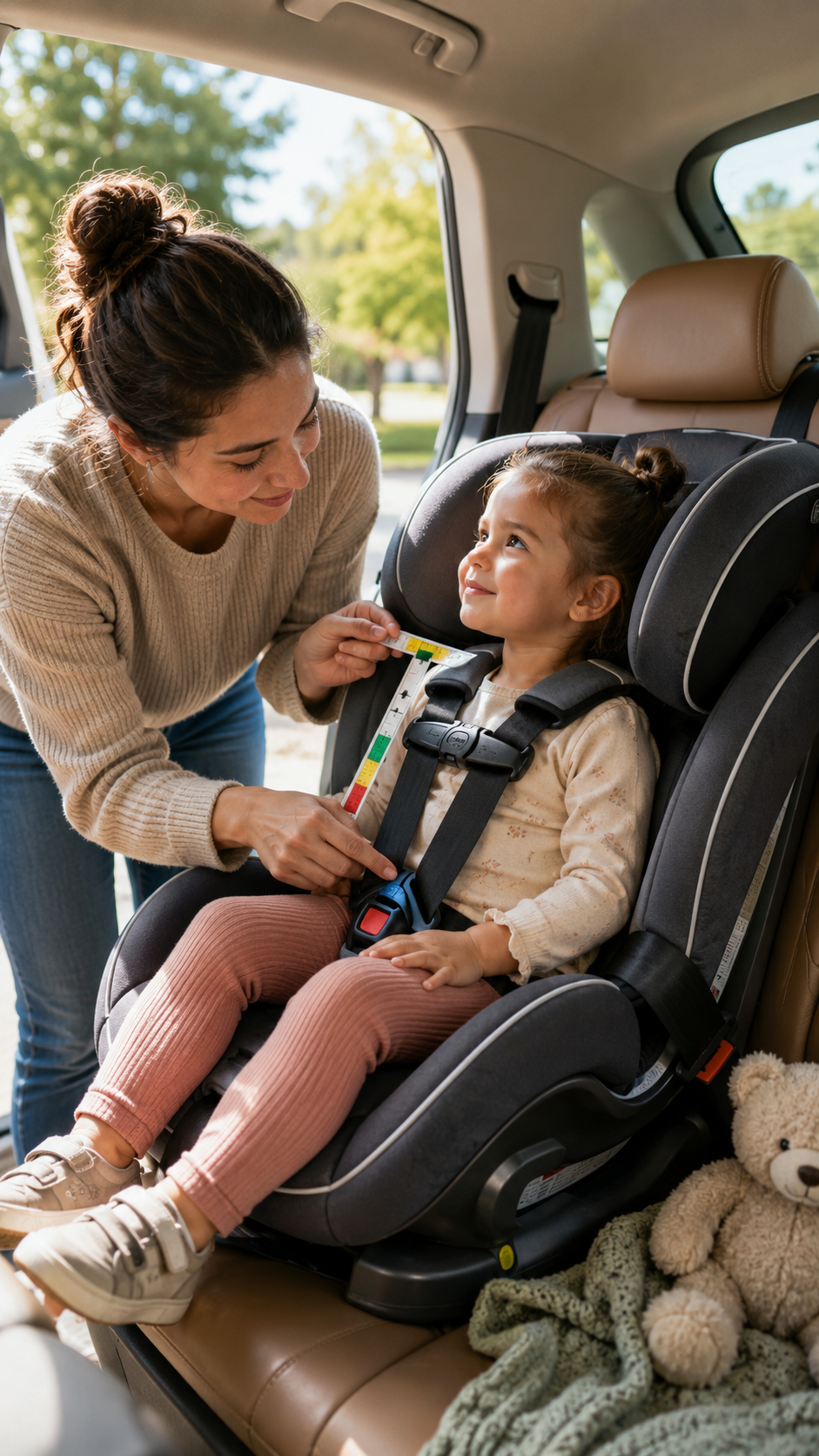

A car seat must fit your child’s height and weight to protect them properly. Learn why size limits matter, common mistakes parents make, and simple ways to choose and use the right seat.
Why Car Seat Fit Is More Than an Age Rule
Buying a car seat can feel overwhelming. There are infant seats, convertible seats, all-in-one seats, forward-facing seats, high-back boosters, backless boosters, latch systems, harness slots, recline angles, and weight limits printed in tiny text.
It is no wonder many parents look for the simplest answer: “What car seat should my child use at this age?”
Age matters, but it is not enough.
A child’s height and weight are just as important, and sometimes more important, when choosing and adjusting a car seat. Two children can be the same age and need different setups. One 4-year-old may still fit well in a forward-facing harness seat, while another may be close to the seat’s height limit. One 8-year-old may fit the vehicle seat belt properly, while another still needs a booster.
A car seat works best when it matches the child’s size, the vehicle, and the manufacturer’s instructions. When the fit is wrong, the seat may not position the harness or seat belt where it needs to be.
The goal is not to make car seat decisions feel stressful. The goal is to make them more practical. Once you know why height and weight matter, the labels and limits start to make more sense.
Why Height and Weight Limits Exist
Car seats are designed and tested for specific size ranges. That is why every seat has a minimum and maximum weight, and usually a height limit too.
Those limits are not suggestions. They tell you the range where the seat is meant to protect a child properly.
A child who is too small for a seat may not be held securely. The harness may sit in the wrong place. The child may slump or slide. A child who is too large for a seat may have shoulders above the allowed harness slots, the head may rise too high, or the seat may not manage crash forces as designed.
This is why “still fits in the seat” is not the same as “still fits safely.” A child can physically sit in a car seat while already being over the height or weight limit.
The manual matters. The label on the seat matters. Your child’s current measurements matter.
Why Moving Up Too Soon Can Be a Problem
Parents often feel pressure to move a child to the next stage. Babies look cramped in rear-facing seats. Toddlers complain. Older kids want to sit like their friends. A booster seems easier than a harness. A regular seat belt feels like a milestone.
But car seat stages are not meant to be rushed.
A rear-facing seat supports a young child’s head, neck, and spine differently than a forward-facing seat. A forward-facing harness keeps the child positioned in a way an adult seat belt cannot. A booster helps the vehicle seat belt sit correctly on a child who is not yet big enough for the belt alone.
Moving up too early may make the ride more convenient, but it can reduce protection.
A helpful mindset is this: do not move to the next stage when your child reaches the minimum. Move when your child outgrows the current stage according to the seat’s height or weight limits.
Rear-Facing Seats: Why Size Matters
Rear-facing seats are used for infants and young children. Many convertible car seats allow children to remain rear-facing beyond babyhood, depending on the seat’s limits.
Parents sometimes turn children forward-facing because their legs look bent. But bent legs alone do not mean the child has outgrown the seat. The key is the seat’s height and weight limit, plus the fit rules in the manual.
A rear-facing seat may be outgrown when the child reaches the maximum weight, exceeds the allowed height, or has too little space above the head according to the seat instructions.
That last detail is important. Some rear-facing seats require a certain amount of shell above the child’s head. If the child’s head is too close to the top, the seat may no longer be appropriate even if the weight limit has not been reached.
Because each model is different, always check the manual.
Forward-Facing Harness Seats: The Harness Has to Fit
Once a child has outgrown rear-facing limits, they may move to a forward-facing car seat with a harness and tether.
In this stage, height and weight still matter. The harness should sit correctly on the child’s shoulders. The child should be within the seat’s allowed weight range. The top tether should be used if the seat and vehicle allow it, because it helps reduce forward movement in a crash.
A forward-facing harness seat is not outgrown just because a child turns 4 or starts preschool. Many children can continue using a harness seat for several years, depending on the seat.
Watch for signs that the child has outgrown it:
The child is over the maximum weight limit.
The shoulders are above the highest allowed harness slot.
The tops of the ears are above the top of the car seat shell, depending on the manual.
The harness no longer fits snugly.
If any of these happen, it is time to check the seat instructions and move to the next appropriate option.
Booster Seats: Not Just for “Big Kids”
A booster seat is used after a child outgrows a forward-facing harness. It does not restrain the child with its own harness. Instead, it positions the vehicle’s lap-and-shoulder belt so it fits the child’s body correctly.
This is where height becomes especially important.
An adult seat belt is designed for adult bodies. On a smaller child, the lap belt may ride up on the belly, and the shoulder belt may cross the neck or face. A booster lifts the child so the belt sits in safer positions.
A proper booster fit usually means:
The lap belt lies low across the upper thighs, not the stomach.
The shoulder belt crosses the middle of the chest and shoulder, not the neck or face.
The child can sit upright for the entire ride.
The knees bend comfortably at the edge of the vehicle seat.
The child does not tuck the shoulder belt behind the back or under the arm.
A booster is not only about age. It is about whether the vehicle seat belt fits the child correctly without help.
Why the Regular Seat Belt May Not Fit Yet
Many kids are excited to stop using a booster. Parents may be ready too. Boosters take up space, move between cars, and can feel like one more thing to manage.
But the regular seat belt should fit the child, not just buckle.
A child may be legally old enough in some places to use a seat belt, but still not physically large enough for the best fit. That is why many safety experts use the “seat belt fit” test rather than age alone.
Ask these questions:
Can the child sit all the way back against the vehicle seat?
Do the child’s knees bend naturally at the edge of the seat?
Does the lap belt stay low across the hips or upper thighs?
Does the shoulder belt cross the middle of the shoulder and chest?
Can the child stay seated this way for the whole trip?
If the answer is no, the booster may still be needed.
Common Car Seat Fit Mistakes
Most car seat mistakes are not because parents do not care. They happen because children grow quickly, instructions are confusing, and life gets busy.
Choosing by Age Only
Age ranges on packaging can be helpful, but they are not enough. Always check height and weight limits.
A tall child may outgrow a seat by height before weight. A heavier child may reach the weight limit before height. Either one matters.
Turning Forward-Facing Too Soon
Many children can ride rear-facing longer than parents expect, especially in convertible seats with higher limits.
Do not turn the seat forward-facing just because the child’s second birthday passed or because their legs look bent. Check the seat’s actual limits.
Moving to a Booster Too Soon
A booster requires maturity. The child must sit correctly without leaning, twisting, slouching, or moving the belt out of position.
If a child cannot do that consistently, a harnessed seat may still be the better fit, as long as they are within the seat’s limits.
Letting the Harness Get Too Loose
A harness should be snug. Bulky coats, loose straps, or twisted harness webbing can affect the fit.
A simple check is the pinch test: after buckling and tightening, try to pinch the harness webbing at the shoulder. If you can pinch extra slack, it may be too loose.
Forgetting to Adjust as the Child Grows
Children can grow out of harness slots, headrest positions, and booster settings faster than expected. A seat that fit well six months ago may need adjustment now.
Warning Signs the Car Seat May Not Fit Anymore
A car seat may need adjustment or replacement for the next stage if you notice:
The child’s head is too close to the top of a rear-facing seat.
The child exceeds the stated height or weight limit.
The shoulders are above the highest usable harness slot for forward-facing.
The harness is difficult to buckle or tighten correctly.
The child’s ears are above the seat shell where the manual says they should not be.
The booster belt crosses the neck, face, or stomach.
The child constantly slouches to make the belt feel better.
These are signs to stop and check the manual, not to guess.
How to Check Your Child’s Car Seat Fit
A quick fit check can become part of your routine.
First, weigh and measure your child every few months, or whenever they seem to have had a growth spurt. You do not need exact medical-chart precision, but you do need a realistic height and weight.
Next, compare those numbers with the car seat label and manual. Look for rear-facing limits, forward-facing limits, booster limits, and harness height rules.
Then check the child sitting in the seat. Look at the harness position, chest clip placement, head support, and how the seat belt rests if using a booster.
Finally, check installation. A correctly chosen seat still needs to be installed correctly. The seat should not move more than allowed at the belt path, and the correct belt path should be used for the child’s mode.
If you are unsure, look for a certified Child Passenger Safety Technician or local car seat inspection event.
Do State Laws Decide the Best Seat?
State laws matter, and parents should follow them. But the law is usually the minimum requirement, not always the full best-practice answer for every child.
Car seat laws vary by state. Some focus on age. Some include height or weight. Some have different booster requirements.
A child may meet the legal minimum and still fit better in a booster or harness. That is why the best approach is to follow three things together: your state law, the car seat manual, and your child’s actual height and weight.
If you move between states or travel often, it is worth checking the rules where you drive.
What About Hand-Me-Down Car Seats?
A hand-me-down seat can be tempting, especially because car seats can be expensive. But be careful.
Before using a secondhand seat, make sure it has not expired, has not been in a crash, has all its parts, has the manual or available instructions, and has not been recalled.
Also check that the seat actually fits your child’s current height and weight.
A free seat is not a good deal if it is expired, damaged, missing labels, or no longer appropriate for your child’s size.
Practical Tips for Everyday Parents
Keep the car seat manual in the glove box or save a digital copy on your phone.
Write your child’s current height and weight in your notes app so you can check limits easily.
Recheck the harness and headrest after every growth spurt.
Avoid bulky coats under the harness. Use thin layers and place a blanket or coat over the buckled harness if needed.
Keep kids in the back seat at least through age 12.
Do not rush transitions. Max out each stage within the manufacturer’s limits before moving on.
Register your car seat so you can receive recall notices.
Ask for help from a certified technician if installation or fit feels confusing.
These habits are small, but they make car seat decisions much easier.
A Calm Takeaway for Safer Rides
Your child’s height and weight matter because a car seat is designed to protect a child within a specific size range. If the seat is too small, too large, or used in the wrong stage, the harness or seat belt may not sit where it should.
Age gives a general starting point, but size tells you whether the seat truly fits.
Keep your child in each stage as long as they fit within the manufacturer’s height and weight limits. Check the manual. Adjust the harness and headrest as your child grows. Use a booster until the vehicle seat belt fits properly without it. Follow state law, but remember that best fit may go beyond the legal minimum.
Car seat safety can feel complicated, but the heart of it is simple: the right seat, the right direction, the right fit, and the right installation.
A few regular checks can help every ride feel calmer, safer, and more confident.

Hi, I’m the creator and editor behind ZestyHabit. I research everyday safety, first aid, and practical wellness topics using official guidance and reliable public sources, then turn that information into clear, realistic steps for daily life.
My goal is to help readers make safer, better-informed choices at home and beyond.


