Airplane Emergency Landing Brace Position: How to Protect Yourself During Impact
Minjin Park
·
Learn the safest brace position for an airplane emergency landing, how to prepare your seat, protect your head and legs, and evacuate safely after impact.
An emergency landing announcement can turn an ordinary flight into an intensely frightening experience. You may hear unfamiliar sounds, see flight attendants moving quickly, or receive urgent instructions to tighten your seat belt and prepare for impact. In that moment, knowing what to do can help you remain focused.
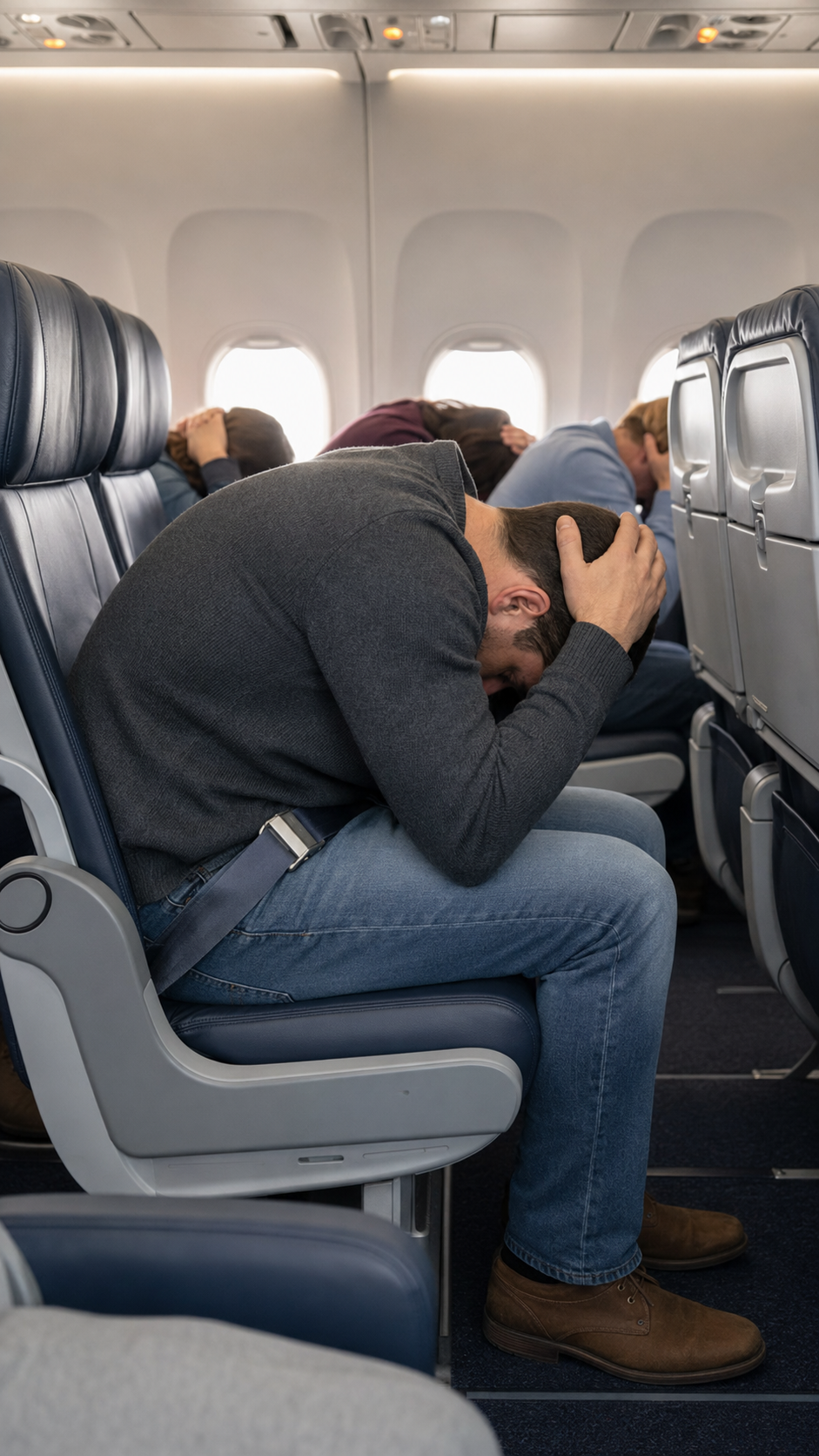
One of the most important actions a passenger can take is assuming the correct airplane emergency landing brace position. The brace position is designed to limit uncontrolled body movement and reduce the risk of striking nearby surfaces during a sudden deceleration.
However, there is no single position that works for every passenger or every airplane seat. The correct posture depends on factors such as the direction your seat faces, whether you have a lap belt or shoulder harness, the amount of space in front of you, and your physical condition.
Always follow the instructions given by the flight attendants and study the safety card at your specific seat. Those instructions are designed for the aircraft you are actually traveling on.
The brace position is a protective posture used before an anticipated impact, emergency landing, or crash landing. It places the body in a controlled position before the aircraft experiences sudden movement.
To reduce flailing of the arms, legs, and upper body
To reduce secondary impact with the seat, wall, bulkhead, or another surface
During a hard landing, the airplane may slow down much faster than a passenger’s body. A properly tightened seat belt restrains the pelvis, while the brace position helps control the head, torso, arms, and legs.
Bracing cannot prevent every possible injury, but it can help reduce violent movement and the distance your body travels before striking something.
First, Listen to the Flight Attendants
In a planned emergency landing, the crew may have several minutes to prepare the cabin. Flight attendants may explain the brace position, check seat belts, secure loose objects, and identify passengers who need assistance.
Listen carefully, even if the instructions differ from advice you have heard before. Aircraft interiors vary considerably. A brace position that is appropriate for a forward-facing economy seat may be wrong for an aft-facing business-class seat with a shoulder harness.
You may hear repeated commands such as:
“Brace! Brace!”
“Heads down! Stay down!”
“Grab your ankles!”
“Bend over!”
“Stay down!”
These commands are intentionally short and repetitive. During an unplanned emergency, there may not be time for a detailed explanation. Respond immediately and remain in position until the aircraft has stopped or the crew gives another command.
Prepare Your Seat Before Bracing
The brace position works best when the surrounding area has already been prepared. Follow the crew’s directions and complete these actions as quickly as possible:
Fasten and tighten your seat belt. Position the belt low across your hips, not high over your stomach. Pull the loose end until the belt is as snug as possible.
Return your seat to the upright position. A reclined seat may interfere with the passenger behind you and can make it harder for both of you to brace or evacuate.
Close and lock your tray table. A deployed tray creates a hard surface close to your abdomen and may block your movement.
Stow loose belongings. Laptops, tablets, bottles, books, and other objects can become projectiles or obstruct the aisle after impact.
Remove headphones if instructed. You need to hear commands clearly. Do not let cords or devices interfere with your movement.
Keep the floor and aisle clear. Bags should be fully under the seat or in an approved overhead compartment.
Locate the nearest exits. Count the rows between your seat and the exits in front of and behind you. Smoke or darkness could make the cabin difficult to see.
The FAA emphasizes that the seat belt should be worn as tightly and as low on the torso as possible in every brace position.
Brace Position for a Forward-Facing Seat With a Lap Belt
Most economy-class passengers sit in forward-facing seats equipped with a lap belt. The recommended position depends on how much space is available.
When You Have Enough Space to Bend Forward
If there is sufficient room between your seat and the one in front:
Keep your seat belt low and tight.
Place your feet back as far as possible.
Bend forward as far as you comfortably can.
Bring your chest toward your thighs.
Keep your head down with your face directed toward your lap.
Wrap your arms underneath your legs and behind your knees.
Do not turn your head sideways. Keeping the head face down helps maintain a more neutral and controlled position.
Your feet should remain firmly placed rather than extended into the aisle. Pulling them back can help reduce the risk of your lower legs striking or becoming trapped by the seat structure in front of you.
When There Is Not Enough Room to Fold Completely
In tightly spaced seating, it may be impossible to bring your chest all the way to your thighs. In that situation:
Tighten your seat belt low across your hips.
Move your feet back as far as possible.
Bend forward.
Place your head against the surface in front of you.
Keep your face directed downward.
Reach down and grasp your lower legs.
Current FAA guidance places the hands down near the lower legs instead of on the seat back. Research cited by the FAA found that this position reduced potentially harmful interaction between the arms and different types of seat backs.
Your airline’s safety card may show a specific variation for your seat. Use that illustration and the flight attendant’s instructions as your primary guide.
Brace Position for a Seat With a Shoulder Belt
Some premium-cabin, side-facing, oblique, or specialized seats have both a lap belt and a shoulder restraint. The forward-folded economy-seat position may not be appropriate when a shoulder harness is present.
For a forward-facing seat with a shoulder belt, FAA guidance generally recommends:
Sit upright against the seat back.
Tighten both the lap belt and shoulder restraint.
Lower your chin toward your chest.
Place your hands in your lap.
Keep your feet flat on the floor.
Bend your knees at approximately a 90-degree angle.
Do not release the shoulder harness so that you can bend forward. The restraint system is designed to help control your upper body while you remain against the seat.
Brace Position for an Aft-Facing Seat
Aft-facing seats point toward the rear of the aircraft. In a forward deceleration, the seat back may help distribute forces across the passenger’s back.
If you are in an aft-facing seat:
Sit upright and firmly against the seat back.
Rest your head against the headrest.
Keep the lap belt or harness tight.
Place your hands in your lap.
Keep your feet flat on the floor.
Position your knees at approximately a 90-degree angle.
Do not lean forward unless the crew or aircraft-specific safety card tells you to do so. The correct posture is based on the direction of your seat and its restraint system.
Should You Put Your Hands Behind Your Head?
Many people imagine a crash position with their fingers interlocked behind the neck. That is not the current general FAA recommendation for passengers in forward-facing seats.
Placing the hands behind the head may leave the arms less controlled and can expose the hands, wrists, or elbows to injury. For a standard forward-facing seat, current guidance generally directs passengers to place their arms beneath the legs or grasp the lower legs, depending on the available space.
Do not rely on an image remembered from a movie, an old poster, or another airline. Check the safety card for your seat and follow the crew’s commands.
Should You Use a Pillow or Blanket for Protection?
It may seem logical to place a pillow between your head and the seat in front, but FAA guidance advises against positioning pillows or blankets between your body and the surface against which you are bracing.
These soft items provide little useful impact absorption and may allow additional movement before the body reaches a solid surface. They can also fall into the aisle and create obstacles during an evacuation.
Stow the pillow or blanket unless the flight crew gives different instructions.
Brace Positions for Children and Infants
Children occupying their own passenger seats should generally use the same aircraft-specific brace position as adults when they are large enough to do so.
A child secured in an approved child restraint system should remain properly restrained and be positioned according to the restraint manufacturer’s instructions. The FAA advises that the safest place for a young child is in an approved child safety restraint system installed in a separate aircraft seat, rather than being held on an adult’s lap.
If an adult is holding a lap infant, the adult should follow the flight attendant’s instructions carefully. FAA brace guidance says the adult should provide even support to the infant’s head, neck, and body and lean over the infant to reduce uncontrolled movement. Procedures may vary by airline and aircraft, so parents should ask the crew for an individual briefing before takeoff.
Never place an infant on the floor, beneath a seat, or inside a loose carrier during an emergency landing.
Pregnancy, Limited Mobility, and Other Physical Needs
A pregnant passenger, someone with limited mobility, or a passenger who cannot bend fully may need an alternative brace position. Trying to force the body into an uncomfortable posture could create another problem.
If you may need assistance:
Tell the flight attendant as early as possible.
Ask which brace position is appropriate for your seat.
Keep the seat belt low across the hips and below the abdomen.
Ask how a companion should assist you.
Discuss how you will reach an exit if an evacuation becomes necessary.
Do not wait until an emergency announcement to request guidance. A short conversation during boarding gives the crew time to consider your seat, mobility, and available assistance.
What If There Is No Time to Prepare?
Some emergencies develop without warning. You may hear a sudden crew command or realize that the aircraft is making an unusually hard descent.
If you hear “Brace,” “Heads down,” or a similar command:
Tighten your seat belt immediately if possible.
Move your feet back.
Bend forward if you are in a standard forward-facing seat.
Put your head down.
Control your arms by grasping your lower legs or wrapping them beneath your legs.
Stay in position.
Do not look out the window to see what is happening. Do not attempt to retrieve your phone, shoes, passport, or bag. Protecting your head and remaining restrained are the priorities.
The FAA notes that accident interviews have found passengers who attempted some form of bracing often experienced fewer injuries than those who made no attempt at all.
Stay Braced Until the Aircraft Stops
The first contact with the runway, ground, or water may not be the only impact. The aircraft could bounce, turn, slide, or strike another object.
Remain in the brace position until the airplane has come to a complete stop or the flight attendants tell you to move. Lifting your head immediately after the first impact may expose you to another sudden movement.
Once the aircraft stops, listen for commands. The crew may order an immediate evacuation, tell passengers to remain seated, or redirect everyone away from an unusable exit.
How to Evacuate Safely After an Emergency Landing
If the crew orders an evacuation, act quickly but do not push.
Unfasten the seat belt by lifting the buckle flap. This action differs from releasing a car seat belt, so mentally review it before every flight.
Then:
Leave all carry-on baggage behind.
Follow illuminated floor markings if visibility is poor.
Move toward the nearest usable exit, which may be behind you.
Listen for crew commands because some exits may be blocked by fire, water, or debris.
Remove sharp high-heeled shoes before using an evacuation slide if instructed.
Jump onto the slide rather than sitting at its edge.
Move well away from the aircraft after reaching the ground.
Never return for personal belongings.
The NTSB’s study of emergency airplane evacuations highlights the value of advance briefings and reviewing brace positions before an anticipated emergency. It also reinforces that preparation can reduce confusion when passengers must evacuate quickly.
During a water landing, put on a life vest when instructed, but do not inflate it inside the aircraft. An inflated vest can make it difficult to move through the cabin or escape if water enters.
Common Brace-Position Mistakes
Avoid these common errors:
Wearing the seat belt loosely or across the stomach
Extending the legs forward instead of pulling the feet back
Bracing against a tray table that has not been stowed
Placing the hands on the seat back without checking current instructions
Putting the hands behind the neck
Using a pillow as an impact cushion
Copying another passenger in a different type of seat
Leaving the brace position after the first jolt
Taking luggage during an evacuation
The correct position is not about making yourself as small as possible. It is about securing the body, controlling the limbs, and reducing the distance the head and torso can travel.
A Simple Safety Habit for Every Flight
You do not need to spend the entire flight worrying about an emergency. A 30-second review after sitting down is enough to improve your readiness.
Fasten the seat belt low and snug, look at the brace-position illustration on the safety card, locate two exits, count the rows to them, and notice how your buckle opens. If your seat has an unfamiliar shoulder harness or faces a different direction, pay particular attention to the aircraft-specific instructions.
In an actual emergency, the safest brace position is the one shown for your seat and directed by the trained cabin crew. Tighten your restraint, control your head and limbs, stay down through the entire impact sequence, and leave everything behind if evacuation is ordered.
Do you usually read the safety card and locate your nearest exit when you board a plane, or is that a habit you plan to start on your next flight? Share your thoughts or your best air-travel safety tip in the comments below.
Hi, I’m the creator and editor behind ZestyHabit. I research everyday safety, first aid, and practical wellness topics using official guidance and reliable public sources, then turn that information into clear, realistic steps for daily life.
My goal is to help readers make safer, better-informed choices at home and beyond.