Why Small LEGO Pieces Can Become a Choking Hazard: Simple Safety Tips for Everyday Homes
Minjin Park
·
Small LEGO pieces can be fun for older kids but risky around babies and toddlers. Learn why tiny bricks matter, common mistakes to avoid, and simple ways to keep play areas safer.
LEGO bricks are a classic part of childhood. They encourage creativity, patience, problem-solving, and hours of quiet building. For many families, a bin of colorful bricks is almost a household staple.
But if you have babies, toddlers, or young children in the home, small LEGO pieces need a little extra attention.
The concern is not that LEGO toys are “bad.” For the right age group, they can be wonderful. The issue is size. Tiny pieces can fit into a young child’s mouth, and young children explore the world by touching, grabbing, and mouthing objects.
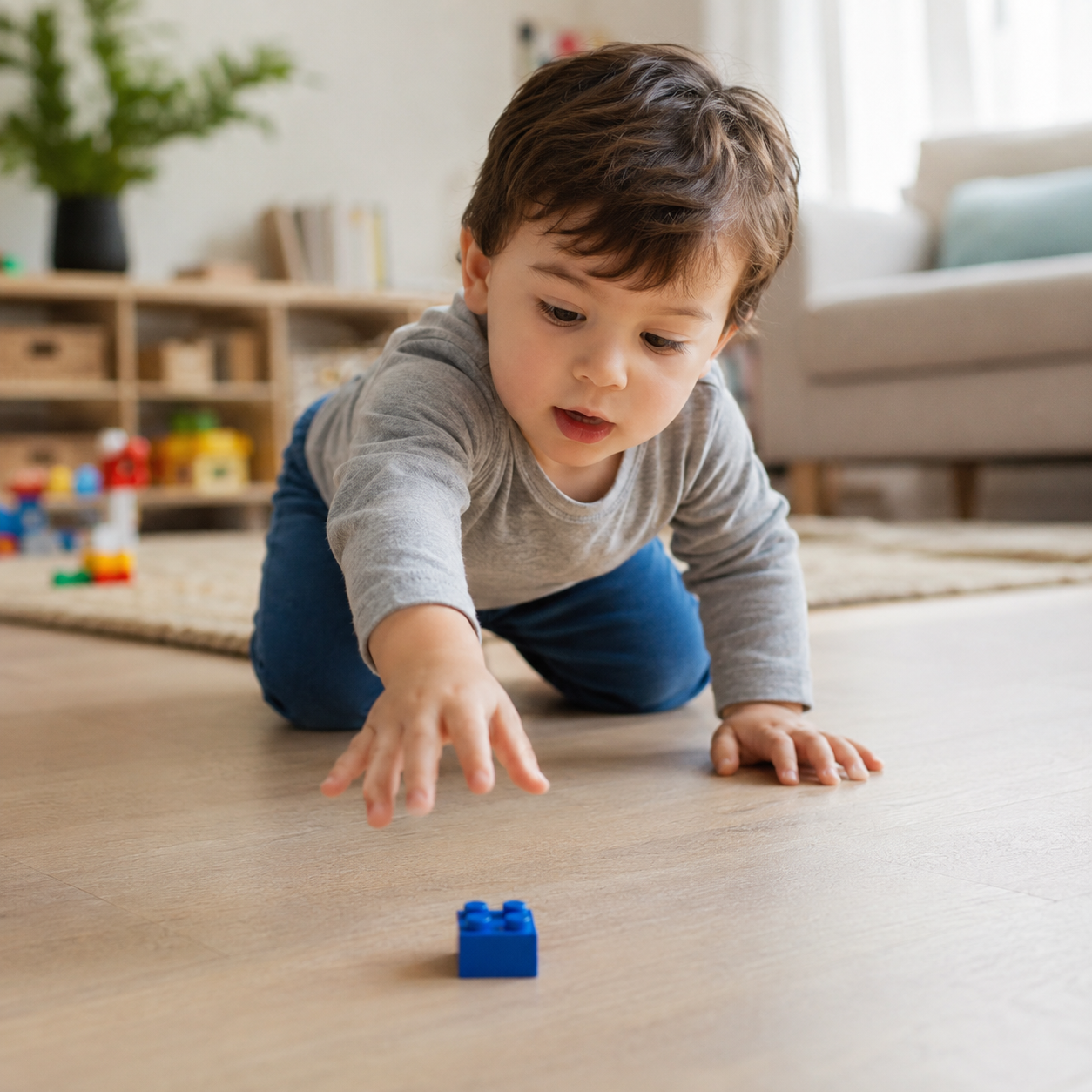
A small brick under the couch may not look like a big deal to an adult. To a crawling baby, it may look interesting. To a toddler, it may look like something to taste, chew, or hide in their mouth.
That is why LEGO safety is less about fear and more about habits: age-appropriate toys, good cleanup routines, separate play zones, and a quick floor check before younger children enter the room.
Small toy pieces can become a choking hazard if they block the airway. A baby or toddler may not be able to cough strongly enough to clear the object. They may also panic, become quiet, or be unable to communicate what happened.
Small LEGO pieces can be especially tricky because they are colorful, lightweight, and easy to scatter. A single tiny round piece, wheel, flower, tile, or connector can roll under furniture and stay hidden until a younger child finds it later.
The smaller the child, the more cautious you need to be.
The Sibling Problem: When Toys for Big Kids Meet Little Kids
Many choking hazards happen in homes with children of different ages.
An older child may be perfectly ready for small building bricks. They can follow instructions, understand warnings, and keep pieces out of their mouth. But a younger sibling may not be ready at all.
This creates a common household challenge.
A 7-year-old builds a spaceship in the living room. A toddler crawls nearby. A few tiny pieces fall onto the rug. Later, the older child walks away, and the toddler finds the pieces.
No one meant to create a risky situation. It just happens when big-kid toys and baby-safe spaces overlap.
This is why families often need a “small parts rule,” not just a “toy rule.” Any toy with tiny pieces should be treated differently when babies or toddlers are present.
Common LEGO Pieces That Are Easy to Miss
Some LEGO pieces are easy to spot. Large bricks, baseplates, and bigger creations are obvious on the floor.
The smaller pieces are different.
Tiny round studs, smooth tiles, mini figure accessories, small wheels, flowers, food pieces, cones, clips, and little decorative parts can disappear into rugs, couch cushions, toy bins, and under furniture.
Mini figure accessories can be especially easy to overlook. A tiny cup, helmet piece, sword, tool, or hairpiece may be fascinating to a young child.
Even if a set is stored in a box, loose pieces often escape during play. One missing piece may not bother an older child, but it can matter if there is a baby in the home.
Age Labels Matter
Toy age labels are not only about whether a child is smart enough to build the set. They are also about safety, size, and small parts.
A LEGO set marked for older children may include tiny accessories or pieces that are not suitable for younger children. Even if a toddler likes the colors or wants to copy an older sibling, that does not mean the toy is appropriate for them.
For younger children, choose larger building toys designed for their age range. Larger bricks are easier for small hands to hold and less likely to fit fully in the mouth.
It can help to explain this to older siblings too. Instead of saying, “You can’t play with LEGO,” try saying, “These pieces are for your table only because they are too small for the baby.”
That keeps the focus on responsibility, not punishment.
Common Mistakes Parents and Caregivers Make
Most LEGO-related safety mistakes are ordinary household habits. They are easy to fix once you notice them.
Letting Small Pieces Spread Across Shared Spaces
The living room floor may feel like a natural play area, but it is also where babies crawl, toddlers tumble, and pets roam.
If small LEGO pieces are used in shared spaces, they need a strong cleanup routine afterward.
Assuming “Just One Piece” Is Harmless
A single tiny piece can still be a choking hazard. Small parts do not become safer because there are only one or two of them.
Storing Big-Kid LEGO in Open Bins
Open bins are convenient, but toddlers can reach into them easily. A curious child may grab pieces before an adult notices.
Use containers with secure lids, high shelves, or storage areas that younger children cannot access.
Forgetting About Couch Cushions and Rugs
Small pieces love to hide. They fall between cushions, stick in thick rugs, and roll under coffee tables.
A room can look clean while still holding a few hidden pieces.
Letting Toddlers “Join In” With Older Sets
It may seem sweet to let a younger child sit with an older sibling during building time. But if the set includes small pieces, the younger child needs a safer alternative.
Give toddlers larger blocks nearby so they can participate without handling tiny parts.
How to Create a Safer LEGO Play Zone
A clear play zone makes cleanup easier and keeps small pieces contained.
Use a Table Instead of the Floor
A table is one of the simplest ways to keep small pieces away from babies and toddlers. It also helps older kids build without pieces spreading across the whole room.
If the table is low enough for a toddler to reach, use a higher table or move playtime to a gated room.
Add a Play Mat or Tray
A mat, tray, or shallow bin lid can help contain loose pieces. When playtime ends, the mat can be folded or the tray can be carried to storage.
This is especially helpful for sets with tiny accessories.
Choose a Room With a Door
If possible, keep small LEGO play in a bedroom, office, or playroom with a door. A door makes it easier to separate big-kid toys from baby-safe areas.
Set a Cleanup Rule Before Play Starts
Cleanup works better when it is expected from the beginning. Try a simple rule: “Small pieces stay at the table, and we check the floor before we leave.”
Older children are more likely to follow a routine when it is clear and consistent.
A Simple Floor Check Routine
A quick floor check can become a normal part of the day.
Start by looking under the table and chairs. Then check the rug, couch cushions, and nearby corners. Look under low furniture with a flashlight if the room was used for building.
You can also make cleanup more fun for older kids. Ask them to do a “tiny piece hunt” before the baby comes into the room. Give them a small container and let them collect anything smaller than a large brick.
This turns safety into responsibility instead of nagging.
Storage Tips That Actually Work
Good storage does not have to look perfect. It just needs to keep small pieces away from younger children.
Use lidded bins instead of open baskets.
Store tiny specialty pieces in smaller containers inside a larger bin.
Keep LEGO storage on high shelves if toddlers are in the home.
Use zipper pouches for mini figure accessories.
Avoid storing small pieces in bedrooms where babies or toddlers nap or crawl.
Keep current projects on a high shelf, table, or covered tray.
If a child is building a set over several days, do not leave the pieces spread across the floor overnight. Move the project to a safe place before younger children enter the space.
What About LEGO at Grandparents’ Homes?
Grandparents’ homes can be tricky because toys from different ages may be stored together.
A box of older toys in a closet might include small bricks, marbles, tiny game pieces, batteries, craft beads, or broken toy parts. These may not be noticed until a toddler finds them.
Before young children visit, it helps to do a quick toy check. Put older-child toys in a separate room, high cabinet, or closed container.
This is not about making anyone feel bad. Toy safety standards and family routines change over time. A few minutes of checking can prevent stress during a visit.
Warning Signs During Playtime
While this article is mostly about prevention, caregivers should still know when to pay attention.
If a child suddenly coughs, gags, becomes quiet, has trouble breathing, cannot cry or speak, or appears distressed while playing with small objects, treat it as urgent and seek emergency help.
Do not wait to see if it passes if the child seems unable to breathe or communicate normally.
For everyday prevention, the better goal is to keep small pieces away from children who may put them in their mouths in the first place.
Teaching Older Kids Without Scaring Them
Older siblings can be helpful partners in toy safety. The key is to explain the rule in a calm way.
You might say:
“These tiny pieces are safe for you because you know how to play with them. But they are not safe for the baby, because babies put things in their mouths.”
Or:
“Your LEGO table is your big-kid space. When you are done, we need to check the floor so the toddler does not find a tiny piece.”
This helps older kids feel trusted rather than blamed.
You can also give them their own storage box or building tray. When children have a clear place for their toys, cleanup becomes easier.
When to Choose Larger Building Toys Instead
For toddlers and younger preschoolers, larger building blocks are usually a better choice. They still offer stacking, sorting, colors, creativity, and imaginative play, but with pieces designed for younger children.
If your toddler wants to copy an older sibling, give them a “little builder” bin with age-appropriate blocks. They can build alongside the older child without touching tiny pieces.
This can reduce arguments too. The older child keeps their small pieces safe, and the younger child still feels included.
A Calm Takeaway for Everyday Homes
Small LEGO pieces can become a choking hazard because they are tiny, colorful, easy to scatter, and tempting for young children to put in their mouths. The risk is highest when older-child toys end up in baby and toddler spaces.
The solution is not to get rid of LEGO. It is to use it in the right place, for the right age, with the right cleanup habits.
Check age labels. Keep small pieces away from children under the recommended age. Create a separate building zone. Store tiny parts in lidded containers. Check floors, rugs, and couch cushions after play. Give younger children larger blocks so they can join in safely.
A few simple routines can make a big difference. LEGO play can stay creative, fun, and exciting — while your home stays a little safer for the smallest people in it.
Hi, I’m the creator and editor behind ZestyHabit. I research everyday safety, first aid, and practical wellness topics using official guidance and reliable public sources, then turn that information into clear, realistic steps for daily life.
My goal is to help readers make safer, better-informed choices at home and beyond.