
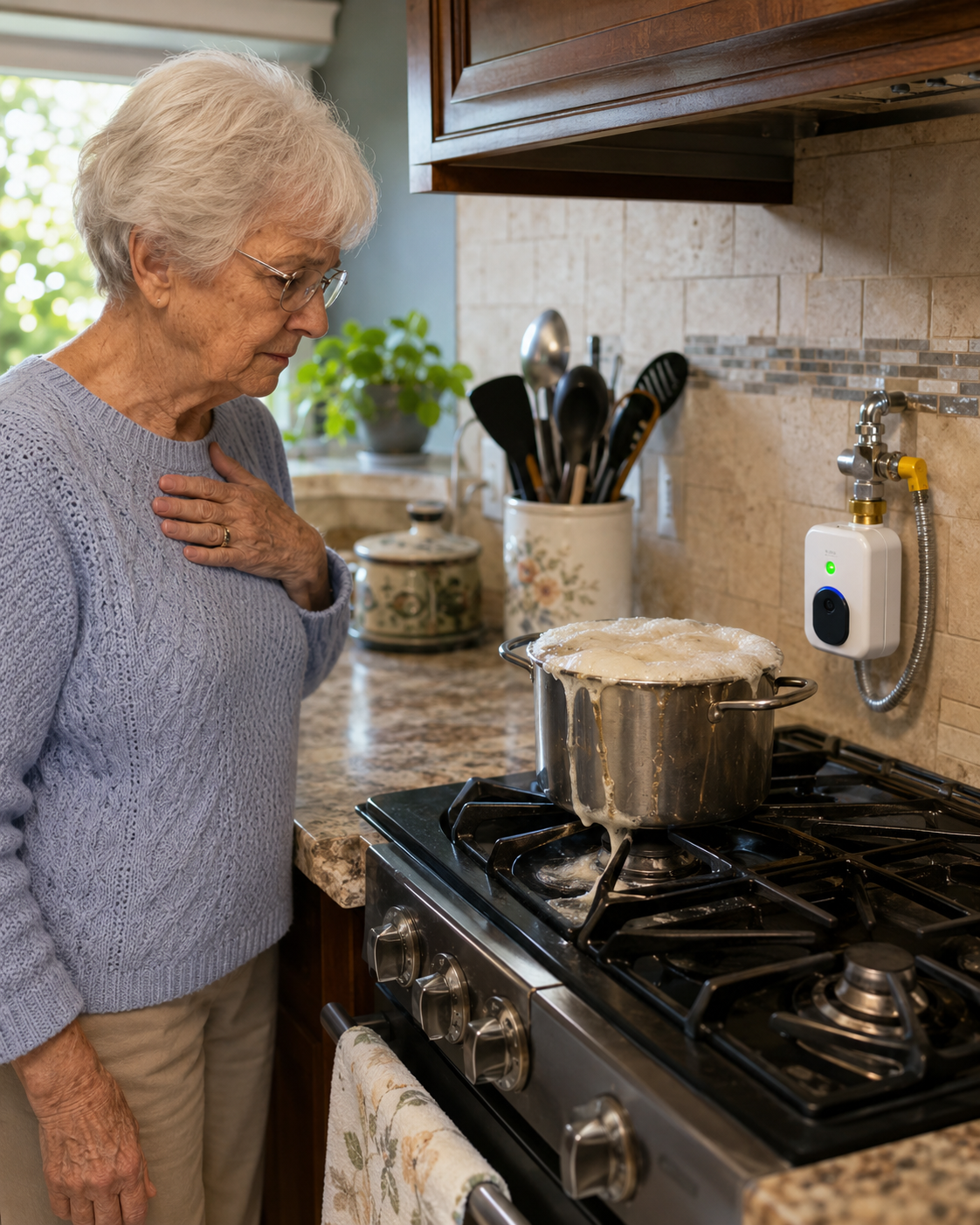
Automatic gas shutoff devices can add an extra layer of safety for older adults who cook at home. Learn how they work, why they help, and what families should know.

Why Gas Safety Matters More in Aging Households
For many older adults, cooking at home is part of daily independence. A familiar gas stove can make it easier to prepare tea, soup, eggs, or a simple dinner without relying on takeout or other people. That sense of routine matters.
At the same time, small cooking mistakes can become more likely with age. Someone may turn on a burner and get distracted by a phone call. A pot may boil over. A person may think they turned the knob all the way off, only to leave it slightly open. These are not signs that someone is careless. They are ordinary human mistakes that can happen to anyone.
For older adults, especially those living alone, those small mistakes can be harder for someone else to notice quickly.
That is where an automatic gas shutoff device can be helpful. It is not a replacement for safe cooking habits, smoke alarms, carbon monoxide alarms, or regular appliance maintenance. But it can add a practical layer of protection in the background.
For families who worry about an aging parent, grandparent, neighbor, or spouse using a gas stove, this type of device can provide peace of mind without taking away independence.
What Is an Automatic Gas Shutoff Device?
An automatic gas shutoff device is designed to stop the flow of gas under certain conditions. Depending on the model, it may shut off gas after a set amount of time, when no movement is detected, when abnormal use is sensed, or when it is connected to other safety sensors.
Some devices are simple timer-based shutoffs. For example, the stove may only stay on for a chosen amount of time before gas flow is automatically stopped.
Other systems may include motion sensors, temperature sensors, smart controls, or alerts that notify a family member or caregiver. Some are installed directly on the gas line, while others work with stove knobs or appliance controls.
The basic purpose is simple: if the stove is left on unintentionally, the device helps reduce the chance of gas continuing to flow unnoticed.
Why These Devices Can Be Especially Helpful for Seniors
Older adults are not all the same. Many seniors cook safely every day and do not need extra support. But for some households, small changes in memory, vision, mobility, hearing, or reaction time can make cooking less predictable.
An automatic shutoff device can help bridge that gap.
It Supports Independence Without Constant Supervision
One of the hardest conversations families face is whether an older loved one should keep cooking. Food is personal. Cooking is tied to dignity, routine, culture, and independence.
Telling someone, “You should not use the stove anymore,” can feel harsh, especially if they are still mostly capable.
An automatic gas shutoff device may offer a middle ground. It allows the person to keep using a familiar appliance while reducing the risk from forgotten burners or gas left on too long.
It is not about treating older adults like children. It is about making the home environment more forgiving.
It Helps When Distractions Happen
Distractions are one of the biggest causes of cooking-related mistakes.
Someone may start heating soup and then answer the door. They may go to the living room to take a call. They may sit down for “just a minute” and lose track of time.
This can happen to anyone, but it becomes more concerning when the person has slower mobility, mild forgetfulness, fatigue, or a habit of multitasking.
A shutoff device can help if the stove is forgotten after one of these everyday interruptions.
It Can Reduce Worry for Family Members
Adult children and caregivers often worry quietly. They may wonder whether Mom turned off the stove. They may call to check in, stop by more often than needed, or feel nervous when their loved one cooks alone.
An automatic gas shutoff device does not remove every risk, but it can reduce one major worry.
For long-distance family members, some smart models may also provide alerts or status updates. Even without smart features, a timer-based shutoff can be reassuring because it creates a built-in stopping point.
It Helps During Routine Changes
Older adults often do well with familiar routines. But problems can appear when the routine changes.
Maybe they are recovering from an illness. Maybe they recently moved. Maybe a spouse who used to handle cooking has passed away. Maybe new medication causes drowsiness. Maybe they are simply more tired than usual.
During these transition periods, a home safety upgrade can be very helpful. An automatic gas shutoff device can act as a quiet backup while the person adjusts.
Common Situations Where a Shutoff Device May Help
Automatic gas shutoff devices are most useful in everyday situations where a burner may accidentally stay on.
Boiling Water and Walking Away
Boiling water seems harmless, but it is easy to forget. A person may put a kettle or pot on the stove, then leave the kitchen.
If the water boils away, the pot can overheat. If the burner remains on afterward, the risk increases.
A timer-based shutoff may stop the gas flow after a set period, helping prevent the burner from staying on indefinitely.
Cooking Soup or Stew for a Long Time
Long cooking times can be tricky. Many people simmer soup, beans, sauces, or stews and then go about other tasks.
If the person forgets to check the pot, food may burn, smoke may build up, or the flame may behave unpredictably if liquid spills over.
A shutoff device can encourage safer time limits and help prevent the stove from staying on too long.
Accidentally Bumping a Stove Knob
Some gas stove knobs turn easily. A hip, elbow, cleaning cloth, pet, or child may bump a knob without anyone noticing.
In a senior household, this can be especially concerning if the person has reduced smell, hearing, or vision.
A shutoff system cannot fix every knob-related problem, but it can be part of a broader safety plan. Stove knob covers, clear markings, and keeping the area uncluttered may also help.
Thinking the Burner Is Off When It Is Not
Sometimes the flame looks low or is hidden under a pot. A person may believe the burner is off because they turned the knob partway, but gas may still be flowing.
This can happen when knob labels are worn, lighting is poor, or the person has vision changes.
Clear labels and better lighting help, but automatic shutoff adds another layer of backup.
Signs a Household May Benefit from Extra Gas Stove Safety
Not every home needs an automatic shutoff device. But certain warning signs suggest it may be worth considering.
Burned Pots or Frequent Boil-Overs
If pots are often scorched, food burns regularly, or water frequently boils over, it may be a sign that the stove is being left unattended too often.
One burned pot does not mean there is a serious problem. But repeated incidents are worth paying attention to.
Family Members Often Need to Remind Someone
If loved ones are regularly saying, “Did you turn off the stove?” or “Please don’t leave the kitchen while cooking,” that may be a sign that reminders alone are not enough.
A safety device can reduce the need for constant checking and nagging.
The Person Lives Alone
Living alone does not automatically make cooking unsafe. Many seniors live independently and cook responsibly.
But if a mistake happens, there may not be another person nearby to notice quickly. For older adults who live alone and use a gas stove daily, an automatic shutoff device may be a sensible safety upgrade.
Smell or Vision Has Changed
Gas leaks are often noticed by smell, but not everyone detects odors well. Some older adults have reduced sense of smell. Others may have vision changes that make it harder to see whether a flame is on.
If smell or vision is not as reliable as it used to be, extra safeguards become more valuable.
Practical Benefits Beyond Emergency Prevention
Automatic gas shutoff devices are often discussed only in terms of preventing serious accidents. But their everyday benefits may be just as important.
They Make Cooking Less Stressful
When someone knows there is a backup system in place, cooking can feel calmer. Family members may also feel less anxious.
Instead of turning every meal into a safety concern, the device becomes part of the home’s normal setup.
They Encourage Better Cooking Habits
Some timer-based devices make users more aware of how long the stove has been on. This can gently encourage safer routines, such as staying in the kitchen while cooking or setting a timer.
The goal is not to rely completely on the device. The goal is to combine it with better habits.
They Can Delay the Need for Bigger Changes
For some families, a shutoff device may help an older adult continue cooking safely for longer. That can be meaningful.
Instead of immediately removing stove access or switching all meals to prepared food, families may be able to make gradual changes.
Of course, if cooking becomes clearly unsafe despite support, larger adjustments may still be needed. But for many homes, small safety tools can make a real difference.
Common Mistakes When Using Gas Shutoff Devices
Like any safety product, an automatic gas shutoff device works best when used correctly.
Treating It as a Complete Solution
The biggest mistake is assuming the device removes all risk. It does not.
People should still stay nearby while cooking, keep flammable items away from the stove, use timers, maintain smoke and carbon monoxide alarms, and check that burners are turned off after use.
The device is a backup, not a substitute for attention.
Choosing the Wrong Type
Different households need different features. A simple timer may work well for someone who mostly heats tea or soup. A more advanced system may be better for someone who often forgets the stove entirely.
Before buying, think about the actual problem you are trying to solve. Is the issue forgetting burners? Leaving food unattended? Bumping knobs? Cooking too long? Choosing based on real habits makes the device more useful.
Poor Installation
Some gas shutoff devices may require professional installation, especially if they connect to a gas line. A poorly installed device can create its own safety problems.
Follow the manufacturer’s instructions and use qualified help when needed. This is one area where guessing is not worth it.
Not Explaining It to the Person Using It
If the device is installed in an older adult’s home, make sure they understand what it does.
A person may feel confused or frustrated if the stove suddenly stops working and no one explained why. Keep the explanation simple: “This helps turn the gas off if the stove is left on too long.”
The more comfortable the person feels with the device, the more likely they are to use the stove safely.
Simple Gas Safety Habits for Older Adults
An automatic shutoff device works best when paired with simple daily habits.
Stay in the Kitchen While Cooking
For quick cooking tasks, staying in the kitchen is one of the safest habits. If something needs to simmer, set a timer and check it regularly.
A timer on a phone, microwave, or countertop timer can help.
Keep the Stove Area Clear
Dish towels, paper towels, mail, plastic bags, oven mitts, and food packaging should stay away from burners.
A clear stove area reduces the chance of something catching heat or blocking the view of the flame.
Use Front Burners Carefully
Front burners are easier to reach, but they may also be easier to bump. Back burners may be safer in some homes, especially if children or pets visit.
The best choice depends on the person’s reach, balance, and comfort.
Improve Lighting Around the Stove
Good lighting makes it easier to see burner flames, knob positions, spills, and pot handles.
If the kitchen feels dim, consider brighter bulbs or under-cabinet lighting.
Make Knob Positions Easy to Read
Worn or hard-to-see knob markings can cause confusion. Large-print labels, contrast stickers, or replacement knobs may help.
The goal is simple: make “on” and “off” easy to recognize at a glance.
How Families Can Talk About Stove Safety Respectfully
Gas stove safety can be a sensitive topic. Older adults may feel embarrassed, criticized, or afraid of losing independence.
The conversation matters.
Instead of saying, “You’re becoming unsafe,” try focusing on the home environment.
You might say, “I know you’re careful, but I’d feel better if there were a backup shutoff, just like having smoke alarms.”
Or, “This is not because you can’t cook. It’s just an extra safety layer in case the phone rings or something distracts you.”
Respect goes a long way. Many people are more open to safety changes when they do not feel judged.
It can also help to involve the older adult in choosing the device. Let them see how it works, ask questions, and decide where reminders or controls should go.
What to Look for When Considering a Device
Before choosing an automatic gas shutoff device, review a few practical details.
Compatibility
Not every device works with every stove or gas setup. Check whether it is designed for natural gas, propane, a specific appliance type, or a particular installation style.
Timer Settings
Look for settings that match the person’s cooking habits. A very short timer may be annoying. A very long timer may not solve the problem.
Some devices allow adjustable time limits, which can be helpful.
Ease of Use
The controls should be easy to understand. Small buttons, confusing menus, or hard-to-read displays may not be ideal for older adults.
Simple is often better.
Alerts and Notifications
Some models provide sounds, lights, or app alerts. These may be useful, but they should not be overwhelming.
For someone who does not use a smartphone, a basic local alert may be more practical than an app-based system.
Installation Requirements
Check whether the device can be installed by the homeowner or whether a professional is recommended. When gas lines are involved, safety and proper installation should come first.
Final Thoughts: A Helpful Backup for Everyday Peace of Mind
Automatic gas shutoff devices can be a smart safety upgrade for older adults who use gas stoves at home. They are especially helpful when forgetfulness, distractions, reduced smell, poor vision, or living alone makes cooking a little more concerning.
They do not replace careful habits. People should still stay nearby while cooking, keep the stove area clear, use timers, and maintain working smoke and carbon monoxide alarms.
But as part of a larger home safety plan, an automatic gas shutoff device can make daily cooking more manageable. It can help older adults keep their independence while giving family members a little more peace of mind.
The best safety tools are often the quiet ones. They do not make life feel smaller. They simply make everyday routines a bit more forgiving.

Hi, I’m the creator and editor behind ZestyHabit. I research everyday safety, first aid, and practical wellness topics using official guidance and reliable public sources, then turn that information into clear, realistic steps for daily life.
My goal is to help readers make safer, better-informed choices at home and beyond.


[…] people live in a home for years without knowing where the gas shutoff valve is. They may only find it when moving the stove, cleaning behind it, or dealing with a […]