Why You Should Think “Tsunami” If You Feel an Earthquake Near the Coast
Minjin Park
·
If you feel an earthquake while near the ocean, it may be a natural warning sign of a possible tsunami. Learn why coastal earthquakes matter, what signs to watch for, and how to respond calmly.
If you live near the coast, visit beach towns, go fishing, surf, camp near the water, or take family vacations by the ocean, earthquakes may not be the first thing on your mind. Most people think about waves, tides, weather, sunscreen, parking, or where to eat after a beach day.
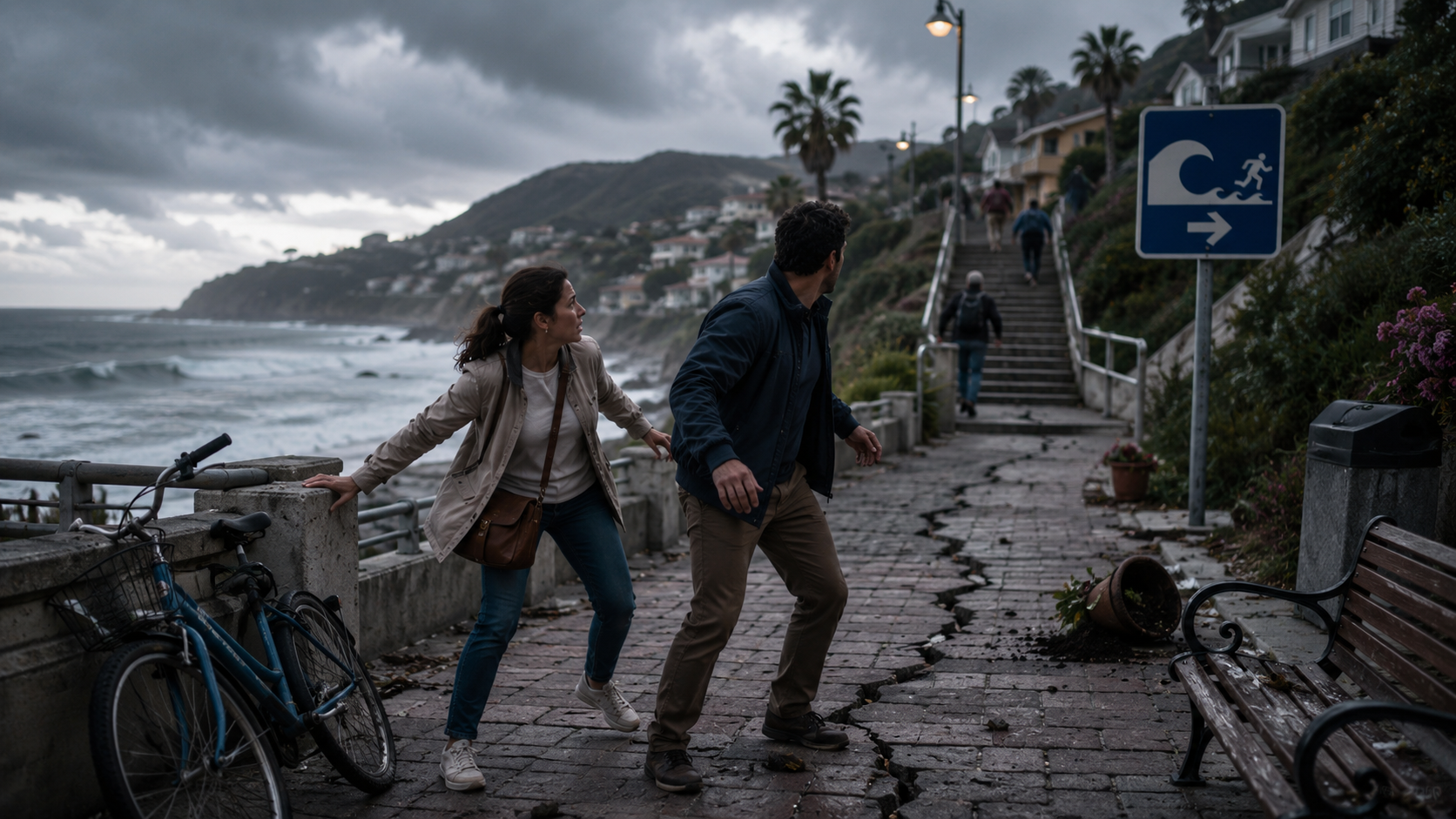
But in some coastal areas, feeling an earthquake is more than a shaking event. It can also be a natural warning sign that a tsunami may be possible.
A tsunami is not just a big wave like the kind surfers chase. It is a series of powerful ocean waves usually caused by sudden movement under the sea, often from an earthquake. These waves can travel across the ocean and reach shore with strong, fast-moving water.
The tricky part is that a tsunami does not always arrive with dramatic movie-like warning signs. Sometimes the first clue is the earthquake itself. If the ground shakes strongly or for a long time near the coast, that shaking may be your signal to move away from the water and toward higher ground.
This does not mean every coastal earthquake causes a tsunami. Many do not. But when you are close to the ocean, it is smart to treat strong or long shaking as a reason to pause, look around, and take the possibility seriously.
Why Earthquakes Can Cause Tsunamis
The Ocean Floor Can Move Suddenly
Many tsunamis begin when an earthquake shifts part of the ocean floor. If the seafloor suddenly lifts or drops, it can push a large amount of water out of place. That movement spreads outward as waves.
In deep water, tsunami waves may not look tall. Boats far offshore might barely notice them. But as the waves move into shallow coastal water, they can slow down, rise, and push inland with surprising force.
That is why the shaking you feel on land can matter. If the earthquake happened offshore or near a coastal fault, it may have disturbed the ocean enough to create a tsunami.
Local Tsunamis Can Arrive Quickly
Some tsunamis travel from far away, giving officials time to issue warnings. Others are local, meaning the source is nearby. Local tsunamis can arrive much faster.
In a local event, you may not have time to wait for a phone alert, siren, news report, or official announcement. The earthquake itself may be the warning.
This is especially important for people on beaches, docks, marinas, boardwalks, low-lying roads, and coastal campgrounds. If the ground shakes strongly enough that it is hard to stand, or if shaking lasts a long time, it is better to move inland or uphill right away than to wait and wonder.
Why Coastal Areas Are Especially Vulnerable
Beaches Are Low and Open
Beaches are beautiful because they are flat, open, and close to the water. Those same features can make them vulnerable during a tsunami.
A beach gives incoming water little resistance. There may be no tall buildings, hills, or strong barriers nearby. People may be spread out, barefoot, carrying gear, watching kids, or far from their cars.
If a tsunami warning sign appears, losing time gathering towels, coolers, chairs, and umbrellas can make it harder to leave quickly.
Harbors and Marinas Can Be Risky Too
Tsunami waves are not only a beach problem. Harbors, marinas, fishing piers, and boat ramps can experience strong currents and sudden water level changes.
Even a smaller tsunami can create dangerous water movement around boats, docks, pilings, and channels. People may underestimate the risk because the water does not look like a towering wall.
For someone standing near a marina after feeling an earthquake, the safest habit is not to walk down to the water to check. Move away first, then get information from official sources once you are in a safer place.
Coastal Roads May Become Crowded
After an earthquake, people may try to drive away at the same time. Roads near beaches can be narrow, seasonal, or crowded with visitors. Bridges, tunnels, and low-lying routes may also be affected by shaking.
That is why knowing evacuation routes ahead of time matters. In some places, walking uphill may be faster and safer than sitting in traffic near the water.
Natural Warning Signs of a Possible Tsunami
Strong or Long Earthquake Shaking
One of the most important warning signs is the shaking itself. If you are near the coast and feel strong shaking, or shaking that lasts longer than usual, think about tsunami safety.
A simple way to remember it is: long or strong, move along.
You do not need to know the earthquake’s magnitude. You do not need to know the exact epicenter. If the shaking feels strong enough to worry you, or if it continues for a while, treat it as a sign to move away from the shore.
The Ocean Suddenly Pulls Back
Another natural warning sign is water suddenly receding from the shoreline. The ocean may pull back farther than a normal low tide, exposing rocks, sand, reefs, or sea life that are usually underwater.
This can be fascinating to look at, which is exactly why it is dangerous. People may walk toward the exposed seafloor to take photos or collect shells. But sudden water withdrawal can happen before a tsunami wave arrives.
If the ocean behaves strangely, do not go closer. Move away.
A Loud Roaring Sound From the Ocean
Some people describe a coming tsunami as sounding like a train, jet, or loud roar from the sea. Not every tsunami comes with this sound, but if you hear something unusual from the ocean after an earthquake, take it seriously.
Again, the goal is not to stand still and figure out exactly what is happening. The goal is to respond early and calmly.
Common Mistakes People Make After Feeling a Coastal Earthquake
Mistake 1: Waiting for an Official Alert
Official alerts are important, but they may not arrive immediately, especially after a nearby earthquake. Phone networks may be overloaded. Sirens may not cover every beach. Power may be out. Visitors may not know the local warning system.
If you are near the coast and the shaking is strong or long, do not wait for confirmation before moving to higher ground.
Mistake 2: Going to the Beach to Look
Curiosity is natural. After an earthquake, people may want to see if the water looks strange. They may walk toward the shore, climb onto a seawall, or drive to a viewpoint.
This is one of the worst habits to have in a tsunami-prone area. If a tsunami is possible, the shoreline is exactly where you do not want to be.
Take photos later. Look from a safe, elevated place only after officials say it is okay.
Mistake 3: Assuming the First Wave Is the Only Wave
Tsunamis often arrive as a series of waves. The first wave may not be the largest. Water may surge in, pull back, and return again.
This can confuse people. After the first movement, they may think the danger is over and return to the beach, harbor, or low-lying street. But the water can remain dangerous for hours.
A safer habit is to stay away from coastal areas until local officials give the all-clear.
Mistake 4: Trying to Save Belongings
Beach chairs, coolers, fishing rods, surfboards, backpacks, and phones can make people hesitate. That hesitation can cost valuable time.
If you feel strong or long shaking near the ocean, leave the gear. Personal safety matters more than anything you brought with you.
Mistake 5: Driving When Walking Is Faster
In some coastal towns, evacuation signs point toward higher ground. If the route is close and you can walk safely, walking may be better than trying to drive through traffic.
Cars can get stuck in congestion, blocked by debris, or trapped on low roads. Of course, every area is different, but it helps to think about this before an emergency happens.
What to Do If You Feel an Earthquake Near the Coast
Protect Yourself During the Shaking
During the earthquake itself, protect yourself from falling objects, broken glass, or unstable structures. If you are indoors, follow basic earthquake safety habits. If you are outside, move away from things that may fall if you can do so safely.
At the beach, watch for falling rocks, cliffs, power lines, trees, signs, or damaged structures. Coastal areas can have hazards besides water.
Move Inland or to Higher Ground
Once the shaking stops, move away from the shore if the earthquake was strong or long. Look for posted tsunami evacuation route signs. Head uphill, inland, or to a designated evacuation area.
If you are in a hotel, campground, beach rental, or coastal neighborhood, ask ahead of time where the tsunami evacuation route is. Many coastal communities in the United States post signs, but visitors often do not notice them until they need them.
Do Not Return Too Soon
After reaching a safer area, stay there until officials say it is safe to return. Do not assume the danger has passed because the water looks calm or the first surge is over.
Listen to local emergency information when available. Use radio, official alerts, local emergency management updates, or trusted public safety sources.
Practical Examples From Everyday Life
A Family Beach Day
Imagine your family is spending the afternoon at the beach. The kids are digging in the sand, the cooler is full, and everyone is relaxed. Suddenly, the ground shakes. It is strong enough that people stop talking and look around.
The wrong move is to wait on the sand while someone checks social media. The better move is to calmly gather people, leave the beach gear, and walk toward higher ground or the posted evacuation route.
You can sort out the details later. The first priority is getting away from the water.
A Couple Staying in a Coastal Hotel
You are staying in a hotel near the ocean. Late at night, the room begins to shake. The shaking lasts long enough to wake you up fully.
This is the kind of situation where planning helps. Before your trip, it is smart to glance at the evacuation map in the room or lobby. After the shaking stops, put on shoes, grab only essentials that are right next to you, and follow the evacuation route if the shaking was strong or long.
Do not go to the balcony to watch the ocean.
A Fisherman at a Marina
You are at a marina early in the morning when you feel shaking. Boats rock, lines creak, and a few people walk toward the docks to check damage.
But marinas can be dangerous during tsunami activity because of strong currents and sudden water changes. The safer choice is to move away from the docks and low shoreline first, then get updates.
How to Prepare Before Visiting the Coast
Notice Tsunami Evacuation Signs
Many coastal areas have signs showing evacuation routes or tsunami hazard zones. These signs are easy to ignore when everything feels normal, but they are very helpful in an emergency.
When you arrive at a beach town, campground, hotel, or state park, take a minute to notice where the signs point. This is a small habit that can make a stressful moment much clearer.
Ask One Simple Question
If you are staying near the ocean, ask: “Where would I go if there were a tsunami warning?”
That one question can guide your choices. Maybe the answer is a hill behind the hotel. Maybe it is a marked road inland. Maybe it is an upper floor of a designated vertical evacuation building. The answer depends on the location.
The point is not to worry all vacation long. It is to know the plan so you can relax with a little more confidence.
Keep Shoes Nearby
At the beach or in a coastal hotel room, shoes matter. After an earthquake, there may be broken glass, debris, cracked pavement, or sharp objects. Walking barefoot can slow you down.
If you are sleeping near the coast, keep shoes and a small flashlight close to the bed. If you are at the beach, know where your sandals are.
Do Not Rely Only on Your Phone
Phones are useful, but they are not perfect. Batteries die. Signals fail. Alerts may be delayed. You may be in an area with poor service.
Natural warning signs matter because they do not depend on technology. Strong shaking, unusual ocean behavior, and a loud ocean roar are all signs you can notice yourself.
You might say, “If we feel a big earthquake at the beach, we move away from the water and go uphill.” Practice pointing out evacuation signs when you see them. Turn it into a normal awareness habit, not a scary lecture.
Kids often respond well to clear rules. “We don’t go look at the ocean after an earthquake” is easy to remember.
Why Calm Action Matters Most
Tsunami safety is not about panic. Panic often makes people freeze, argue, or waste time. Calm action is better.
If you feel strong or long shaking near the coast, your response can be simple: protect yourself during the quake, move away from the water afterward, follow evacuation signs, and wait for official all-clear information before returning.
You do not need to predict the tsunami. You just need to respect the possibility.
Conclusion: Let the Earthquake Be Your Warning
When you are near the coast, an earthquake is not just an earthquake. It can also be nature’s warning that the ocean may change quickly.
Most coastal earthquakes will not lead to a damaging tsunami, but you do not want to stand on the beach trying to guess which one will. Strong or long shaking, sudden ocean withdrawal, or a loud roar from the sea are all signs to move inland or uphill.
The best safety habits are simple: know your evacuation route, leave belongings behind, avoid going to the shore to watch, and do not return until officials say it is safe.
A calm, early decision can make all the difference. The ocean is beautiful, but after a coastal earthquake, distance and higher ground are your friends.
Hi, I’m the creator and editor behind ZestyHabit. I research everyday safety, first aid, and practical wellness topics using official guidance and reliable public sources, then turn that information into clear, realistic steps for daily life.
My goal is to help readers make safer, better-informed choices at home and beyond.