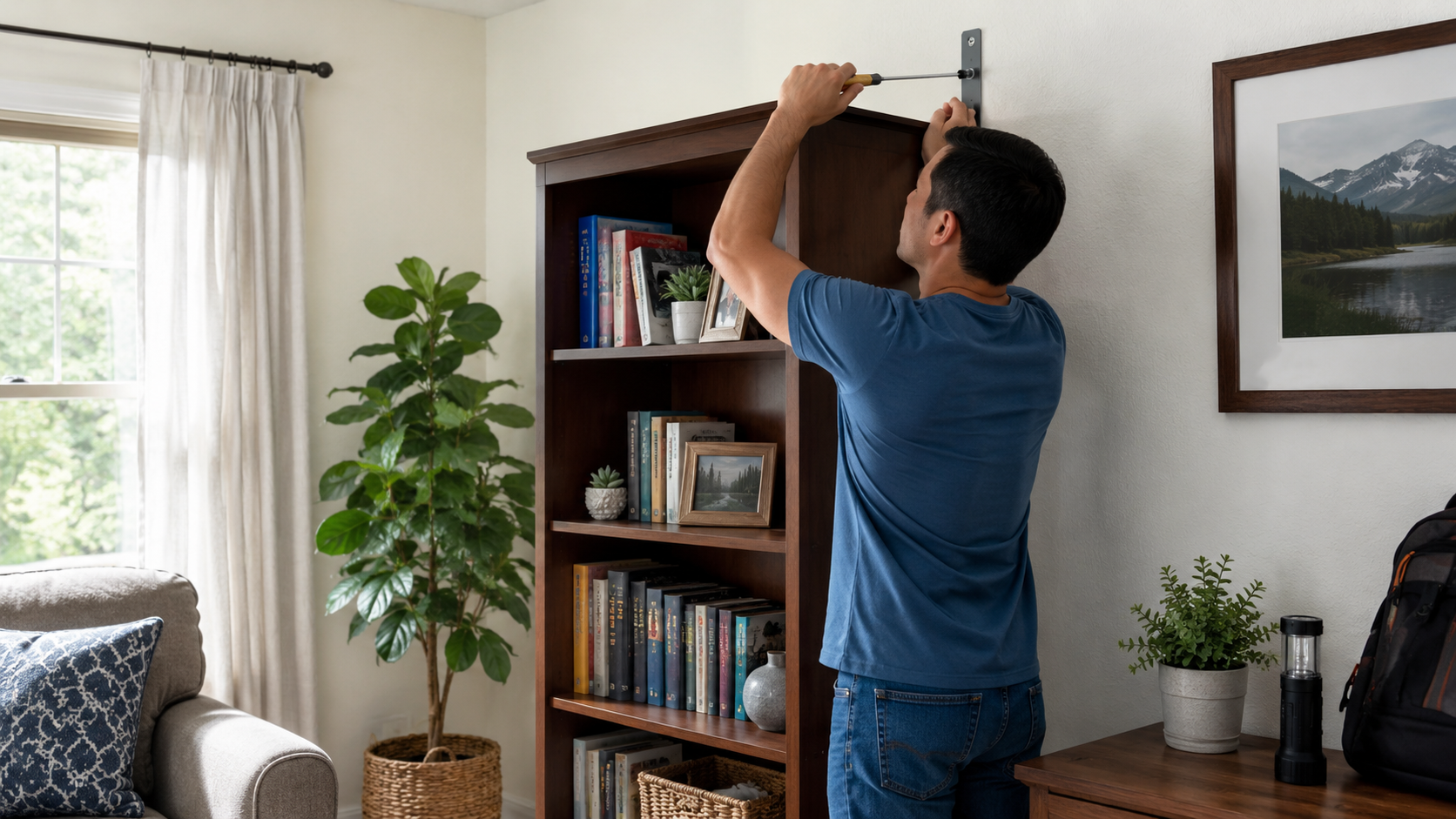
Why Securing Furniture Is One of the Most Important Earthquake Safety Habits at Home
Minjin Park
·
Learn why anchoring furniture matters for earthquake preparedness, which items are most likely to fall, and simple steps families can take to make their homes safer.
When people think about earthquake safety, they often picture cracked roads, shaking buildings, or emergency kits stored in a closet. Those things matter, of course. But one of the most practical earthquake safety steps happens right inside the home, long before the ground starts moving.
It is securing furniture.
A tall bookshelf, a heavy dresser, a flat-screen TV, or a cabinet full of dishes may seem harmless on an ordinary day. It sits quietly in the corner, holds your things, and blends into the background of everyday life.
During an earthquake, though, the same furniture can shift, tip, slide, or fall. A room that feels safe and familiar can quickly become cluttered with broken glass, fallen shelves, and blocked exits.
The good news is that furniture anchoring is not complicated. It is usually inexpensive, and many fixes can be done in an afternoon. More importantly, it helps reduce the risk of injuries and damage in the spaces where your family already spends the most time.
This is not about being fearful. It is about making your home work better during a sudden event.
Earthquakes Turn Everyday Objects Into Moving Hazards
Earthquake shaking is different from most household risks because it happens suddenly and affects everything at once.
You may not have time to move a chair, catch a falling lamp, hold a cabinet shut, or guide a child away from a bookcase. The shaking can make heavy objects move in ways that seem surprising.
A tall dresser may rock forward.
A bookshelf may tip.
A TV may slide off a stand.
Kitchen cabinets may open.
Picture frames may fall.
A filing cabinet may roll or shift.
These are normal household objects, but they become hazards when the floor and walls start moving. The heavier and taller the item is, the more carefully it should be secured.
A common mistake is assuming that furniture is safe because it has never moved before. But furniture does not need to move during normal life to become unstable during an earthquake.
Why Tall Furniture Is Especially Risky
Tall furniture has a higher center of gravity. That means it can become unstable more easily when shaken from side to side.
Think about a narrow bookshelf filled with books. The lower shelves may feel sturdy, but the top section can sway during shaking. If the furniture is not anchored to the wall, that motion can cause it to tip forward.
The same can happen with:
Dressers
Wardrobes
China cabinets
Storage shelves
Tall entertainment centers
Freestanding pantry cabinets
Bathroom storage towers
Office bookcases
Children’s bedroom furniture
A heavy item does not have to fall far to cause damage. Even a partial tip can break belongings, damage flooring, injure someone nearby, or block a doorway.
In children’s rooms, tall furniture deserves extra attention. Kids may climb drawers or shelves during normal play, and earthquake shaking adds another layer of risk. Anchoring furniture is a smart safety habit for both everyday life and disaster preparedness.
Heavy Furniture Can Block Exits
One overlooked reason to secure furniture is access.
After an earthquake, you may need to move through your home carefully. You may need to check on family members, reach your phone, find shoes, avoid broken glass, or leave the house if there is damage.
If a large bookshelf, dresser, or cabinet falls across a doorway or hallway, it can make that harder.
This matters especially in bedrooms, where people may be asleep when an earthquake happens. A tipped dresser near the bed or a fallen shelf near the door can turn a simple exit path into an obstacle course.
Furniture placement matters, too. Even when an item is anchored, it is smart to avoid placing heavy, tall furniture where it could block the main route out of a room if it failed.
When you look around your home, ask yourself: “If this fell, would it trap someone, block a door, or cover the path to an exit?”
That one question can help you spot risks quickly.
TVs, Monitors, and Appliances Need Attention Too
Furniture anchoring is not only about bookcases and dressers. Many homes have large electronics and appliances that can move during shaking.
Flat-screen TVs are a good example. They may be lighter than older televisions, but they are often large, wide, and placed on narrow stands. During shaking, they can slide, tip, or fall forward.
Computer monitors, speakers, printers, microwaves, and small appliances can also shift. In a home office or living room, these items may sit on desks, shelves, or entertainment centers without any restraint.
Simple safety options include anti-tip straps, brackets, non-slip pads, or moving heavier electronics to lower surfaces. For wall-mounted TVs, make sure the mount is properly attached to wall studs, not just drywall.
The same thinking applies in kitchens and laundry rooms. A microwave on a high shelf, a countertop appliance near the edge, or a stacked item in a pantry can fall when the room shakes.
You do not need to secure every single object in your home. Start with the things that are heavy, high, fragile, or likely to hurt someone if they fall.
Cabinets Can Open During Shaking
During an earthquake, cabinet doors can swing open and spill their contents. In the kitchen, that might mean dishes, mugs, glass jars, pantry items, or cleaning products. In the bathroom, it could be medicine bottles, toiletries, or glass containers.
Cabinet latches are a simple way to reduce this problem.
They are especially helpful for upper kitchen cabinets, china cabinets, bathroom cabinets, and storage areas that hold breakable or heavy items. Child-safety style latches, push latches, or earthquake safety latches can help keep doors closed when shaking starts.
Also think about where items are stored. Heavy pots, glass serving bowls, and large appliances are usually safer on lower shelves. Lighter items can go higher.
This is one of the easiest earthquake preparation habits because it does not require a major project. It is simply better organization with safety in mind.
Common Mistakes People Make With Furniture Safety
Furniture anchoring sounds simple, but a few mistakes can make it less effective.
Assuming Weight Means Stability
Heavy furniture may feel stable when you push it gently, but earthquake shaking is different. A heavy item can still rock, shift, or tip if it is tall or poorly balanced.
A full bookshelf can be even more dangerous than an empty one because the added weight increases the impact if it falls.
Anchoring Only the Biggest Items
Large furniture should be a priority, but smaller items can still be risky if they are high, sharp, fragile, or near a bed or seating area.
A small glass cabinet above a reading chair may deserve attention before a large but low coffee table.
Using the Wrong Hardware
Not all anchors are equal. A strap attached only to drywall may not hold well. For heavier furniture, it is usually best to secure anchors into wall studs using appropriate hardware.
If you rent, you may worry about making holes. In that case, look for renter-friendly options where possible, but do not ignore major risks. It may be worth discussing safety anchoring with your landlord, especially in earthquake-prone areas.
Forgetting the Garage
Garages often contain tall shelves, tools, paint cans, bicycles, sports gear, and storage bins. During an earthquake, garage items can fall onto cars, block doors, or spill hazardous materials.
Anchoring garage shelving and storing heavier items low can make a big difference.
Ignoring Items Near Beds
Bedrooms deserve special attention because earthquakes can happen at night. Avoid hanging heavy frames, mirrors, or shelves directly above beds. Secure dressers and bookcases near sleeping areas. Keep shoes and a flashlight somewhere easy to reach in case broken glass falls nearby.
Which Furniture Should You Secure First?
If the idea of securing your whole home feels overwhelming, start with the highest-risk items.
Start With Tall and Heavy Pieces
Bookcases, dressers, wardrobes, cabinets, and shelving units should be near the top of the list. Anything taller than it is wide deserves a closer look.
Look at Children’s Rooms
Children’s rooms often have dressers, toy shelves, bookcases, and storage cubes. Secure furniture that could tip if climbed on or shaken.
Check Sleeping Areas
Look around beds and cribs. Remove or secure heavy wall decor, mirrors, shelves, and furniture that could fall toward the sleeping area.
Review the Kitchen
Install cabinet latches where needed. Move heavy or breakable items to lower shelves. Avoid storing glass containers high above counters.
Walk Through the Garage
Secure shelving, strap water heaters if applicable, and store heavy bins low. Keep walkways and exits clear.
You do not have to do everything at once. A room-by-room approach is often more realistic.
Simple Tools That Can Help
Furniture safety supplies are usually easy to find at hardware stores, home improvement stores, or online.
Common options include:
Furniture anti-tip straps
L-brackets
Wall anchors
Stud finders
Cabinet latches
TV safety straps
Museum putty or quake putty
Non-slip shelf liners
Bungee cords for garage shelves
The right tool depends on the item. A tall dresser may need anti-tip straps. A cabinet may need latches. A TV may need a safety strap or proper wall mount. Small decorative objects may stay better in place with museum putty.
When installing anchors, follow the product instructions carefully. For heavy furniture, anchoring into studs is usually more secure than relying on drywall alone.
If you are unsure, a handyman or contractor can help with proper installation.
How to Do a Quick Home Safety Walkthrough
A simple walkthrough can reveal a lot. Start at your front door and move room by room.
You might notice a bookcase leaning slightly forward, a heavy mirror above a bed, a TV close to the edge of a stand, or a shelf full of glass items above a workspace.
Take notes as you go. Then choose the top three fixes to handle first.
For example:
Anchor the living room bookcase.
Move heavy dishes to a lower kitchen shelf.
Secure the bedroom dresser.
Once those are done, choose the next three. This keeps the project manageable instead of turning it into a weekend of stress.
Apartment and Rental Home Considerations
Renters sometimes avoid furniture anchoring because they do not want to damage walls or lose a security deposit. That is understandable, but safety still matters.
If you live in an earthquake-prone area, ask your landlord about anchoring heavy furniture. Some landlords may allow wall anchoring if holes are properly repaired later.
You can also use lower-risk choices that do not involve major installation. Place heavy items on lower shelves. Avoid tall, narrow furniture when possible. Use non-slip pads under electronics. Keep beds away from large unsecured furniture. Choose wider, lower storage pieces instead of tall cabinets.
These steps may not replace proper anchoring, but they still reduce risk.
Special Considerations for Older Adults and People With Mobility Needs
Furniture safety is especially important for anyone who may have difficulty moving quickly after shaking begins.
A fallen bookcase, blocked hallway, or broken glass on the floor can be a bigger obstacle for older adults, people with mobility challenges, or anyone using a cane, walker, or wheelchair.
In these homes, clear pathways matter. Secure anything that could fall into a walking route. Keep emergency items within reach. Avoid placing heavy furniture near narrow hallways, bedroom exits, or bathroom doors.
Small improvements can make a home easier to navigate after shaking stops.
Do Not Forget Decorative Items
Sometimes the most dangerous objects are not the biggest pieces of furniture, but the things sitting on top of them.
Heavy vases, framed photos, lamps, speakers, plants, candles, and collectibles can fall from shelves and surfaces. Glass items can break and create sharp debris.
Use putty or non-slip materials for smaller items you want to keep displayed. Move heavy decor away from high shelves. Avoid placing breakable items above beds, cribs, couches, or desks.
Wall art also deserves attention. Heavy mirrors and frames should be hung with secure hardware. A small nail may be fine for a light picture, but not for a large mirror in an earthquake-prone area.
Making Furniture Safety a Family Habit
Earthquake preparedness works best when it becomes part of normal home care.
When you buy new furniture, ask yourself how it will be secured before you bring it home. When rearranging a bedroom, think about what is near the bed. When organizing a closet or garage shelf, put heavy items low.
Families can also involve older kids in the process. Let them help identify what might fall in their room. This can make safety feel practical instead of scary.
You might say, “We’re making sure our shelves stay where they belong if the house shakes.” That kind of calm explanation helps children understand the purpose without feeling frightened.
A Practical Plan for This Weekend
If you want to improve earthquake safety without overthinking it, here is a simple weekend plan.
On day one, walk through the home and list tall furniture, heavy electronics, and items near beds. Take photos if that helps you remember.
On day two, buy basic safety supplies such as furniture straps, cabinet latches, and museum putty. Start with one or two rooms, not the whole house.
Focus first on bedrooms, children’s rooms, and main living areas. Then move to the kitchen, office, garage, and storage areas as time allows.
A few finished fixes are better than a long list that never gets done.
Conclusion: Small Anchors Can Make a Big Difference
Securing furniture may not be the most exciting part of earthquake preparedness, but it is one of the most useful.
Earthquakes happen without warning, and once shaking starts, there may be no time to move heavy objects out of the way. Anchoring furniture, securing TVs, latching cabinets, and moving heavy items lower can help reduce injuries, damage, and blocked exits.
The best part is that these steps are practical. You do not need a major renovation or an expensive emergency setup. You can start with one bookcase, one dresser, one cabinet, or one room.
A safer home is often built through small decisions made before anything happens.
So the next time you walk past that tall shelf, heavy dresser, or wobbly TV stand, take a second look. A simple anchor today can help keep your home calmer, safer, and easier to move through when the ground starts to shake.
Hi, I’m the creator and editor behind ZestyHabit. I research everyday safety, first aid, and practical wellness topics using official guidance and reliable public sources, then turn that information into clear, realistic steps for daily life.
My goal is to help readers make safer, better-informed choices at home and beyond.