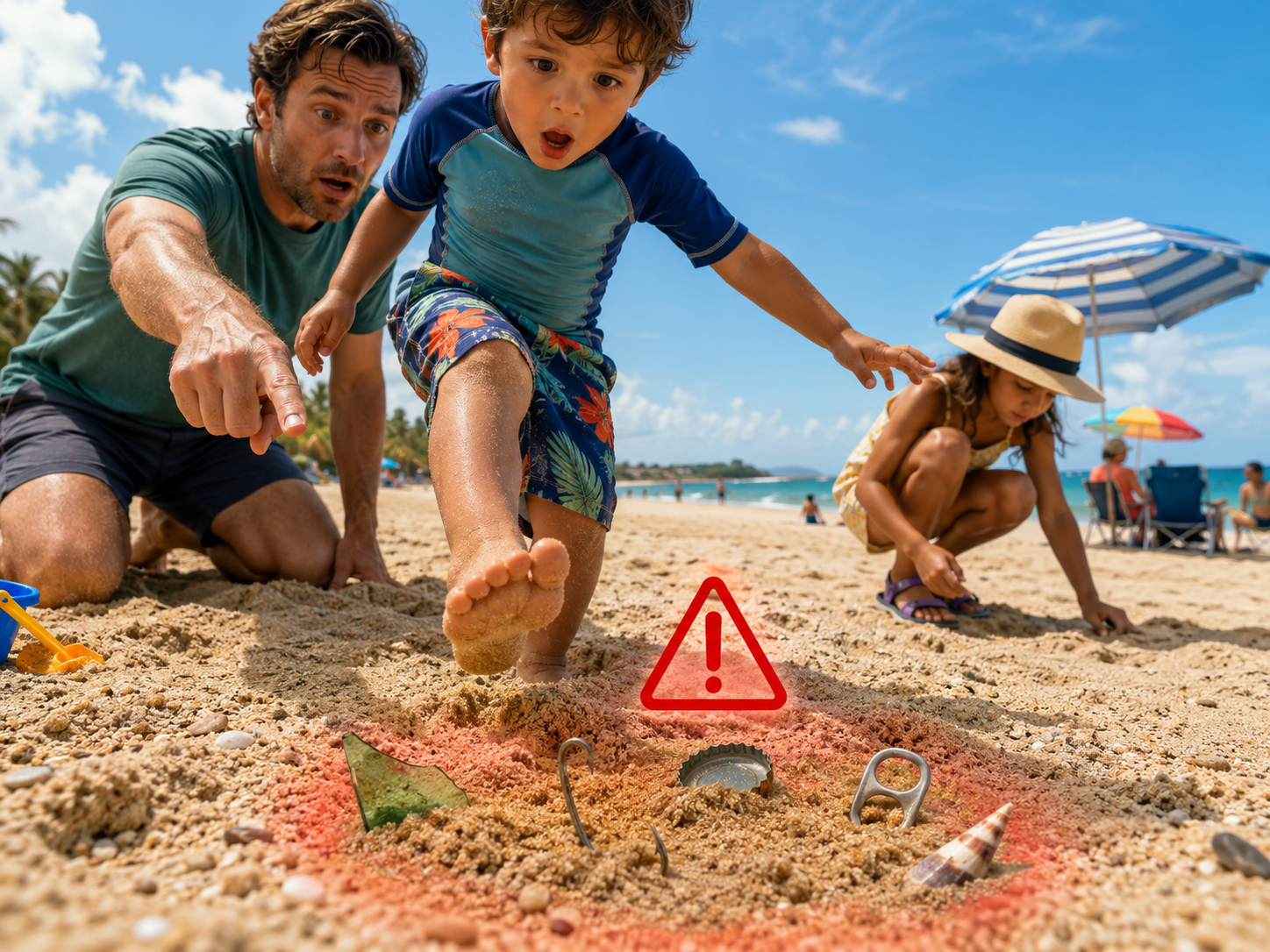
Why You Should Watch for Sharp Objects Hidden in Beach Sand
Minjin Park
·
Broken glass, fishhooks, shells, and other sharp objects can hide beneath beach sand. Learn how to protect your feet, help children play more safely, and respond to minor injuries.
Walking barefoot across warm sand is one of the simplest pleasures of a beach day.
Most people expect the ground to feel soft, loose, and harmless. That expectation can make it easy to forget that sand can hide objects you cannot see until you step directly on them.
Broken glass, metal can tabs, fishing hooks, sharp shells, splintered wood, and pieces of plastic may become partially or completely buried. Some are left behind as litter. Others wash ashore, break apart in the surf, or get covered when wind, waves, and beach traffic move the sand.
This does not mean beaches are generally unsafe or that everyone should spend the day worrying about what is underfoot. Most visits end without any problem.
Still, a few practical habits can lower the chance of a painful cut or puncture, especially when children are playing, people are walking near fishing areas, or the beach is crowded after a busy weekend.
Wind blows it across the surface. Waves move it along the shoreline. People dig, run, drag chairs, build sandcastles, and cover items without noticing.
An object that was clearly visible in the morning may be hidden by the afternoon.
Sand Can Cover an Object Without Making the Area Look Different
A thin layer of sand may be enough to hide the edge of broken glass or the point of a fishhook.
The ground can look smooth and undisturbed even when something sharp is just below the surface. Stepping down places your full body weight on a very small point, which can turn a nearly invisible object into a painful injury.
Wet Sand Can Hold Sharp Items Upright
Objects in dry sand may shift when touched. Wet, compact sand can hold them more firmly.
A shard of glass, shell fragment, or piece of metal may remain at an angle with one sharp edge pointing upward.
This is one reason the hard-packed sand near the waterline is not automatically safer than the loose sand farther up the beach.
Light and Glare Can Hide Details
Bright sunlight reflecting off water and pale sand can make small objects difficult to notice.
Sunglasses, sun glare, and shadows from umbrellas may also affect visibility. At sunrise, sunset, or after dark, the risk of overlooking debris increases even more.
Common Sharp Objects Found on Beaches
The hazards vary depending on the location, weather, crowds, and nearby activities.
Some beaches are carefully maintained, while others are more natural or isolated. Even a clean beach can receive debris from tides and storms.
Broken Glass
Glass may come from drink bottles, food containers, or debris that washes ashore.
Over time, waves can smooth the edges of some glass. However, not every piece becomes harmless “sea glass.” Freshly broken fragments may remain extremely sharp.
Small clear pieces are especially difficult to see against wet sand.
Fishing Hooks and Line
Beaches near piers, jetties, boat ramps, and popular fishing spots may contain lost hooks, lures, sinkers, and fishing line.
A hook may be buried with only the point exposed. It may also remain attached to nearly invisible line, increasing the chance that someone steps on it or becomes tangled.
Dogs that sniff or pick up bait may also encounter discarded fishing gear.
Sharp Shells and Marine Debris
Many shells are smooth, but broken shell fragments can have pointed or razor-like edges.
Barnacles, crab shells, coral fragments, and pieces of hard marine material may also cut bare feet or hands.
These objects are natural, but they can still cause injury when stepped on unexpectedly.
Metal and Aluminum
Bent can tabs, bottle caps, wire, nails, screws, and rusted metal fragments may be hidden beneath the sand.
Construction work, damaged beach equipment, bonfires, boats, and litter can all contribute to this kind of debris.
Rust does not necessarily make an object sharper, but it may make the surface rough, dirty, and difficult to handle safely.
Splintered Wood
Driftwood can look smooth from a distance but contain cracks, sharp ends, or long splinters.
Broken pallets, boardwalk pieces, picnic equipment, and firewood may also leave fragments in the sand.
Children often climb or sit on large pieces of driftwood, so checking the surface first is a good habit.
Needles and Other Unusual Litter
Discarded needles are not among the most common beach hazards, but they are possible in some public areas.
Children should be taught never to pick up a needle, syringe, broken container, or unfamiliar sharp object. They should move away and tell an adult, lifeguard, or beach employee.
Adults should not handle these items with bare hands.
Why Children Face a Higher Risk
Children usually interact with sand more directly than adults do.
They dig with their hands, kneel, crawl, bury their feet, and run without watching the ground. They may also be excited and moving quickly, making it less likely that they will notice a small object.
Digging Can Reveal Buried Debris
A child building a deep hole may suddenly uncover glass, a hook, or metal hidden below the surface.
Using a shovel does not completely remove the risk. The object may be picked up along with the sand or pushed toward the child’s hand.
Teach children to stop digging if they find trash, wire, broken material, or anything they do not recognize.
Children May Treat Dangerous Objects Like Treasures
Colorful glass, shiny fishing lures, metal objects, and unusual shells can look interesting.
A child may pick something up before checking whether it has a sharp edge.
A simple family rule can help:
If you find something made of glass, metal, wire, or plastic, call an adult before touching it.
Running Increases the Force of an Injury
A person walking slowly may feel an object and pull the foot away. A child running at full speed places more force on each step.
Running also makes it harder to avoid debris, fishing equipment, or damaged areas once they are noticed.
Children can still run and play, but footwear and a quick visual check of the area provide useful protection.
Dogs and Other Pets Can Be Injured Too
A dog’s paw pads are durable, but they are not protected from glass, hooks, shells, or hot metal.
Dogs may also investigate sharp objects with their noses and mouths.
Check Paws After Beach Walks
After walking through sand, inspect between the toes and around the paw pads.
Watch for:
Limping
Licking one paw repeatedly
Bleeding
Sensitivity when the paw touches the ground
A visible cut or embedded object
Reluctance to continue walking
Fishing hooks can be particularly difficult because they may become caught in the paw, lip, tongue, or skin.
Do not pull forcefully on a deeply embedded or barbed hook. Keep the pet calm and seek veterinary guidance.
Keep Pets Away From Fishing Gear
Do not allow dogs to explore buckets, bait containers, fishing line, or discarded fish remains.
A hook may still be present even when the bait or fish appears to be abandoned.
Using a leash near fishing areas can help prevent a curious pet from grabbing something before you can react.
Beach Areas That Deserve Extra Attention
Sharp objects can appear anywhere, but certain areas may have more debris or reduced visibility.
Around Fire Pits
Beaches that allow fires may contain broken bottles, food cans, wire, nails, or charred wood.
Even if the fire is completely out, buried coals and heated objects can remain hazardous.
Avoid walking barefoot through old fire pits or areas with blackened sand and ash.
Near Piers and Fishing Spots
Fishing hooks, line, bait containers, knives, and metal equipment may be present near popular fishing areas.
Give active anglers enough room, and do not walk directly behind someone who is casting.
Close to Trash Cans
Trash may fall or blow out of an overfilled container.
Broken glass and sharp packaging can become scattered nearby, especially on windy days.
Choose a sitting and play area that is not directly beside waste bins.
After Storms and High Tides
Storms can bring driftwood, damaged containers, fishing equipment, building materials, and other debris onto shore.
The beach may look unusually cluttered after rough weather. Wearing protective footwear is especially sensible under these conditions.
After Large Gatherings
Holiday weekends, festivals, nighttime parties, and crowded events may leave more litter than usual.
Early morning visitors may arrive before the beach has been fully cleaned.
Common Mistakes That Increase the Risk
Most beach injuries do not happen because someone acted recklessly. They happen during ordinary activities when people assume the area is clear.
Assuming a Popular Beach Is Completely Clean
Regularly maintained beaches can still have hidden debris.
Cleaning crews may remove visible trash without finding objects buried beneath the surface. New debris can also arrive after the area has been inspected.
Letting Children Dig Anywhere
A clear space near an old fire pit, fishing station, trash can, or boardwalk may not be the best place for a sandcastle.
Choose a cleaner, open section of beach and inspect the surface before children begin digging.
Reaching Into Sand Without Looking
People often search for buried toys, keys, jewelry, or shells by sweeping their hands through the sand.
If the area may contain broken material, use a small shovel or carefully remove sand from the surface rather than reaching blindly into a hole.
Picking Up Glass With Bare Hands
A visible glass fragment may have more sharp edges beneath the surface than you can see.
Do not let children collect it. Notify beach staff or use an appropriate rigid tool and puncture-resistant container only if you can do so without putting yourself at risk.
Walking Barefoot After Dark
The sand may feel pleasant at night, but poor visibility makes debris much harder to avoid.
Wear sturdy sandals or water shoes and carry a flashlight when walking between the beach, campground, parking area, or rental property.
Relying on Thin Flip-Flops for Full Protection
Flip-flops can help protect the bottom of the foot from hot sand and surface debris.
However, thin soles may not stop a nail, hook, or sharply angled piece of glass. They also leave the sides and top of the foot exposed.
For rocky, littered, storm-affected, or unfamiliar beaches, water shoes or closed-toe beach footwear may offer better coverage.
Simple Ways to Reduce the Risk
A safer beach day does not require complicated equipment.
Inspect the Area Before Setting Up
Take a slow walk around the spot where you plan to place towels, chairs, toys, and umbrellas.
Look for glass, metal, fishing line, broken shells, burned material, splintered wood, and litter.
Pay attention to the areas children will use, not just the place where adults will sit.
Wear Footwear When Conditions Are Uncertain
Water shoes, sturdy sandals, or lightweight closed-toe shoes can provide useful protection.
Footwear is especially helpful:
Near fishing areas
Around fire pits
On rocky beaches
After storms
During evening walks
At crowded public beaches
When launching kayaks or carrying equipment
When the sand contains visible debris
Going barefoot in a clean, inspected area may still be reasonable. The goal is to match the footwear to the conditions.
Bring Basic Supplies
A small beach first-aid kit can include clean water, sterile gauze, bandages, and disposable gloves.
This is useful for ordinary scrapes and cuts, not only sharp-object injuries.
Keep the kit where it is easy to reach rather than buried at the bottom of a packed vehicle.
Teach Children a “Stop and Show” Rule
Children do not need a frightening warning.
Teach them to stop and show an adult when they find:
Glass
Fishing hooks or line
Needles
Metal pieces
Sharp shells
Unfamiliar containers
Objects with blood or other visible residue
Praise them for noticing the item instead of touching it.
Keep the Beach Cleaner Than You Found It
Picking up ordinary litter can help protect other visitors, but only collect items that are safe to handle.
Use gloves or a trash grabber, and never place loose sharp objects into a thin plastic bag. Report dangerous debris to a lifeguard, ranger, park employee, or local beach authority.
What to Do After a Cut or Puncture
A small surface cut and a deep puncture are not the same kind of injury.
For a minor cut, move away from the sandy area and rinse away visible dirt with clean water. Apply gentle pressure with clean gauze if there is bleeding, then protect the area from further sand and contamination.
Do not pour seawater into the wound as a cleaning method. Ocean and lake water can contain microorganisms and debris.
Do Not Dig for a Deep Object
If glass, metal, a fishhook, or another object is deeply embedded, do not pull, twist, or dig around it.
Movement can make the injury worse or leave part of the object behind.
Seek professional care for an embedded object, a deep puncture, a wound that will not stop bleeding, numbness, difficulty moving the affected area, or a serious injury to the eye, face, hand, or foot.
Watch the Area Afterward
Even a small cut can become irritated.
Pay attention to increasing redness, warmth, swelling, worsening pain, drainage, fever, or red streaking around the injury. These changes deserve medical guidance.
Because puncture wounds may look small on the surface, do not judge the injury only by the size of the opening.
A Quick Beach Safety Check
Before everyone takes off their shoes, ask:
Is there visible litter?
Are we close to a pier, fishing area, fire pit, or trash can?
Did a recent storm bring debris ashore?
Can children safely dig here?
Is the sand too dark or poorly lit to inspect?
Would water shoes be a better choice?
Do we have basic first-aid supplies?
Do children know not to touch sharp or unfamiliar objects?
This check takes less than a minute but can prevent an unpleasant interruption to the day.
Final Thoughts
Beach sand often looks soft and clean, but it can hide sharp objects just beneath the surface.
Broken glass, fishing hooks, metal pieces, shell fragments, and splintered wood may be buried by wind, waves, or foot traffic. Children and pets face additional risk because they dig, run, sniff, and explore close to the ground.
There is no need to approach every beach with fear. Simply look over the area before setting up, use protective footwear when conditions are uncertain, keep children away from fishing gear and old fire pits, and teach them to show an adult anything sharp or unfamiliar.
Bring a small first-aid kit and take cuts or punctures seriously when they are deep, contaminated, or involve an embedded object.
A quick inspection and a few sensible habits can help everyone enjoy the sand, water, and sunshine with fewer preventable surprises.
Hi, I’m the creator and editor behind ZestyHabit. I research everyday safety, first aid, and practical wellness topics using official guidance and reliable public sources, then turn that information into clear, realistic steps for daily life.
My goal is to help readers make safer, better-informed choices at home and beyond.