
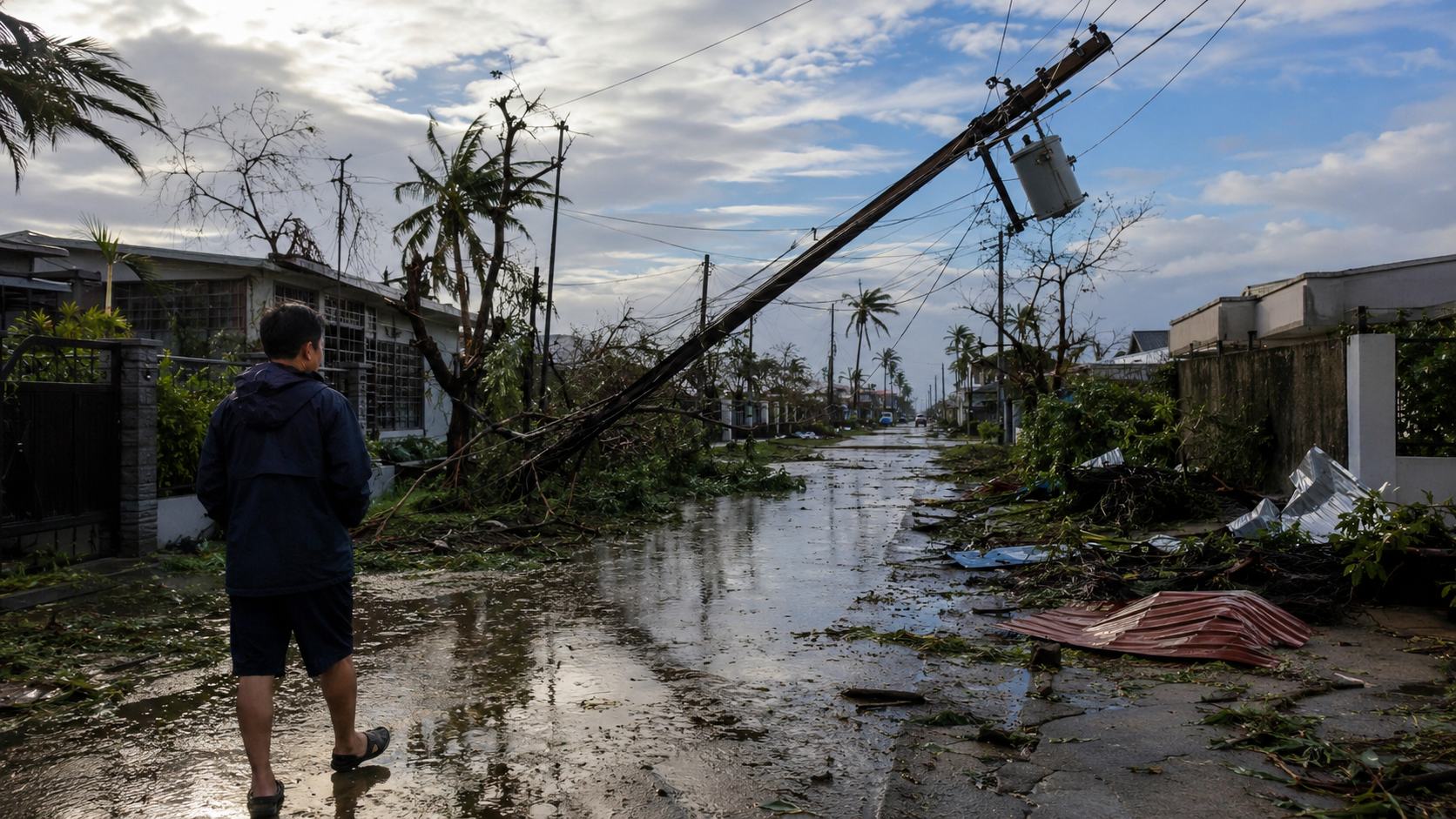
A typhoon may seem over once the wind and rain calm down, but hidden hazards can remain. Learn why the hours after a storm still require caution and simple steps to stay safer.

Why the Time After a Typhoon Still Matters
When a typhoon finally moves away, it is natural to feel relieved. The loud wind quiets down. The rain slows. The sky may even start to clear. After hours of waiting indoors, many people want to step outside, check the neighborhood, take photos, or start cleaning up right away.
That reaction is understandable. Nobody likes feeling stuck.
But the period right after a typhoon can still be risky. In fact, some hazards become easier to overlook because the storm no longer looks dramatic. The danger is not always the wind itself. It may be floodwater, fallen power lines, weakened trees, loose roof materials, broken glass, unstable ground, or contaminated water.
In the United States, people may hear similar warnings after hurricanes, tropical storms, or severe coastal storms. The name may be different, but the safety concerns are very similar. The National Weather Service reminds people that hurricane dangers can remain even after skies turn blue, including downed power lines, damaged buildings, and floodwaters.
The goal is not to scare anyone. It is to slow down a little. After a typhoon, a calm and careful approach is often the safest one.
The Storm May Be Gone, but the Environment Has Changed
A familiar street can look completely different after a major storm. Roads may be blocked, signs may be twisted, sidewalks may be covered with branches, and water may hide what is underneath.
Damage Is Not Always Obvious at First
Some hazards are easy to see, like a tree across the road or a broken fence. Others are harder to notice.
A roof may have loose shingles. A porch may be weakened by water. A tree may look upright but have damaged roots. A sidewalk may be cracked under a layer of leaves. A puddle may hide a hole, sharp debris, or a downed wire.
This is why it helps to move slowly after the storm passes. Do not assume that familiar places are in their usual condition.
People Are Often Distracted After a Storm
Right after a typhoon, emotions are high. People are checking on family, calling neighbors, looking for damage, trying to save belongings, or worrying about power outages.
That distraction can lead to rushed decisions.
Someone may walk through floodwater to check a car. Another person may climb a ladder to look at the roof. A family may let children or pets outside before checking the yard. These actions may feel normal in the moment, but they can create unnecessary risk.
A slower first walk-around is usually better.
Floodwater Can Hide More Than You Think
Floodwater is one of the biggest reasons to stay cautious after a typhoon. Even shallow water can create problems.
You Cannot See What Is Under the Water
A flooded street or yard may look calm on the surface. Underneath, there may be broken glass, nails, branches, uneven pavement, open drains, or displaced objects.
If water is muddy, you may not be able to judge depth. What looks like a shallow puddle could be deeper near a curb, ditch, or storm drain.
This is especially important for children, who may see floodwater as something to splash in. After a typhoon, floodwater should not be treated like ordinary rain puddles.
Floodwater May Be Contaminated
Floodwater can mix with soil, trash, sewage, fuel, chemicals, and other materials from damaged areas. The CDC notes that returning to a flooded home can involve contamination from mold or sewage, so cleanup should be approached carefully.
For everyday safety, the simple habit is this: avoid walking or playing in floodwater when you can. If you must clean around wet areas, use basic protective gear such as sturdy shoes and gloves, and wash up afterward.
Roads Can Be Weakened
After heavy rain and flooding, roads and shoulders may be damaged. Water can wash away soil under pavement, leaving surfaces unstable even if they look normal from above.
Drivers may also misjudge water depth. A road that was safe yesterday may be unsafe after flooding.
If a road is covered with water or blocked by local officials, choose another route.
Downed Power Lines Are Easy to Miss
Strong wind can knock down power lines or bring tree branches into contact with electrical equipment. This danger can remain after the storm has passed.
A Wire Does Not Have to Spark to Be Dangerous
Many people imagine a dangerous power line as something that sparks, flashes, or makes noise. But a downed line can be dangerous even if it looks quiet.
It may be partly hidden in leaves, water, or debris. It may also be touching a fence, tree, car, or metal object.
The National Weather Service advises people not to touch downed power lines or objects in contact with them, and to report electrical hazards to the proper authorities.
Floodwater and Electricity Are a Bad Combination
If there is standing water near electrical equipment, avoid the area. Do not try to move wires, branches, or objects that may be touching electrical lines.
This is also a good reason to keep children and pets inside until you have checked the yard and nearby street from a safe distance.
Trees and Branches May Still Fall
A tree does not have to fall during the typhoon to be dangerous afterward. Wind and saturated soil can weaken trees, roots, and branches.
Wet Soil Can Loosen Roots
When the ground is soaked, tree roots may lose some of their support. A tree may lean more than usual or have cracked soil around the base.
Even after the wind calms, a weakened tree can fall later, especially if another gust comes through or the ground shifts.
Watch for trees leaning toward homes, sidewalks, driveways, or power lines. If something looks unstable, keep your distance and contact the appropriate local service or property professional.
Broken Branches Can Hang Overhead
After a storm, large branches may get caught in other branches. They may not fall right away. These hanging branches are sometimes hard to see from below, especially if the tree still has many leaves.
Before walking under trees, parking under them, or letting children play nearby, look up.
A quick glance overhead can help you spot broken limbs, dangling branches, or loose items caught in trees.
Buildings and Outdoor Structures Can Be Weakened
Homes, garages, sheds, fences, signs, decks, and porches can all take damage during a typhoon.
Loose Materials Can Shift After the Storm
Roof shingles, siding, gutters, shutters, screens, and outdoor decorations may be loosened by wind. They can fall later when someone opens a door, bumps a structure, or when another breeze passes through.
Be careful around buildings with visible damage. Avoid standing directly under loose-looking roof edges, signs, or hanging materials.
Water Damage Can Affect Floors and Steps
If water entered a building, floors and stairs may be slick, soft, or unstable. Rugs may slide. Wooden steps may be weakened. Mud can make tile, concrete, and garage floors slippery.
Use a flashlight if lighting is poor. The National Weather Service recommends using a flashlight instead of candles when inspecting a damaged home because of fire or explosion concerns.
Power Outages Create Their Own Safety Issues
After a typhoon, power outages are common. When the electricity is off, people often rely on flashlights, candles, portable chargers, generators, grills, or camp stoves.
Some of these tools are helpful, but they need to be used carefully.
Generators Must Be Used Outside
Portable generators can be useful during an outage, but they create carbon monoxide, a gas that cannot be seen or smelled. The CDC advises using generators, grills, and stoves outside and away from windows and doors.
This is one of the most important post-storm habits for households.
Never run a generator inside a home, garage, basement, shed, or enclosed porch. Opening a window is not enough to make indoor use safe.
Candles Can Add Fire Risk
Candles may seem simple during an outage, but after a storm, homes may have clutter, leaks, damaged wiring, or tired people moving around in the dark.
Battery-powered lights are usually a better choice when available. Keep flashlights in easy-to-reach places, and check batteries before storm season when possible.
Cleanup Can Bring Hidden Hazards
Once the weather improves, many people want to clean up right away. That is understandable, especially if water entered the home or debris is blocking a driveway.
But cleanup should be done carefully.
Debris Can Contain Sharp Objects
Storm debris may include broken glass, nails, splintered wood, metal pieces, roofing materials, and sharp branches.
Wear sturdy shoes, long pants, and gloves when handling debris. Avoid walking barefoot or in sandals, even around your own yard.
This is especially important if children are helping. They may pick up objects without noticing sharp edges.
Mold Can Develop After Water Damage
If a home has been wet, drying it out matters. The CDC provides cleanup guidance after disasters, including mold precautions and using protective equipment during cleanup.
For a general household approach, open windows if it is safe, remove wet items when possible, and dry damp areas promptly. If the damage is large, contaminated, or difficult to handle, professional help may be needed.
Common Mistakes People Make After a Typhoon
Many post-storm mistakes come from good intentions. People want to help, check damage, or return to normal quickly.
Mistake 1: Going Outside Too Soon
The wind may calm briefly even when conditions are not fully safe. Depending on the storm, weather can change again, and local authorities may still advise people to stay inside.
Wait for reliable local updates before heading out. Do not rely only on what the sky looks like from your window.
Mistake 2: Letting Kids Explore the Neighborhood
Children may be curious after a storm. Fallen branches, puddles, damaged signs, and blocked roads can look exciting to them.
But the area may contain hazards they do not recognize. Keep children close until adults have checked the surroundings.
Mistake 3: Driving Around to Look at Damage
After a typhoon, roads may be needed by emergency crews, utility workers, and cleanup teams. Unnecessary driving can also put you near flooded roads, downed lines, or unstable trees.
Unless you need to travel, it is often better to stay put and let official crews do their work.
Mistake 4: Assuming the House Is Fine Because It Looks Fine
A quick glance is not always enough. Check for water intrusion, loose outdoor items, damaged gutters, broken windows, unusual smells, and signs of roof or ceiling leaks.
If something seems unsafe, avoid that area until it can be checked properly.
Mistake 5: Forgetting About Pets
Pets can step on sharp debris, drink from contaminated puddles, or become frightened by unfamiliar sounds and smells.
Before letting pets outside, check the yard. Keep them away from floodwater, damaged fencing, and debris piles.
Warning Signs to Watch For
After a typhoon, it helps to know what should make you pause.
Outside the Home
Watch for leaning trees, hanging branches, downed wires, flooded roads, broken glass, loose signs, damaged fences, and water near electrical equipment.
Also notice smells, such as gas, sewage, or strong chemical odors. If something smells unusual, move away from the area and follow local guidance.
Inside the Home
Look for wet outlets, sagging ceilings, warped floors, cracked walls, standing water, moldy smells, and appliances that got wet.
Do not use wet electrical devices until they have been checked or replaced. Water and electricity should always be treated carefully.
In the Neighborhood
Pay attention to blocked storm drains, washed-out shoulders, damaged traffic lights, and crews working on roads or power lines.
Give workers plenty of space. They may be dealing with hazards that are not obvious to bystanders.
Simple Steps to Take Right After the Storm
A calm checklist can help you avoid rushing.
Step 1: Wait for Official Updates
Before going outside, check local alerts, weather updates, utility notices, or community announcements. Conditions can vary by neighborhood.
Step 2: Check From a Safe Place First
Look through windows or from a doorway before walking around. Scan for downed lines, flooding, damaged trees, or loose materials.
Step 3: Dress for Cleanup, Not Comfort
If you need to go outside, wear closed-toe shoes, long pants, and gloves. Bring a flashlight if lighting is poor.
Step 4: Avoid Floodwater
Do not walk, drive, or let children play in floodwater. Choose dry routes whenever possible.
Step 5: Photograph Damage Safely
If you need photos for your own records, take them from a safe distance. Do not climb onto roofs, enter unstable areas, or stand near wires for a better picture.
Step 6: Check on Neighbors Carefully
If you are able, check on nearby family or neighbors by phone first. If you go in person, watch for debris, water, and unstable surfaces along the way.
Final Thoughts: Let the Calm Return Slowly
When a typhoon passes, the quiet afterward can feel like a signal that everything is safe again. Sometimes it is. But often, the storm leaves behind hazards that take time to notice and repair.
Floodwater may hide debris. Power lines may be down. Trees may be weakened. Buildings may have loose materials. Cleanup may involve sharp objects, mold, or wet electrical items.
The safest approach is simple: do not rush the first hour after the storm. Wait for local updates, look carefully before going outside, avoid floodwater, keep children and pets close, and use practical protective gear during cleanup.
A typhoon does not end the moment the rain stops. Give your home, your neighborhood, and yourself a little time to settle. That calm, patient approach can make the recovery period safer and less stressful for everyone.

Hi, I’m the creator and editor behind ZestyHabit. I research everyday safety, first aid, and practical wellness topics using official guidance and reliable public sources, then turn that information into clear, realistic steps for daily life.
My goal is to help readers make safer, better-informed choices at home and beyond.


