
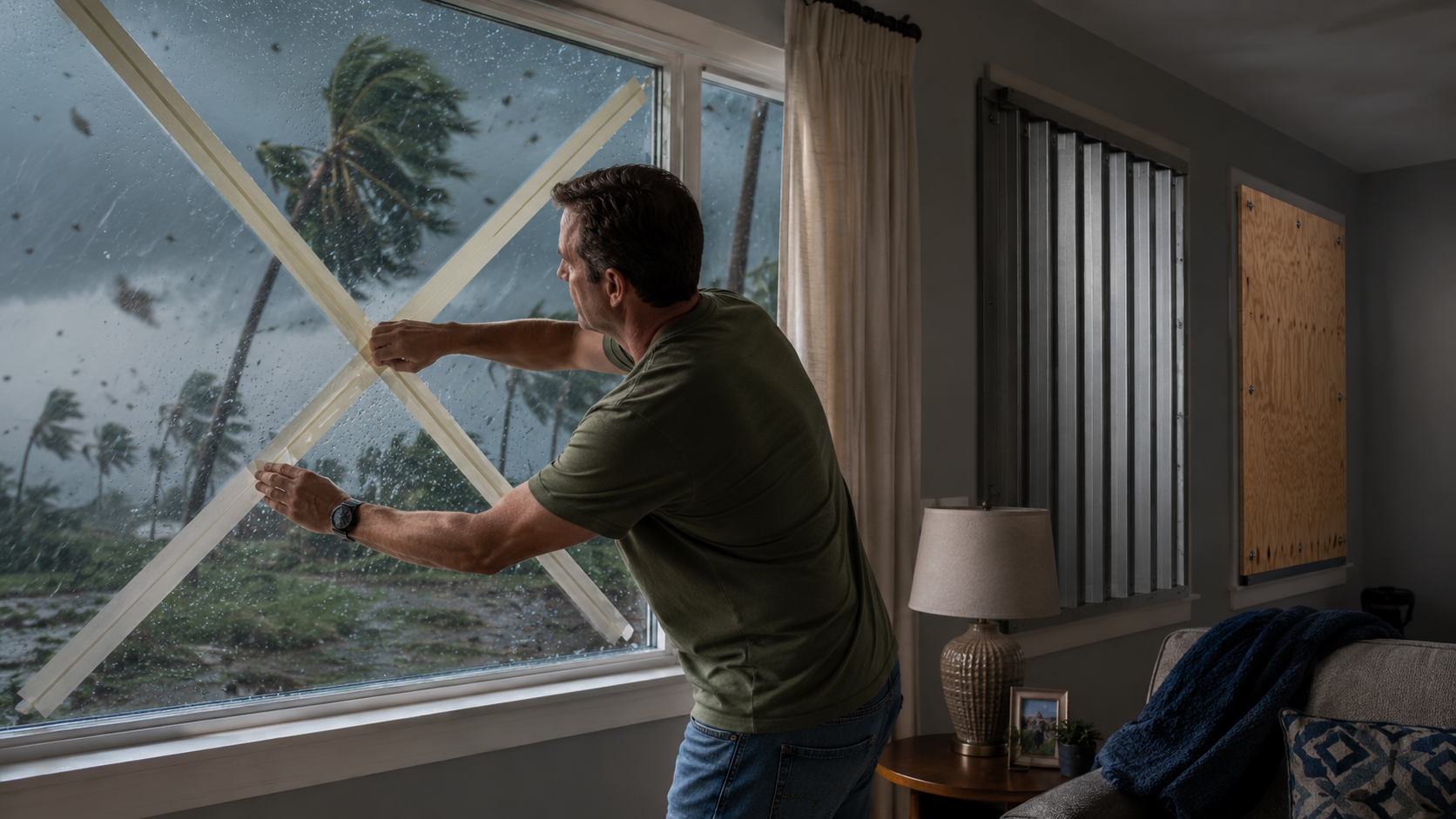

Taping windows before strong winds may seem helpful, but it is not enough to protect your home. Learn what tape can and cannot do, common storm mistakes, and practical ways to prepare windows safely.
The Window Tape Myth Is Still Common
When strong winds are in the forecast, many people start thinking about their windows. That makes sense. Windows are one of the most vulnerable parts of a home during hurricanes, severe thunderstorms, tornado warnings, and wind-driven debris.
One old habit still comes up often: putting tape across the windows.
Maybe you have seen people make a big “X” with masking tape or duct tape. Maybe your parents or grandparents did it before storms. Maybe you have seen neighbors do it and wondered if you should too.
The short answer is this: taping windows is not enough protection during strong winds.
Tape may hold some small pieces of glass together if the window cracks, but it does not make the glass strong. It does not stop flying debris. It does not prevent the window from breaking. And in some cases, it can give people a false sense of security.
That does not mean you are helpless. It simply means tape should not be your main storm plan. If strong winds are possible, there are better and more practical steps to take.
Why This Matters for Everyday Home Safety
Most people are not storm experts. They are busy trying to protect their family, pets, car, yard, and home before bad weather arrives. In that rush, it is natural to reach for something easy, cheap, and familiar.
Tape feels like action. It is visible. It is quick. It makes the window look “prepared.”
But storm safety is not about looking prepared. It is about reducing real risks.
During high winds, windows can break for several reasons. Flying branches, loose patio furniture, roof shingles, signs, gravel, or other debris can strike the glass. Pressure changes and repeated wind gusts can stress weak windows. Once a window breaks, wind and rain can enter the home, creating more damage and making the space less safe.
This is why it helps to understand what tape can actually do — and what it cannot do.
What Tape Can and Cannot Do
Tape May Hold Some Glass Together
If glass breaks, tape might hold a few pieces in place for a short time. That is the small bit of truth behind the old habit.
However, that limited benefit is not the same as protection. A taped window can still shatter. Pieces of glass can still fall or fly inward. The window frame can still fail. Rain and wind can still enter.
Tape does not turn a regular window into a storm-resistant window.
Tape Does Not Strengthen Glass
This is the most important point. Tape does not make glass stronger against impact.
If a heavy branch, piece of fencing, patio umbrella, or loose object hits the window, tape is not going to stop that force. The glass may still break, and the taped sections may come loose as large, dangerous pieces.
A taped “X” may look like reinforcement, but it is not the same as shutters, plywood, or impact-rated windows.
Tape Can Create Larger Pieces of Broken Glass
One concern with taping windows is that it can hold broken glass in larger sections. Instead of many smaller fragments, the tape may allow bigger pieces to stay connected before falling or being pushed inward.
That does not mean every taped window becomes more dangerous, but it is one reason tape should not be treated as a safety solution.
If the goal is to keep glass from entering the room, covering the window properly from the outside is usually more meaningful than taping the glass itself.
Why People Still Tape Windows
It Feels Better Than Doing Nothing
When a storm is coming, people want to do something. Tape is easy to find, easy to apply, and easy to understand.
That feeling matters emotionally, but it does not always match the actual risk. A better approach is to use that same energy on steps that make a bigger difference.
It Is Cheaper Than Shutters or Plywood
Cost is a real concern. Not everyone can install storm shutters or replace windows with impact-rated glass.
But even if you cannot afford major upgrades, there are still more useful low-cost steps than taping glass. Clearing the yard, closing interior doors, moving furniture away from windows, and choosing a safe interior room can all help.
It Is Passed Down as Old Advice
Many safety myths last because people hear them from someone they trust. If a parent, neighbor, or older relative always taped windows, it may feel like the “normal” thing to do.
But homes, storm guidance, building codes, and window products have changed over time. Some old habits are worth updating.
Better Ways to Protect Windows During Strong Winds
Use Storm Shutters If You Have Them
Storm shutters are designed to cover windows and help protect them from wind-driven debris. If your home already has shutters, make sure you know how to close and secure them before a storm is close.
Do not wait until winds are already picking up. It is much harder and less safe to handle shutters when conditions are worsening.
If shutters have not been used in a while, check for rusted parts, missing fasteners, or anything that does not close properly.
Install Plywood Properly When Needed
For homes without shutters, plywood can be a practical temporary option when installed correctly. The key word is correctly.
Plywood should be thick enough, cut to fit the window area, and attached securely to the structure around the window — not just taped or loosely wedged into place. Waiting until the last minute can be stressful because stores may run out of supplies before major storms.
If you live in a hurricane-prone area, pre-cutting and labeling plywood panels before storm season can save time. Mark each panel by window location so you are not guessing later.
Consider Impact-Rated Windows or Film for Long-Term Planning
Impact-rated windows are designed to perform better in storm conditions than regular glass. They can be expensive, but they may be worth considering as a long-term upgrade in areas that often experience hurricanes or severe wind events.
Some homeowners also look into safety window film. Film may help hold glass together after cracking, but it is not the same as a full storm shutter or impact-rated system. If you consider it, read product details carefully and understand its limits.
Close Curtains and Blinds
Curtains and blinds will not stop a window from breaking, but they may help reduce how far small glass pieces scatter into a room.
This is a simple indoor step, especially if you do not have time to do much else. Close window coverings before the worst weather arrives, then keep people and pets away from those areas.
Stay Away From Windows During High Winds
One of the simplest and most important habits is to avoid standing near windows during strong winds.
People often look outside because they are curious. They want to record video, watch trees bend, or see what is happening in the street. But windows can fail suddenly, especially if debris hits.
Choose an interior room, hallway, or lower-level space away from windows when wind conditions become severe.
Do Not Forget the Yard
Flying Debris Is Often the Real Problem
Many broken windows are not caused by wind alone. They are caused by objects carried by wind.
That is why yard cleanup matters. Patio chairs, umbrellas, flowerpots, trash cans, garden tools, toys, grills, lightweight decorations, and loose branches can become hazards when wind picks up.
Before strong winds arrive, walk around your home and ask, “What could move if a big gust hit it?”
If something is light enough to blow around, bring it inside or secure it.
Trim Weak Branches Before Storm Season
Tree branches near windows, roofs, and power lines can become a problem during wind events. Regular tree care is easier before storm season than during a weather warning.
You do not need to cut down every tree near your house. The goal is to reduce obvious weak, dead, or hanging branches that could break loose.
For large trees or branches near utility lines, use qualified help instead of trying to handle risky work yourself.
Common Mistakes People Make With Windows Before Storms
Waiting Too Long
Storm preparation gets harder as weather worsens. Stores get crowded. Supplies run low. Rain may begin. Wind may make outdoor work unsafe.
If strong winds are possible, start early. Even small tasks like moving patio furniture or closing shutters are much easier when conditions are calm.
Opening Windows to “Equalize Pressure”
Some people believe they should crack windows open during a storm to balance pressure inside the house. This is not a good storm habit.
Opening windows can let wind and rain inside. It can also make indoor conditions more dangerous if debris breaks glass or gusts push through the home.
In general, keep windows and doors closed during strong winds.
Standing Near Windows to Watch the Storm
It is natural to be curious, but windows are not a safe viewing spot during severe winds. If you want updates, use weather alerts, local news, or a phone app instead of standing next to glass.
This matters especially for children and pets, who may gather near windows without thinking about the risk.
Assuming New Windows Cannot Break
Newer windows may perform better than old, weak, or poorly sealed windows, but regular windows can still break if hit by debris.
Do not assume a window is safe just because it looks modern. Unless it is specifically rated for impact or protected by shutters, it still has limits.
Using the Wrong Tape for the Wrong Reason
Duct tape, masking tape, painter’s tape, or packing tape may stick to glass, but none of them provide real storm protection. They can also leave sticky residue that is difficult to remove later.
If your only plan is tape, it is time to improve the plan.
Warning Signs Your Windows May Need Attention
Some windows are more vulnerable than others. Before storm season or windy weather, look for signs such as:
Cracked glass
Loose frames
Rotting wood around the window
Water leaks during normal rain
Windows that rattle in light wind
Broken locks or latches
Gaps around the frame
Old caulking that is peeling or missing
Previous storm damage that was never repaired
These issues do not automatically mean the window will fail, but they are worth addressing. A window that already rattles or leaks may not handle strong weather well.
What to Do If You Cannot Install Shutters or Plywood
Not everyone can install storm shutters or board up windows. Renters, apartment residents, older adults, and people with limited budgets may need simpler options.
In that case, focus on reducing exposure inside the home.
Move chairs, beds, cribs, pet beds, and valuables away from windows. Close curtains or blinds. Keep shoes nearby in case glass breaks. Choose an interior room where your household can stay during the strongest winds. Keep pets in a safer area away from glass doors or large windows.
If you live in an apartment, avoid balconies during strong winds and bring balcony items indoors before the storm.
For renters, it may also help to ask the landlord or property manager what storm protections are available before severe weather season begins.
A Simple Strong-Wind Window Safety Checklist
When strong winds are in the forecast, use this simple checklist:
Check local weather alerts and timing.
Close and lock all windows.
Close curtains, blinds, or shades.
Move people, pets, and furniture away from windows.
Bring loose outdoor items inside.
Secure trash cans, patio furniture, and decorations.
Use shutters or properly installed plywood if available.
Avoid taping windows as your main protection.
Choose an interior room away from glass.
Keep shoes, flashlights, and a charged phone nearby.
This list is simple, but it covers the habits that matter most in everyday homes.
Preparing Before Storm Season
Know Your Home’s Weak Spots
Every home has different risks. A house with large picture windows has different needs than a small apartment. A coastal home has different concerns than an inland home that mostly sees thunderstorms.
Walk through your home before storm season and notice where glass is most exposed. Large windows, sliding glass doors, sunrooms, and rooms facing open areas may need extra planning.
Store Supplies in One Place
If you use plywood, shutters, fasteners, gloves, or tools, keep them organized. Label parts clearly. Store them where you can access them without digging through the garage during bad weather.
Storm preparation is much easier when supplies are not scattered.
Talk Through the Plan With Your Household
A good safety plan does not need to be complicated. Everyone should know where to go during strong winds, which rooms to avoid, and what to do with pets.
Children especially benefit from simple instructions. You might say, “If the wind gets very strong, we stay in the hallway away from windows.”
Calm, clear directions work better than last-minute confusion.
What If a Window Breaks During Strong Winds?
If a window breaks, do not rush toward it while the wind is still strong. Broken glass, wind, rain, and debris can make the area unsafe.
Move people and pets away from the room if possible. Close interior doors to help limit wind and debris moving through the home. Wait until conditions are safer before trying to clean up or cover the opening.
For general safety, keep sturdy shoes available during storms. If glass ends up on the floor, bare feet can turn a small problem into an injury.
The main goal is to stay away from the broken window area until it is safe to deal with it.
The Bottom Line: Tape Is Not a Storm Plan
Taping windows may feel like a quick fix, but it should not be considered real protection during strong winds. It does not strengthen the glass, stop debris, or prevent a window from breaking.
Better preparation focuses on covering windows properly, reducing flying debris, staying away from glass, and having a safe interior space ready.
You do not need the most expensive home upgrades to make smarter choices. Even basic steps can help: clear the yard, close window coverings, move furniture away from windows, and avoid standing near glass during the storm.
Final Thoughts
Strong winds can be stressful, especially when you are trying to protect your home and family quickly. It is understandable why people reach for tape. It is familiar, cheap, and easy. But when it comes to window safety, tape alone is not enough.
A better habit is to think in layers. Protect the outside of the window when possible with shutters or properly installed plywood. Reduce loose objects around the home. Close curtains and blinds. Move people and pets away from glass. Choose a safer interior room before winds become severe.
The goal is not to worry over every storm cloud. It is to prepare in a practical, calm way.
The next time strong winds are in the forecast, skip the false comfort of tape as your main plan. Focus on the steps that actually reduce risk and help your household stay safer.

Hi, I’m the creator and editor behind ZestyHabit. I research everyday safety, first aid, and practical wellness topics using official guidance and reliable public sources, then turn that information into clear, realistic steps for daily life.
My goal is to help readers make safer, better-informed choices at home and beyond.


