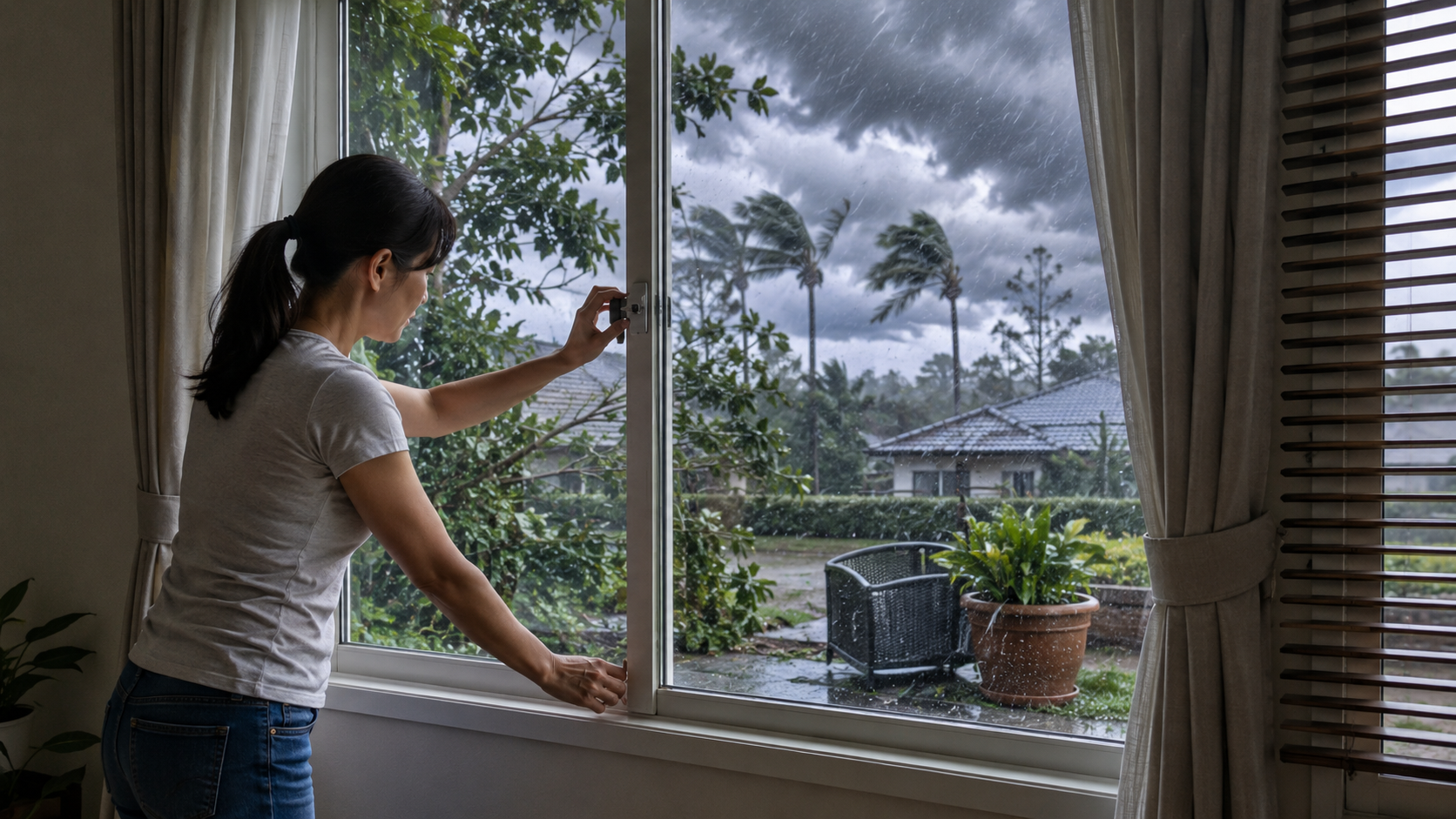
Why You Should Check Around Your Windows Before a Typhoon or Major Storm
Minjin Park
·
Before a typhoon, hurricane, or strong storm arrives, your windows deserve a careful check. Learn how small gaps, loose frames, cracked seals, and nearby objects can lead to leaks, drafts, and preventable damage.
When people prepare for a typhoon, hurricane, or major windstorm, they often think about the obvious things first: bottled water, flashlights, batteries, food, and charging phones.
Those are important. But one part of the home often gets overlooked until the rain starts blowing sideways: the windows.
Windows are one of the main places where wind and rain can enter or affect a home. Even if the glass itself is strong, the area around it may have small gaps, cracked caulking, loose screens, worn weatherstripping, or clutter nearby that can become a problem during severe weather.
A quick window check before the storm does not require special skills. You are not trying to rebuild your house in one afternoon. You are simply looking for weak spots, leaks, loose items, and anything that might make the storm more stressful than it needs to be.
For everyday families, renters, homeowners, and apartment dwellers, this small habit can make a big difference. It can help reduce water leaks, protect belongings near windows, prevent indoor messes, and give you a calmer sense of readiness before the weather turns rough.
Typhoon Winds Push Rain Into Places Normal Rain Never Reaches
A regular rainy day usually falls from above. Storm rain is different.
During a typhoon or hurricane-like storm, wind can drive rain sideways into window frames, tracks, sliding doors, vents, and tiny gaps around the wall. A window that never leaks during a normal shower may leak during a major storm because the water is being pushed with force.
That is why window inspection matters even if you have “never had a problem before.”
The Problem With Small Gaps
A tiny gap around a window may seem harmless on a calm day. But when strong wind pushes water against the house for hours, that small gap can let moisture in.
At first, it may look like a few drops on the windowsill. Then the water may spread to curtains, flooring, furniture, drywall, or electrical items nearby.
The goal is not to panic over every small crack. It is to notice obvious issues early enough to reduce the chance of a messy surprise.
Start With a Simple Walkaround
Before a storm arrives, walk around your home and look at every window you can safely access.
Do this during daylight if possible. It is much easier to spot cracks, loose trim, and clogged tracks when you are not rushing in the dark.
If you live in an apartment or condo, check from the inside and from any balcony or patio area you can access safely. Do not lean out windows or climb onto unsafe surfaces.
What to Look For Outside
From outside, look for:
Cracked or missing caulk around window edges
Loose trim or siding near the window
Gaps between the frame and wall
Damaged screens
Loose shutters
Rusted or weak hardware
Tree branches touching or hanging over windows
Outdoor furniture, pots, or decorations nearby
You do not need to fix every cosmetic issue. Focus on anything that looks loose, open, cracked, or likely to let water in.
What to Look For Inside
Inside the home, check for:
Water stains on the wall or sill
Soft or swollen wood around the frame
Peeling paint near the window
Drafts
Loose locks
Damaged weatherstripping
Curtains or blinds touching damp areas
Electronics placed too close to the glass
If a window already shows signs of past leaks, treat that area as a priority before the storm.
Check the Window Locks and Latches
Window locks are not just for security. They also help the window close tightly.
A window that is almost closed but not fully latched can rattle, leak, or shift during strong wind. Sliding windows and older double-hung windows are especially worth checking because they may appear closed while still leaving a small opening.
Go room by room and make sure every window is completely closed and locked.
Do Not Forget Rarely Used Rooms
Guest rooms, storage rooms, laundry rooms, basements, and spare bathrooms often get missed. These spaces may have windows that have not been opened in months.
A window left cracked for ventilation can become a problem quickly when wind-driven rain arrives.
Before the storm, check every room, even the ones you rarely use.
Inspect Window Tracks and Weep Holes
Many modern windows have small drainage features that allow water to escape. These are often called weep holes. Window tracks can also collect dirt, leaves, dead insects, and debris over time.
If drainage paths are blocked, water may back up and spill indoors.
Clean the Tracks
Use a vacuum, cloth, small brush, or cotton swab to remove debris from the window tracks. This is especially helpful for sliding windows and patio doors.
You may be surprised by how much dust and grit collects there.
Make Sure Water Has a Way Out
If your windows have visible weep holes, check that they are not clogged. Do not seal them shut with caulk or tape. They are designed to help water drain.
This is a common mistake. People sometimes see a little opening near the window and assume it should be covered. But if it is part of the window’s drainage system, blocking it can make water problems worse.
Look for Cracked Caulk and Worn Seals
Caulk around windows helps seal gaps between the frame and the surrounding wall. Over time, caulk can crack, shrink, peel, or pull away.
Before a storm, look closely at the edges of the window where the frame meets the siding, brick, stucco, or trim.
When a Temporary Fix May Help
If you find a small obvious gap and have time before the storm, exterior-grade caulk may help seal it. Follow the product directions and only apply it where appropriate.
For renters, check with your landlord or property manager before making repairs. At minimum, document the issue with photos and report it early.
For larger gaps, damaged frames, or signs of serious water intrusion, a professional repair may be needed. A quick storm-prep check is not a substitute for proper maintenance, but it can help you identify problems before they become more noticeable.
Move Furniture and Valuables Away From Windows
Even if your windows are in good condition, it is smart to move important items away from them before a major storm.
Wind-driven rain can find tiny openings. Condensation can form. A window may leak unexpectedly. And in severe conditions, objects outside can strike the glass.
You do not have to rearrange the whole house. Just create a little distance between valuable or absorbent items and the windows.
Think About the Floor Too
Water does not always stay on the sill. It can drip down the wall, run behind furniture, or soak into carpet and flooring.
If you know a window has leaked before, place towels nearby and keep the area clear so you can spot water early.
Remove Loose Objects Near Windows
One of the simplest and most useful storm habits is clearing outdoor items before the wind picks up.
A flowerpot, patio chair, garden tool, children’s toy, small table, or hanging decoration can become dangerous to windows when strong gusts arrive.
Check Patios, Balconies, and Porches
Look around any area near windows and glass doors. Bring loose items indoors or secure them properly.
This includes:
Patio chairs
Umbrellas
Planters
Wind chimes
Decorative signs
Grills or grill covers
Trash bins
Toys
Outdoor storage boxes
Small tables
Apartment balconies deserve special attention because items can blow into your own windows or fall toward areas below.
Trim or Report Branches
Tree branches near windows can scrape, hit, or break during high winds. If you own the property and can safely trim small branches ahead of time, do so before storm season.
If the branches are large, close to power lines, or on shared property, contact the appropriate property manager, landlord, or tree professional. Do not attempt risky trimming right before a storm.
Understand the Limits of Tape on Windows
Many people have heard that taping windows helps during storms. This advice is outdated and often misunderstood.
Tape does not make glass stormproof. It may keep some broken pieces together in certain situations, but it does not stop the window from breaking, and it can give people a false sense of security.
Better Options Than Tape
If your area is prone to hurricanes or typhoons, storm shutters, impact-resistant windows, or properly installed plywood may provide better protection when used correctly.
For renters or apartment residents, ask your property manager what storm protection is allowed and recommended.
If you do not have storm shutters, the practical steps still matter: close and lock windows, clear outdoor objects, move valuables away, and stay away from glass during the worst conditions.
Close Curtains or Blinds, But Do Not Rely on Them
Closing curtains or blinds before the storm can provide a small layer of privacy and may help catch minor debris or glass fragments if a window is damaged. But they are not protective barriers.
Use them as an extra layer, not your main safety plan.
During strong winds, it is best to keep people, pets, and sleeping areas away from windows if possible. Choose an interior room or area of the home when conditions become intense.
Check Sliding Glass Doors Too
Sliding glass doors are basically large windows, and they deserve the same attention.
Make sure the door is fully closed, locked, and seated properly in its track. Clean the track so water can drain and the door can close tightly.
Watch the Bottom Track
Sliding doors often leak at the bottom if the track is dirty, damaged, or overwhelmed by wind-driven rain. Before a storm, remove leaves, sand, pet hair, and debris from the track.
If your sliding door has leaked before, roll up rugs and move furniture away from that area.
Do Not Forget Basement and Ground-Level Windows
Basement windows, window wells, and ground-level windows can collect water quickly during heavy rain.
If leaves, mud, or debris block drainage around a window well, water can pool against the glass or frame.
Clear Window Wells
Before the storm, remove leaves, trash, and loose debris from window wells if you can do so safely. Make sure any drain area is not obviously blocked.
Check that covers are secure if you use them. A loose cover can blow away or shift during strong wind.
Look for Soil or Mulch Against the Frame
If soil, mulch, or landscaping material is piled too high against a window frame, water may have an easier path inside. This is not always something you can fix right before a storm, but it is worth noticing for future maintenance.
Warning Signs Your Windows Need Attention
Some window issues are easy to overlook until the weather gets rough. Before storm season, watch for these signs:
Water stains below the window
Musty smells near the wall or sill
Peeling paint or bubbling drywall
Soft wood trim
Windows that do not lock properly
Rattling during normal wind
Visible gaps around the frame
Fogging between panes
Cracked glass
Repeated drafts in one area
These signs do not always mean an immediate emergency. But they are clues that the window area may be vulnerable during a major storm.
Common Mistakes People Make Before a Typhoon
Storm prep often happens under pressure, and that is when small mistakes are easy to make.
Waiting Until the Wind Starts
Window checks are much easier and safer before the weather turns bad. Once the wind is strong, it may be too late to clear outdoor items, inspect frames, or move things around calmly.
Balcony items may seem heavy enough to stay put, but gusty wind can move more than people expect. Small objects are especially easy to forget.
Blocking Drainage Holes
Sealing every tiny opening around a window may seem helpful, but some openings are designed for drainage. Blocking weep holes can cause water to back up.
Keeping Electronics on Windowsills
Phones, speakers, chargers, laptops, and power strips should not sit near windows during a major storm. Move them early.
A Simple Pre-Storm Window Checklist
Use this quick checklist before a typhoon, hurricane, or major windstorm arrives.
Outside the Home
Walk around the house during daylight. Look for loose trim, cracked caulk, damaged screens, and objects that could blow into windows.
Bring in or secure patio furniture, planters, toys, tools, decorations, and trash bins.
Check nearby branches and report unsafe ones if needed.
Inside the Home
Close and lock every window. Check guest rooms, bathrooms, laundry rooms, basements, and storage areas.
Move furniture, electronics, papers, rugs, and valuables away from windows that may leak.
Close curtains or blinds as an extra layer.
For Sliding Doors
Clean the bottom track. Make sure the door locks properly. Move rugs and furniture away from the glass.
For Basement Windows
Clear window wells. Check for pooling water risks. Make sure covers are secure if you use them.
During the Storm
Stay away from windows during the strongest winds. Keep towels nearby for minor leaks. Watch for water entering around frames, but do not put yourself at risk trying to fix exterior problems during the storm.
What Renters Can Do
Renters may feel limited because they cannot make major repairs. But there are still practical steps you can take.
Document any cracked seals, loose frames, or past leak stains with photos. Report them to your landlord or property manager before the storm if possible.
Inside your unit, close and lock windows, move belongings away from glass, clear balcony items, and keep towels ready for minor leaks.
If your building has storm procedures, follow them. Apartment and condo buildings may have specific rules about balconies, shutters, parking areas, and shared entrances.
Why This Matters in Everyday Life
A window leak may sound minor compared with the storm itself, but anyone who has dealt with wet carpet, soaked curtains, damaged books, or water dripping near an outlet knows how stressful it can be.
The frustrating part is that many window-related storm problems are partly preventable. Not always completely, but enough to make preparation worthwhile.
A few minutes of checking can help protect your home from avoidable messes. It can also help you notice maintenance issues before they become bigger problems later.
For families, this matters even more because storm prep already comes with distractions. Kids may be nervous. Pets may act restless. Everyone may be trying to charge devices, gather supplies, and watch the forecast. Taking care of windows early removes one more worry from the list.
Final Thoughts: Small Window Checks Can Make Storm Prep Easier
Before a typhoon, hurricane, or major storm, your windows deserve more than a quick glance.
Check that they close and lock properly. Look for gaps, cracked caulk, clogged tracks, old leak stains, and loose items outside. Move valuables away from the glass. Clean drainage areas. Secure patio and balcony objects before the wind arrives.
These steps are simple, but they are practical. They help reduce leaks, protect belongings, and make your home feel more prepared when the weather gets rough.
Storm safety does not have to be dramatic. Often, it is about calm, ordinary habits done at the right time. A careful window check before the storm is one of those habits—and it is well worth adding to your routine.
Hi, I’m the creator and editor behind ZestyHabit. I research everyday safety, first aid, and practical wellness topics using official guidance and reliable public sources, then turn that information into clear, realistic steps for daily life.
My goal is to help readers make safer, better-informed choices at home and beyond.