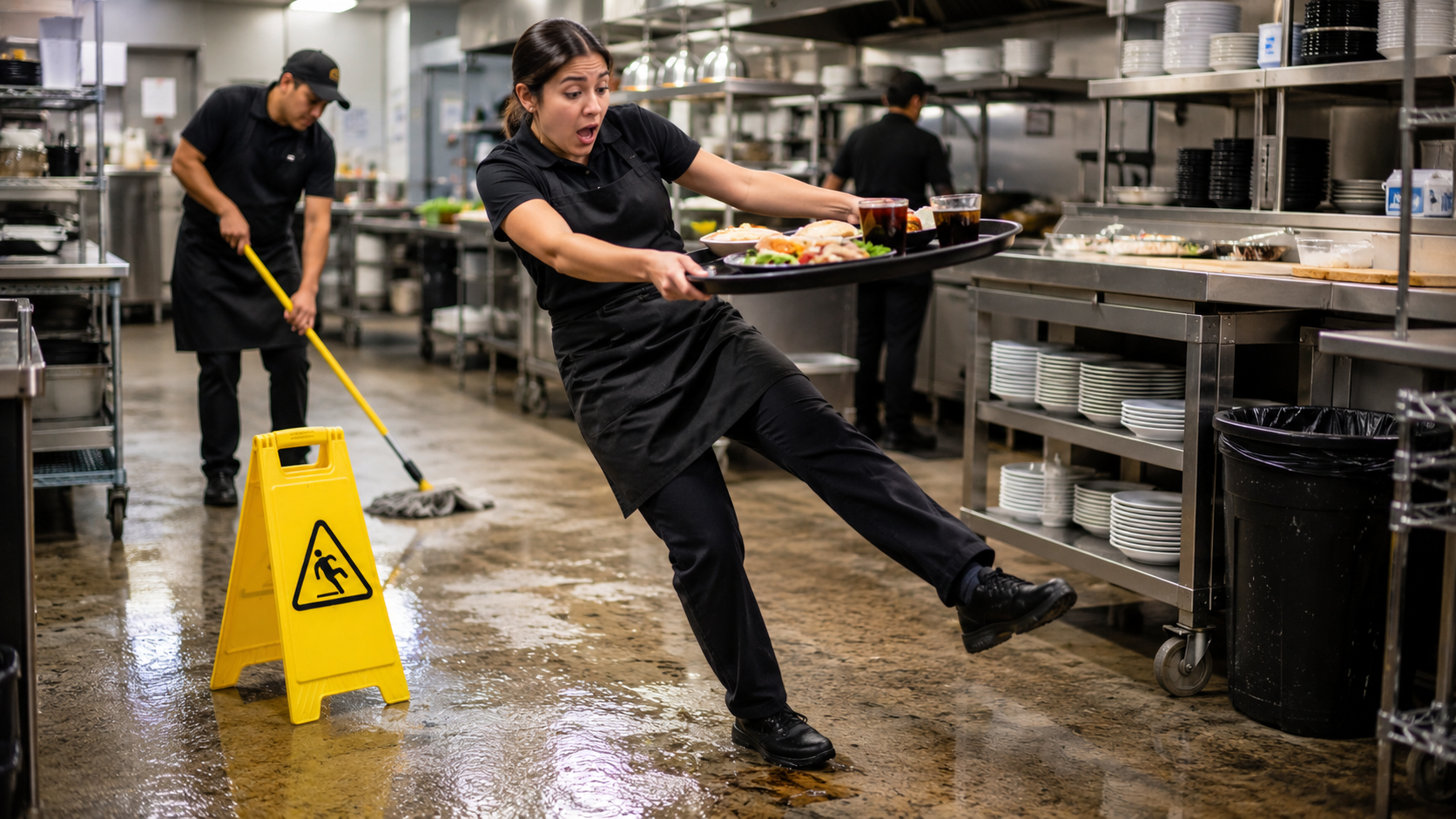
Why Greasy Restaurant Floors Can Be a Slip Hazard — and How to Stay Safer
Minjin Park
·
Greasy restaurant floors can become surprisingly slippery, especially near kitchens, counters, and entryways. Learn why it happens, what warning signs to notice, and simple safety habits for customers and staff.
Most people walk into a restaurant thinking about food, not flooring.
You may be focused on finding your table, picking up a takeout order, helping a child into a booth, or carrying a tray from the counter. The floor is usually the last thing on your mind.
But in restaurants, floors can become slippery in ways that are not always obvious. A thin layer of cooking oil, spilled sauce, tracked-in water, or cleaning residue can turn an ordinary walkway into a slip hazard.
The tricky part is that grease is often harder to see than a puddle of water. A floor can look clean and still feel slick under your shoes. That is especially true in busy restaurants where employees are cooking, serving, cleaning, and moving quickly all at the same time.
For customers, noticing floor conditions can help prevent an unexpected fall. For restaurant staff and owners, managing grease is part of keeping the space safer and more comfortable for everyone.
This is not about blaming anyone for one slippery spot. Restaurants are active places. Spills happen. Oil splatters. Shoes track things around. The goal is to understand why greasy floors happen and how simple habits can reduce the risk.
How Grease Ends Up on Restaurant Floors
Grease does not always land on the floor in one dramatic spill. More often, it builds up in small ways throughout the day.
In a kitchen, oil may splatter from fryers, grills, sauté pans, or food prep areas. Employees may step on small grease spots and then track that residue into walkways. A tiny amount of oil on the bottom of a shoe can spread farther than people expect.
In dining areas, greasy food can fall from plates. Salad dressing, melted butter, sauce, gravy, or oil from fried food can drip onto the floor. Near trash cans, takeout counters, and bus stations, food residue may collect faster because people are handling plates, containers, and leftovers.
Even cleaning can contribute if it is not done correctly. If a floor is mopped with dirty water, the wrong cleaner, or too much soap, it may leave behind a slick film. A floor may look freshly cleaned but still be slippery.
That is why restaurant floor safety is not just about wiping up obvious spills. It is about controlling the thin, hidden layers that make shoes lose grip.
Why Grease Makes Floors So Slippery
Walking safely depends on friction. Your shoes need enough grip against the floor to keep your feet from sliding.
Grease reduces that grip. It creates a smooth layer between the shoe sole and the floor surface. Instead of the shoe catching the floor, it may glide across it.
This can happen quickly. One foot lands, slides farther than expected, and your body reacts too late. You may twist, reach for a nearby chair, bump into someone, or drop what you are carrying.
Grease is especially tricky because it can spread into a very thin film. Unlike a large puddle, it may not catch your eye. You might only notice it after your foot slips slightly.
Certain floors also show grease less clearly than others. Dark tile, polished concrete, patterned flooring, and glossy surfaces can hide slick spots. Bright lighting may help, but even well-lit restaurants can have floors that look fine and feel slippery.
Common Restaurant Areas Where Grease Builds Up
Some parts of a restaurant are more likely to become slippery than others. Knowing where to pay attention can help both customers and staff.
Near the Kitchen Entrance
The area where the kitchen meets the dining room is one of the most common transition zones. Staff move quickly through this space carrying plates, trays, drinks, and cleaning supplies.
Grease from the kitchen floor can travel on shoes into the service path. If the area is narrow or crowded, people may also have less room to adjust their steps.
Around Fryers and Grills
In the kitchen itself, fryer and grill areas are high-risk spots. Oil splatter, steam, food debris, and fast movement can all make floors slippery.
This is especially important for employees, but it can also matter in open-kitchen restaurants or places where customers walk near food prep areas.
Takeout and Pickup Counters
Takeout bags, containers, sauces, and drinks are handled quickly at pickup counters. A small leak from a container or a dropped sauce cup can create a slick spot near the waiting area.
Customers may also crowd together while looking at phones or order screens, which makes it harder to notice the floor.
Buffet and Self-Serve Areas
Buffets can be convenient, but they also create more chances for drips. Salad dressing, soup, gravy, butter, oil, and sauces may fall as people serve themselves.
People may carry full plates while looking ahead for a table instead of looking down at the floor.
Restroom Hallways
Restroom paths sometimes become slippery because of a mix of water, soap, and tracked-in grease from shoes. If the hallway floor is smooth, even a small amount of residue can matter.
Entryways During Rain or Snow
Grease becomes even more difficult when mixed with water. On rainy or snowy days, customers track in moisture. If that moisture combines with oily residue, the floor can become very slick.
Entry mats help, but they need to be placed well and kept flat. A curled or soaked mat can become its own hazard.
Why Busy Restaurants Can Be More Challenging
Busy restaurants have more movement, more spills, and less time between tasks.
During a lunch rush or dinner rush, employees may be carrying hot food, clearing tables, refilling drinks, answering customers, and cleaning as they go. Customers may be standing in lines, moving chairs, helping kids, or walking through crowded aisles.
In that kind of environment, a small slick spot can be missed.
The pace also affects how people walk. When we are in a hurry, we take quicker steps, turn faster, and pay less attention to the ground. A server carrying a full tray may not see a grease spot near a table. A customer picking up food may step backward without looking. A child may run toward a booth without noticing the floor.
Crowding adds another layer. If someone slips in a tight space, they may bump into tables, chairs, other customers, or staff. That is why keeping walking paths clean and clear matters so much.
Common Mistakes Customers Make
Customers do not control restaurant cleaning, but they can still make safer choices in slippery environments.
Walking Too Fast
It is easy to rush when your name is called at a pickup counter or when you are trying to follow a host to a table. But fast steps make it harder to recover from a slip.
A slower pace gives your shoes more time to grip and your body more time to react.
Not Watching Transition Areas
The spot between outside and inside, kitchen and dining room, tile and carpet, or restroom and hallway can feel different underfoot. These transition areas are worth noticing.
If the floor suddenly looks shiny, damp, or darker than nearby areas, slow down.
Wearing Slick Shoes
Some shoes have smooth soles that do not grip well on tile or polished floors. Dress shoes, worn-out sneakers, certain sandals, and high heels can be more slippery on greasy surfaces.
For people who work in restaurants, slip-resistant shoes are especially important. For customers, choosing stable shoes can help when going to crowded or casual dining places.
Letting Kids Run Indoors
Children may not notice slick floors, especially if they are excited, hungry, or playing near the table. Restaurant floors are not the best place for running.
A simple reminder like “walking feet inside” can help prevent slips near booths, restrooms, and buffet areas.
Ign booths, restrooms, and buffet areas.
Ignoring a Small Slip
If your foot slides a little, take it seriously. A small slip may be a clue that the floor is slick. Slow down, step carefully, and let staff know if you notice a greasy or wet spot.
Common Mistakes Restaurants Can Overlook
For restaurants, floor safety depends on routines. A clean-looking floor is not always a safe floor.
Using the Wrong Cleaning Product
Grease needs the right cleaning approach. If a cleaner does not break down oil well, it may spread the grease instead of removing it. Too much soap can also leave residue that feels slick.
Mopping With Dirty Water
Mopping a greasy floor with dirty water can move grease around. The floor may look damp and freshly cleaned, but the residue may remain.
Changing mop water regularly and using clean tools matters.
Forgetting High-Traffic Paths
Some areas need more frequent attention than others. The path from kitchen to dining room, the area near the host stand, and the route to restrooms may need checks throughout the day.
Not Training Staff to Report Slick Spots
Employees are often the first to notice a problem. If they feel a small slide under their shoes, see a sauce spill, or notice a greasy patch, they should know what to do right away.
A strong safety culture makes reporting normal, not annoying.
Leaving Warning Signs Too Long
Wet floor signs are useful when the floor is actually wet or recently cleaned. But signs should not become a replacement for proper cleaning. If a floor stays slick after it dries, the problem may be residue, not moisture.
Warning Signs of a Slippery Restaurant Floor
Sometimes you can spot a risky floor before stepping onto it.
Look for these signs:
A shiny or greasy-looking patch
A darker area on tile or concrete
A floor that feels slick under one foot
Food crumbs mixed with sauce or oil
Water near entryways, drink stations, or restrooms
A mat that is curled, bunched, or soaked
Employees walking carefully in one area
Spilled dressing, soup, or sauce near tables
A strong oily film near kitchen doors
Not every shiny floor is dangerous, but shine plus food service activity is worth noticing.
Trust your feet too. If the floor feels slippery, it probably needs attention.
Simple Safety Habits for Customers
A few small habits can help you move more safely through restaurants.
Walk at a steady pace, especially near entrances, restrooms, counters, and buffets.
Watch the floor in high-traffic areas.
Hold handrails when using stairs.
Keep children close in crowded spaces.
Avoid stepping over spills.
Report slick spots to staff calmly.
Be careful when carrying drinks, trays, or takeout bags.
Use extra caution on rainy or snowy days.
If a floor looks wet or greasy, do not assume someone else has already mentioned it. Staff may not have seen it yet, especially during a rush.
A simple “There’s a slick spot near the counter” can help prevent someone else from slipping.
Simple Prevention Tips for Restaurant Staff
For staff, the best approach is consistency. Grease control works best when it is part of the daily rhythm, not just a reaction after someone slips.
Check floors regularly during busy periods.
Clean spills right away when safe to do so.
Use degreasing products appropriate for the floor type.
Change mop water often.
Keep mats flat, clean, and dry.
Use slip-resistant footwear.
Store oil and sauces carefully.
Keep walking paths free of boxes, cords, and clutter.
Pay attention to areas near fryers, grills, dish stations, and kitchen doors.
Communicate quickly when a floor needs attention.
Even small improvements can make the restaurant feel safer for staff and guests.
Why Footwear Makes Such a Difference
Shoes are the connection between the person and the floor. On a greasy surface, that connection matters.
Slip-resistant shoes are designed to provide better traction on wet or oily floors. They are especially helpful for people who work long shifts in restaurants, cafeterias, bakeries, coffee shops, and commercial kitchens.
For customers, footwear still matters. Smooth leather soles, worn-down treads, loose sandals, and unstable heels can make slips more likely on slick tile.
You do not need special shoes just to go out to dinner. But if you are visiting a busy restaurant on a rainy day, walking through a food court, or attending an event with buffet service, stable shoes can help.
Why Greasy Floors Are Harder to Manage in Winter
Winter adds extra challenges.
People track in snow, slush, salt, and water. Heavy coats and bags make it harder to see the floor. Entry mats become wet quickly. Restaurants may be crowded with people waiting inside to avoid the cold.
When moisture mixes with grease, the floor can become even slicker.
That is why winter floor care often needs more frequent checks. Entryways may need extra mats, but those mats must stay flat and not slide. Staff may need to inspect the area more often, especially during lunch and dinner rushes.
Customers can help by wiping shoes on mats, slowing down near entrances, and watching for wet spots.
What to Do If You Notice a Greasy Spot
If you see or feel a slick spot in a restaurant, respond calmly.
Step away from the area if you can.
Warn anyone nearby if they are about to step into it.
Tell a staff member where the spot is.
Avoid trying to clean it yourself unless it is a very small, simple spill and you can do so safely.
If you are with children, guide them around the area.
For staff, the response should be quick and clear: mark the area if needed, clean it properly, and make sure the floor is not still slick after it dries.
A greasy floor often needs more than a quick swipe with a napkin. It may need the right cleaner and a little time.
How Families Can Stay Safer When Dining Out
Dining out with kids, older adults, or a group can make floor awareness more important.
Children may dart toward a booth, crawl under tables, or swing their feet into walkways. Older adults may have a harder time recovering from a slip. Anyone carrying a baby, using a cane, or walking with limited mobility may need a clearer path.
When you arrive, take a quick look at the route to your table. Notice whether the floor is wet near the entrance. Keep bags tucked away so they do not create tripping hazards. Encourage kids to walk, not run.
If you are helping someone who needs extra balance, avoid rushing through crowded paths. Ask for a table that is easier to reach if needed.
These are small, ordinary choices, but they can make a meal feel smoother and safer.
A Practical Restaurant Floor Safety Checklist
Whether you are a customer or part of a restaurant team, these questions are helpful:
Does the floor look shiny, wet, or greasy?
Are spills being cleaned quickly?
Are entry mats flat and dry enough to work?
Are people walking carefully in one area?
Are children running near tables or counters?
Are food and drink stations being checked often?
Are staff wearing shoes with good traction?
Are kitchen-to-dining paths clean and clear?
Are rainy-day entryways being monitored?
Would someone carrying a tray notice this spot?
The goal is not perfection. The goal is paying attention before a small slick spot becomes a fall.
Conclusion: A Clean-Looking Floor Can Still Be Slick
Restaurant floors deal with a lot: cooking oil, sauces, drinks, crumbs, rain, snow, cleaning products, and constant foot traffic. Because grease can spread in a thin, hard-to-see layer, a floor may look fine but still be slippery.
That is why awareness matters.
For customers, the safest habits are simple: slow down in high-traffic areas, watch for shiny or wet patches, keep kids from running, wear stable shoes when possible, and let staff know if you notice a slick spot.
For restaurants, regular cleaning, proper degreasers, clean mop water, good mats, staff training, and slip-resistant footwear can reduce everyday risks.
A meal out should be relaxing, not stressful. With a little attention from both customers and staff, greasy floor hazards can be managed quietly and practically.
The next time you walk through a busy restaurant, especially near the entrance, counter, restroom, or kitchen path, take one extra second to notice the floor. That small pause may help keep the whole experience safer and more comfortable.
Hi, I’m the creator and editor behind ZestyHabit. I research everyday safety, first aid, and practical wellness topics using official guidance and reliable public sources, then turn that information into clear, realistic steps for daily life.
My goal is to help readers make safer, better-informed choices at home and beyond.