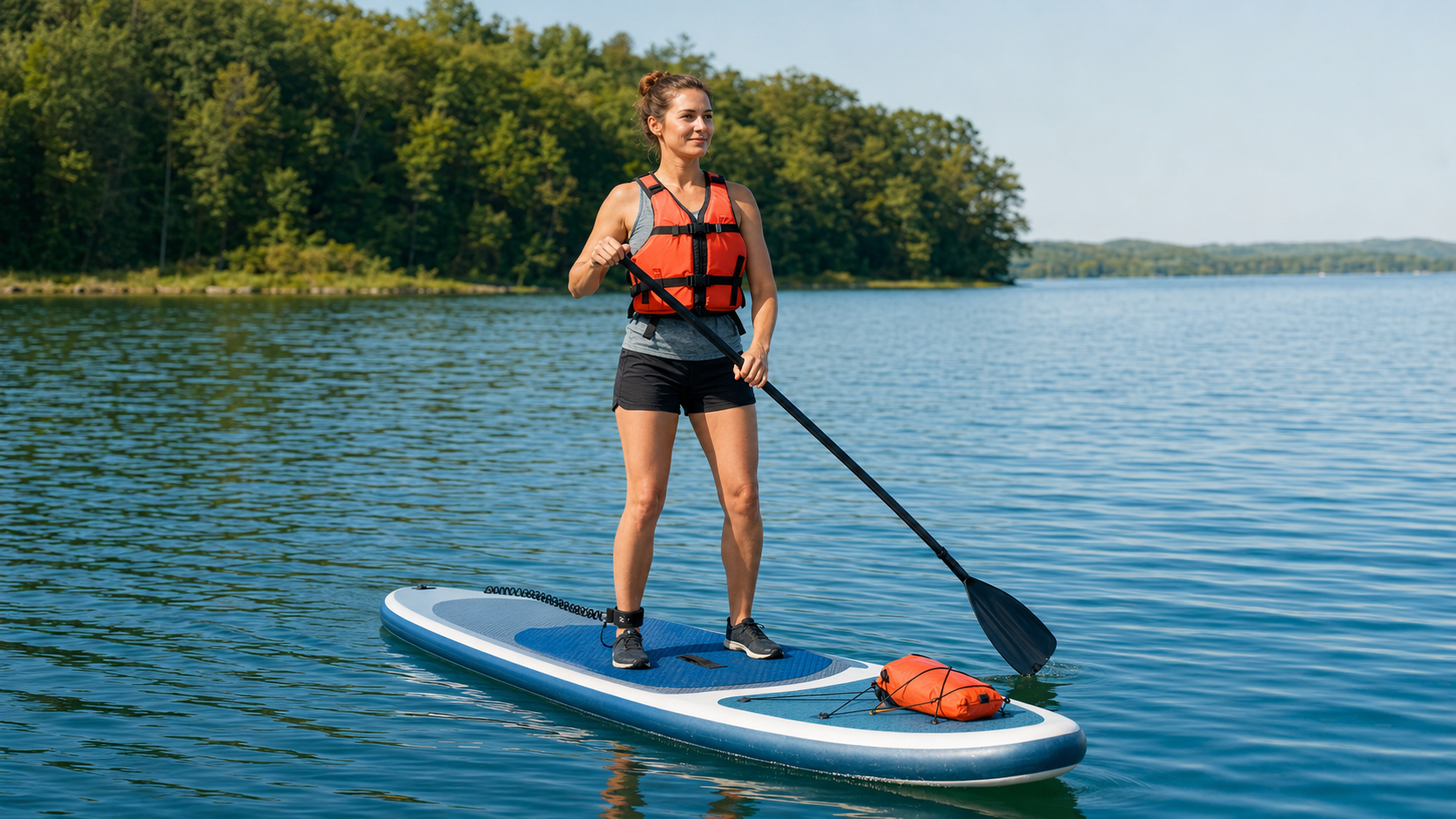
Paddleboarding Precautions: How to Stay Balanced and Safe
Minjin Park
·
Paddleboarding looks peaceful from the shore. Someone stands on a board, glides across calm water, and makes it seem effortless. The movement is smooth, the scenery is beautiful, and the whole activity can feel more like relaxation than exercise.
But once you step onto a paddleboard yourself, you quickly realize that balance, weather, water conditions, and equipment all matter. Even on a calm-looking day, the board can wobble. A breeze can push you off course. Boat waves can surprise you. The sun can feel stronger than expected. And if you fall in, getting back on the board may be harder than it looked.
That does not mean paddleboarding is dangerous or only for athletic people. Stand-up paddleboarding can be beginner-friendly, enjoyable, and a great full-body activity. But like any water sport, it deserves respect. Staying safe is not just about being able to stand up. It is about knowing the conditions, using a leash, wearing the right gear, protecting yourself from the sun, and understanding when to sit, kneel, turn back, or call it a day.
If you are new to paddleboarding, these precautions can help you stay balanced, comfortable, and safe on the water.
Paddleboarding combines balance, water awareness, and outdoor conditions. That means your safety depends on more than your strength.
A beginner may be able to stand on the board in calm water, but things can change quickly. Wind may pick up. A current may pull you farther than planned. A boat wake may rock your board. Your legs may become tired. Your skin may burn under the sun. You may drift without noticing because the view is distracting.
Many paddleboarding problems happen gradually. You start close to shore, feel confident, paddle farther, then realize the wind is pushing against you on the way back. Or you forget sunscreen because the morning feels cool, then end the session with a painful burn. Or you skip the leash because the water looks calm, then the board floats away when you fall.
Good paddleboarding safety is about prevention. It helps you enjoy the water instead of fighting it.
Start in Calm, Shallow Water
For your first few paddleboarding sessions, choose calm, flat water. A quiet lake, protected bay, slow river, or beginner-friendly rental area is usually better than open ocean or windy water.
Shallow water can also help beginners feel less nervous, as long as it is deep enough that the fin does not scrape the bottom. You should avoid very shallow rocky areas because falling there can hurt your feet, knees, or hands.
Look for a place with easy entry and exit. A sandy shoreline, dock with assistance, or calm launch area makes the beginning much easier. Avoid launching where waves are breaking, boats are moving close by, or currents are strong.
The goal at first is not distance. It is comfort. You want to learn how the board feels, how to kneel, how to stand, how to paddle, how to turn, and how to get back on if you fall.
A calm environment lets you practice these basics without unnecessary pressure.
Wear a Proper Personal Flotation Device
Even strong swimmers should wear a personal flotation device, often called a PFD or life jacket, when paddleboarding. Falling into water is different from swimming in a pool. You may be surprised, tired, cold, far from shore, or dealing with wind and current.
A PFD gives you extra safety if something unexpected happens. It can also reduce panic, especially for beginners.
Choose one that fits properly and allows shoulder movement. A bulky, uncomfortable life jacket may make paddling awkward, but one that is too loose may not protect you well. Many paddlers use low-profile PFDs designed for paddling, but beginners should prioritize proper fit and reliable flotation over style.
Check local rules too. Some areas legally require paddleboarders to have a PFD, and children may be required to wear one at all times.
Wearing a PFD is not a sign that you are inexperienced. It is a normal part of responsible water activity.
Use a Leash and Know Which Type You Need
A leash connects you to your board. This matters because your board is your biggest flotation support. If you fall and the board drifts away, you may have to swim after it, and wind can move it faster than you expect.
For calm lakes, bays, and ocean paddling, an ankle or calf leash is common. It keeps the board close after a fall.
However, moving water is different. On rivers or areas with current, a standard ankle leash can become dangerous if it gets caught on rocks, branches, or underwater objects. In those conditions, paddlers often use a quick-release leash attached around the waist or avoid certain leash setups depending on the environment and skill level.
This is why beginners should not treat all water the same. A calm lake and a flowing river require different safety thinking.
If you rent a board, ask staff which leash is appropriate for the location. If you own your equipment, learn the difference before paddling in new conditions.
A leash is simple, but using the right leash in the right place is important.
Check Wind Before You Go
Wind is one of the biggest factors in paddleboarding safety. A day can look sunny and beautiful, but if the wind is strong, paddling can become difficult quickly.
The most important thing to remember is that wind can push you away from shore. Beginners often paddle with the wind without realizing it, then struggle badly when they turn around and have to paddle back against it.
Before you launch, check the wind direction and speed. If possible, start by paddling into the wind first. That way, the return trip is easier because the wind helps push you back.
Be especially careful with offshore wind, which blows from land toward open water. It can carry you away from shore faster than expected. For beginners, offshore wind is a serious reason to reconsider the session.
If the wind picks up while you are on the water, lower your body. Kneel on the board to reduce wind resistance and improve stability. If needed, lie down and paddle with your hands like a surfboard to get back safely.
Confidence on a paddleboard should always include respect for wind.
Understand Water Conditions
Water can look calm from a distance but feel different once you are on it. Before paddleboarding, pay attention to waves, current, tides, boat traffic, water temperature, and visibility.
Small ripples are usually manageable, but choppy water can make balancing much harder. Boat wakes can also surprise beginners. If you see a wake coming, bend your knees, face the board toward the wave if possible, and stay relaxed.
Currents are especially important. In rivers, tidal areas, and channels, moving water can affect your route and energy. You may drift without realizing it. If you are new, avoid strong currents until you have more experience or go with a qualified guide.
Cold water deserves caution too. Even on a warm day, falling into cold water can shock your body and make it harder to move. Dress for the water temperature, not only the air temperature.
If you are unsure about conditions, ask local rental shops, lifeguards, park staff, or experienced paddlers. Local knowledge is often more useful than guessing from the shore.
Learn the Best Beginner Stance
Balance starts with your stance. Many beginners stand too stiffly or place their feet too close together.
Stand near the center of the board, usually around the carry handle. Keep your feet about hip-width apart and parallel. Your toes should point forward, not out to the sides. Bend your knees slightly and keep your body relaxed.
Try not to stare down at your feet. Looking down often makes balance worse. Instead, look toward the horizon or where you want to go. Your body tends to follow your eyes.
Keep your core gently engaged, but do not become rigid. A paddleboard moves under you. Your job is not to freeze it completely. Your job is to move with it.
If standing feels too hard, start on your knees. Kneeling is not failure. It is a smart way to build comfort, especially in wind, chop, or crowded areas.
Use the Paddle for Support
Your paddle is not just for moving forward. It can also help with balance.
When you paddle, the blade in the water creates a point of support. Many beginners feel more stable once they start paddling because the paddle gives rhythm and direction.
Hold the paddle correctly. One hand goes on the top grip, and the other holds the shaft. The blade should angle forward, away from you, when paddling. This may feel backward at first, but it helps the blade move through the water efficiently.
Take smooth strokes close to the board. Reaching too far out to the side can make the board turn and may throw off your balance. Keep your movements controlled rather than wild.
If you wobble, do not panic and throw the paddle around. Bend your knees, place the paddle blade in the water, and use it to steady yourself.
The more calmly you use the paddle, the more stable you will feel.
Practice Falling and Getting Back On
Falling is normal in paddleboarding. It happens to beginners and experienced paddlers. The important thing is knowing how to fall and recover.
If you feel yourself falling, try to fall away from the board rather than onto it. The water is usually safer than hitting the board. Avoid grabbing the board awkwardly as you fall because that can strain your shoulder or wrist.
Once in the water, stay calm. Your leash should keep the board nearby. Swim to the side of the board near the center, place your paddle across the board if possible, and pull yourself up onto your stomach. Then move into a kneeling position before standing again.
Practice this in calm water before you actually need it. Many beginners are surprised by how much energy it takes to climb back on, especially if they are tired.
Knowing you can recover from a fall makes the whole session less stressful.
Protect Yourself From the Sun
Sun exposure can be stronger on the water than on land because light reflects off the surface. Even on cooler days, you can burn quickly.
Apply broad-spectrum sunscreen before you go out, and reapply as needed, especially after falling in or sweating. Pay attention to areas people often miss: ears, back of the neck, tops of feet, backs of hands, and the area around swimsuit or clothing lines.
A hat, sunglasses with a strap, and sun-protective clothing can make a big difference. Long-sleeve rash guards or lightweight UPF shirts are especially useful because they reduce how much sunscreen you need to rely on.
Hydration also matters. Bring water, especially if you plan to paddle longer than a short rental session. Sun, wind, and physical effort can dehydrate you faster than you expect.
Sun protection is not just about avoiding a burn. It helps you stay comfortable, alert, and safer on the water.
Do Not Paddle Alone as a Beginner
Solo paddleboarding can be peaceful, but beginners should avoid going alone, especially in unfamiliar water.
Go with a friend, instructor, rental group, or guided session. If something goes wrong, having another person nearby can make a big difference. They can help if you fall, drift, lose your paddle, become tired, or feel nervous.
At the very least, tell someone where you are going and when you expect to return. Carry a waterproof phone case or communication device if appropriate for the location. Just make sure it is secured and usable.
Beginners often underestimate how far they have drifted or how quickly conditions change. A buddy system adds a layer of safety and confidence.
Paddleboarding is more enjoyable when you are not carrying all the risk alone.
Stay Aware of Boats and Other Water Users
Paddleboards are small compared with boats, jet skis, and larger watercraft. You need to stay visible and predictable.
Avoid busy boat channels if you are new. Stay closer to shore where it is safe to do so, but avoid rocky edges, swimmers, and restricted areas. Wear bright clothing if possible, especially in areas with mixed water traffic.
Do not assume boaters can see you. Sun glare, speed, distance, and waves can make paddleboarders harder to spot.
When crossing an area with traffic, do so carefully and directly. Avoid sudden movements. Keep watching your surroundings, not just the water in front of your board.
Also be considerate of swimmers, kayakers, surfers, anglers, and wildlife. Paddleboarding should be calm and respectful, not chaotic.
Know Your Limits
Paddleboarding can feel easy at first because the pace is relaxed. But it uses your legs, core, back, shoulders, and balance more than you may realize.
Fatigue can sneak up on you. Your legs may start shaking. Your paddle strokes may become sloppy. Your balance may get worse. You may start sitting down more often. These are signs to rest or turn back.
Do not measure success by how far you go. For beginners, a short, controlled session is much better than a long, exhausting one.
Plan your route so you have enough energy to return. Remember that the way back may be harder if wind or current changes. Take breaks before you are desperate for them.
There is no shame in kneeling, sitting, or ending early. Smart paddlers adjust.
Dress for the Water, Not Just the Weather
A warm sunny day does not always mean the water is warm. If you fall into cold water wearing only light clothing, your body may cool quickly.
In warm water, swimwear, a rash guard, or light activewear may be fine. In cooler water, you may need a wetsuit or other thermal protection. Local conditions matter.
Avoid heavy cotton clothing. Once wet, cotton can become cold, heavy, and uncomfortable. Choose clothing that dries quickly and allows movement.
Footwear depends on the location. Bare feet may work on clean boards and sandy launches, but water shoes can protect against rocks, shells, hot surfaces, or slippery entry points.
Dress in a way that helps you move, fall, climb back on, and stay comfortable after getting wet.
Keep Your Board and Gear in Good Condition
Before launching, check your board, paddle, fin, leash, and PFD.
If you use an inflatable paddleboard, make sure it is properly inflated. An underinflated board may feel unstable and sluggish. Check that the fin is attached securely and that the valve is closed properly.
If you use a hard board, check for damage, cracks, or anything that might affect flotation. Make sure the deck pad is not slippery.
Adjust your paddle to the right height. If it is too short or too long, paddling may feel awkward and tiring.
Secure loose items. Use dry bags or bungee storage if available. Do not bring valuables unless they are protected and attached. A dropped phone or water bottle can be distracting and unsafe to chase.
Good gear does not have to be fancy. It just needs to be suitable, secure, and functional.
Avoid Alcohol Before and During Paddleboarding
Paddleboarding may look like a relaxed vacation activity, but it still requires balance, judgment, coordination, and awareness. Alcohol affects all of those.
Even a small amount can make it harder to react to wind, waves, boats, and falls. It can also increase dehydration and reduce your ability to judge distance or risk.
Save alcohol for after the session, when you are safely off the water.
This is especially important for group outings where paddleboarding is part of a beach day or lake trip. Keep the water activity separate from drinking.
Take a Lesson if You Are Unsure
A beginner paddleboarding lesson can save you a lot of frustration. An instructor can help you learn how to carry the board, launch, stand, paddle straight, turn, stop, fall, recover, and read basic water conditions.
Many beginners improve quickly with just a few simple corrections. For example, they learn to stand in the right spot, hold the paddle correctly, stop looking at their feet, or use their core instead of only their arms.
A lesson is especially helpful if you are paddling in coastal water, rivers, or any area with changing conditions.
You do not need to become a competitive paddler. You just need enough foundation to feel safe and confident.
A Simple Paddleboarding Safety Checklist
Before you go out, ask yourself:
Is the water calm enough for my skill level?
Did I check wind direction and strength?
Am I wearing a properly fitted PFD?
Am I using the right leash for this location?
Do I know how to get back on the board after falling?
Did I apply sunscreen and bring water?
Am I dressed for the water temperature?
Does someone know where I am going?
Is my board, paddle, fin, and leash in good condition?
Am I willing to kneel, turn back, or stop if conditions change?
These simple questions can prevent many common beginner problems.
Final Thoughts
Paddleboarding is peaceful, fun, and surprisingly good exercise. It can give you a beautiful view of the water while improving balance, core strength, and confidence. But because it takes place outdoors on changing water, safety should always come first.
Start in calm conditions. Wear a PFD. Use the right leash. Respect wind, current, sun, and water temperature. Practice falling and getting back on. Keep your stance relaxed, your knees soft, and your expectations realistic.
The best paddleboarding sessions are not the ones where you prove how far you can go. They are the ones where you return feeling refreshed, safe, and excited to go again.
Stay balanced, stay aware, and let the water be enjoyable—not something you have to fight.
Hi, I’m the creator and editor behind ZestyHabit. I research everyday safety, first aid, and practical wellness topics using official guidance and reliable public sources, then turn that information into clear, realistic steps for daily life.
My goal is to help readers make safer, better-informed choices at home and beyond.