
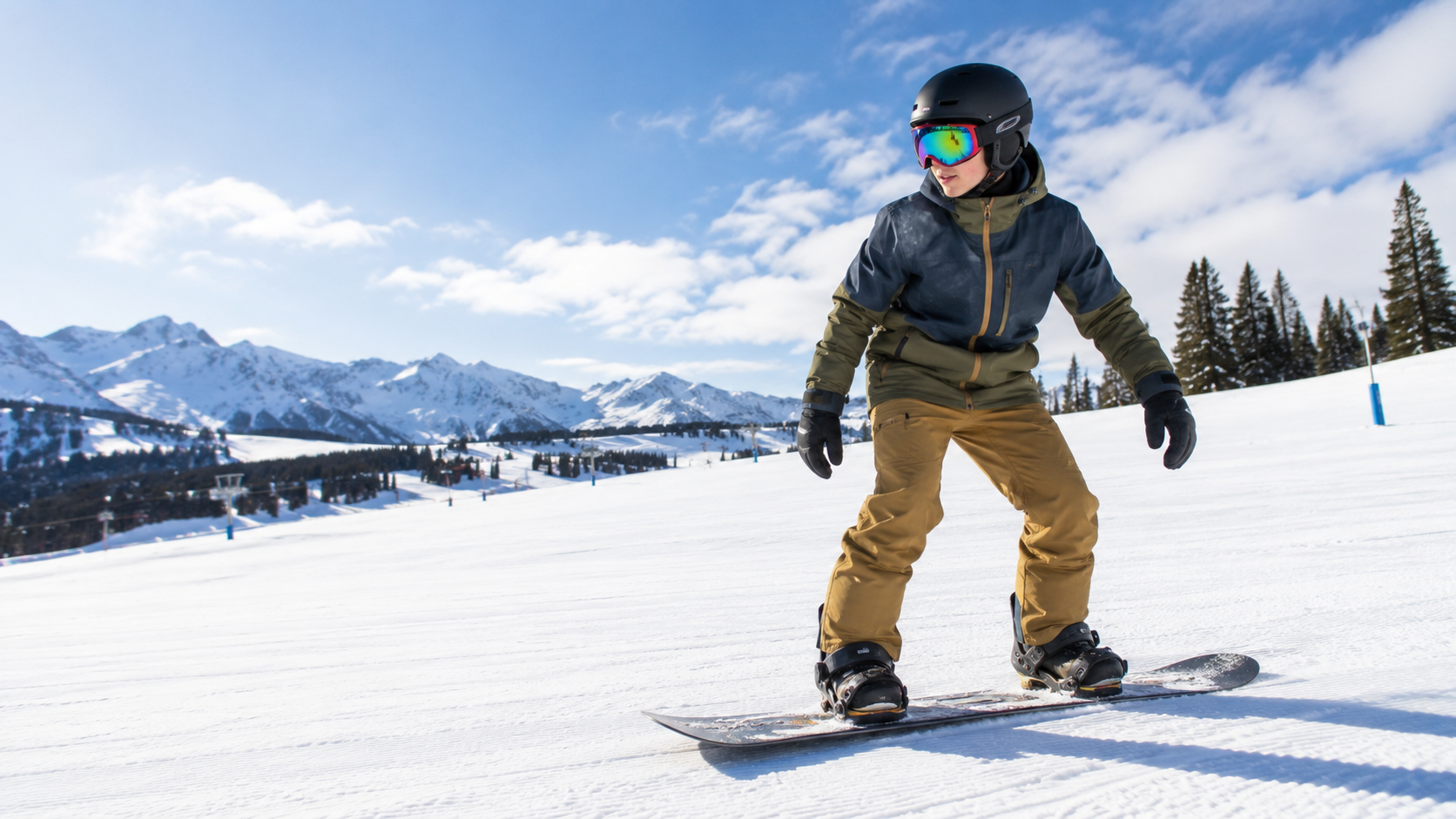

Snowboarding looks effortless when experienced riders glide down the slope, carve smooth turns, and stop exactly where they want to. But for beginners, the first few sessions can feel completely different.
One moment you are standing still. The next, the board starts sliding, your body stiffens, your edge catches, and you are suddenly on the snow wondering what just happened.
That is normal.
Falling is part of learning to snowboard. In fact, almost every snowboarder falls many times in the beginning. The goal is not to avoid every fall. The goal is to reduce unnecessary falls, protect your wrists and body, and learn how to fall in a safer way when it does happen.
Beginner falls often come from the same basic issues: poor stance, stiff posture, looking down, catching an edge, leaning the wrong way, or trying terrain that is too difficult too soon. With a few smart precautions, you can make your first snowboarding days less frustrating and much safer.
Here is how to avoid common beginner snowboarding falls while building better control, confidence, and balance on the mountain.
Why Beginners Fall So Often When Snowboarding
Snowboarding feels strange at first because both feet are attached to one board. Unlike skiing, you cannot step one foot out to catch yourself easily. Your balance has to come from your whole body working with the board.
Beginners often fall because they fight the board instead of guiding it. They lean back too much, straighten their legs, twist their upper body, or panic when the board starts to move. These reactions are natural, but they can make the board harder to control.
Another major reason beginners fall is edge catching. A snowboard has two main edges: the toe edge and the heel edge. These edges help you turn and stop. But if the wrong edge catches the snow while the board is moving, you can fall quickly.
Catching an edge can feel sudden and dramatic. It often happens when the board is too flat, when your weight is in the wrong place, or when you are not controlling which edge is touching the snow.
Learning to snowboard is really learning how to manage your edges, your weight, and your body position.
Wear Wrist Protection From the Start
One of the most common beginner snowboarding injuries involves the wrists.
When people fall, the natural reaction is to throw the hands out to stop the body. On snow, especially with speed, this can put a lot of force through the wrists. A simple backward or forward fall can lead to soreness, sprains, or more serious injury.
Wrist guards can be very helpful for beginners. They are not magic armor, but they can reduce the stress of sudden hand-first falls. Many beginners avoid wrist guards because they think they look awkward, but protecting your wrists is much more important than looking experienced.
Gloves with built-in wrist protection are also available. The most important thing is that the protection fits well and does not make your hands feel completely stiff or uncomfortable.
Even with wrist guards, you should still learn better falling habits. Protective gear helps, but it should not encourage careless riding.
Learn How to Fall Safely
Falling safely is one of the best skills a beginner snowboarder can learn.
The instinct to catch yourself with straight arms is strong, but it is not ideal. A locked wrist, elbow, or shoulder can take too much impact. Instead, try to spread the force across a larger area of the body.
If you fall forward, avoid landing with stiff, straight arms. Try to keep your arms slightly bent and land more on your forearms rather than directly on your hands. If you fall backward, try to tuck your chin slightly and avoid whipping your head into the snow. Keep your arms closer to your body rather than reaching straight behind you.
Relaxing a little also helps. A very stiff body often hits harder. This is easier said than done, but with practice, falling becomes less shocking.
Beginners can practice gentle falls on flat snow before riding. It may feel silly, but it teaches your body what to do before a real fall happens at speed.
Start on the Right Terrain
Choosing the right slope matters more than beginners realize.
A slope that is too steep can make everything harder. You gain speed too quickly, panic more easily, and have less time to correct mistakes. A crowded slope also increases stress because you may feel rushed or afraid of hitting someone.
Start on a beginner area or gentle learning slope. Ideally, choose a wide, uncrowded section with soft snow and enough space to stop. A magic carpet or beginner lift area is usually better than jumping straight onto a regular run.
Do not compare yourself to friends who already ride. Trying to follow more experienced riders down a slope before you are ready is one of the easiest ways to fall repeatedly and lose confidence.
Beginner terrain is not embarrassing. It is where you learn the basics that make the rest of snowboarding possible.
Keep a Soft, Athletic Stance
A stiff body leads to more falls.
Many beginners stand too upright with locked knees. This makes it harder to absorb bumps, adjust balance, or control the board. When the board shifts, the body cannot respond quickly, so the rider tips over.
A better stance is soft and athletic. Bend your knees slightly, keep your hips relaxed, and let your ankles, knees, and hips move with the terrain. Your arms can be out naturally for balance, but they should not be wildly waving around.
Think of your body like a shock absorber. The snow is not perfectly smooth, and the board will move underneath you. If your legs are stiff, every small change can throw you off. If your knees are soft, you can adjust more easily.
This stance also helps with edge control. You can shift pressure between heel edge and toe edge more smoothly when your body is relaxed and balanced.
Look Where You Want to Go
Beginners often stare down at the board.
It feels logical because you want to see what your feet are doing. But looking down usually makes balance worse. Your upper body collapses forward, your posture becomes awkward, and you stop reading the terrain ahead.
Your eyes help guide your body. If you look where you want to go, your shoulders, hips, and board are more likely to follow. If you look at the snow directly under your feet, you may feel more unstable and react too late.
When practicing turns, pick a spot ahead of you. Look across the slope in the direction you want to travel. Keep your head up and scan the area around you.
This also helps you avoid other riders. Snowboarding safely is not only about controlling your own board. It is also about being aware of people, obstacles, and changes in the snow.
Understand Heel Edge and Toe Edge
Edge control is one of the most important beginner snowboarding skills.
Your heel edge is the edge under your heels. Your toe edge is the edge under your toes. These edges help you slow down, stop, and turn. Beginners usually start by learning how to slide and stop on one edge, then progress to linking turns.
A common beginner fall happens when the downhill edge catches the snow. If your board is sideways across the slope and the edge facing downhill catches, the board can stop suddenly while your body keeps moving. That is when you fall.
To avoid this, you need to learn which edge should be active. When sliding on your heel edge, keep your toes slightly lifted. When sliding on your toe edge, keep your heels lifted and pressure through the toes.
The board should not be completely flat when you are trying to control speed across the slope. A flat board can feel unstable for beginners because either edge may catch unexpectedly.
Practicing basic heel-side and toe-side control slowly is much safer than rushing into turns before you understand the edges.
Avoid Leaning Too Far Back
Many beginners lean back because speed feels scary. Unfortunately, leaning back usually makes the board harder to control.
When your weight shifts too far toward the tail of the board, the front becomes lighter and less responsive. You may feel like the board is running away from you. This can lead to more panic and more falls.
Try to keep your weight centered over the board. Your knees should be bent, your body stacked over your feet, and your head up. You do not need to lean aggressively forward, but you should not sit back behind the board either.
Centered balance helps the board respond. It also makes stopping and turning easier.
A simple cue is to feel pressure through both feet. Beginners sometimes put almost all their weight on the back foot, especially when scared. Instead, aim for a more balanced stance unless you are intentionally using specific technique.
Learn to Stop Before You Try to Go Fast
Speed is fun after you can control it. Before that, speed is stressful.
One of the most important beginner skills is stopping. If you cannot stop reliably, every downhill movement feels frightening. That fear makes your body stiff, and stiffness leads to more falls.
Practice stopping on both heel edge and toe edge. Heel-side stops are often easier for beginners because you face downhill and can see where you are going. Toe-side stops may feel strange at first because your back is partly toward the slope, but they are just as important.
Do not rush past this stage. Spend time learning how to slow down gradually, stop fully, and stay balanced after stopping.
Once stopping feels more reliable, your confidence improves. You can focus on turning instead of simply surviving.
Take a Lesson If You Can
A beginner lesson can save you a lot of frustration.
Snowboarding has small technical details that are hard to figure out alone. A good instructor can help with stance, edge control, turning, stopping, falling, and lift use. They can also catch mistakes you may not notice, such as leaning back, twisting your shoulders, or using the wrong edge.
Many beginners make slower progress because they try to learn only by copying friends. Friends may mean well, but they may not know how to explain the basics clearly. Some experienced riders also forget what it feels like to be brand new.
Even one lesson can make your first day much smoother. It can also reduce the number of hard falls caused by avoidable technique mistakes.
Be Careful Getting Off the Lift
Chairlifts can be intimidating for new snowboarders.
Getting off the lift requires sliding with one foot strapped in and one foot free. This feels awkward at first, and many beginners fall near the unloading area.
Practice skating on flat ground before using a chairlift. Keep your front foot strapped in, push gently with the back foot, then place the back foot on the stomp pad or board between the bindings. Try to glide slowly and stay relaxed.
When getting off the lift, keep the board pointed straight, stand up smoothly, and move away from the unloading area. Do not sit down immediately in the path of other riders. If you fall, move out of the way as soon as it is safe.
A beginner-friendly lift or lesson area is the best place to practice this skill.
Do Not Ride Too Tired
Snowboarding uses muscles that beginners may not be used to using.
Your legs, core, hips, and feet work constantly to balance and control the board. After a few hours, fatigue can sneak up on you. When your legs get tired, your stance becomes sloppy, your reactions slow down, and your falls may become harder.
Many beginner injuries happen near the end of the day. People want “one more run,” but their body is no longer moving well.
Take breaks before you feel completely exhausted. Drink water, eat something, and warm up indoors if needed. If your legs are shaking, your balance is poor, or you keep falling in situations that felt easy earlier, it may be time to stop.
Ending the day safely is better than forcing one extra run and getting hurt.
Dress for Comfort and Movement
Being cold, wet, or restricted can make learning harder.
Wear waterproof or water-resistant outer layers, warm base layers, gloves, and proper snow socks. Avoid cotton as a main layer because it holds moisture and can make you feel cold. Your clothing should allow movement without being so loose that it gets in the way.
A helmet is strongly recommended. Beginners fall often, and head protection matters. Make sure the helmet fits properly and is designed for snow sports.
Goggles can help protect your eyes from wind, snow, and glare. Clear vision is important for balance and awareness.
Comfort does not automatically prevent falls, but it helps you stay focused. If you are freezing, soaked, or unable to move freely, you are more likely to ride poorly.
Keep Distance From Other Riders
Beginners need space.
When you are still learning to stop and turn, it is harder to predict exactly where you will go. Give yourself plenty of room and avoid crowded areas when possible.
Do not stop in the middle of a narrow trail or below a blind spot where uphill riders cannot see you. If you need to rest, move to the side of the slope.
Also remember that people downhill from you generally have the right of way because they cannot always see you coming from behind. Ride in control and choose a path that avoids others.
Feeling rushed by other riders can make beginners panic. Choosing quieter times or beginner zones can make learning much calmer.
Progress Gradually
It is tempting to move to a bigger slope as soon as you can stand up and slide. But progressing too quickly often leads to harder falls.
Before moving to steeper terrain, you should be able to stop, control speed, make basic turns, and avoid other riders. If you are still falling every time the board starts moving faster, stay on easier terrain a little longer.
Confidence should come from control, not luck.
Snowboarding improves through repetition. The basics may feel boring, but they are what make later riding safer and more enjoyable. Smooth turns, controlled stops, and good edge awareness are worth practicing.
Practical Takeaways for Beginner Snowboarders
Snowboarding involves falling, especially at the beginning. But you can reduce the worst beginner falls by preparing well and learning the right habits early.
Wear wrist protection and a helmet. Learn how to fall without locking your arms. Start on gentle terrain. Keep your knees soft and your body centered. Look where you want to go. Understand your heel edge and toe edge. Practice stopping before chasing speed. Take breaks when you are tired. Give yourself space from other riders.
Most of all, be patient with yourself. Snowboarding can feel awkward at first, then suddenly start to make sense. Every controlled stop, every smoother turn, and every safer fall is part of the learning process.
You do not need to look perfect on your first day. You just need to stay aware, protect your body, and build your skills step by step. That is how beginner snowboarding becomes less about crashing and more about enjoying the mountain.

Hi, I’m the creator and editor behind ZestyHabit. I research everyday safety, first aid, and practical wellness topics using official guidance and reliable public sources, then turn that information into clear, realistic steps for daily life.
My goal is to help readers make safer, better-informed choices at home and beyond.


