Canoeing Precautions: What Beginners Should Check Before Paddling
Minjin Park
·
Canoeing can feel peaceful from the outside. A quiet lake, a steady paddle rhythm, trees along the shore, and the sound of water moving beside the boat. It is one of those outdoor activities that looks simple, slow, and relaxing.
But once you actually sit in a canoe, you realize there is more to it than just paddling forward.
The canoe moves when you shift your weight. Wind can push you off course. A small wave can feel bigger than expected. Your arms may tire sooner than you thought. And if you are new, even getting in and out of the canoe can feel slightly awkward.
That does not mean canoeing is dangerous for beginners. It simply means you should prepare properly. Canoeing is much more enjoyable when you understand balance, wear the right safety gear, check the weather, plan your route, and avoid taking unnecessary risks.
A beginner does not need to master every advanced paddling skill before going out. But you should know what to check before launching, how to stay stable, what to do if conditions change, and when it is smarter to turn back.
For your first few canoe trips, choose calm water. A small lake, quiet pond, or slow-moving river is much better than open water, strong current, or windy conditions.
Beginners often underestimate how much wind and current affect a canoe. A canoe is long, light, and easy for wind to push. Even if the water looks calm near shore, conditions can feel different once you paddle farther out.
Avoid fast rivers, large lakes, ocean bays, or areas with boat traffic until you have more experience. Moving water adds complexity because you have to manage current, obstacles, and landing points. Large open water can become difficult if wind picks up.
Stay close enough to shore that you can return safely if you get tired or uncomfortable. This does not mean hugging the bank every second, but beginners should not paddle far into the middle of a large body of water without confidence and planning.
A simple rule works well: start smaller than you think you need to. You can always choose a longer route later.
Always Wear a Life Jacket
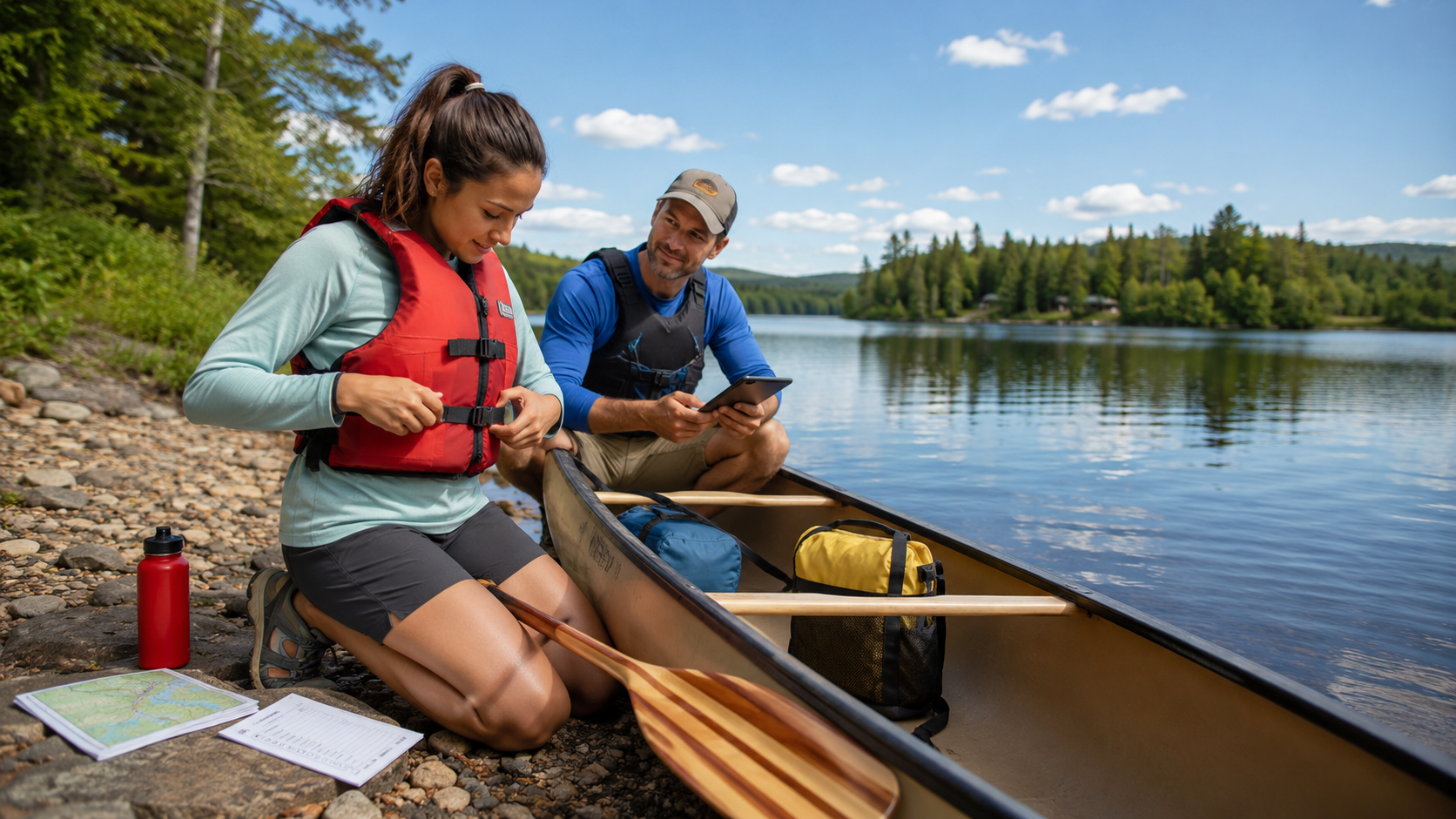
A life jacket is not something to keep in the canoe “just in case.” It should be worn properly the entire time you are on the water.
Even strong swimmers should wear one. Falling into water unexpectedly is different from swimming in a pool. You may be startled, cold, tired, fully clothed, or separated from the canoe. There may be current, weeds, waves, or slippery banks. A life jacket gives you support when things do not go as planned.
Make sure the life jacket fits snugly. If it is too loose, it can ride up around your face in the water. Tighten the straps and test the fit before launching. You should be able to move your arms freely without the jacket slipping around.
Children should wear life jackets designed for their size and weight. Adult life jackets are not suitable for small children.
Do not treat a life jacket as optional just because the water looks calm or shallow. Many accidents happen close to shore, in familiar places, and on ordinary days.
Check the Weather Before You Go
Weather can turn an easy canoe trip into a stressful one. Beginners should be especially careful about wind, storms, temperature, and visibility.
Wind is one of the biggest factors. A light breeze may be manageable, but stronger wind can make steering difficult and tiring. It can push the canoe sideways, slow your return, or create choppy water.
Check the forecast before leaving, but also look at the actual conditions when you arrive. If the trees are moving strongly, the water surface is rough, or paddlers are struggling to return, it may not be a good beginner day.
Avoid canoeing during thunderstorms or when storms are possible. Water is an unsafe place to be during lightning. If you hear thunder or see dark clouds building, get off the water early.
Temperature matters too. Cold water can be dangerous even when the air feels mild. If you fall in, cold water can quickly affect your breathing, strength, and coordination. Dress for the water temperature, not just the air temperature.
Fog, heavy rain, and low visibility can also make navigation harder. Beginners should paddle when they can clearly see where they are going and where they launched.
Plan Your Route Before Launching
Do not just get in the canoe and “see where it goes,” especially as a beginner. Route planning helps prevent many common problems.
Before launching, decide where you are going, how far you plan to paddle, where you will turn around, and where you can safely get off the water if needed.
Look at a map if the area is unfamiliar. Notice landmarks, shorelines, islands, bridges, docks, and possible exit points. If you are paddling on a river, understand where the current goes and where you will take out.
Beginners should avoid routes that depend on perfect stamina. Remember that paddling out with the wind behind you may feel easy, but returning against the wind can be much harder.
Tell someone your plan if you are going out for more than a short casual paddle. Let them know where you are launching, where you expect to go, and when you expect to return.
Keep your first route simple. Short, familiar, and easy to exit is better than long, ambitious, and uncertain.
Check the Canoe Before You Get In
Before paddling, inspect the canoe. It does not need to look brand new, but it should be safe and functional.
Check for cracks, damage, leaks, loose seats, sharp edges, or missing hardware. Make sure the canoe is not taking on water before you leave the launch area.
Look at the seats and thwarts. They should feel secure. If something moves or creaks in a concerning way, ask for help or choose another canoe.
Check that you have enough paddles. Each paddler should have a paddle, and it is smart to have an extra paddle if possible. A lost or broken paddle can turn a simple trip into a problem.
If you are renting, ask staff to help you choose a canoe suitable for beginners. Some canoes feel more stable than others. A wider recreational canoe may feel easier for a first trip than a narrow performance-style canoe.
Load the Canoe Carefully
Balance matters in canoeing. Where people and gear sit can affect stability and steering.
Try to keep weight centered and low. Heavy items should sit near the middle of the canoe rather than high or far to one side. Avoid stacking gear in a way that makes the canoe feel top-heavy.
If two people are paddling, one usually sits near the bow and the other near the stern. The stern paddler often helps steer. If one person is much heavier, you may need to adjust seating or gear placement so the canoe trims well in the water.
Do not overload the canoe. Too much weight makes the canoe sit lower in the water and can reduce stability. Check the canoe’s capacity if available.
Secure important items in dry bags or waterproof containers. Phones, keys, snacks, spare clothes, and first-aid supplies should not be loose where they can float away if the canoe tips.
Also keep the floor area clear enough that you can move your feet safely. Loose clutter can make it harder to react calmly.
Get In and Out Slowly
Many beginner canoe mishaps happen before the trip even starts. Getting in and out can be awkward because the canoe shifts under your weight.
When entering, keep your weight low and centered. Hold the canoe steady if possible. Step into the center line of the canoe, not onto the edge. Avoid standing upright and shifting suddenly.
If launching from a dock, one person may stabilize the canoe while the other enters. If launching from shore, place the canoe partly in the water and enter carefully from a shallow, stable position.
Once inside, sit down smoothly. Do not stand in the canoe unless you are experienced and conditions are appropriate.
Getting out requires the same patience. Bring the canoe close to shore or dock, keep your weight low, and step out carefully. Do not rush just because you are almost done.
A calm entry and exit set the tone for the whole paddle.
Understand Basic Balance
A canoe may feel wobbly at first, but it usually becomes more comfortable once you relax and learn how balance works.
Keep your weight centered. Avoid leaning far over the side to look at something, reach for an item, or splash the water. Sudden side-to-side movements can make the canoe feel unstable.
If you need to reach for something, move slowly and keep your body low. Ask another paddler to help if the item is far away.
Beginners often become stiff when nervous. Surprisingly, stiffness can make the canoe feel less stable. Try to sit tall but relaxed, with your hips and core gently engaged. Let the canoe move slightly under you without overreacting.
Do not make sudden movements when another person is shifting. Communicate before changing position, reaching for gear, or adjusting seats.
If you feel the canoe tipping, avoid jerking your body in panic. Stay low, center your weight, and pause.
Learn Simple Paddle Strokes Before Going Far
You do not need advanced paddling skills for a beginner canoe trip, but you should know the basics.
The forward stroke moves the canoe ahead. Reach forward with the paddle, place the blade in the water, pull back alongside the canoe, and remove it near your hip. Try to use your torso, not just your arms. This reduces fatigue.
The backward stroke helps slow or reverse the canoe. It is useful near docks, shorelines, or obstacles.
The sweep stroke helps turn the canoe. It uses a wide arc away from the canoe to rotate the boat.
The J-stroke is commonly used by the stern paddler to help keep the canoe moving straight, but beginners do not need to perfect it immediately. Still, learning basic steering makes the trip less frustrating.
Practice near the launch area before heading out. Make sure you can move forward, slow down, turn, and return to shore.
Do Not Paddle Too Far Too Soon
Canoeing can feel easy at the start. The water is calm, your energy is high, and the scenery is pleasant. But paddling back after an hour can feel very different, especially if wind, current, or fatigue sets in.
Beginners should keep the first trip short. It is better to finish thinking, “That was fun, I could do more next time,” than to end exhausted and stressed.
Pay attention to arm, shoulder, back, and hand fatigue. If your strokes become sloppy, your steering worsens, or you start feeling irritated and tired, it may be time to turn back.
Remember that the return trip can take longer than the outgoing trip. Plan your turnaround point early.
Protect Your Shoulders, Back, and Hands
Canoeing is not only about the arms. Good paddling uses the core, back, shoulders, and torso. Beginners often pull hard with the arms alone, which can lead to sore shoulders and tired hands.
Sit tall and rotate gently through your torso as you paddle. Keep your shoulders relaxed. Avoid shrugging them up toward your ears.
Do not grip the paddle too tightly. A tense grip can fatigue your hands and forearms. Hold the paddle securely, but let your hands stay relaxed.
If your lower back gets uncomfortable, check your posture. Slouching for a long time can cause stiffness. Sitting tall with light core engagement often feels better.
Take breaks before discomfort builds. Rest the paddle across the canoe, shake out your hands, roll your shoulders, and breathe.
Watch for Wind and Current
Wind and current can quietly change your canoeing experience.
If you are paddling on a lake, wind may push you away from shore or make the return harder. If you are paddling on a river, current may carry you faster than expected.
Beginners should avoid paddling far downwind unless they are confident they can return against the wind. The same goes for rivers: do not let the current take you somewhere unless you know how you will get back or where you will exit.
Look at the water surface. Ripples, waves, and drifting leaves can show wind and current direction. Notice whether you are being pushed without paddling.
If conditions become harder, turn back early. Waiting too long can make the return more difficult.
Stay Aware of Boats and Other Water Users
Canoes are small and slow compared with motorboats. Stay alert in areas with boat traffic.
Avoid busy channels, marina entrances, and places where motorboats travel quickly. If you must cross an area with traffic, do it directly and only when safe.
Make yourself visible. Bright clothing can help. In low light, proper lighting may be required. Do not assume larger boats can see you easily.
Also be courteous around swimmers, anglers, kayakers, paddleboarders, and wildlife. Give people space. Avoid paddling too close to fishing lines, docks, or private areas.
Good awareness keeps the trip safer and more pleasant for everyone.
Bring Basic Safety Items
For a short beginner paddle, you do not need to pack like you are going on an expedition. But you should have basic safety items.
Helpful items include water, sunscreen, a hat, sunglasses with a strap, a whistle, a small first-aid kit, a dry bag, a phone in a waterproof case, and an extra layer of clothing if conditions might change.
A whistle is useful because it can help you signal for attention if needed. It is small, cheap, and easy to carry on your life jacket.
If paddling in cooler weather, bring a dry layer. Getting wet and cold can become uncomfortable quickly.
Do not bring valuables loose in your pockets. If the canoe tips, they may be gone.
Know What to Do If the Canoe Tips
Beginners should understand that tipping is possible. Knowing what to do reduces panic.
If the canoe capsizes, stay calm and stay with the canoe if it is safe to do so. A canoe is easier to see than a person in the water and may provide flotation.
Make sure everyone is accounted for. Hold onto your paddle if possible, but people come first.
If you are close to shore and conditions are calm, you may be able to swim the canoe to shore. If you are farther out, recovery can be more difficult, which is why beginners should stay close to shore and wear life jackets.
Do not waste energy trying to save loose items. Gear can be replaced. Safety matters more.
Practicing basic capsize recovery with an instructor or experienced paddler can be very helpful, especially if you plan to canoe more often.
Avoid Alcohol Before or During Canoeing
Canoeing may seem like a relaxed social activity, but alcohol and water do not mix well. Alcohol affects balance, judgment, reaction time, coordination, and body temperature regulation.
For beginners, these effects are especially risky because you are still learning how to control the canoe and respond to changing conditions.
Save alcohol for after the trip, when you are safely off the water.
Respect Your Comfort Level
A beginner should never feel pressured to keep going when conditions feel wrong. If the wind is stronger than expected, the water feels too rough, the route seems confusing, or you feel nervous, it is okay to turn back.
Outdoor activities are not about proving toughness. They are about making good decisions in changing environments.
The more experience you gain, the better your judgment becomes. For now, caution is a strength.
This checklist only takes a few minutes, but it can prevent many beginner problems.
Final Thoughts
Canoeing can be peaceful, refreshing, and surprisingly rewarding. It gives you a slower way to enjoy the water, notice nature, and move your body without rushing. But beginners should treat it with respect.
The most important precautions are simple: wear a life jacket, start on calm water, check the weather, plan your route, keep your balance centered, and avoid paddling farther than you can comfortably return. Learn basic paddle strokes before going far, pay attention to wind and current, and bring a few essential safety items.
You do not need to be fearless to enjoy canoeing. In fact, the best beginners are usually the ones who are calm, prepared, and honest about their limits.
When you prepare well, canoeing feels less uncertain and more relaxing. The canoe becomes easier to control, the route feels clearer, and the water feels more inviting. Start small, paddle steadily, and let each trip build your confidence one stroke at a time.
Hi, I’m the creator and editor behind ZestyHabit. I research everyday safety, first aid, and practical wellness topics using official guidance and reliable public sources, then turn that information into clear, realistic steps for daily life.
My goal is to help readers make safer, better-informed choices at home and beyond.