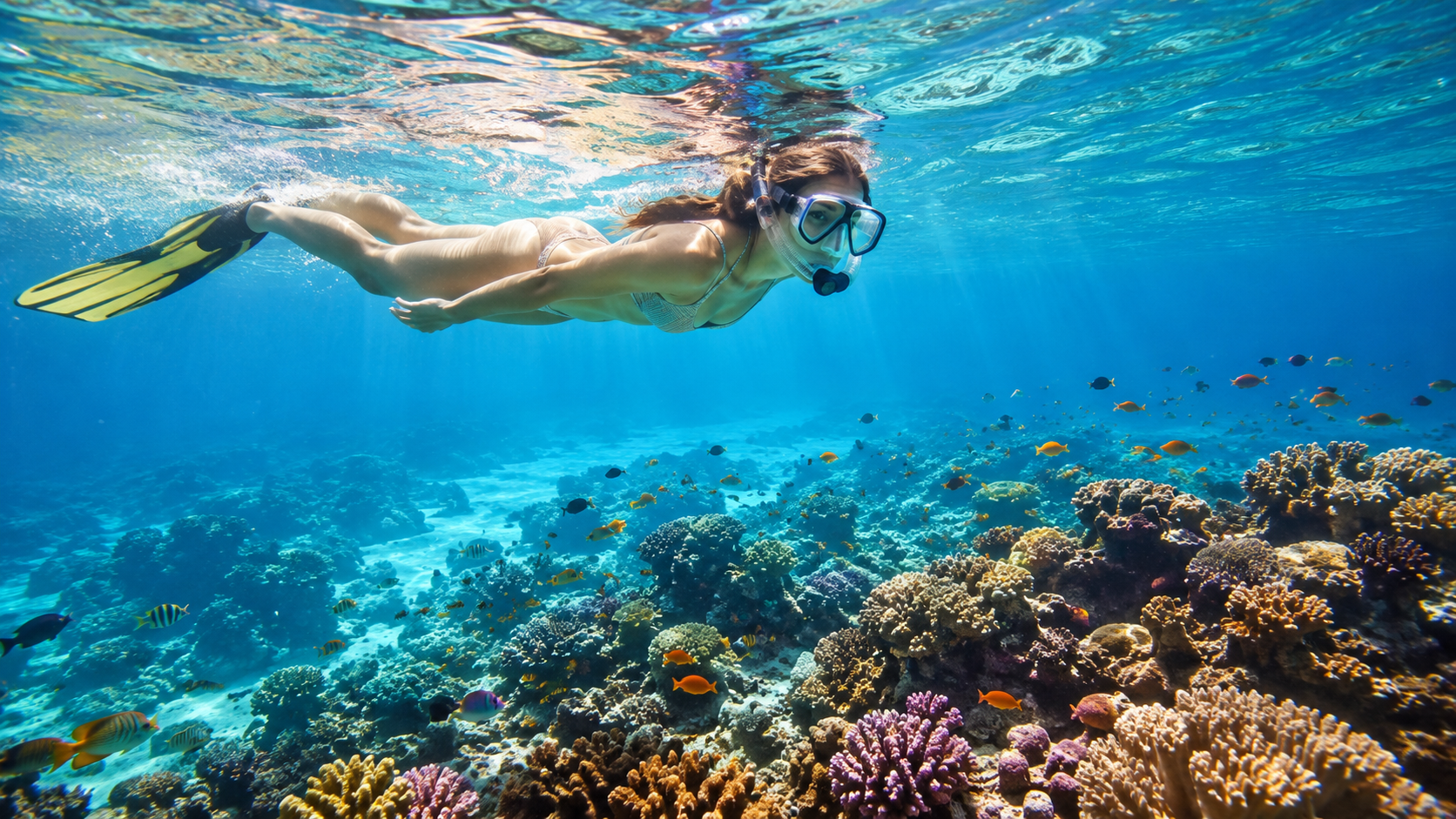
Snorkeling Precautions: How to Stay Safe and Comfortable in the Water
Minjin Park
·
Snorkeling can be peaceful and unforgettable, but safety matters. Learn simple precautions for breathing, mask fit, currents, buddy systems, comfort, and water awareness.
Snorkeling can feel almost magical the first time you do it. You float on the surface, breathe through a tube, and suddenly the water below you becomes another world. Fish move quietly under you, sunlight shifts across the sand, and even a shallow reef can feel like a place you have only seen in documentaries.
It is also one of the most beginner-friendly water activities. You do not need heavy diving equipment. You do not need to go deep. You do not need to be an athlete to enjoy it.
But snorkeling still deserves respect.
The calm surface can be misleading. Breathing through a snorkel feels different from normal breathing. A poorly fitted mask can cause panic. Currents may be stronger than they look. Waves can push water into the snorkel. A beginner who gets tired, separates from the group, or panics can quickly become uncomfortable.
The goal is not to make snorkeling sound scary. It is to help you enjoy it with more confidence. Most snorkeling problems can be reduced with simple preparation: using gear that fits, practicing your breathing, staying close to a buddy, checking the water conditions, and not pushing beyond your comfort level.
Whether you are snorkeling on vacation, trying it for the first time, or planning a casual beach trip, these precautions can help you stay safer and more comfortable in the water.
Snorkeling happens at the surface, but it is still a water activity. You do not need to swim like a competitive athlete, but you should be comfortable floating, moving in the water, and staying calm if water splashes your face.
If you are not a strong swimmer, do not pretend you are. That does not mean you cannot snorkel. It means you should choose very calm, shallow water, wear a properly fitted flotation device, stay close to shore or a guide, and avoid areas with current, waves, or boat traffic.
Some snorkeling tours provide flotation vests or noodles. Use them if you need them. There is nothing embarrassing about extra support in the water.
Being honest about your ability is one of the smartest safety choices you can make. Many water problems begin when people feel pressured to keep up with others or act more confident than they feel.
Snorkeling should feel calm and enjoyable, not like a test.
Make Sure Your Mask Fits Properly
A leaking mask can turn a relaxing snorkeling session into a frustrating one. Water constantly entering your mask may make you anxious, distract you from your surroundings, and cause you to lift your head repeatedly.
Before getting into the water, check the fit.
Place the mask gently against your face without using the strap. Breathe in slightly through your nose. If the mask seals and stays in place for a moment, it is more likely to fit. If it falls away immediately, leaks around the edges, or presses painfully on your face, try a different size or shape.
The strap should hold the mask in position, not crush it against your face. Tightening the strap too much can actually make leaks worse by distorting the silicone seal. It can also leave uncomfortable marks around your eyes and nose.
Hair can also break the seal. Make sure no strands are trapped under the mask skirt. If you have facial hair, especially around the upper lip, you may need to adjust carefully because the seal can be harder to maintain.
A good mask should feel secure, not painful.
Practice Breathing Before Going Far
Breathing through a snorkel feels unusual at first. You are breathing through your mouth, not your nose, and the tube adds a slight resistance. Some beginners feel nervous simply because it feels different.
Do not wait until you are far from shore to discover that you are uncomfortable.
Practice in shallow, calm water where you can stand. Put your face in the water and breathe slowly through the snorkel. Keep your body relaxed. Try not to take fast, shallow breaths. Slow breathing helps you stay calm and makes the experience more comfortable.
If water enters the snorkel, do not panic. Lift your head, clear the water, and reset. Some snorkels have purge valves or splash guards, but no snorkel is perfect in all conditions.
Beginners should spend a few minutes just getting used to the sensation of breathing. It may feel strange at first, then suddenly normal.
The calmer your breathing, the calmer your whole body becomes.
Do Not Hyperventilate or Hold Your Breath Repeatedly
Some people try to take many fast breaths before dipping underwater. This is not a safe habit. Hyperventilating can interfere with your body’s normal breathing signals and may increase risk if you are doing breath-hold dives.
For casual snorkeling, the safest approach is simple: breathe normally and stay relaxed. You do not need to dive down to enjoy snorkeling. Most of the beauty can be seen from the surface.
If you do decide to duck under briefly, keep it conservative. Do not push your breath-hold. Do not compete with others. Do not dive repeatedly until you feel lightheaded or exhausted.
Snorkeling is not about proving how long you can stay underwater. It is about observing comfortably and safely.
If you feel dizzy, short of breath, panicked, unusually tired, or confused, stop snorkeling and get out of the water.
Choose Calm Water as a Beginner
The best beginner snorkeling conditions are calm, clear, shallow, and protected.
Avoid rough water, strong waves, murky conditions, and areas where you cannot easily return to shore. Even small waves can make breathing through a snorkel harder because water may splash into the tube or push you around.
Clear water is also important. If visibility is poor, you may not see rocks, coral, other swimmers, or changes in depth. Murky water can also make beginners more nervous.
Start in a place where you can stand or easily float, preferably with a sandy bottom and minimal current. A calm lagoon, protected bay, or supervised snorkeling area is usually better than open ocean for a first experience.
Do not assume that a popular snorkeling spot is always beginner-friendly. Conditions can change by the day or even by the hour.
Understand Currents Before Entering
Currents are one of the most important snorkeling risks because they are not always obvious from the shore.
A current can slowly pull you away from your starting point without you noticing. You may be busy watching fish, looking down through your mask, and drifting farther than planned. By the time you look up, returning may feel harder.
Before entering the water, ask local lifeguards, guides, rental staff, or experienced locals about currents. Look for posted warning signs. Pay attention to flags at beaches. If people are being told not to swim, do not snorkel.
If you notice that you are drifting, do not panic. Signal your buddy or guide. Swim calmly across the current rather than fighting directly against it, depending on the situation and local guidance. Use flotation if available.
The best precaution is to avoid strong-current areas in the first place, especially as a beginner.
Always Use the Buddy System
Snorkeling alone is not a good idea, especially for beginners.
A buddy can help if your mask leaks, you get tired, you drift too far, you feel anxious, or you need assistance. Even experienced snorkelers benefit from having someone nearby.
The buddy system only works if you actually stay together. Do not enter the water together and then separate immediately. Check in often. Look up regularly. Agree on simple signals before you start, such as “OK,” “help,” “go back,” and “stop.”
If you are on a guided tour, stay within the group boundaries. Do not chase fish away from the group or drift behind while taking photos.
It is surprisingly easy to lose track of someone when everyone has their face in the water. Make it a habit to look around every few minutes.
Snorkeling is more enjoyable when someone is watching out for you, and you are watching out for them.
Use Fins Carefully
Fins can make snorkeling easier because they help you move through the water with less effort. But beginners sometimes misuse them.
Do not kick wildly from the knees. This wastes energy and can make you splash, bump into others, or stir up sand. Use slow, relaxed kicks from the hips with mostly straight but not locked legs.
Make sure your fins fit. Fins that are too loose may slip off. Fins that are too tight can cause cramps or blisters. If you are using rental fins, take a moment to check comfort before going far.
Be careful in shallow water. Fins can accidentally hit coral, rocks, marine life, or other swimmers. When you are near a reef, keep your body horizontal and kick gently.
If your legs start cramping, stop, float, signal your buddy, and stretch gently if you can. Do not keep kicking hard through a cramp.
Stay Relaxed and Float More Than You Swim
One of the best snorkeling skills is learning to do less.
Beginners often kick too much, lift their heads too often, and use more effort than necessary. This leads to fatigue and makes the experience feel stressful.
Instead, think of snorkeling as floating with gentle movement. Let the water support you. Keep your body long and relaxed. Use small fin kicks to guide yourself rather than constantly powering forward.
If you have a flotation vest, let it help you. If you are in calm water, pause often and simply observe.
The less you fight the water, the more comfortable you become.
This is especially helpful for people who feel nervous. Slow floating, slow breathing, and slow movement all send your body the message that you are safe.
Be Aware of Boats and Other People
Snorkelers can be hard for boaters to see, especially in areas with waves, glare, or traffic. If you are snorkeling near boat routes, use a visible float or dive flag where required. Stay inside designated snorkeling areas whenever possible.
Do not assume boats will automatically notice you. Keep looking up. Listen for engines. Avoid crossing channels or swimming far from shore in busy areas.
Other swimmers matter too. Avoid kicking near someone’s face. Keep distance from people taking photos or floating quietly. If you are in a group, do not crowd everyone into the same small area.
Good snorkeling etiquette is also good safety. Space gives people room to breathe, move, and react.
Protect Yourself From Sun Exposure
Snorkeling can cause sneaky sunburn. Your back, shoulders, calves, and neck may be exposed for a long time while you float face down. Because you are in the water, you may not feel how much sun you are getting.
Use sun protection before you enter the water. A long-sleeve rash guard is one of the easiest ways to protect your skin without constantly reapplying sunscreen. A swim shirt, leggings, or reef-safe sunscreen may also help, depending on the location and local rules.
Do not forget the backs of your legs, ears, neck, and hands.
If you use sunscreen, apply it early enough that it has time to settle before swimming. Also follow local guidelines, especially in reef areas where certain sunscreen ingredients may be restricted.
Sunburn can turn a beautiful snorkeling day into an uncomfortable evening. Prevention is much easier.
Respect Coral and Marine Life
A good rule for snorkeling is simple: look, but do not touch.
Coral can be fragile and easily damaged. It can also be sharp and may cause cuts. Some marine animals can sting, bite, or react defensively if disturbed. Even animals that look harmless should be left alone.
Do not stand on coral. Do not chase fish. Do not pick up sea creatures. Do not feed marine life. Do not put your hands into holes or under rocks.
If you need to adjust your mask or rest, move to a safe sandy area or float calmly. Avoid touching the bottom unless you are sure it is safe and allowed.
Respecting the underwater environment protects both you and the place you came to enjoy.
Be Careful With Full-Face Snorkel Masks
Full-face snorkel masks have become popular because they allow people to breathe through both the nose and mouth. Some beginners find them comfortable, but they also require extra caution.
Fit and quality matter a lot. A poorly designed or poorly fitted full-face mask can feel uncomfortable, foggy, or difficult to clear. It may also be harder to remove quickly if you panic.
If you choose to use one, buy or rent from a reputable source, make sure it fits properly, and practice in shallow water first. Do not use it for diving down. Full-face snorkel masks are generally intended for surface snorkeling.
Traditional mask-and-snorkel setups are still common for a reason: they are simple, easier to clear with practice, and widely used by guides and experienced snorkelers.
Whatever gear you choose, practice before going far.
Know What to Do If Water Gets in Your Mask
Water entering the mask is common and does not have to ruin the experience.
If you are a beginner and your mask fills with water, the simplest option is to lift your head, stay calm, and stand up if you are in shallow water. Adjust the mask seal, clear the water, and continue only when you feel comfortable.
More experienced snorkelers may learn to clear a mask while in the water, but beginners should not feel pressured to do that immediately.
The important thing is not to panic. Water in the mask feels annoying, but it is usually manageable. Your snorkel still lets you breathe as long as it is clear and positioned properly.
If the mask keeps leaking, do not force yourself to continue. Return to shore or the boat and fix the gear.
Comfort is part of safety.
Watch for Fatigue
Snorkeling can feel easy at first because you are floating. But it still uses energy, especially if there is current, wind, waves, or a long swim back.
Beginners may not notice fatigue until they are already tired. This is why it is smart to stay close to your entry point and take breaks.
If your breathing becomes fast, your legs feel heavy, or you start feeling anxious, stop and float. Signal your buddy. Return before you are exhausted.
Do not chase fish farther and farther from shore. Do not try to keep up with stronger swimmers if you are struggling. Do not let the excitement of the underwater view make you forget the distance back.
A good snorkeling session should end while you still have energy.
Avoid Snorkeling After Heavy Meals or Alcohol
A huge meal right before snorkeling can make you uncomfortable, especially if you are floating face down and moving your core. A light meal or snack is usually better than feeling overly full.
Alcohol is a bigger concern. It affects balance, judgment, reaction time, and coordination. These are all important in the water. Save alcohol for after snorkeling, once you are safely done for the day.
Also be mindful of dehydration. Saltwater, sun, and travel can make you more dehydrated than you realize. Drink water before and after snorkeling.
Feeling clear, steady, and alert helps you enjoy the water more safely.
Get Out If Something Feels Wrong
Your body often gives early warning signs before a situation becomes serious.
Get out of the water if you feel dizzy, unusually short of breath, panicked, chilled, exhausted, nauseated, confused, or cramped. Also return if the water gets rough, visibility drops, your gear fails, or you lose sight of your buddy.
Do not worry about “ruining the fun.” A safe return is always more important than finishing a planned route.
Snorkeling should feel comfortable enough that you can breathe calmly and stay aware. If it no longer feels that way, pause and reset.
A Simple Beginner Snorkeling Checklist
Before entering the water, check a few things.
Does your mask fit? Is your snorkel comfortable? Are your fins secure? Are you wearing flotation if needed? Do you understand the current and weather conditions? Are you with a buddy? Do you know where you will enter and exit? Are you protected from the sun? Do you feel calm enough to breathe through the snorkel?
This quick check can prevent many beginner problems.
Once you are in the water, keep it simple. Stay close to your buddy. Look up often. Breathe slowly. Float more than you fight. Turn back before you are tired.
Final Thoughts
Snorkeling can be one of the most peaceful ways to experience the ocean, a lake, or a clear tropical bay. It gives you a window into another world without requiring deep diving or complicated equipment.
But simple does not mean careless.
A safe snorkeling experience starts before you enter the water. Use gear that fits. Practice breathing. Check the weather and currents. Stay with a buddy. Protect yourself from sun, fatigue, and panic. Respect marine life and know your limits.
The best snorkelers are not the ones who swim the farthest or dive the deepest. They are the ones who stay calm, aware, and comfortable.
When you take the right precautions, snorkeling becomes what it should be: quiet, beautiful, memorable, and safe enough to enjoy fully.
Hi, I’m the creator and editor behind ZestyHabit. I research everyday safety, first aid, and practical wellness topics using official guidance and reliable public sources, then turn that information into clear, realistic steps for daily life.
My goal is to help readers make safer, better-informed choices at home and beyond.