
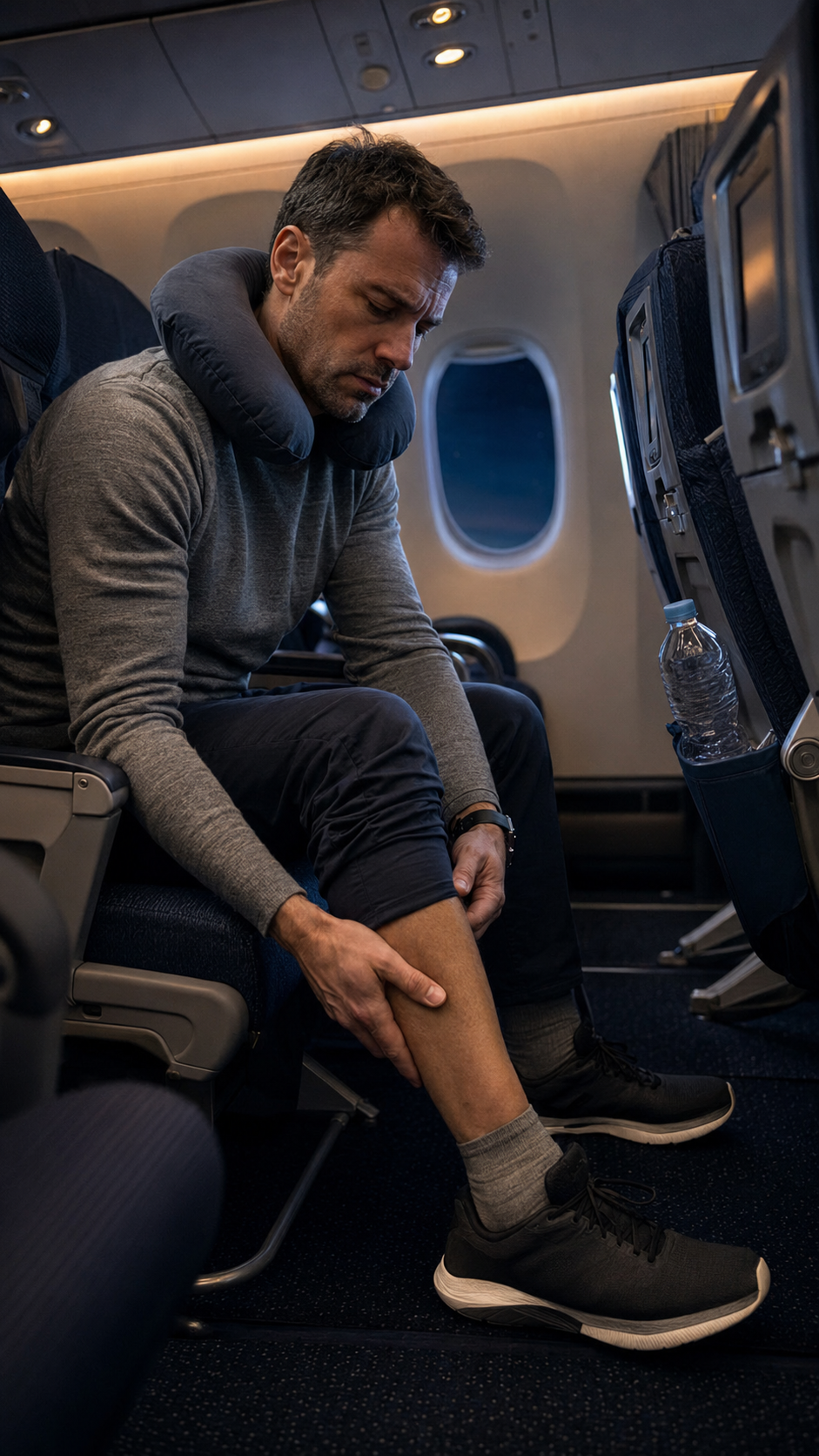

Learn about blood clots, dehydration, jet lag, ear pain, infection, and other health concerns associated with long-haul flights—and how to travel more safely.
Long-haul flights make it possible to cross continents in a single day, but spending eight, twelve, or even sixteen hours inside an aircraft can be physically demanding. Limited movement, disrupted sleep, dry cabin air, changes in pressure, and close contact with other passengers may all affect how you feel during and after the journey.
Most healthy travelers complete long flights without a serious medical problem. However, certain conditions—including previous blood clots, recent surgery, pregnancy, heart or lung disease, severe anemia, and diabetes—can make additional preparation necessary.
Knowing the most important long-haul flight health risks allows you to take practical precautions without becoming unnecessarily anxious. It also helps you recognize symptoms that should never be dismissed as ordinary travel fatigue.
1. Deep Vein Thrombosis and Pulmonary Embolism
The most widely discussed health concern associated with long-distance travel is deep vein thrombosis, commonly called DVT.
A DVT occurs when a blood clot forms in a deep vein, usually in the leg. If part of that clot breaks away and travels to the lungs, it can block blood flow and cause a potentially fatal pulmonary embolism, or PE.
Sitting in a confined position for hours slows blood flow through the legs. Pressure from the seat edge behind the knees may contribute to venous stasis, particularly when a passenger rarely changes position.
The risk remains low for most healthy travelers, but it rises as travel time and individual risk factors increase. According to the CDC Yellow Book, most people who develop travel-associated blood clots have at least one additional risk factor.
Who Has a Higher Risk of Blood Clots?
Important risk factors include:
- A previous DVT or pulmonary embolism
- Recent surgery, hospitalization, or significant injury
- Active cancer or recent cancer treatment
- Pregnancy or the postpartum period
- Estrogen-containing birth control or hormone replacement therapy
- Obesity
- Limited mobility, paralysis, or a leg cast
- An inherited or acquired blood-clotting disorder
- A family history of blood clots
- Older age, with risk gradually increasing after age 40
- Certain chronic heart, lung, or metabolic conditions
The combination of several risk factors may matter more than the flight alone. Anyone with a history of blood clots, recent major surgery, active cancer, or another substantial risk should consult a healthcare professional before booking a long flight.
How to Reduce DVT Risk During a Flight
The CDC recommends moving the legs frequently and walking around about every one to two hours when it is safe to do so.
While seated, try simple exercises:
- Lift your heels while keeping your toes on the floor.
- Lift your toes while keeping your heels down.
- Rotate each ankle slowly in both directions.
- Flex your ankles by pulling your toes toward you.
- Tighten and release your calf and thigh muscles.
- Change your sitting position regularly.
Avoid crossing your legs for long periods, and do not place bags where they prevent you from moving your feet. An aisle seat may make it easier to stand and walk without feeling that you are disturbing other passengers.
Some travelers at increased risk may benefit from properly fitted, below-the-knee graduated compression stockings. However, compression stockings are not automatically necessary for everyone, and an incorrect size may be uncomfortable or inappropriate for certain circulation problems.
Do not begin taking aspirin, anticoagulants, or other medication solely for a flight without medical advice. Preventive medication may be appropriate for a small number of high-risk travelers, but it must be selected according to the individual’s clotting and bleeding risks.
2. Recognizing a Blood Clot After Flying
A travel-related blood clot may not become apparent during the flight. Most air travel-associated blood clots occur within the first one or two weeks after flying, although the increased risk can persist longer.
Possible DVT symptoms include:
- Swelling in one leg or arm
- Unexplained pain or tenderness
- Warmth over the affected area
- Redness or unusual skin discoloration
Mild swelling in both ankles can occur after prolonged sitting and is not necessarily a blood clot. Unilateral swelling—especially when accompanied by pain, warmth, or redness—deserves prompt medical evaluation.
Possible pulmonary embolism symptoms include:
- Sudden or unexplained shortness of breath
- Chest pain that worsens with breathing or coughing
- A rapid or irregular heartbeat
- Coughing, particularly coughing up blood
- Lightheadedness or fainting
- Sudden, intense anxiety accompanied by breathing difficulty
A pulmonary embolism is a medical emergency. Call 911 or the local emergency number immediately if these symptoms develop during or after a flight.
3. Reduced Cabin Pressure and Lower Oxygen Levels
Commercial aircraft cabins are pressurized, but not to the same pressure found at sea level. The cabin environment usually corresponds to an altitude of approximately 6,000 to 8,000 feet.
Most healthy passengers tolerate this decrease in oxygen pressure without noticeable difficulty. However, it may worsen symptoms in people with:
- Chronic obstructive pulmonary disease
- Severe asthma or other lung disease
- Heart failure or certain congenital heart conditions
- Severe anemia or sickle cell disease
- Cerebrovascular disease
- A regular need for supplemental oxygen
The CDC’s air travel guidance recommends evaluating unstable chronic conditions before travel. Someone who is comfortable at sea level may still experience breathing difficulty when cabin oxygen pressure falls.
Travelers who require oxygen should contact both their clinician and airline well in advance. Airline rules vary, and passengers generally cannot simply bring a standard oxygen cylinder aboard. Some airlines allow only specific FAA-approved portable oxygen concentrators and require medical documentation or advance notice.
If you develop severe shortness of breath, chest pain, bluish lips, confusion, or faintness during the flight, notify the cabin crew immediately.
4. Ear and Sinus Barotrauma
Changes in cabin pressure during takeoff and landing can cause pain in the ears or sinuses. The problem is often most noticeable during descent, when outside pressure increases and the middle ear must equalize.
A cold, sinus infection, severe nasal congestion, or allergy flare can block the passage that equalizes pressure behind the eardrum. This may cause intense pain, muffled hearing, dizziness, ringing in the ears, or—in rare cases—a ruptured eardrum.
To reduce discomfort:
- Swallow frequently during ascent and descent.
- Yawn or chew gum.
- Sip water during landing.
- Stay awake during descent so you can actively equalize pressure.
- Try gently pinching the nose, closing the mouth, and exhaling against the closed nostrils. Stop if this causes sharp pain.
Do not perform pressure-equalizing maneuvers forcefully. People with severe congestion, a recent ear procedure, or an active ear or sinus infection should ask a clinician whether postponing the flight would be safer.
Oral or nasal decongestants may help some travelers, but they are not appropriate for everyone. Certain products may raise blood pressure, affect heart rhythm, interact with medication, or cause rebound nasal congestion. Ask a healthcare professional before using them.
5. Dry Eyes, Skin, and Airways
Aircraft cabin humidity is often only about 10% to 20%. This dry environment can irritate the eyes, nose, throat, and skin.
Contact lens wearers may notice burning or gritty eyes. Glasses can be more comfortable on a very long flight, and preservative-free artificial tears may help if they are normally safe for you.
Other practical measures include:
- Drinking fluids according to thirst
- Using lip balm and unscented moisturizer
- Avoiding direct airflow from the overhead vent into your eyes
- Using saline nasal spray if appropriate
- Limiting excessive alcohol
Dry cabin air commonly dries the body’s surface tissues, but it does not mean that every passenger will become dangerously dehydrated. Staying reasonably hydrated may improve comfort and reduce headaches, constipation, and jet-lag symptoms, but drinking excessive amounts of water is unnecessary and can disrupt sleep through frequent bathroom visits.
Hydration alone has not been proven to prevent travel-related blood clots. Regular movement remains the more important preventive behavior.
6. Alcohol, Caffeine, and Sedating Medication
Many passengers use alcohol to relax or fall asleep, but it can worsen sleep quality, contribute to headache and stomach irritation, and make it harder to respond appropriately during an emergency. Alcohol may also increase immobility when it causes prolonged sedation.
Caffeine can improve alertness, but large amounts may increase anxiety, palpitations, indigestion, and difficulty sleeping after arrival. Use it strategically rather than continuously throughout the flight.
Avoid combining alcohol with sleep medication, anti-anxiety medication, sedating antihistamines, opioid pain relievers, or other drugs that slow the nervous system. The combination can impair breathing, balance, judgment, and awareness.
Do not try a new sleep aid for the first time while flying. Some people experience confusion, agitation, excessive sedation, or unusual behavior rather than restful sleep. If you need help sleeping during travel, discuss safe options with your clinician before departure.
7. Jet Lag and Sleep Disruption
Jet lag occurs when rapid travel across time zones places your internal body clock out of sync with the local schedule. Symptoms may include insomnia, daytime sleepiness, poor concentration, irritability, headache, digestive changes, and reduced physical performance.
Traveling east is often harder because the body must fall asleep earlier than usual, while westward travel generally requires staying awake later.
To reduce jet lag:
- Get adequate sleep before the trip.
- Begin shifting your schedule gradually when practical.
- Set meals, sleep, and activities according to destination time.
- Use daylight at the destination to help reset your body clock.
- Avoid very long daytime naps after arrival.
- Use caffeine selectively and avoid it close to planned sleep.
- Limit excessive alcohol.
A short nap may improve alertness, but sleeping for several hours during the destination’s daytime can make nighttime insomnia worse.
Melatonin may be helpful for some travelers, but timing matters. Taking it at the wrong biological time may worsen circadian misalignment. The CDC’s jet lag guidance also advises against casually using high doses. Consult a clinician or pharmacist if you take other medication, are pregnant, or have a chronic medical condition.
8. Exposure to Respiratory Infections
Air travel involves time in security lines, boarding areas, jet bridges, and crowded seating. Close proximity to an infected person can increase exposure to respiratory viruses, even though modern aircraft use substantial air filtration and ventilation during normal operation.
To reduce infection risk:
- Stay current with recommended vaccinations.
- Wash your hands or use sanitizer containing at least 60% alcohol.
- Clean your hands before eating and after using the restroom.
- Avoid touching your eyes, nose, and mouth with unwashed hands.
- Cover coughs and sneezes.
- Consider a well-fitting respirator such as an N95 or KN95 in crowded settings, especially if you are medically vulnerable.
- Postpone nonessential travel when you are acutely ill or contagious.
A mask offers the greatest protection when it fits closely around the nose and mouth and can be worn consistently. Carry a spare in case the first becomes damp or damaged.
9. Digestive Problems and Motion Sickness
Changes in meal timing, unfamiliar airport food, carbonated drinks, and prolonged sitting can contribute to bloating, indigestion, constipation, or nausea.
Gas inside the digestive tract expands as cabin pressure falls, which may make bloating more noticeable. Eating slowly and choosing moderate portions before and during the flight may feel better than consuming a large, heavy meal.
People prone to motion sickness may benefit from sitting near the aircraft’s wings, where movement may feel less pronounced. Looking at a stable reference point, directing cool air toward the face, and avoiding heavy or greasy foods can also help.
Motion-sickness medications can cause drowsiness, dry mouth, blurred vision, or urinary problems. Ask a healthcare professional which option is appropriate, especially for children, older adults, pregnant travelers, and people with glaucoma or prostate problems.
10. Medication and Chronic Disease Management
Long flights and time-zone changes can disrupt medication schedules. This is particularly important for insulin, seizure medication, anticoagulants, and medicines that must be taken at precise intervals.
Before traveling:
- Ask your clinician how to adjust medication times across time zones.
- Carry medication in your hand luggage, not only in checked baggage.
- Keep it in its original labeled container.
- Bring enough for the trip plus extra for delays.
- Carry copies of prescriptions and a current medication list.
- Check the medication laws of your destination and transit countries.
- Keep essential inhalers, epinephrine, glucose supplies, and other rescue medication accessible from your seat.
The CDC recommends carrying chronic-disease medication and medical supplies in original containers in your carry-on luggage. Never place all essential medication in a checked bag that could be delayed or lost.
People with diabetes should plan for meal delays, changing insulin schedules, glucose monitoring, and safe storage of supplies. Those with severe allergies should tell travel companions where their epinephrine auto-injector is kept.
11. Travelers Who Need Medical Advice Before Flying
A preflight medical consultation is particularly important if you:
- Recently had major surgery
- Recently experienced a blood clot, heart attack, stroke, or serious infection
- Have unstable heart or lung disease
- Need supplemental oxygen
- Are pregnant and have complications or are late in pregnancy
- Have severe anemia or sickle cell disease
- Have a poorly controlled seizure disorder or diabetes
- Recently underwent an eye, chest, or abdominal procedure
- Recently went scuba diving
- Have a cast or significant mobility limitation
The safe waiting period after surgery, a blood clot, or another illness depends on the specific condition and treatment. Do not rely on a universal number of days found online; obtain individualized clearance.
A Practical Long-Haul Flight Health Checklist
Before departure:
- Review personal health risks with a clinician if necessary.
- Pack medication and medical documents in your carry-on.
- Choose an aisle seat if frequent movement is important.
- Wear loose, comfortable clothing and properly fitting shoes.
- Avoid starting unprescribed aspirin or anticoagulants.
During the flight:
- Move your ankles and calf muscles frequently.
- Walk every one to two hours when conditions allow.
- Keep the area under the seat clear enough to move your feet.
- Drink according to thirst and limit excessive alcohol.
- Practice hand hygiene and consider a well-fitting mask.
- Notify the crew promptly if serious symptoms appear.
- Keep your seat belt fastened whenever you are seated.
After arrival, seek immediate care for sudden breathing difficulty, chest pain, fainting, coughing blood, or a rapid unexplained heartbeat. Promptly contact a healthcare professional for one-sided leg swelling, warmth, discoloration, or unexplained pain.
Final Thoughts
Long-haul flights are generally safe, but preparation matters—especially when you have blood-clot risks, chronic illness, recent surgery, pregnancy, or significant mobility limitations. Moving regularly, managing medication carefully, protecting your sleep, and recognizing emergency symptoms can make a long journey safer and more comfortable. Which health issue bothers you most on long flights—leg swelling, ear pain, dry eyes, motion sickness, or jet lag? Share your experience and best in-flight wellness tips in the comments below.

Hi, I’m the creator and editor behind ZestyHabit. I research everyday safety, first aid, and practical wellness topics using official guidance and reliable public sources, then turn that information into clear, realistic steps for daily life.
My goal is to help readers make safer, better-informed choices at home and beyond.


