What to Do If a Fly Gets in Your Ear: Safe First Aid and Warning Signs
Minjin Park
·
Few sensations are as startling as a fly buzzing inside your ear. The sound may seem extremely loud because the insect is moving within the narrow ear canal, very close to the eardrum. You may feel scratching, fluttering, pressure, pain, or a strong urge to put something into the ear immediately.
Although a fly in the ear is usually not life-threatening, panicked attempts to remove it can cause more harm than the insect itself. Cotton swabs, hairpins, fingernails, and other objects can push the fly deeper, injure the delicate ear canal, or puncture the eardrum.
The safest approach is to stay calm, avoid probing the ear, and use a simple removal method only when there are no signs of eardrum damage. If the fly does not come out easily, a healthcare professional can remove it with proper lighting and specialized instruments.
The ear canal is a narrow passage leading from the visible outer ear to the eardrum. Its skin is thin, sensitive, and supplied with many nerve endings. A fly’s wings and legs may repeatedly touch the canal walls, producing loud buzzing and an uncomfortable crawling sensation.
Common symptoms include:
Buzzing or fluttering sounds
A crawling or scratching sensation
Sudden ear discomfort
A feeling of fullness or blockage
Mild to moderate ear pain
Temporary muffled hearing
Anxiety, panic, or dizziness
Crying or irritability in a young child
The insect may eventually stop moving, but that does not necessarily mean it has left the ear. It may be trapped, injured, or dead inside the canal.
Can a Fly Travel From the Ear to the Brain?
This is a common fear, but an ordinary fly cannot crawl directly through a healthy eardrum into the brain. The eardrum separates the external ear canal from the middle ear.
However, the fly can still scratch the ear canal, become lodged against the eardrum, or leave fragments behind. Repeated removal attempts can also cause swelling, bleeding, infection, or eardrum damage. That is why it is important to use a gentle method and stop if the insect does not come out easily.
Step 1: Stay Still and Do Not Probe the Ear
Your first reaction may be to shake your head violently or insert a finger into the ear. Try to resist that impulse.
Sit somewhere safe, especially if the sensation is making you dizzy. Ask another person to help if possible. Keep young children from scratching or hitting the affected ear.
Do not place any of the following inside the ear canal:
Cotton swabs
Fingers or fingernails
Hairpins or bobby pins
Matchsticks
Pens or pencils
Keys
Ear-cleaning tools
Pointed tweezers
These objects may push the fly farther inward. They can also scratch the canal or puncture the eardrum. According to Mayo Clinic’s first-aid guidance, poking or prodding a foreign object may make removal more difficult and cause additional damage.
Step 2: Try Gravity First
Before putting anything into the ear, try allowing gravity to help.
Tilt your head so the affected ear faces downward. Gently pull the outer ear upward and backward to help straighten the canal. For a very young child, the ear is generally pulled gently downward and backward.
Remain in this position for a short time. The fly may crawl or fall out on its own. You may gently shake your head, but avoid violent movements or striking the side of the head.
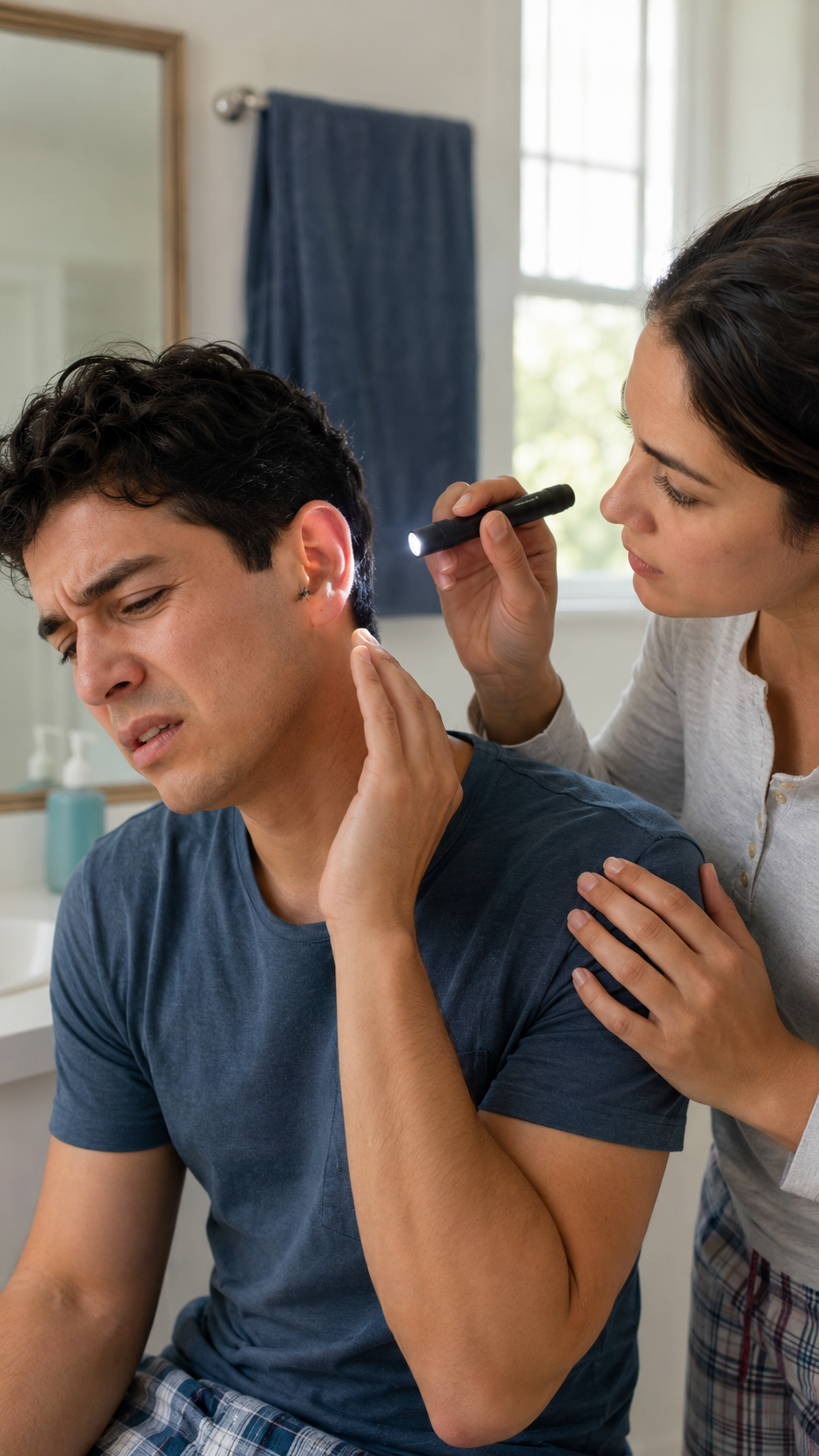
If another person is helping, they may look at the entrance of the ear with a flashlight. They should not insert the flashlight, tweezers, or any other instrument into the canal.
Step 3: You May Try Light, but Do Not Depend on It
Some insects may move toward a bright light. With the affected ear facing outward, another person can shine a light near—not inside—the ear opening.
This method is not guaranteed to work. A frightened or injured fly may remain still or move farther into the canal. Do not continue for a long time if the buzzing, pain, or distress is getting worse.
If the insect is sitting at the very entrance of the ear and can be grasped without placing tweezers inside the canal, gentle removal may be possible. However, if the person cannot remain completely still or the fly is deeper than the opening, leave it alone and use a safer method or seek medical care.
Step 4: Use Warm Oil Only When It Is Safe
When you are reasonably certain that a live insect entered the ear, warm oil can stop its movement and help it float out. Suitable options include:
The oil should be close to body temperature—not hot. Hot oil can burn the ear canal and eardrum. Test the container against the inside of your wrist before use.
To try this method:
Lie on your side with the affected ear facing upward.
Gently pull the outer ear up and back to straighten the canal.
Slowly place enough warm oil into the ear canal to cover the insect.
Remain still for several minutes.
Turn over so the affected ear faces downward.
Allow the oil and insect to drain naturally onto a clean towel.
Do not forcefully squirt the oil into the ear. Gentle pouring or drops are safer than creating pressure.
Both Mayo Clinic and MyHealth Alberta describe warm mineral, olive, or baby oil as an option for helping an insect float out.
When You Should Not Put Oil or Other Liquid in the Ear
Do not place oil, water, alcohol, hydrogen peroxide, or ear drops into the ear if any of the following applies:
The person has ear tubes.
There is a known or suspected perforated eardrum.
The person has had certain ear surgeries.
Blood or fluid is draining from the ear.
Severe pain began suddenly.
A sharp object may have entered the ear.
You are not sure whether the object is actually an insect.
The injury occurred after an explosion or forceful blow to the ear.
Pain, bleeding, or discharge may indicate damage to the canal or eardrum. Liquid entering through a perforated eardrum can cause additional complications.
If the person has a history of ear problems and you are uncertain whether oil is safe, skip home treatment and seek medical care.
Why Water Is Not Always the Best Choice
People sometimes try to flush a fly out with water from a showerhead, syringe, or bottle. Forceful flushing can push the insect deeper, increase pressure near the eardrum, and make the person dizzy.
Water should never be used when an eardrum perforation or ear tube is possible. It is also inappropriate for certain other foreign objects because batteries can cause chemical burns and organic materials such as seeds may swell when wet.
For a confirmed live insect and an intact eardrum, warm oil is generally a more practical home option because it can stop the insect’s movement while helping it float. If the fly remains trapped, a healthcare professional should remove it.
Hydrogen peroxide when eardrum status is uncertain
Never spray pesticide into or around the ear canal. These products can irritate or burn the skin, eyes, respiratory tract, and eardrum.
Ear candles should not be used either. They do not reliably remove foreign objects and may cause burns, melted wax blockage, or eardrum injury.
Stop After One Gentle Attempt
Repeated attempts often make the situation worse. If gravity, light, or one careful oil attempt does not remove the fly, stop.
The insect may be wedged in earwax, pressed against the eardrum, or stuck behind a curve in the canal. Swelling caused by unsuccessful attempts can make professional removal more difficult.
Mayo Clinic recommends getting medical care when an object cannot be removed easily or when removal has already been attempted more than once. Delays and repeated attempts can increase the risk of infection or injury.
Special Precautions for Children
A child may be unable to explain what happened. They might cry, hold one ear, say they hear a strange noise, or suddenly become frightened.
Do not attempt home removal if the child cannot stay still. A sudden head movement while tweezers or another tool is near the ear could cause a serious injury. Do not physically restrain a struggling child to continue repeated removal attempts.
Place the child in a comfortable position and speak calmly. If you know a fly entered the ear and there are no signs of eardrum injury, a careful warm-oil attempt may be reasonable. However, medical removal is safer when the child is very young, extremely distressed, experiencing significant pain, or has ear tubes.
What to Do After the Fly Comes Out
Once the insect appears to have come out, do not insert anything to clean the canal. Allow excess oil to drain and wipe only the visible outer ear with a clean cloth.
Examine the insect if possible. If it appears incomplete, part of it may remain in the ear. Wings, legs, or other fragments can irritate the canal and contribute to infection.
Monitor the ear over the next day or two for:
Persistent pain
Continued buzzing or fullness
Reduced hearing
Bleeding or discharge
Bad odor from the ear
Increasing redness or swelling
Fever
Dizziness or balance problems
A healthcare professional should examine the ear if any of these symptoms occur.
When to Seek Urgent Medical Care
Seek prompt medical attention if the fly does not come out or if the person develops:
Severe or worsening pain
Bleeding from the ear
Clear, yellow, or pus-like drainage
Sudden or significant hearing loss
Severe dizziness or trouble walking
Persistent vomiting
Swelling around the ear
Fever or signs of infection
A continued feeling that something remains inside
Symptoms after an unsuccessful removal attempt
Also seek professional care if the person has a weakened immune system, diabetes, previous ear surgery, ear tubes, or a known perforated eardrum.
Severe dizziness, loss of consciousness, facial weakness, major bleeding, or other alarming neurological symptoms require emergency evaluation.
How a Doctor Removes an Insect From the Ear
A healthcare professional can examine the canal and eardrum with an otoscope. Depending on the insect’s location and the condition of the ear, removal may involve small forceps, gentle suction, irrigation, or specialized hooks.
Professional examination also confirms whether the entire insect was removed. The clinician can check for scratches, swelling, infection, bleeding, or eardrum damage. Antibiotic ear drops may be prescribed if the canal has been injured or infected, but they should not be used without medical guidance.
Most cases can be treated quickly when the person avoids pushing the insect deeper beforehand.
Possible Complications
A fly in the ear usually causes only temporary discomfort, but complications can occur when the insect remains trapped or the ear is injured during removal.
Potential problems include:
Scratches in the ear canal
External ear infection
Swelling that blocks the canal
Retained insect fragments
Temporary hearing reduction
Eardrum perforation
Bleeding
Persistent pain or dizziness
The risk increases when sharp tools, high-pressure water, hot liquids, or chemicals are used.
How to Reduce the Chance of Insects Entering the Ear
It is impossible to prevent every accidental encounter, but a few habits may reduce the risk:
Avoid sleeping directly outdoors without protective netting.
Use a tent with a closed insect screen.
Consider comfortable ear coverings when camping in areas with many insects.
Keep outdoor lights away from sleeping areas when possible.
Avoid placing fingers or objects in the ears after an insect lands nearby.
If you frequently work or sleep in an insect-heavy environment, breathable head netting may be more comfortable and safer than inserting objects deeply into the ears.
A fly in the ear is frightening, but calm, gentle action is usually far safer than aggressive removal. Start with gravity, use warm oil only when the eardrum is likely intact, and stop after one unsuccessful attempt. Have you ever had an insect fly into your ear, and what helped you handle the situation? Share your experience or safety tip in the comments below.
Hi, I’m the creator and editor behind ZestyHabit. I research everyday safety, first aid, and practical wellness topics using official guidance and reliable public sources, then turn that information into clear, realistic steps for daily life.
My goal is to help readers make safer, better-informed choices at home and beyond.