
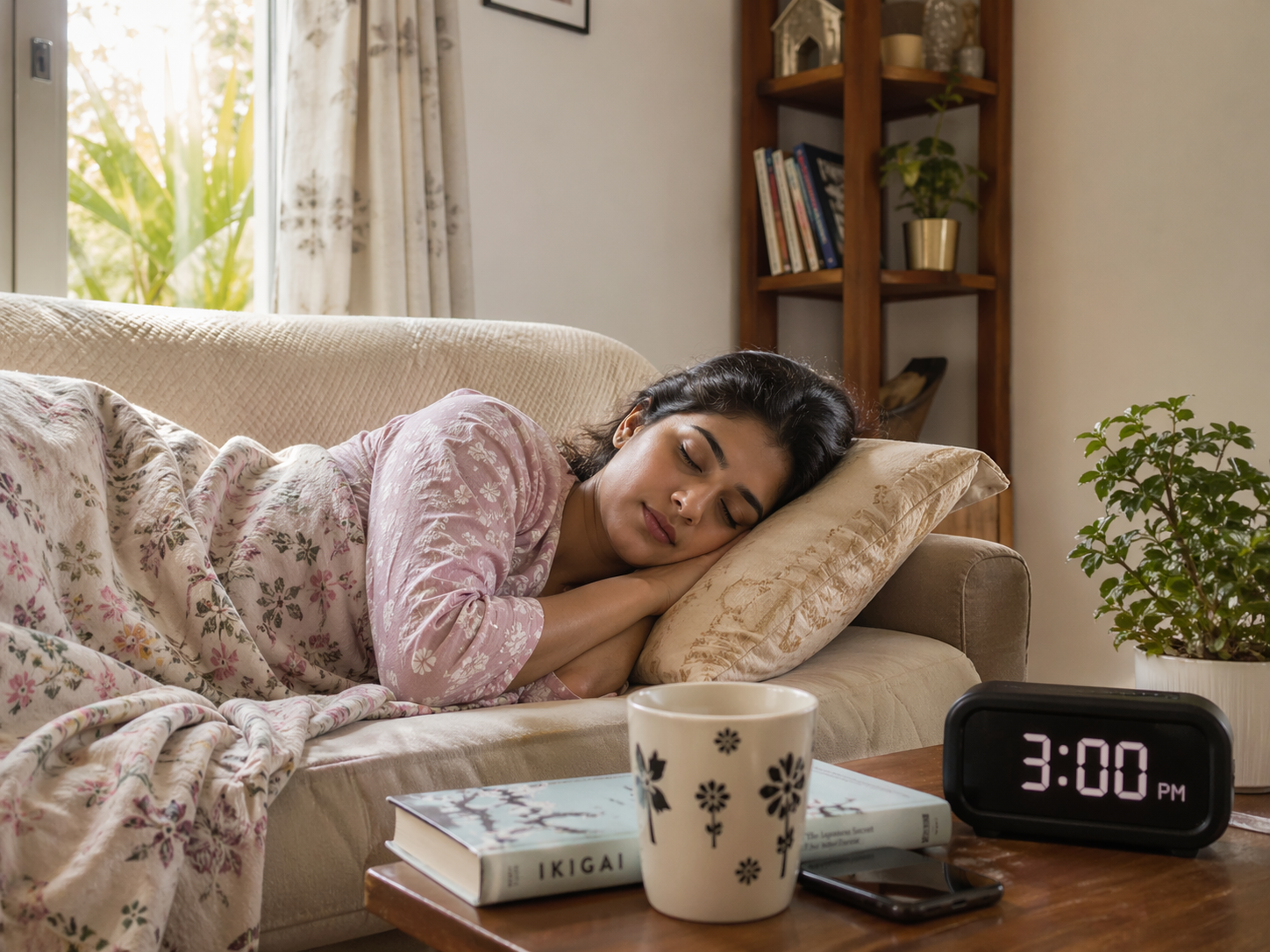
A short nap sounds simple on paper.

You lie down for 15 or 20 minutes, close your eyes, wake up a little refreshed, and go on with your day like a reasonable adult who has mastered energy management.
Then real life happens.
You either cannot fall asleep at all, or you wake up 90 minutes later confused, sweaty, and slightly offended by the clock. Sometimes both happen in the same week. A “quick nap” somehow turns into a full event.
A lot of people have this problem, especially when they are tired enough to want a nap but busy enough to need it to stay short. That awkward middle zone is where napping gets tricky. You are not trying to go to bed. You are trying to borrow a little rest without disappearing into the afternoon.
And for many people, that is harder than it sounds.
Short naps are helpful for some people, but they are not automatically easy. They depend on timing, sleep pressure, environment, stress level, and honestly, whether your brain feels like cooperating that day. Some people can fall asleep sitting half upright on a couch with sunlight coming through the blinds. Other people lie perfectly still for 25 minutes and spend the whole time thinking about email.
If short naps never seem to work for you, it usually does not mean you are bad at resting. It usually means something in the setup is off.
Why short naps are harder than people expect
Part of the problem is that “taking a quick nap” sounds like a small thing, but it asks your body to do something very specific.
You need to get sleepy enough to drift off fairly fast, but not so sleepy that you sink into deeper sleep and struggle to wake up. That is a pretty narrow window.
When people imagine a short nap, they often picture a neat, controlled routine. You set a timer. You close your eyes. You wake up alert and calm. But the body is not always that tidy. Sleep does not arrive on command just because your calendar has a 20-minute opening.
There is also a common mismatch between what people need and what they attempt.
If you are mildly tired, you may not fall asleep at all. If you are deeply sleep-deprived, a short nap may be too short to feel satisfying, and your body may push hard for more sleep once you finally drift off. That is when the 20-minute nap turns into waking up an hour and a half later with pillow lines on your face and absolutely no idea what year it is.
Short naps work best in a fairly specific range. Tired enough to nap. Not so exhausted that your body grabs the wheel.
Sometimes you are trying to nap at the wrong time
Timing matters more than people think.
A lot of people try to nap whenever they finally get a break. That makes sense in normal life, but biologically it is hit or miss. A short nap usually works better in the early to mid-afternoon than late in the day.
For many people, that sleepy dip after lunch is real. You may notice it around 1 p.m. to 3 p.m., sometimes a little later depending on your schedule. That tends to be the most nap-friendly time if you want a short rest without messing up nighttime sleep too much.
Late afternoon naps are where things get messy. A nap at 5 or 6 p.m. often feels tempting, especially if you had a rough night or a long workday. But by then, a short nap may either not happen properly or it may take the edge off your sleepiness just enough to make bedtime irritating later.
And then you end up in a loop. Bad sleep at night, desperate nap the next day, weird bedtime again.
It is not that a late nap is always wrong. Life is not a sleep lab. But if short naps keep backfiring, timing is one of the first things worth changing.
A simple rule that helps
If you are experimenting with naps, try this first:
Aim for early to mid-afternoon
Somewhere around 1 p.m. to 3 p.m. is often a better starting point than late afternoon or evening.
That one shift alone can make naps feel less chaotic.
You may be more tired than you think
This is a big one.
A lot of adults walk around mildly to significantly sleep-deprived and do not fully realize it because the tiredness feels normal. They are functioning. They are getting things done. They are drinking coffee. So they assume they are “fine, just a little tired.”
Then they lie down for a nap and disappear for two hours.
That is not always a sign that naps are bad for you. Sometimes it is a sign that your body has been asking for more rest for a while and finally found an opening.
If you regularly oversleep during naps, especially on weekends or after a few bad nights, the issue may be less about nap technique and more about accumulated sleep debt. A short nap is harder to keep short when your body is hungry for real sleep.
You can think of it like this: if you are only a little thirsty, a small glass of water feels fine. If you are really dehydrated, a sip will not satisfy you. Sleep can work in a similar way.
That does not mean you should never nap. It just means it helps to be honest about the bigger picture. If you are sleeping five hours a night all week and expecting a perfect 15-minute nap to fix the situation, that is a lot to ask from one little nap.
Stress can make you too wired to nap
Being tired is not always the same as being relaxed enough to fall asleep.
This is where short naps become weirdly frustrating.
You feel exhausted. Your eyes burn. Your brain feels mushy. But the second you lie down, your mind starts replaying awkward conversations from three years ago, tomorrow’s to-do list, and whether you forgot to respond to that text.
That is a stress problem, not a laziness problem.
A lot of people are carrying around a type of tiredness that is mixed with tension. Their body needs rest, but their nervous system is still switched on. In that state, a nap can feel like trying to park a car while someone keeps tapping the gas pedal.
This is especially common if you are trying to nap during a hectic workday, between errands, or in a house that never quite gets quiet.
You may need a short wind-down before the nap, not just the nap itself.
What helps if your brain will not settle
A few practical things can make a difference:
Do not jump straight from scrolling to napping
Going from phone stimulation to instant sleep is hard for a lot of people. Give yourself a few minutes without constant input.
Try a very short reset routine
Wash your face, dim the room, use the bathroom, and lie down. Keep it plain. Nothing fancy.
Use one predictable cue
Maybe that is the same blanket, the same chair, or the same quiet audio track. Repetition helps your brain catch on.
The nap environment may be working against you
Some people can nap anywhere. That is not most people.
If the room is too bright, too noisy, too warm, or just slightly uncomfortable, a short nap gets harder. Not impossible, but harder. This matters even more if you are already someone who does not fall asleep easily.
And the thing is, it does not take a dramatic problem. It can be small stuff.
A room that is a little stuffy. A couch that makes your neck angle weird. Sunlight hitting one eye through the curtain. The dishwasher running in the next room. You may not consciously think, “This environment is terrible.” You just keep not napping well.
There is also the setup problem. Sometimes people try to nap in the exact place where they do everything else. They answer messages in bed, watch shows in bed, snack on the couch, work at the table, then suddenly expect the body to understand that this 20-minute period is different.
It helps to create a more obvious nap signal.
A better short-nap setup
You do not need ideal conditions, but a few things help:
Slightly dark
Not cave-dark, just dim enough that your brain gets the hint.
Cool enough
A warm, stuffy room can make naps feel heavy and harder to wake from.
Comfortable, but not too cozy
This one surprises people. If you crawl fully under the covers in bed, your body may decide it is proper sleep time. For some people, a couch, recliner, or bed without getting all the way tucked in works better for a short nap.
A timer you trust
Not one you might sleep through five times.
You may be giving yourself too much time
This sounds backward, but sometimes a short nap is hard because the “short nap” window is actually too long.
If you set aside an hour and tell yourself it is for a quick nap, your body may treat it like permission to fully settle in. Once that happens, waking up at the 20-minute mark becomes less likely.
For many people, a short nap works better when the whole routine is contained. Not just the sleeping part. The entire thing.
That means maybe 20 to 30 minutes total, including the time it takes to drift off a little.
If you know you tend to oversleep, leaving yourself a big open-ended block can make things worse. It creates a loose boundary, and sleepy brains are not great at respecting loose boundaries.
Try thinking in “nap window” instead of “sleep time”
For example:
- 25-minute nap window total
- maybe 5 to 10 minutes to settle
- maybe 10 to 15 minutes of light sleep or rest
- timer goes off before things get too deep
That feels more realistic for a lot of people than aiming for “exactly 20 minutes of sleep.”
You might actually hate waking from deeper sleep
This is where people start saying, “Naps make me feel worse.”
Sometimes that is true. But often what they mean is that waking from the wrong stage of sleep feels awful.
That groggy, heavy, slightly sick feeling after a nap is often what people call sleep inertia. It is that foggy period where your brain does not want to reboot. If you nap too long, especially beyond the short light-sleep zone, you may wake up right in the middle of that.
Then the whole nap feels like a mistake.
This is why shorter naps often work better for people who are sensitive to post-nap grogginess. Not because short naps are magic, but because they reduce the chances of dropping into deeper sleep and dragging yourself back out of it too soon.
If you regularly wake up from naps feeling worse, it may be worth shortening them even more, not lengthening them.
That can feel unfair, but it often helps.
The pressure to nap “correctly” can ruin the nap
This sounds silly until you notice yourself doing it.
You lie down and immediately start monitoring the nap.
Am I asleep yet?
How many minutes are left?
If I fall asleep now, is it worth it?
What if I oversleep?
What if I do not sleep at all?
Is resting without sleeping still helpful?
That kind of mental hovering does not exactly invite sleep.
Short naps tend to go better when you stop treating them like a performance. Resting quietly for 15 or 20 minutes is not a failure, even if you do not fully fall asleep. For some people, especially beginners or anxious nappers, taking the pressure off makes actual sleep more likely later.
It also makes the whole routine less annoying.
A healthier goal
Instead of saying:
I need to fall asleep fast and wake up refreshed
Try:
I am giving myself 20 quiet minutes to rest, and if I sleep, great
That shift sounds small, but it changes the mood of the whole thing.
Practical tips that make short naps easier
If short naps rarely work for you, these are the most useful adjustments to test first.
Keep the nap early enough
Afternoon usually works better than evening.
Use one consistent timer
Do not rely on vibes. Use an alarm you trust and place it where you have to actually move to turn it off if oversleeping is a problem.
Make the nap physically smaller
Try a recliner, sofa, or lying on top of the bed instead of getting fully tucked in.
Cut back the total nap window
Try 20 to 30 minutes total, not a vague hour.
Give yourself five minutes to wind down
Not scrolling, not answering messages, not racing from one task straight into a pillow.
Do not nap as a substitute for chronic poor sleep
A short nap can help on a rough day. It is not a magical patch for weeks of not sleeping enough.
Notice your own pattern
Some people do best with 10 minutes. Some with 20. Some simply do not nap well unless they are extremely tired, and then it stops being a short nap.
That is useful information, not failure.
A realistic example of what a better nap looks like
Let’s say you had a rough night and feel sleepy around 1:30 p.m.
Instead of waiting until 5 p.m. when you are wrecked, you decide to try a short nap earlier. You silence notifications, close the blinds halfway, set a 25-minute timer, and lie on top of the bed with a light blanket instead of fully getting under the covers.
You do not expect perfection. You just aim to rest.
Maybe you fall asleep for 12 minutes. Maybe you mostly drift. Either way, the timer goes off before you fully sink. You sit up, feel a little fuzzy for a minute, drink some water, and move on.
That kind of nap tends to work better than collapsing late in the day for a “quick” nap that accidentally becomes a second night.
It is not dramatic. That is part of the point.
It is okay if short naps are not your thing
This part often gets left out.
Some people just are not great nappers. They can sleep well at night, function fine during the day, and still find short naps awkward, unrefreshing, or impossible. That does happen.
If that is you, it does not mean something is wrong. It may simply mean your body does not switch easily into a neat little daytime sleep session.
In that case, a non-sleep rest break might work better. Lying down in a quiet room. Closing your eyes for 15 minutes. Sitting outside without your phone. Even just stepping away from screens and noise for a bit.
That is not exactly the same as napping, but it can still help take the edge off.
Sometimes people spend so much energy trying to become “good at naps” that they miss the bigger goal, which is just getting a little reset.
The goal is not a perfect nap
Short naps are tricky because they sit in an awkward middle space. Too short to feel luxurious. Too long to be nothing. Helpful when they work, annoying when they do not.
If you want to get better at them, the best place to start is not with some idealized power-nap routine. It is with noticing what keeps going wrong in your version.
Maybe the timing is off. Maybe you are more sleep-deprived than you realized. Maybe your brain is too wired. Maybe your “quick nap” setup is secretly just a full bedtime invitation.
Usually, there is a reason.
And once you spot it, naps start feeling less mysterious and more adjustable. Maybe not perfect, but more workable. Which, honestly, is enough.

Hi, I’m the creator and editor behind ZestyHabit. I research everyday safety, first aid, and practical wellness topics using official guidance and reliable public sources, then turn that information into clear, realistic steps for daily life.
My goal is to help readers make safer, better-informed choices at home and beyond.


