The Window Screen Cleaning Habit Most People Forget Until the Dirt Is Obvious
Minjin Park
·
Dirty window screens can quietly collect dust, pollen, grime, and outdoor debris. Here’s why cleaning them matters and how to keep the job simple without turning it into a weekend project.
Window screens are easy to ignore.
They sit there quietly between your home and the outside world, doing their job without asking for attention. You open the window, let in a breeze, maybe enjoy the sound of rain or birds or traffic if you live somewhere busy, and that is about it.
Until one day, the sunlight hits the screen at just the right angle.
Then you see it.
Dust. Pollen. Gray fuzz. Little bits of leaves. Maybe a few mystery specks you do not want to examine too closely.
The strange thing is that a dirty window screen does not always look dirty from far away. It can seem fine for months. But over time, screens collect outdoor grime and indoor dust, and when they are left alone too long, that buildup can affect airflow, make windows look dull, and even send dust back into the room when the wind blows.
Cleaning window screens is not exactly anyone’s favorite home task. It does not have the instant satisfaction of vacuuming a rug or wiping a shiny counter. But if you like opening your windows, it is one of those small maintenance habits that makes the house feel fresher in a very real way.
Most people think of window screens as insect barriers. And yes, that is their main job. They keep flies, mosquitoes, gnats, and other unwanted little visitors outside where they belong.
But screens also catch a lot more than bugs.
They collect pollen in spring. Dust during dry weather. Fine dirt from nearby roads. Tiny pieces of leaves and seeds. Smoke residue if you live in an area affected by wildfires or frequent outdoor burning. Grease-like film if a kitchen window is near a cooking area. Even pet hair and lint can cling to the inside surface.
A screen is basically a mesh filter sitting in your window.
The problem is that, unlike an HVAC filter, it does not get replaced regularly. It just stays there, season after season, catching whatever passes by.
And because screens are usually dark gray or black, the grime blends in. You may not notice it until you touch the screen and your finger comes away dusty.
Not the most glamorous discovery.
Dirty Screens Can Make Fresh Air Feel Less Fresh
Opening a window is supposed to make a room feel better.
You want that light, moving-air feeling. A little reset. Maybe the room has been stuffy all day, or you cooked something strong, or the weather finally feels nice enough to stop relying on the air conditioner.
But if the screen is covered in dust and pollen, some of that debris can come inside with the breeze.
It may not pour into the room in a visible cloud. Usually it is subtler than that. The windowsill gets dusty faster. The nearby curtain looks dull. A table next to the window needs wiping again even though you just cleaned it. If you have allergies, you may notice more sneezing when windows are open.
Of course, outdoor pollen and dust can enter even through a clean screen. A screen is not a sealed air purifier. But a dirty screen adds another layer of buildup right at the point where air enters your home.
That is why cleaning it matters. You are not trying to make the outdoors sterile. You are just removing old grime so the air coming through is not brushing past months of collected dirt first.
Pollen Season Can Turn Screens Into Sticky Dust Traps
If you live in a place with a heavy spring pollen season, you know how quickly outdoor surfaces can turn yellow-green. Cars, patio furniture, porch railings, and window ledges all seem to get coated overnight.
Window screens get hit too.
Pollen sticks easily to the fine mesh, especially when there is moisture in the air. After a light rain, pollen and dust can form a slightly stubborn film. Then new dust lands on top of that. Then more pollen. By the time summer rolls around, the screen may have a layered buildup that does not come off with a casual swipe.
This is especially noticeable if your windows face trees, grass, gardens, or a busy street.
A screen that looks only “a little dusty” may be holding a lot of pollen. For someone with seasonal allergies, that can make open-window days less pleasant. You may think, “Why am I sneezing inside when I cleaned the room?” Meanwhile, the screen has been quietly collecting spring in mesh form.
Grimy Screens Can Reduce Airflow
A clean screen already slows airflow a little because it is a physical barrier. That is normal.
A dirty screen slows it more.
When dust, lint, pollen, and debris fill the tiny openings in the mesh, less air moves through. You may still feel a breeze, but not as much as you would with a clean screen.
This can matter in rooms where natural ventilation is important. Bedrooms, kitchens, laundry areas, bathrooms with windows, and small apartments all benefit from good airflow. If the screen is clogged, opening the window may not freshen the room as well as you expect.
You might open the window wider, thinking the room is just not getting enough air. But sometimes the issue is right there in the screen.
Cleaning it can make the window feel more useful again. The breeze comes through better. The room clears faster. The house feels less stale.
It is one of those small fixes that feels oddly satisfying once you notice the difference.
Screens Also Affect How Clean the Window Looks
Sometimes the glass is clean, but the window still looks dingy.
The culprit may be the screen.
A dirty screen can make natural light look muted. It can blur the view slightly. It can also shed dust onto the glass or window track, making the whole window area seem older and less cared for than it really is.
This is especially true for windows that get direct sunlight. Bright light reveals everything. A screen that looked fine on a cloudy day suddenly looks like it has been living through a dust storm.
If you have ever cleaned window glass and still felt like the window did not look quite right, check the screen. The glass may not be the problem.
The Window Track Gets Dirty Too
Window screen neglect usually comes with another quiet issue: dirty tracks.
The bottom track of a window collects dust, dead insects, leaf bits, and moisture. If the screen is dirty, more debris tends to gather there. When rain blows against the window, grime can wash down into the track and dry into a gritty layer.
Then every time you open or close the window, the dirt shifts around.
Dirty tracks can make windows harder to slide. They can also hold moisture longer, especially if debris blocks small drainage areas. Over time, that damp grit is not great for the window frame.
This does not mean you need to deep-clean every window with a toothbrush every week. Please do not make your life harder than it needs to be. But wiping the track when you clean the screen keeps the whole area from becoming a tiny outdoor compost zone.
How Often Should You Clean Window Screens?
There is no perfect schedule for every home.
A house near a busy road may need more frequent cleaning. So might a home surrounded by trees, a first-floor apartment near landscaping, or a place in a dusty climate. If you rarely open your windows, the urgency is lower, though dust still builds up over time.
For many homes, cleaning screens once or twice a year is a reasonable starting point.
Spring is a good time because pollen and winter grime have built up. Early fall can also work, especially after summer dust, insects, and storms.
A simple way to think about it: if you would not want air blowing across it and into your room, it is time to clean it.
The Easy Way to Clean Screens Without Overcomplicating It
Cleaning screens can be simple. It does not need special equipment or a huge production.
For light dust, you can start with a soft brush attachment on a vacuum. Use gentle pressure so you do not stretch or damage the mesh. Vacuum both sides if you can reach them. This works well for maintenance cleaning when the screens are not too grimy.
For a deeper clean, remove the screens if they are designed to come out easily. Take them outside, lay them flat or lean them carefully against a wall, and rinse with a garden hose on a gentle setting. A harsh spray can damage older screens, so no need to blast them like you are washing a driveway.
Use a bucket of warm water with a small amount of mild dish soap. Wipe gently with a soft sponge or microfiber cloth. Rinse well. Let the screen dry completely before putting it back.
That last part matters. Reinstalling a wet screen can leave moisture around the frame or track.
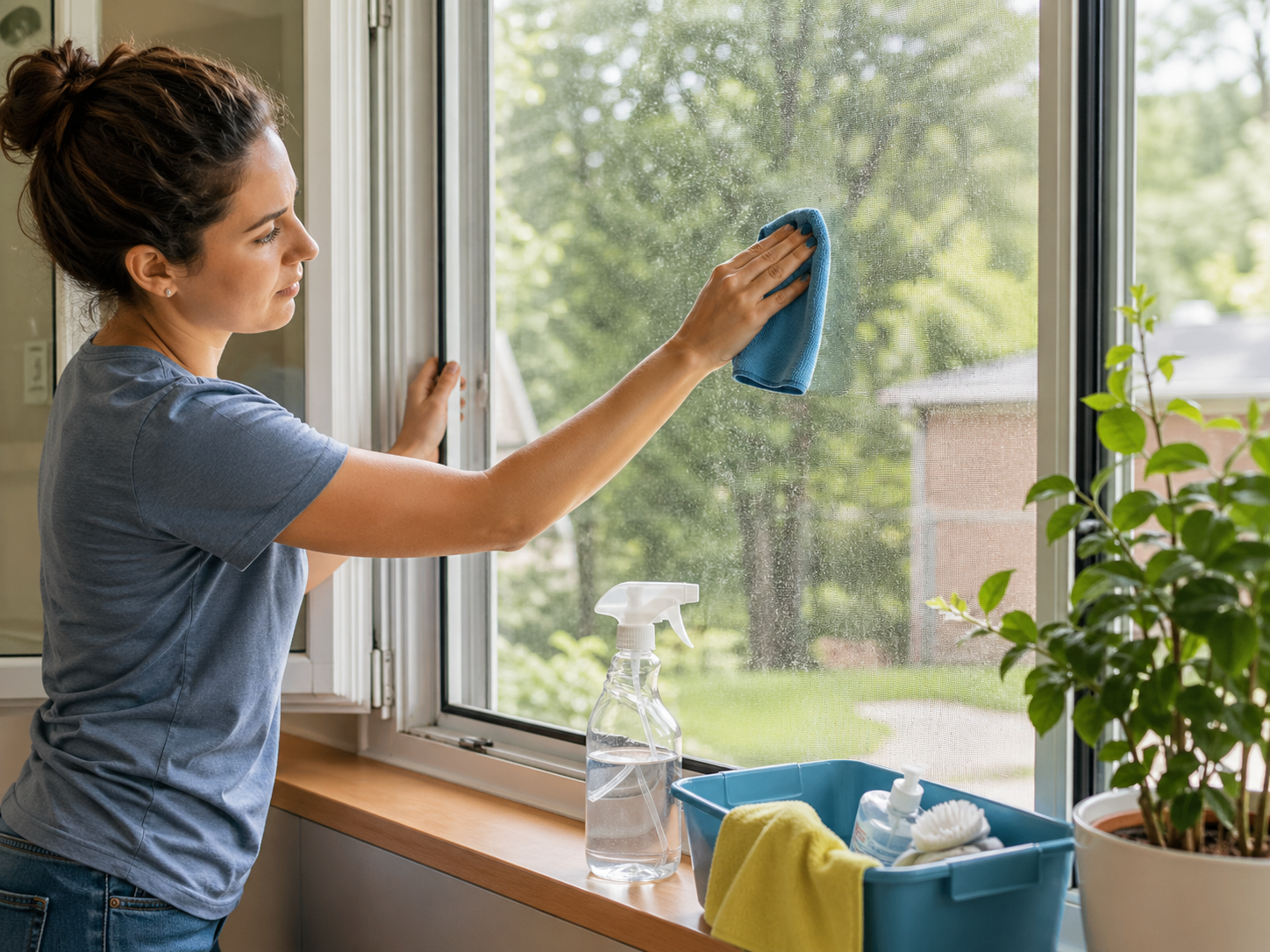
If you live in an apartment and cannot easily remove screens, you can still clean them from inside. Place an old towel under the window to catch drips. Vacuum first. Then wipe the screen gently with a damp microfiber cloth. Rinse the cloth often so you are not just spreading dirt around.
It may take a few passes, especially if the screen has not been cleaned in a long time. The first wipe is usually a little disgusting. No judgment. That is exactly why you are doing it.
What Not to Do When Cleaning Screens
Screens are tougher than they look in some ways, but they can still bend, tear, or pop loose if handled roughly.
Avoid using stiff wire brushes. They can damage the mesh.
Do not scrub aggressively in one spot. If the dirt is stubborn, use more rinsing and gentle wiping instead of force.
Skip strong cleaners unless the screen material specifically allows them. Mild soap is usually enough.
Be careful with pressure washers. They can stretch, tear, or loosen the screen.
Do not reinstall screens while they are dripping wet.
Also, pay attention to fragile or old screens. If the mesh is brittle, loose, or already torn, cleaning may reveal that it needs repair. That is annoying, yes, but better than discovering it after mosquitoes have been using your window like a side entrance.
Small Habits That Keep Screens Cleaner Longer
A full screen cleaning once or twice a year is helpful, but small habits can prevent heavy buildup.
Wipe nearby windowsills when you dust the room. A clean sill means less loose dirt gets pushed around.
Vacuum around window areas during regular cleaning, especially if you have pets.
After storms, check lower windows for leaf bits or mud splatter.
Keep kitchen window screens cleaner if you cook nearby. Grease can make dust stick more firmly.
Trim plants that press against screens. Leaves and branches can leave residue and trap moisture.
If you see a spider web on the outside of a screen, remove it before it becomes a dust net. Spider webs are strangely efficient at collecting grime.
These little habits take minutes, not hours.
Clean Screens Can Help the Whole Room Feel Better
There is something nice about opening a window after the screen has been cleaned.
The air seems to move more easily. The light looks clearer. The window area feels less neglected. It is not a dramatic home makeover, but it changes the feel of the room.
This is especially true in bedrooms and living rooms where you actually spend time relaxing. A dusty screen next to your bed or favorite chair is not exactly comforting once you notice it.
And that is the funny thing about neglected household dirt. You can ignore it for months, but once you see it, you cannot unsee it.
The good news is that screens are not hard to maintain once they are on your radar. They just need to be included in the cleaning routine now and then.
The Bottom Line
Not cleaning window screens may seem like a small habit, but over time it allows dust, pollen, grime, and outdoor debris to build up right where fresh air enters your home.
Dirty screens can reduce airflow, make windows look dull, add dust to nearby surfaces, and hold onto pollen during allergy season. They can also make the window track dirtier, which turns a simple cleaning task into a more annoying one later.
You do not need to clean every screen constantly. A light vacuum now and then, plus a deeper wash once or twice a year, is enough for many homes.
The next time you open a window and wonder why the room still feels a little stale, take a look at the screen. It might not need replacing. It might just need a bath.
Hi, I’m the creator and editor behind ZestyHabit. I research everyday safety, first aid, and practical wellness topics using official guidance and reliable public sources, then turn that information into clear, realistic steps for daily life.
My goal is to help readers make safer, better-informed choices at home and beyond.