Window Frame Mold: Causes, Health Risks, and Moisture Fixes
Minjin Park
·
Discover why mold grows around window frames, how it may affect your health, how to clean small areas safely, and how to stop condensation and leaks.
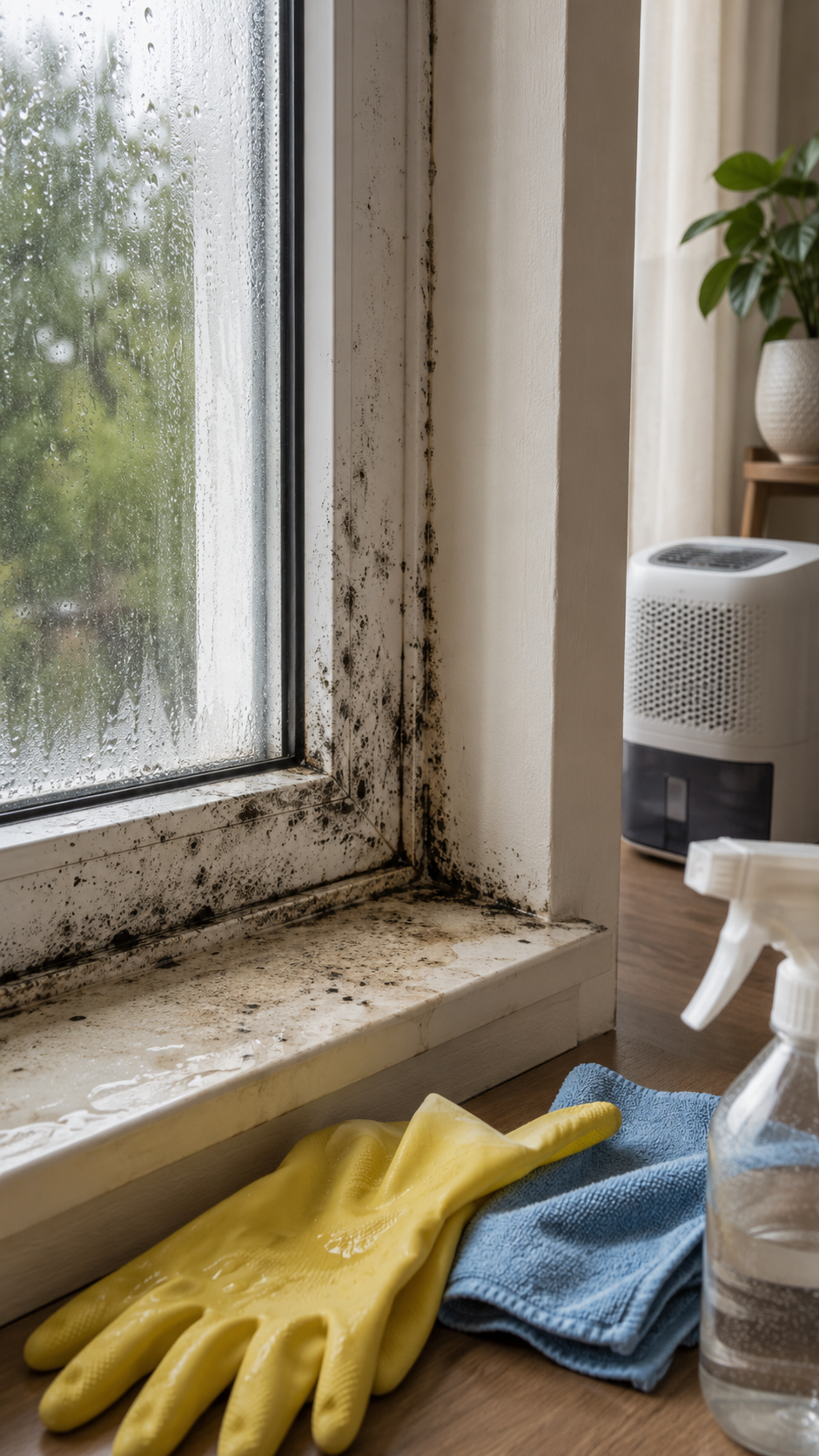
Mold around a window often starts quietly. You may notice a few black specks in the corner of the sill, a musty smell behind the curtains, or a thin line of discoloration along the caulk. After cleaning it, the window looks better—only for the spots to return a few weeks later.
Recurring window mold is rarely just a cleaning problem. It is usually evidence that the area is staying damp long enough for mold to grow. Condensation is a common cause, especially during cold weather, but rainwater leaks, failed caulk, poor insulation, blocked drainage, and limited airflow can produce similar results.
The key is to remove the existing growth safely and correct the source of moisture. Simply painting over the stain, spraying bleach repeatedly, or wiping the glass without drying the frame will not provide a lasting solution.
Here is how to identify the likely cause of window frame mold, understand its potential health effects, clean manageable areas, and prevent it from returning.
Mold spores are naturally present in indoor and outdoor air. They do not become a visible household problem unless they land on a suitable surface with enough moisture and organic material.
Window areas provide several favorable conditions:
Cold glass and frames collect condensation.
Dust supplies organic material on which mold can grow.
Caulk lines and corners trap water.
Curtains and blinds limit air circulation.
Leaks can keep wood, drywall, and insulation damp.
Mold does not necessarily grow because a home is dirty. Even a well-maintained room can develop window mold when warm, humid indoor air repeatedly meets a cold surface.
Condensation: The Most Common Cause
Air contains water vapor. When warm indoor air contacts a cold window, it cools. If it reaches its dew point, some of that vapor changes into liquid water on the glass, frame, or sill.
This is why window condensation is especially common:
A small amount of occasional condensation may not cause damage if it is wiped up and the surface dries quickly. Trouble begins when water collects every day, runs into the frame, or remains trapped for many hours.
The EPA recommends keeping indoor relative humidity below 60 percent and ideally between 30 and 50 percent. If moisture regularly appears on windows, the agency advises drying the surface promptly and reducing the moisture source.
Water Leaks Can Look Like Condensation
Not every wet window is caused by indoor humidity. Water may enter from outdoors through damaged caulk, deteriorated seals, cracked siding, poor flashing, roof problems, or blocked drainage openings.
Clues that suggest a leak include:
Dampness after rain rather than cold weather
Stains concentrated at the top of the window
Peeling paint or swollen trim
Soft or crumbling wood
Water inside the wall
Discoloration that extends beyond the sill
Moisture on only one window despite similar indoor conditions
Bubbling drywall or wallpaper
Condensation usually forms on the room-facing surface of the glass or frame. Moisture trapped between the panes of an insulated window generally indicates a failed glazing seal. Rainwater appearing around the frame, particularly after wind-driven rain, points more strongly toward an exterior defect.
A persistent leak should be repaired before mold cleanup is considered complete. Otherwise, the newly cleaned material will become wet again.
Poor Airflow Makes the Problem Worse
Thick curtains, blackout shades, furniture, and deep window coverings can create a small pocket of still air. The main room may feel dry while the space between the curtain and cold glass remains damp.
This often explains why mold appears primarily:
Behind curtains
Along the lower corners of a window
Under closed blinds
Behind furniture placed against an outside wall
Around windows in rarely used rooms
Opening curtains during the day, leaving a small air gap, and allowing heated or conditioned air to circulate across the glass can reduce surface moisture. However, airflow alone will not correct a structural leak or severely elevated indoor humidity.
Can Window Mold Affect Your Health?
People respond to mold differently. Some experience no noticeable symptoms, while others develop irritation or allergic reactions.
Mold can irritate the eyes, skin, nose, throat, and lungs even in people who do not have a diagnosed mold allergy.
For people with asthma, exposure may trigger coughing, chest tightness, wheezing, or shortness of breath. Research has also found an association between damp buildings and both worsening asthma and the development of new asthma in some occupants.
People with weakened immune systems or chronic lung disease may face a greater risk of fungal lung infections. These individuals should not clean mold themselves and may need to avoid the affected area until remediation is complete.
Is Black Window Mold “Toxic Black Mold”?
Color cannot reliably identify a mold species or determine how hazardous it is. Mold around a window may appear black, dark green, brown, gray, white, pink, or orange.
The phrase “toxic black mold” is often used online to describe Stachybotrys chartarum, but many unrelated molds can look dark. Identifying the exact species does not usually change the basic response: remove the mold safely and eliminate the moisture supporting it.
Routine home mold testing is often unnecessary when visible growth and a moisture problem are already present. There are no universally accepted indoor mold limits that turn a test result into a simple “safe” or “unsafe” answer. Inspection, moisture control, and appropriate cleanup are generally more useful than identifying every spore.
Can You Clean Window Mold Yourself?
The size of the affected area, the material involved, the cause of moisture, and the health of the occupants all matter.
The EPA’s household mold cleanup guidance states that an area smaller than about 10 square feet—roughly a 3-by-3-foot patch—can usually be managed by the homeowner.
Professional help is more appropriate when:
Mold covers more than about 10 square feet.
The problem followed major water damage or flooding.
Sewage or contaminated water was involved.
Mold has entered drywall, insulation, or wall cavities.
The HVAC system may be contaminated.
The window frame is extensively rotted.
Mold returns despite moisture repairs.
Occupants have severe allergies, asthma, lung disease, or weakened immunity.
You cannot identify where the water is coming from.
A small visible patch may be connected to a larger hidden problem. A strong musty odor, wet drywall, or widespread paint damage can indicate mold beneath the surface.
What to Wear When Cleaning Mold
Cleaning can release spores and fragments into the air. Protect your skin, eyes, and respiratory system before disturbing the affected area.
The CDC recommends that people performing mold cleanup wear at least a NIOSH-approved N95 respirator. Gloves and protective eyewear are also sensible precautions.
Use:
An N95 respirator that fits properly
Nonporous gloves
Goggles without ventilation holes
Clothing that covers the skin
Shoes that can be cleaned afterward
Children, pets, and people with respiratory conditions should stay away from the work area. Anyone with asthma, COPD, significant mold allergies, or a weakened immune system should not participate in cleanup.
How to Clean a Small Area of Window Mold
Before cleaning, determine whether the window is still wet. Repair active leaks and reduce condensation as soon as possible.
For a small area on a hard, washable surface:
Ventilate the room when outdoor conditions allow.
Put on appropriate protective equipment.
Remove nearby washable curtains or blinds carefully.
Clean the affected surface with detergent and water.
Scrub crevices gently with a disposable or dedicated brush.
Wipe away loosened material.
Dry the surface completely.
Dispose of contaminated disposable materials in a sealed bag.
Wash reusable tools separately and wash your hands.
The EPA recommends scrubbing mold from hard surfaces with detergent and water and then drying them completely. Killing surface mold without physically removing residue and controlling moisture is not enough.
Avoid aggressive dry brushing, sanding, or scraping that sends material into the air. Do not paint or apply new caulk directly over visible mold. The surface must first be cleaned, dried, and repaired as necessary.
Should You Use Bleach?
Bleach is not automatically required for routine mold cleanup on hard household surfaces. Detergent and physical cleaning are often sufficient when the moisture source is corrected and the surface is dried thoroughly.
Bleach may discolor finishes, corrode metal hardware, irritate the eyes and lungs, and damage some window materials. It also does not reliably penetrate deeply into porous wood, drywall, or caulk.
If you choose a mold-cleaning product or diluted bleach method, verify that it is appropriate for the window material and follow the product instructions exactly. Never mix bleach with ammonia, vinegar, acids, alcohol, or any other household cleaner. These combinations can release dangerous gases.
More chemical is not better. Repeatedly spraying the area while ignoring condensation or leakage will not solve the underlying problem.
Cleaning Different Window Materials
Vinyl and Aluminum
Smooth vinyl and finished aluminum are generally easier to clean because they are nonporous. Pay attention to joints, tracks, screw holes, and the underside of removable pieces. Dry metal components promptly to limit corrosion.
Painted or Sealed Wood
Surface mold on intact painted or sealed wood may be cleanable. If the wood is soft, swollen, cracked, deeply stained, or crumbling, water may have penetrated below the finish. Damaged sections may require repair or replacement.
Unfinished Wood
Unfinished wood is porous and can be difficult to clean completely. Do not sand moldy wood without appropriate containment and respiratory protection. Seek professional advice if growth is extensive or deeply embedded.
Silicone Caulk and Rubber Seals
Mold can stain or penetrate deteriorated caulk. If discoloration remains after cleaning and drying, the caulk may need to be removed and replaced. Do not install new caulk until the joint is clean, dry, and free from active leakage.
Drywall and MDF Trim
Drywall, fiberboard, and medium-density fiberboard absorb water readily. Swollen, soft, crumbling, or extensively moldy material generally cannot be restored by surface wiping alone.
How to Lower Indoor Humidity
Use an inexpensive digital hygrometer to monitor relative humidity. Check different rooms and times of day because levels can change after cooking, showering, sleeping, or drying laundry.
To keep humidity in a healthier range:
Run bathroom exhaust fans during and after showers.
Use a vented kitchen exhaust fan while cooking.
Vent clothes dryers outdoors.
Avoid drying large amounts of laundry indoors.
Use a dehumidifier when necessary.
Reduce humidifier output if windows are wet.
Keep interior doors open when appropriate for airflow.
Maintain heating and air-conditioning systems.
Wipe condensation as soon as it appears.
A dehumidifier must be sized appropriately and its reservoir emptied and cleaned regularly. It will not fix water entering through damaged flashing or a leaking wall.
Improve the Window’s Surface Temperature
Condensation becomes more likely when the inside surface of a window gets very cold. Improving insulation can keep that surface warmer.
Possible upgrades include:
Repairing failed weatherstripping
Sealing air leaks around the frame
Installing storm windows
Replacing damaged insulated-glass units
Improving insulation around the window opening
Replacing highly inefficient single-pane windows
Caulk should be applied only after mold and damaged material have been removed and the area is completely dry. Sealing a wet cavity can trap moisture and worsen hidden decay.
Some homes may require evaluation by a window contractor, building inspector, or energy specialist to identify thermal bridges or improper installation.
Preventing Window Mold From Returning
After cleaning, inspect the area weekly for the first few months. Pay particular attention after cold nights, heavy rain, cooking, showers, and humid weather.
A practical prevention routine includes:
Drying visible condensation every morning
Cleaning dust from tracks and sills
Opening blinds and curtains periodically
Keeping furniture slightly away from exterior walls
Monitoring humidity with a hygrometer
Repairing leaks promptly
Checking exterior caulk and drainage
Washing or replacing moldy curtains
Avoiding excessive humidifier use
If mold returns in exactly the same location, assume moisture is still reaching that surface. Repeated cleaning is evidence that the cause has not been fully corrected.
When to Seek Medical Advice
Contact a healthcare professional if symptoms such as persistent coughing, wheezing, shortness of breath, eye irritation, or rash appear or worsen in the moldy environment.
Seek prompt care for significant breathing difficulty, a serious asthma attack, fever with respiratory symptoms, or symptoms in a person with a weakened immune system or chronic lung disease.
Medical testing for “mold toxicity” is not a substitute for evaluating symptoms and correcting damp conditions. Tell the healthcare provider when the symptoms began, where mold was found, and whether symptoms improve away from the affected room.
Final Thoughts
Mold around a window is a moisture warning. Cleaning the visible spots is useful, but lasting control comes from stopping condensation, repairing leaks, improving airflow, and keeping indoor humidity—ideally—between 30 and 50 percent. Small areas on hard surfaces may be manageable with proper protection, detergent, water, and thorough drying, while widespread or hidden damage deserves professional attention.
Have you dealt with recurring mold on a bedroom, bathroom, or kitchen window? Was the cause condensation, failed caulk, poor ventilation, or a hidden leak? Share what finally worked for you in the comments below—your experience may help another reader find the real source of their window moisture problem.
Hi, I’m the creator and editor behind ZestyHabit. I research everyday safety, first aid, and practical wellness topics using official guidance and reliable public sources, then turn that information into clear, realistic steps for daily life.
My goal is to help readers make safer, better-informed choices at home and beyond.