The Unseen Value of Almonds: A Nut for Every Occasion
Minjin Park
·
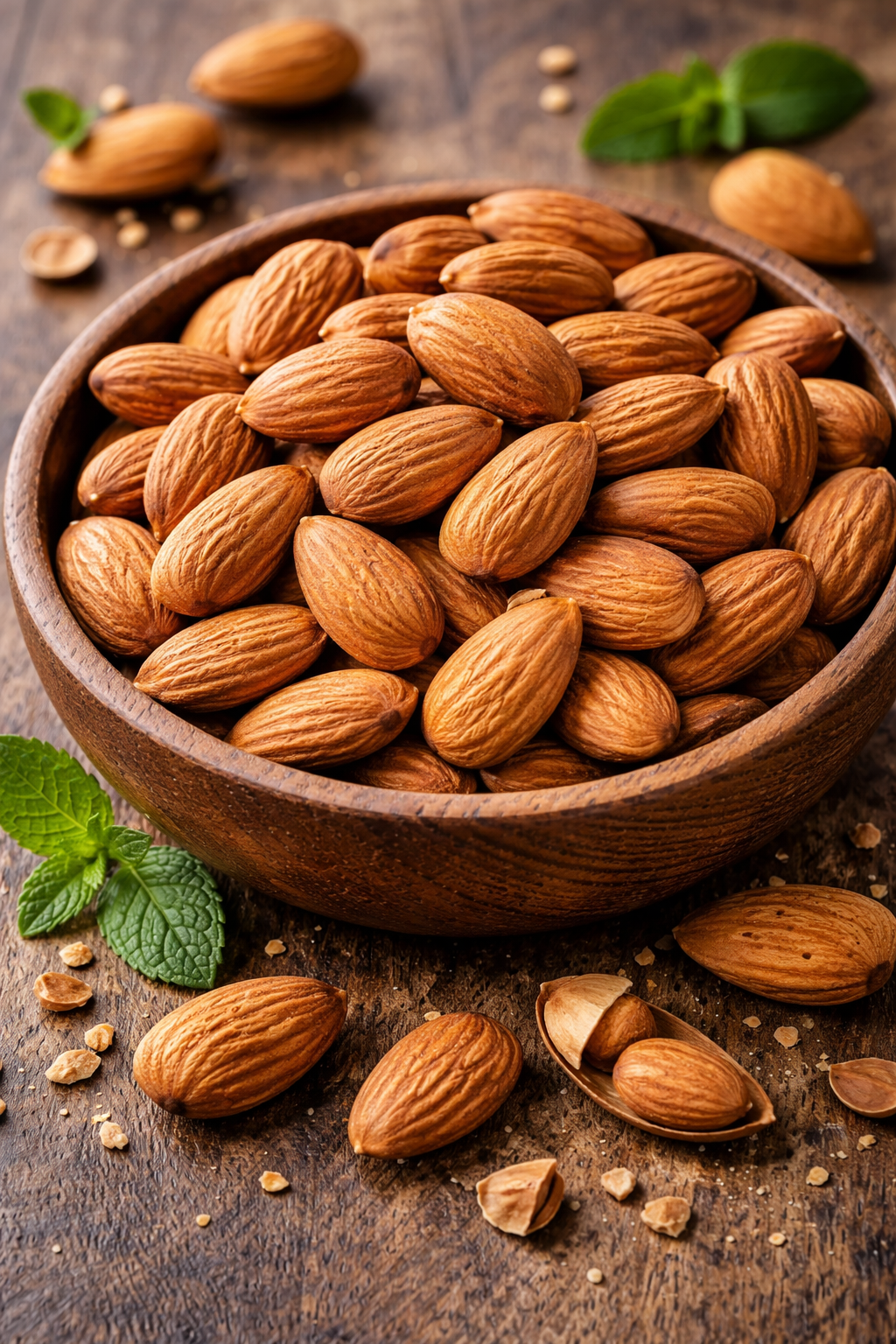
A bowl of almonds on a desk has a way of disappearing without fanfare. No crinkly wrapper, no sugar rush, no drama. Someone reaches in during a meeting, another grabs a few on the way out, and by late afternoon only the almond dust is left at the bottom. That quiet efficiency says a lot about why almonds became the default nut in so many kitchens, offices, gym bags, and supermarket aisles. They are not flashy. They are just unusually easy to live with.
That everyday popularity sometimes makes almonds seem boring, or at least too familiar to deserve much thought. But almonds are one of the better examples of how nutrition and convenience can reinforce each other instead of pulling in opposite directions. They are nutrient-dense without feeling medicinal. They are satisfying without turning into a project. They fit into sweet foods, savory foods, travel snacks, bakery cases, salad toppers, pantry jars, and school lunch boxes. Few foods manage all that while still being recognizably themselves.
When people call almonds a “healthy snack,” they are usually pointing to a few things at once: protein, healthy fats, fiber, vitamin E, and a feeling of real satiety that many snack foods do not offer. But that label can also flatten what makes almonds worth eating. Their nutritional profile is good, yes. Their popularity also comes from texture, shelf life, portability, and the fact that they solve ordinary food problems with almost no effort.
A standard serving of almonds—about 28 grams, or roughly 23 almonds—packs more substance than its size suggests. That portion typically contains around 160 to 170 calories, about 6 grams of protein, 14 grams of fat, 3 to 4 grams of fiber, and relatively little sugar. It also provides a strong dose of vitamin E, along with magnesium, manganese, and smaller amounts of calcium, riboflavin, and other micronutrients.
That list explains a lot of their reputation.
The fat content matters first. Almonds are rich in unsaturated fats, the kind generally associated with heart-friendly eating patterns. This is one reason almonds feel more substantial than a rice cracker or a dry granola bar. Fat slows digestion and helps food linger. It gives almonds staying power.
The protein helps too, though people sometimes oversell it. Almonds are not a protein powerhouse in the way Greek yogurt, eggs, tofu, chicken, or lentils can be. They do provide protein, and that protein contributes to fullness, but the bigger nutritional story is the combination of protein, fat, and fiber all showing up in one small serving. That trio is what makes almonds more useful than snacks built mostly on starch or sugar.
Then there is vitamin E, which is one of the quieter reasons nutrition-minded people keep returning to almonds. Vitamin E functions as an antioxidant, and almonds are one of the more accessible food sources of it. You do not need to memorize the exact numbers to understand the point. A modest handful gives you a meaningful amount of a nutrient many people do not think about until they start paying closer attention to what “nutrient-dense” actually means.
Why almonds became the representative nut
If someone says “nuts” without specifying which kind, many people picture almonds first. Cashews are popular, walnuts are respected, pistachios have personality, and peanuts—though technically legumes—dominate snack shelves. Even so, almonds often end up as the neutral standard.
That did not happen by accident.
Almonds have a mild flavor that works with almost anything. Pecans can be rich to the point of heaviness. Walnuts have a pleasant bitterness that not everyone wants in a plain snack. Brazil nuts are intensely distinctive. Almonds, by contrast, are balanced. Slightly sweet, slightly earthy, crisp when raw, deeper and toastier when roasted. They rarely overwhelm whatever they are paired with.
That matters more than nutrition charts do. A food becomes the representative version of its category when it is easy to use, easy to like, and hard to get tired of.
Almonds also travel well. They are durable. They do not bruise like fruit or spoil quickly like dairy snacks. They can sit in a drawer, a backpack, or a pantry without demanding immediate attention. That kind of stability has enormous real-world value. A lot of “healthy” foods lose points the minute you try to live with them. Almonds mostly keep theirs.
There is also the matter of format. Almonds come whole, sliced, slivered, chopped, smoked, roasted, lightly salted, ground into flour, blended into butter, processed into milk, folded into granola, and embedded in energy bars. That versatility keeps them in circulation. A food with many forms has many chances to become habitual.
The nutrition is solid, but the texture is half the story
People often underestimate texture when they talk about why certain foods become staples. Almonds are not merely nutritious. They are crisp and force you to chew.
That sounds trivial until you compare them with other common snacks. A flavored yogurt can disappear in three minutes. So can a muffin, a protein bar, or a bag of puffed chips. Almonds slow the pace down. They ask for a little effort. That effort is part of why a serving can feel satisfying.
Chewing also changes perception. Foods that require chewing often register as more substantial than foods with similar calories that go down quickly. This is one reason almond butter is useful, but not identical to whole almonds. Almond butter still offers healthy fats and some protein, but it loses the pacing effect of chewing. It is easier to eat a lot of almond butter without noticing. The same is true of almond flour in baked goods. It may sound wholesome, but once an almond becomes a cookie, the experience is no longer “a handful of almonds.”
That is not a moral judgment. It is just a reminder that nutrition is not only chemistry. Form matters.
A practical example: the snack that actually bridges a gap
Picture the late afternoon problem. Lunch is far enough away to feel irrelevant, dinner is still two hours off, and concentration is starting to fray. This is the hour when people reach for snacks that are quick but not especially helpful: sweet coffee drinks, pastries, crackers, sugary bars, or whatever is within arm’s reach.
Almonds work well here because they are one of the few shelf-stable foods that can calm hunger without turning into a meal or a blood-sugar roller coaster. A small handful with a piece of fruit does an especially good job. The fruit supplies water and carbohydrate; the almonds contribute fat, fiber, and some protein. Together they feel complete in a way that each alone may not.
That combination is more useful than almonds by themselves for many people. This is one of the practical points that nutrition summaries often miss. Foods are rarely eaten in isolation. Almonds shine as part of a pairing: with apples, with plain yogurt, with oats, with dark chocolate, with roasted vegetables, with rice dishes, with salad greens, with cheese if that suits your diet. Their nutritional strength becomes more noticeable when they are used to balance something else.
One common mistake: assuming “healthy” means unlimited
Almonds have one of those reputations that invites careless overeating. Because they are nutrient-dense and associated with heart health, people sometimes treat them as if portion size no longer matters.
That is a mistake.
Almonds are good food, but they are also energy-dense. A few handfuls can add up quickly, especially when eaten absentmindedly from a large bag. It is very easy to turn a thoughtful snack into several hundred calories that barely registered because you were working, driving, or watching something.
This does not make almonds problematic. It makes them normal. Nutrient-dense foods often concentrate both benefits and calories. The sensible approach is not fear; it is awareness.
Another common mistake is buying heavily coated almonds—honey-roasted, candied, chocolate-covered, aggressively seasoned—and assuming they offer the same everyday value as plain or lightly salted almonds. Those versions can be enjoyable, and there is nothing inherently wrong with them, but they belong in a different category. Once sugar coatings and flavor crusts take over, the almond becomes more confection than simple staple.
Not all almond products deserve the same halo
The word “almond” has become so marketable that it gets stretched far beyond the whole food.
Almond milk is the obvious example. It can be useful, especially for people who avoid dairy or prefer a lighter option in coffee and cereal. But nutritionally, almond milk is not the same as eating almonds. Many commercial versions are mostly water, sometimes with added gums, stabilizers, and sugar, unless you choose unsweetened varieties. They do not necessarily deliver the protein, fiber, or satiety people associate with a handful of actual nuts.
The same caution applies to almond-flour pastries and “paleo” treats. Almond flour can be a smart ingredient, especially for people avoiding certain grains, but the health message often gets distorted. An almond-flour brownie is still a brownie. It may have a different nutritional profile than a conventional one, but it is not just a bowl of nuts in disguise.
This is where many otherwise sensible eaters get tripped up. They hear “made with almonds” and mentally import all the virtues of whole almonds into a product that does not behave the same way.
The surprising part: almonds are good because they are boring enough
Food culture likes novelty. Ancient grains, exotic berries, functional powders, rare sea vegetables. Almonds have survived all of that partly because they are not trying to be exciting.
There is a strange advantage in that.
A food you can eat often without needing to think about it has more long-term value than a superfood you buy twice, admire, and forget in the back of a cupboard. Almonds are ordinary in the most productive way. They fit habits. They do not require special recipes or ideological commitment. They are easy to recommend because they are easy to repeat.
That predictability is one reason dietitians and practical eaters alike keep coming back to almonds. They offer nutritional quality with very little friction. This sounds less glamorous than “miracle food,” but it is far more persuasive in daily life.
Another underappreciated point: almonds are one of the rare snack foods that can move both directions. They can make austere food more enjoyable and indulgent food more balanced. Scattered over green beans, they add richness and crunch. Chopped into oatmeal, they make breakfast feel less soft and bland. Paired with chocolate, they make a treat more filling and less one-note. Few ingredients are as comfortable in both restraint and pleasure.
For readers wondering about weight gain
This is usually the unspoken question: if almonds are high in fat and fairly calorie-dense, should they be avoided by anyone trying to manage weight?
Not necessarily.
What matters is how they function in the broader pattern of eating. Almonds can support appetite control because they are filling relative to their size. A measured serving can prevent the kind of rebound hunger that leads to raiding the pantry later. They also tend to replace less satisfying snack foods when used well.
The problem starts when almonds are added on top of an already adequate diet instead of replacing something else, or when they are eaten mindlessly from oversized containers. In that case, yes, the calories count. But that is not an almond problem so much as a portion and context problem.
A useful rule is simple: treat almonds as a real food with real substance, not as garnish you can forget to count and not as a guilty pleasure you need to fear.
Almonds versus other nuts
Almonds are popular, but they are not nutritionally superior in every way.
Walnuts offer more omega-3 fats. Pistachios may feel more portion-friendly because shells slow you down. Cashews have a creamier texture and work beautifully in sauces. Hazelnuts bring depth to desserts and pair especially well with chocolate. Pecans are rich and luxurious in a way almonds are not.
So why do almonds still dominate?
Because popularity is rarely about winning every category. It is about being broadly competent across many categories. Almonds are nutritionally respectable, easy to store, easy to pack, mild in flavor, versatile in cooking, and widely available at almost every price point. They are the all-rounder.
That also means they are often the safest choice for households with mixed preferences. If you put out walnuts, someone will complain about bitterness. If you put out Brazil nuts, someone will eat one and stop. If you put out almonds, most people will keep eating.
Raw, roasted, salted: does it matter?
Yes, though not always as much as people assume.
Raw almonds and dry-roasted almonds are fairly close nutritionally. Roasting changes flavor and texture more than it changes the core value. Many people digest roasted almonds more comfortably or simply enjoy them more, which counts for something. A healthy food has to be eaten to matter.
Salt is worth watching if you are trying to manage sodium intake, but lightly salted almonds are still a reasonable choice for most people. The larger problem tends to be flavored products with a long ingredient list, added sugars, or heavy coatings.
One subtle point: freshness matters. Nuts contain oils, and oils can go rancid over time. Stale almonds are not just disappointing; they flatten the whole experience. If almonds have lost their clean, nutty smell and start tasting painty or bitter, they are past their best. This is one reason buying nuts from a store with decent turnover is wiser than grabbing a giant bargain tub you will barely dent in six months.
Why their popularity has lasted
Almonds did not become a flagship nut solely because of marketing, though marketing certainly helped. They stayed popular because they deliver on the promise. A lot of foods get famous and then quietly fade once people realize the reality is less appealing than the idea. Almonds have endured because the reality is good enough.
They are nutritious, but not in a preachy way. Convenient, but not junky. Pleasant, but not addictive in the engineered-snack sense. Flexible, but still recognizable as a whole food. That is a hard balance to strike.
Their reputation also benefits from timing. For years, people have been looking for snacks that are more substantial than crackers and less cumbersome than meal prep. Almonds fit that middle ground neatly. They ask almost nothing of the eater except a little restraint and, ideally, decent teeth.
That modesty may be their strongest trait. Almonds do not promise transformation. They simply perform.
The real reason almonds remain so popular
If almonds were only nutritious, they would be respected but not beloved. If they were only tasty, they would be one more snack among thousands. Their real strength is that they solve several everyday needs at once.
They keep well. They travel. They pair with other foods. They fill the awkward gap between meals. They offer healthy fats, fiber, vitamin E, and a bit of protein in a compact form. They can make plain food better and make indulgent food a little more grounded. They feel sensible without feeling punitive.
That is why almonds became the representative nut. Not because they are the most exotic or the most luxurious or even the most nutrient-packed by every measure. They became popular because they are dependable in the ways people actually need food to be dependable.
A good food does not have to impress you every time. Sometimes it just has to keep earning its place in the cupboard. Almonds have been doing that for years, quietly, which may be the strongest endorsement any food can get.
Hi, I’m the creator and editor behind ZestyHabit. I research everyday safety, first aid, and practical wellness topics using official guidance and reliable public sources, then turn that information into clear, realistic steps for daily life.
My goal is to help readers make safer, better-informed choices at home and beyond.