Why Greek Yogurt Shows Up So Often in Diet Meal Plans
Minjin Park
·
If you have ever looked up a weight-loss meal plan, a healthy snack list, or a “what I eat in a day” post, you have probably noticed one food appearing again and again: Greek yogurt.
It is in breakfast bowls, smoothie recipes, high-protein snacks, meal-prep lunches, and even “healthy dessert” ideas. It gets paired with fruit, oats, nuts, chia seeds, cinnamon, berries, and sometimes even savory toppings. At first glance, it can feel a little repetitive. Why this one food? Why not regular yogurt, cottage cheese, or something else entirely?
The answer is actually pretty practical.
Greek yogurt is not some magical diet food. It does not melt fat, speed up your metabolism overnight, or make weight loss effortless. What it does offer is something that diet meal plans are always trying to solve: how to stay full, eat enough protein, keep calories reasonable, and make healthy eating feel easy enough to repeat. Greek yogurt fits that job unusually well. It is strained, which makes it thicker and usually more protein-dense than regular yogurt, and major nutrition sources note that yogurt can also provide nutrients like calcium and, in many products, live cultures.
It usually gives you more protein for the same kind of portion
One of the biggest reasons Greek yogurt is so common in diet plans is simple: protein matters a lot when you are trying to lose weight without feeling miserable.
Cleveland Clinic notes that Greek yogurt has about twice as much protein as traditional yogurt, and its dietitians specifically point to Greek yogurt as helpful for weight management because the higher protein content can help you feel fuller for longer. In one of Cleveland Clinic’s recent high-protein food guides, a half cup of plain, fat-free Greek yogurt is listed as providing 11 grams of protein.
That matters because many diet struggles are really hunger struggles in disguise. People often assume they lack discipline, when in reality they are just eating meals that are too light, too sweet, or not satisfying enough. A breakfast that digests quickly can leave you hunting for snacks an hour later. A low-protein snack can feel healthy but do almost nothing for real fullness.
Greek yogurt helps with that because it is easy to add protein without making the meal complicated. You do not have to cook chicken at 7 a.m. or pack tuna for a quick afternoon snack. You open a container, add a topping or two, and you are done.
That convenience is a huge part of its popularity.
It is filling in a way many “diet foods” are not
A lot of foods marketed as diet-friendly have one big problem: they are not satisfying.
They are light, low in calories, and maybe visually pretty, but they do not really hold you. You eat them because you think you should, then find yourself standing in the kitchen twenty minutes later looking for something else.
Greek yogurt tends to do better here because it is not just low in calories compared with many snack foods. It also has a thicker texture and more protein, which makes it feel like actual food rather than a placeholder. Harvard’s Nutrition Source notes that yogurt provides protein, and its snacking guidance points out that snacks containing protein can improve satisfaction.
It is easy to keep calories under control without making the portion tiny
Another reason Greek yogurt gets used so often is that it usually gives people that “I ate something substantial” feeling without turning into a calorie bomb too quickly.
Of course, the nutrition depends on the product. Full-fat, flavored, dessert-style, or heavily sweetened versions can be very different from plain Greek yogurt. But in general, plain Greek yogurt gives people a straightforward base they can build around. That makes portion control easier.
This is important because dieting often goes wrong in one of two ways. People either eat foods so tiny and unsatisfying that they eventually overeat later, or they choose “healthy” foods that are fine nutritionally but become calorie-dense fast because the portion quietly grows. Greek yogurt tends to sit in a useful middle ground. It feels substantial, but it is still easy to measure, repeat, and fit into a routine.
That predictability is underrated. When people are trying to lose weight, they usually do better with foods that are easy to understand and easy to repeat.
Greek yogurt is one of those foods.
It works for breakfast, snacks, dessert, and even savory meals
One reason Greek yogurt appears everywhere is not just nutrition. It is versatility.
It can be:
a quick breakfast with berries and oats,
a post-workout snack,
a base for a smoothie,
a higher-protein dip,
a substitute for sour cream in some meals,
or a lighter dessert with cocoa, cinnamon, or fruit.
Cleveland Clinic specifically suggests using Greek yogurt as a substitute for sour cream and also notes that plain yogurt is usually the better pick than sweetened versions.
That flexibility makes it much easier to keep in a weight-loss routine. Foods that only work in one narrow situation usually get boring fast. Greek yogurt does not have that problem. You can make it sweet, plain, tangy, creamy, simple, or more filling depending on what you mix into it.
In real life, that matters a lot more than people think.
A “perfect” diet food that only works in one recipe tends to disappear from your fridge after two weeks. A food that can adapt to different meals has a much better chance of staying useful.
It pairs well with other foods that support fullness
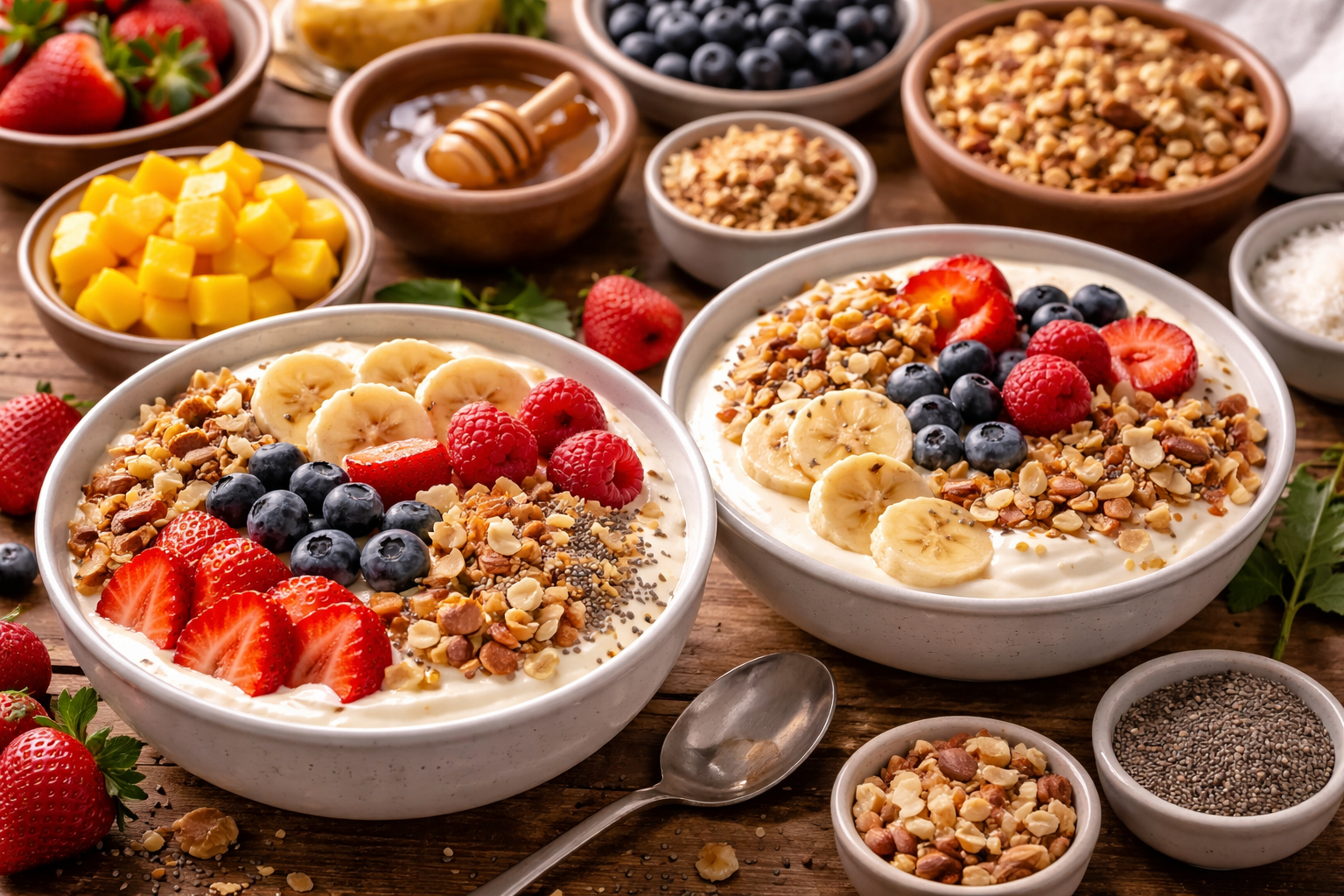
Greek yogurt is not usually eaten alone in the diet world. It is often combined with foods like berries, oats, nuts, seeds, or chia. That is another reason it works so well.
On its own, it brings protein and a creamy texture. Add fruit and you get more volume and freshness. Add oats and you bring in a more substantial, slow-feeling base. Harvard notes that whole-food snacks containing protein and fiber can be more satisfying, and its oats guidance also notes that beta-glucan in oats has been studied for slowing digestion and increasing satiety.
This is why so many diet breakfasts seem to follow a similar pattern: Greek yogurt + fruit + oats or seeds.
It is not random. It is practical food design. Protein helps with fullness. Fiber helps with fullness. A little texture makes the meal feel real. A naturally sweet topping makes it more enjoyable without relying entirely on dessert-like sugar.
That combination is one reason Greek yogurt stays in rotation. It plays well with other foods that make healthy eating easier.
It can help people eat more protein without relying only on meat
Many people trying to lose weight know they “should eat more protein,” but they do not want every meal to revolve around chicken breast, eggs, or protein shakes.
Greek yogurt gives them another option.
That matters for several reasons. Some people want more variety. Some get tired of savory high-protein foods. Some need fast grab-and-go meals. Some want a protein source that works well at breakfast or as an afternoon snack. Greek yogurt fills that gap nicely.
Harvard notes that yogurt provides protein and calcium, while Cleveland Clinic highlights Greek yogurt as a notably protein-rich choice among dairy foods.
This is also part of why Greek yogurt feels so “diet-plan friendly.” It lets people raise protein intake in a way that feels lighter, simpler, and sometimes more enjoyable than another cooked protein serving.
It often feels healthier than sugary snacks, but still tastes good
Let’s be honest: most people do not gain weight because they were too enthusiastic about plain yogurt. They struggle because of the foods eaten around the edges of the day — the pastries, sweet drinks, mindless snacks, and desserts that seem small in the moment but add up quickly.
Greek yogurt often becomes the replacement food in that situation.
It is creamy. It can be sweetened with fruit. It can feel indulgent without actually functioning like a dessert bomb. And because it has protein, it tends to leave people more satisfied than many snack foods made mostly of refined carbs or sugar.
This is probably one of the biggest real-world reasons it is so popular. It helps bridge the gap between “I want to eat lighter” and “I still want food that feels pleasant.”
That middle ground is where sustainable dieting usually happens.
Many options also contain live cultures, which adds to the health image
Another reason Greek yogurt shows up so often is the broader “healthy food” reputation around yogurt in general.
Harvard notes that research on yogurt often focuses on its live bacterial content, and Cleveland Clinic points out that plain Greek yogurt can contain live and active cultures, which are probiotics that support gut health. At the same time, Cleveland Clinic also notes that probiotics themselves should not be treated as a guaranteed weight-loss trick. They may support gut health, but that is not the same as saying they directly cause fat loss.
This distinction matters.
Greek yogurt is popular in diet plans partly because it has an overall healthy image: protein, calcium, fermented dairy, convenient packaging, and often live cultures. But the real weight-loss value is still more practical than magical. It is mostly about satiety, routine, and food quality, not about some secret probiotic fat-burning effect.
That may sound less exciting, but it is actually more useful.
It is easy to portion and easy to repeat
When a food keeps appearing in diet plans, there is usually a behavioral reason behind it, not just a nutritional one.
Greek yogurt is easy to buy, easy to store, easy to portion, and easy to repeat. There is almost no preparation barrier. You do not need a pan, a recipe, or much time. In the real world, those things matter.
A lot of healthy eating falls apart not because people do not know what to eat, but because their better options take too much effort when they are busy, tired, or stressed. Greek yogurt lowers that barrier.
That convenience makes it ideal for:
busy mornings,
office snacks,
late-night “I want something” moments,
post-workout eating,
or simple meal prep.
Foods that reduce friction tend to stay in people’s routines. Greek yogurt is one of them.
It can fit different diet styles without much effort
Another reason Greek yogurt appears so often is that it fits into many eating styles without much adjustment.
People use it in:
higher-protein diets,
calorie-conscious meal plans,
Mediterranean-style eating patterns,
simple clean-eating routines,
muscle-maintenance plans during fat loss,
and even lighter dessert swaps.
It is not perfect for everyone, of course. People who do not tolerate dairy well or avoid animal products will need other options. But for many people, it is one of those rare foods that slides easily into different nutrition goals.
That flexibility gives it staying power.
But there is one reason it sometimes gets overrated
Greek yogurt deserves its reputation, but it also gets overpraised in a way that can be misleading.
It is not automatically healthy just because the label says “Greek.” Some versions are loaded with added sugar, dessert-style flavors, candy mix-ins, or rich toppings that push the calories much higher. Cleveland Clinic specifically recommends plain yogurt over flavored options and notes concerns around very sweet products.
This is where a lot of people get confused. They hear that Greek yogurt is a diet food, then buy a product that is closer to pudding than plain yogurt. The result is not that Greek yogurt “doesn’t work.” It is that the version matters.
That is why plain or lower-sugar options are usually the ones diet plans mean.
Then you control the sweetness yourself with fruit, cinnamon, nuts, cocoa, or a small drizzle of honey if you want it.
So why is Greek yogurt everywhere in weight-loss meal plans?
Because it solves several common dieting problems at the same time.
It gives you a convenient protein source. It helps meals and snacks feel more filling. It fits into breakfast, snacks, and lighter desserts. It pairs well with fruit, oats, and seeds. It is easy to portion. It is easy to repeat. And plain versions can support a calorie-conscious eating pattern without feeling too punishing. Those strengths are why dietitians and mainstream nutrition sources keep highlighting it as a useful option, especially for people trying to manage hunger and build more satisfying meals.
That is really the whole story.
Not hype. Not magic. Just a food that works unusually well in the real life of dieting.
And honestly, that is often what makes a food valuable. Not that it is trendy, but that it keeps helping people do the boring, important part of weight loss: eating in a way they can actually stick to.
Hi, I’m the creator and editor behind ZestyHabit. I research everyday safety, first aid, and practical wellness topics using official guidance and reliable public sources, then turn that information into clear, realistic steps for daily life.
My goal is to help readers make safer, better-informed choices at home and beyond.