Dark Circle Habits: Easy Beauty Care Points People Often Miss
Minjin Park
·
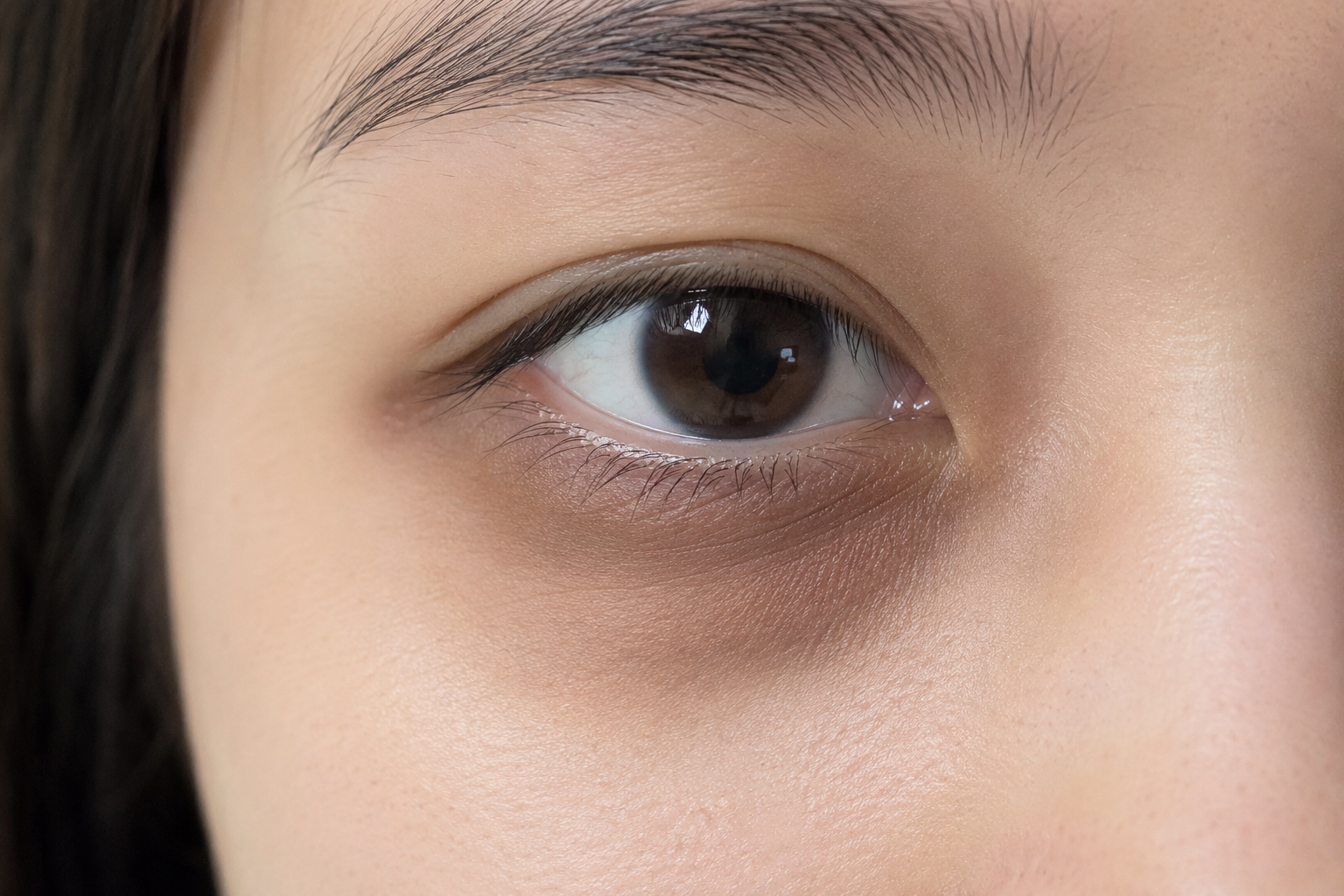
Dark circles are not always caused by lack of sleep. Daily habits, rubbing, dehydration, sun exposure, makeup removal, and skincare choices can all affect how tired your under-eyes look.
Dark circles are one of those beauty concerns that feel unfairly personal.
You can sleep early, drink water, use eye cream, and still wake up looking like you spent the night solving emotional problems under bad lighting. Then someone says, “You look tired,” and suddenly your whole morning has a villain.
The annoying thing about dark circles is that they are not caused by just one thing. Lack of sleep can play a role, of course. But so can genetics, skin thickness, allergies, pigmentation, sun exposure, dehydration, eye rubbing, makeup habits, and even the natural shape of your face.
So when people say, “How do I get rid of dark circles?” the honest answer is: first, you need to understand what kind you have and what habits might be making them worse.
No eye cream can rewrite your bone structure. No serum can replace sleep forever. But small daily habits can make the under-eye area look calmer, smoother, and less shadowy over time.
And the best part? Many of these habits are easy to miss, but not that hard to fix.
When you sleep poorly, your skin can look duller, puffier, and less fresh. The under-eye area may look darker because fluid retention, paleness, or tired-looking skin makes shadows more obvious.
But sleep is not the whole story.
Some people have dark circles even when they sleep well. That can happen because of genetics, deeper tear troughs, thinner under-eye skin, visible blood vessels, or natural pigmentation. If your parents have strong under-eye darkness, you may have inherited that tendency.
This is why one person can sleep four hours and still look bright-eyed, while another person sleeps eight hours and still looks like they have been through a dramatic movie scene.
Rude, but true.
The goal is not always to erase dark circles completely. Sometimes the realistic goal is to reduce the things that make them look worse.
It feels harmless. Your eyes itch, you rub. You are tired, you rub. Makeup feels uncomfortable, you rub. You wake up and press your palms into your eyes like you are rebooting your brain.
But the skin around the eyes is thin and delicate. Repeated rubbing can irritate the area, worsen redness, and contribute to pigmentation over time, especially if your skin is prone to hyperpigmentation.
Rubbing can also make puffiness worse because the area becomes inflamed. If you have allergies, the urge to rub can be even stronger, which creates a frustrating cycle.
A better habit is to press gently instead of rubbing. If your eyes itch often, figure out why. It could be allergies, dry eyes, irritating makeup, contact lenses, or skincare products migrating into the eyes.
Your under-eyes do not need force. They need less drama.
Habit 2: Removing eye makeup too aggressively
This one is huge.
A lot of people treat eye makeup removal like a battle. They wipe back and forth, tug at mascara, scrub eyeliner, and then wonder why the under-eye area looks irritated.
Waterproof mascara is especially stubborn. Long-wear eyeliner too. If your remover is not breaking it down well, your hand starts doing the work instead.
That is where problems start.
Pulling and rubbing around the eyes can make the skin look more tired, dry, and creased. It can also irritate the lash line and make the whole area feel sensitive.
The better method is slower and gentler.
Soak a cotton pad with eye makeup remover or cleansing water, hold it over the closed eye for several seconds, then wipe softly. Let the product dissolve the makeup before you move it. For cleansing balms or oils, massage gently with your fingertips and rinse well.
If you need to scrub hard, the remover is not doing its job.
Habit 3: Skipping sunscreen around the eyes
People are usually better about applying sunscreen to the cheeks and forehead than around the eyes.
Understandable. Sunscreen can sting. Nobody wants watery eyes five minutes after leaving the house.
But skipping sunscreen around the eye area can make pigmentation and premature aging more noticeable over time. The under-eye and outer-eye area gets sun exposure too, especially when you are walking, driving, or sitting near windows.
Sun exposure can darken existing pigmentation and make the skin look more uneven. It can also contribute to collagen breakdown, which may make the under-eye area look thinner or more shadowed as time passes.
If regular sunscreen stings near your eyes, try a mineral sunscreen, a fragrance-free formula, or a sunscreen stick made for sensitive areas. Sunglasses and hats help too.
Honestly, sunglasses are underrated skincare. They protect the eye area and stop you from squinting all day. Very low effort, very useful.
Habit 4: Forgetting hydration
Dehydrated under-eyes can look darker than they really are.
When the skin lacks water, it can look dull, crepey, and slightly sunken. Fine lines become more visible. Concealer clings. Shadows look stronger.
This does not mean drinking one giant bottle of water will magically erase dark circles. Skin hydration is not that simple. But being dehydrated overall can make tiredness show more, and topical hydration can help the under-eye area look smoother.
A lightweight eye cream or gentle moisturizer can help if the skin under your eyes feels dry or tight. Look for ingredients like glycerin, hyaluronic acid, panthenol, ceramides, or squalane.
Apply a small amount. Very small.
The under-eye area does not need a thick layer of cream sliding into your eyes while you sleep.
Habit 5: Using too much eye cream
Eye cream can help. Too much eye cream can create new problems.
A heavy layer may cause puffiness for some people, especially if applied too close to the lower lash line. It can also make makeup crease or slide. In some cases, rich creams can contribute to tiny bumps around the eyes.
The correct amount is usually much less than people think. A rice-grain-sized amount per eye is often enough.
Apply it along the orbital bone, not directly into the lash line. Products move as your skin warms up, so you do not need to place the cream right next to your eyeball.
More product does not mean more results.
Sometimes it just means greasy under-eyes and irritated eyes at 2 a.m.
Habit 6: Ignoring allergies
Allergies can make dark circles look worse.
There is even a term people use casually: “allergic shiners.” The under-eye area can appear darker or puffier when allergies cause congestion, rubbing, inflammation, or poor circulation around the eyes.
If your dark circles come with itchy eyes, sneezing, stuffy nose, watery eyes, or seasonal flares, allergies may be part of the picture.
In that case, eye cream alone will not solve it. You may need to manage the allergy trigger, wash pillowcases more often, avoid rubbing, or talk to a healthcare professional about appropriate treatment.
This is one of those beauty issues where the problem may not be a beauty problem at all.
Sometimes your under-eyes are just reporting what your nose and immune system are doing.
Habit 7: Sleeping flat when you wake up puffy
Puffiness can make dark circles look more obvious because it creates shadows under the eyes.
Some people naturally wake up puffy. Salty food, alcohol, crying, allergies, poor sleep, and sleeping flat can all make fluid collect around the eyes.
If morning puffiness is a regular thing, try sleeping with your head slightly elevated. Not sitting upright like a Victorian ghost, just a little more support. A cool compress in the morning can also help temporarily.
Caffeine eye creams may reduce the appearance of puffiness for some people, especially when used in the morning. They will not fix structural under-eye bags, but they can help with mild temporary swelling.
Also, be careful with very heavy eye creams at night. If you wake up puffier after using one, switch to a lighter texture or apply less.
Habit 8: Eating very salty meals late at night
Salt does not directly “cause” dark circles, but it can contribute to fluid retention.
If you eat a very salty meal late at night, you may wake up with puffier eyes. That puffiness can cast shadows and make the under-eye area look darker.
This does not mean you can never enjoy ramen, chips, takeout, or salty snacks. Life would be very sad.
But if you have an event the next morning, or if you already struggle with puffy under-eyes, it may help to avoid a very salty late-night meal. Drink water normally, sleep well, and keep your evening routine gentle.
Small choices matter most when you are trying to reduce morning puffiness.
Habit 9: Not removing sunscreen and makeup properly at night
Leaving makeup or sunscreen residue around the eyes can irritate the skin.
Even if you do not wear heavy makeup, sunscreen, concealer, powder, mascara, and eyeliner can collect around the eye area. If they are not removed properly, the skin can become dry, irritated, or bumpy.
The tricky part is that you need to cleanse well without rubbing aggressively. A gentle cleansing balm, cleansing oil, micellar water, or eye makeup remover can help dissolve product before you rinse.
After cleansing, your skin should feel clean but not stripped.
If your under-eyes burn after cleansing, your cleanser may be too harsh, or you may be rubbing too much.
Habit 10: Applying strong facial actives too close to the eyes
Retinoids, exfoliating acids, vitamin C, benzoyl peroxide, and strong acne treatments can be useful on the face.
But near the eyes? Be careful.
The eye area is more delicate and more likely to become irritated. If you apply active products too close, they can migrate and cause dryness, peeling, redness, or stinging. Irritated under-eyes often look darker and more tired.
This is especially common with retinol. Someone applies it all over the face, gets too close to the eyes, and then the under-eye area starts flaking.
If you use strong actives, keep them away from the immediate eye area unless the product is specifically made for that zone. You can also apply moisturizer around the eyes first as a buffer.
Your cheeks and your under-eyes do not need the same intensity.
Habit 11: Not managing screen-related eye strain
Screen time does not directly stain your under-eyes dark, but eye strain can contribute to habits that make the area look worse.
When your eyes are tired, you may squint more, rub more, blink less, or sleep worse. Dry eyes can also make you rub without thinking.
If you spend hours at a computer, take short breaks. Look away from the screen. Blink fully. Adjust brightness. Make sure your glasses or contacts prescription is current if you use them.
This is not glamorous advice. It will not sell a tiny jar of eye cream.
But if you stop squinting and rubbing all day, your eye area may look calmer.
Habit 12: Using concealer that is too dry
Makeup can hide dark circles, but the wrong concealer can make the under-eye area look worse.
Very matte or dry concealers can settle into lines, emphasize texture, and make the area look heavier. If you powder too much, the skin may look crepey.
The goal is not always maximum coverage. Sometimes a thin layer of a slightly peachy corrector plus a small amount of concealer looks more natural than thick concealer alone.
Hydrate first, let your eye cream settle, then apply makeup lightly. Use powder only where you need it.
Under-eye makeup is a delicate negotiation. Too little does nothing. Too much announces itself.
How to tell what kind of dark circles you have
This is not a perfect test, but it can help.
If your under-eyes look brownish, pigmentation may be involved. Sun protection and brightening ingredients may help over time.
If they look blue, purple, or reddish, thin skin and visible blood vessels may be part of it. Hydration, gentle care, and avoiding irritation can help the area look better, though it may not fully disappear.
If the darkness looks like a shadow, especially under certain lighting, facial structure or tear troughs may be the main cause. Creams can improve skin quality, but they will not fill a hollow.
If the darkness changes a lot day to day, sleep, puffiness, allergies, salt intake, dehydration, or irritation may be influencing it.
Understanding the type keeps you from wasting energy on the wrong solution.
Ingredients that may help dark circles
For hydration and smoothness, look for glycerin, hyaluronic acid, panthenol, ceramides, and squalane.
For puffiness, caffeine can be helpful, especially in morning formulas.
For pigmentation, ingredients like niacinamide, vitamin C derivatives, licorice extract, or gentle brightening ingredients may help over time.
For fine lines and texture, peptides or gentle retinoid eye creams may be useful, but they should be introduced slowly.
The word “slowly” matters. The eye area is not the place for aggressive experimenting.
If a product stings, burns, makes your eyes water, or causes peeling, stop using it. A dark circle routine should not make your under-eyes angry.
A simple dark circle care routine
You do not need a complicated routine.
Morning:
Rinse or cleanse gently. Apply a small amount of lightweight eye cream if your under-eyes are dry or puffy. Use sunscreen around the eye area if tolerated. Wear sunglasses outside. Apply makeup lightly if you use it.
Night:
Remove makeup and sunscreen gently. Do not rub. Apply a small amount of moisturizer or eye cream around the orbital bone. Avoid placing strong actives too close to the eyes.
That is the foundation.
If allergies are part of the issue, manage them. If puffiness is common, look at sleep position, salt intake, and heavy nighttime products. If pigmentation is the concern, sunscreen matters every single day.
What not to expect from skincare
This is where we have to be honest.
Skincare can improve the look of dark circles, but it cannot fix everything.
If your dark circles are mostly genetic, structural, or caused by deep tear troughs, topical products may only help a little. They can hydrate, brighten slightly, smooth texture, and reduce puffiness, but they cannot fully change the shape of the under-eye area.
That does not mean you should give up. It just means you should not blame yourself if an eye cream does not perform a miracle.
Sometimes the healthiest beauty habit is having realistic expectations.
Your face is not failing because it has shadows.
When to see a professional
If dark circles are sudden, severe, one-sided, accompanied by swelling, pain, irritation, or major skin changes, it is worth getting checked.
Also, if you have ongoing itching, redness, scaling, or eye irritation, you may need help with allergies, dermatitis, or another condition.
For structural concerns like deep hollows or prominent under-eye bags, a dermatologist or qualified medical professional can explain options beyond skincare. That may include treatments, but it is also completely fine to do nothing.
Dark circles are common. They are not a moral emergency.
So, what are the easy beauty care points people miss?
Dark circle care is usually less about one miracle product and more about reducing the habits that make the eye area look worse.
Stop rubbing your eyes. Remove makeup gently. Use sunscreen and sunglasses. Hydrate the under-eye area without overloading it. Watch for allergies. Be careful with salty late-night meals if puffiness is an issue. Keep strong skincare actives away from the eye area. Sleep as well as you realistically can.
And please, do not scrub your under-eyes like you are trying to erase evidence.
The skin there is delicate. Treat it that way.
Dark circles may not disappear completely, especially if they are genetic or structural. But with gentler habits and a more realistic routine, the area can look calmer, smoother, and less tired.
Sometimes the biggest beauty improvement comes from the things you stop doing.
Hi, I’m the creator and editor behind ZestyHabit. I research everyday safety, first aid, and practical wellness topics using official guidance and reliable public sources, then turn that information into clear, realistic steps for daily life.
My goal is to help readers make safer, better-informed choices at home and beyond.