Where to Check Often to Reduce Fine Dust Inside Your Home
Minjin Park
·
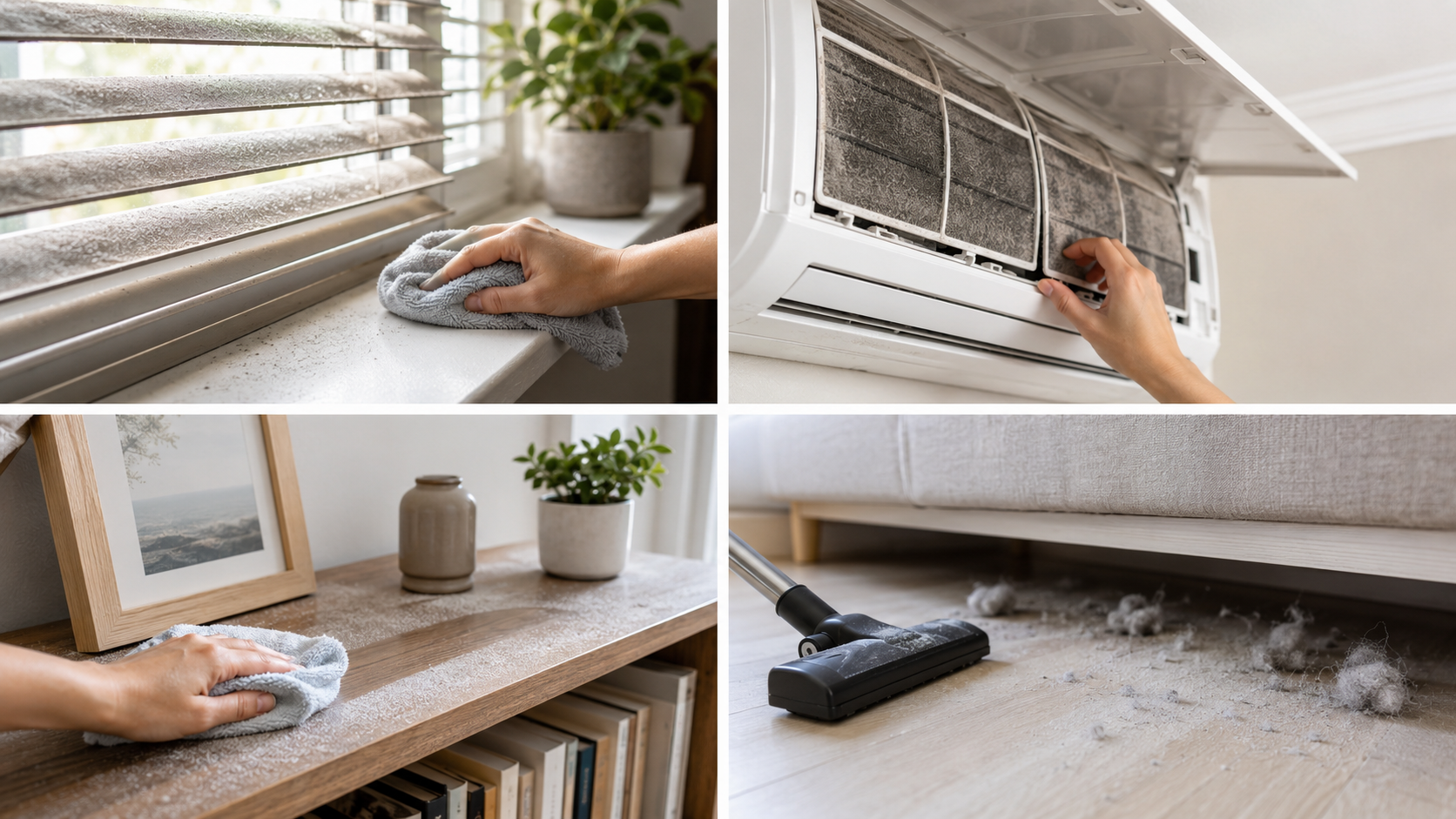
Fine dust inside the home can build up in places we rarely notice, from HVAC filters and vents to bedding, rugs, entryways, and electronics. Learn the everyday spots to check and simple habits that help keep indoor air cleaner.
Dust is one of those things we notice only after it becomes obvious.
You see a gray layer on a shelf. Sunlight hits the room and tiny particles float through the air. Your vacuum fills up faster than expected. A black TV screen looks dusty again just two days after wiping it.
Most homes have some dust. That is normal. Dust comes from outdoor air, clothing fibers, skin flakes, pet dander, cooking particles, carpet fibers, pollen, soil, and everyday movement. But when fine dust builds up indoors, it can make a home feel stuffy, stale, and harder to keep clean.
The tricky part is that fine dust does not only sit on visible surfaces. It collects in filters, vents, fabrics, corners, soft furniture, window tracks, and places where air moves slowly. If you only wipe the coffee table, you may miss the spots that keep sending dust back into the room.
Reducing indoor fine dust is not about making your home perfect. It is about checking the right places regularly so dust does not keep cycling through the air.
Start With the Places That Move Air
If you want to reduce fine dust, look first at anything that moves air around your home. Airflow can help comfort, but it can also spread particles when filters and vents are neglected.
HVAC Filters
Your heating and cooling system filter is one of the most important places to check. If your home has central air or forced-air heating, the filter traps particles before air moves through the system.
A dirty filter can reduce airflow and may allow more dust to circulate. It can also make your system work harder than it should.
How often you change it depends on the filter type, household size, pets, outdoor air quality, and how often the system runs. Some homes may need monthly checks, especially during heavy heating or cooling seasons.
Do not rely only on a calendar. Pull the filter out and look at it. If it is gray, clogged, bent, or coated with dust, it may be time to replace it.
Return Air Grilles
Return air grilles pull air back into the HVAC system. Because they move a lot of air, dust can collect on the grille surface and around the edges.
You may notice fuzzy dust clinging to the slats. Wipe or vacuum these areas regularly. If the grille is dusty, nearby walls may be dusty too.
A return vent covered by furniture, curtains, or storage boxes can also affect airflow. Keep the area open when possible.
Supply Vents
Supply vents blow heated or cooled air into the room. Dust can collect inside the vent cover and then blow outward when the system turns on.
Check vents in bedrooms, living rooms, bathrooms, and hallways. Remove surface dust with a vacuum brush attachment or damp cloth. If a vent has dark dust streaks around it, that is a sign it needs attention.
Portable Air Purifiers
Air purifiers can help reduce particles, but only if the filters are maintained. A purifier with a clogged filter may run loudly without doing much good.
Check the pre-filter and main filter according to the product instructions. Some pre-filters can be vacuumed or washed, while others need replacement. Do not guess; follow the manual.
Also check the area around the purifier. Dust often collects on the intake side because air is constantly being pulled in.
Check Window Areas More Often Than You Think
Windows are one of the main places outdoor dust enters a home. Even when windows are closed, dust can collect around frames, tracks, blinds, and screens.
Window Tracks
Window tracks are easy to ignore until they look grimy. They can collect outdoor dust, pollen, dead insects, moisture, and small debris.
When windows open and close, that buildup can get disturbed and move into the room. Vacuum the tracks first, then wipe with a damp cloth.
If the track has sticky grime, use a small brush to loosen debris before wiping.
Window Screens
Screens catch outdoor particles. That is useful, but it also means screens can become dusty themselves.
When air passes through a dirty screen, some of that dust may come inside. If your screens look gray, wipe them gently or remove and clean them according to the screen type.
This matters especially in spring, pollen season, wildfire smoke season, or if your home faces a busy road.
Blinds and Curtains
Blinds are dust magnets. Each slat catches a fine layer, and when you open or close them, dust can become airborne.
Curtains collect dust too, especially heavy fabric curtains. Wash or vacuum them as appropriate. If you have allergies or dust sensitivity, simpler window coverings may be easier to maintain.
Pay Attention to Entryways
A surprising amount of indoor dust starts at the front door.
Shoes bring in soil, outdoor particles, pollen, road dust, and tiny debris. Bags, coats, pet paws, and deliveries also carry particles inside.
Doormats
A good doormat helps, but only if it is cleaned. A dirty mat becomes a dust source instead of a dust trap.
Shake outdoor mats outside. Vacuum indoor mats regularly. If a mat is washable, wash it as needed and let it dry fully.
Using both an outdoor mat and indoor mat can reduce what gets tracked farther into the house.
Shoe Storage Area
If your home has a shoe rack near the door, check the floor underneath it. Dust, grit, dried mud, and small pebbles often collect there.
This area may need more frequent vacuuming than the rest of the home because it receives outdoor debris directly.
Coats and Bags
Jackets, backpacks, reusable grocery bags, and tote bags can carry dust from outside. If they are dropped on sofas or beds, they transfer particles to soft surfaces.
Create a landing zone near the entrance so outdoor items do not end up all over the house.
Soft Surfaces Hold More Dust Than They Show
Fine dust often hides in fabrics. A room may look clean, but the sofa, rug, bedding, or throw pillows may be holding particles that release whenever someone sits, walks, or shakes the fabric.
Bedding
Bedding collects skin flakes, fibers, dust mites, pet dander, and general household dust. Because you spend hours near it, it is worth keeping on a steady wash routine.
Wash sheets and pillowcases regularly. Check blankets, comforters, mattress protectors, and pillow covers too. Items that are not washed often can become long-term dust reservoirs.
If you store extra blankets under the bed or in an open basket, they may collect dust as well.
Rugs and Carpets
Carpet can hold a lot of fine particles. Walking across it can stir dust back into the air.
Vacuum rugs and carpets regularly with a vacuum that has good filtration. Move slowly instead of rushing. A quick pass may pick up visible crumbs but leave fine dust behind.
Small washable rugs can be easier to maintain than large heavy carpets, especially in entryways and bedrooms.
Sofas and Upholstered Chairs
Sofas collect dust in fabric, seams, cushions, and under pillows. If you have pets, the buildup can happen even faster.
Vacuum upholstery with the proper attachment. Lift cushions and clean underneath. Check the back and sides too, especially if the sofa sits near a window or vent.
Throw Pillows and Blankets
Decorative pillows and throw blankets make a room cozy, but they also collect dust. Wash covers when possible. Shake blankets outside or launder them regularly.
If a room always feels dusty, reducing extra fabric items may help.
Look Under and Behind Furniture
Dust loves places where air moves slowly and people do not clean often.
Under Beds
Under-bed dust is common because bedrooms have bedding fibers, clothing lint, and less frequent deep cleaning. Storage bins can make the area even harder to reach.
Use a vacuum wand or flat mop to clean under the bed. If you store items there, use closed containers instead of open bins or loose fabric bags.
Behind Dressers and Nightstands
The wall gap behind furniture can collect dust, hair, and lint. If there is an outlet, charger, or lamp cord nearby, dust can gather around the cords.
Move furniture occasionally when practical, or use a long vacuum attachment to reach behind it.
Behind the TV and Electronics
Electronics attract dust because of static and airflow. TVs, game consoles, computers, routers, speakers, and chargers can all collect fine dust.
Dust buildup around electronics can also affect ventilation. Wipe surfaces gently with appropriate cloths and keep vents clear.
Avoid spraying cleaner directly into electronics.
Check Kitchen Dust Sources
People do not always think of the kitchen as dusty, but cooking creates particles too. Grease can also make dust stick to surfaces.
Range Hood Filter
The range hood filter catches grease and cooking residue. If it becomes clogged, it may not capture particles as well.
Check and clean the filter according to the hood’s instructions. Metal mesh filters are often washable, while some filters need replacement.
A greasy filter can also hold onto dust and odors.
Tops of Cabinets
The top of kitchen cabinets can collect a sticky mix of dust and grease. Because it is out of sight, it may sit for months.
This buildup can become difficult to remove. Wipe it periodically, especially if you cook often with oil.
Lining the cabinet tops with removable paper or washable mats can make cleanup easier, but make sure anything you use is placed safely away from heat sources.
Open Shelves
Open shelves look nice, but dishes, jars, and decor can collect dust and cooking residue. If you rarely use certain items, they may need rinsing before use.
Keep frequently used items on open shelves and store rarely used items behind cabinet doors.
Pantry Corners
Flour, grains, cereal dust, crumbs, and packaging debris can collect in pantry corners. That dust can spread when you pull items out.
Wipe shelves and check for spilled dry goods. Use sealed containers for foods that shed crumbs or powder.
Bathroom Areas Can Hold Dust Too
Bathrooms are humid, so dust can mix with moisture and become sticky. This makes it harder to clean if ignored.
Exhaust Fan Cover
Bathroom exhaust fans pull moist air out of the room, but the cover can collect dust and lint. A dusty fan cover may reduce airflow.
Vacuum or wipe the cover regularly. If the fan seems weak, noisy, or ineffective, it may need deeper cleaning or maintenance.
Baseboards and Floor Corners
Hair, lint, and dust gather in bathroom corners, especially behind the toilet, under the vanity, and along baseboards.
Because bathrooms are damp, dust can stick to surfaces. A quick weekly wipe can prevent buildup from becoming grime.
Towels and Bath Mats
Towels shed fibers. Bath mats collect lint, dust, hair, and moisture. Wash them regularly and let them dry fully between uses.
A damp bath mat can also contribute to musty smells, which makes the bathroom feel less clean overall.
Don’t Forget Laundry Areas
Laundry rooms can be one of the dustiest places in the home because lint is constantly being created.
Dryer Lint Trap
Clean the lint trap before or after every load. This helps the dryer work better and reduces loose lint in the laundry area.
Lint is not the same as fine dust, but it contributes to airborne particles and surface buildup.
Area Behind the Dryer
Lint and dust often collect behind and beside the dryer. If you can safely access the area, vacuum it periodically.
Also pay attention to the dryer vent system. A clogged vent can affect dryer performance and may become a safety concern. If clothes take longer than usual to dry, the vent may need attention.
Laundry Shelves
Detergent powder, fabric fibers, dryer sheets, and folded laundry can leave residue on shelves. Wipe the area occasionally so dust does not spread back onto clean clothes.
Pet Areas Need Regular Attention
Pets add warmth to a home, but they also add dander, hair, litter dust, bedding fibers, and outdoor particles from walks.
Pet Beds
Pet beds can hold dander, hair, dust, and outdoor debris. Wash covers regularly if they are removable.
If the bed cannot be cleaned easily, it may become a long-term dust source. Choose washable pet bedding when possible.
Litter Box Area
Cat litter can create fine dust, especially when poured, scooped, or kicked out of the box. Check the floor, walls, and nearby surfaces.
Use a mat to catch tracked litter and vacuum carefully. Consider lower-dust litter if dust is a noticeable issue.
Food and Water Stations
Crumbs, spilled kibble, dried food, and pet hair can collect around bowls. Wipe the area regularly and wash bowls often.
Signs Your Home May Have Too Much Fine Dust
A little dust is normal, but certain patterns suggest you may need to check dust sources more often.
You may notice:
Dust returning very quickly after cleaning
White or gray film on furniture
Dust visible in sunlight
Musty or stale indoor air
More sneezing or irritation indoors
Dirty HVAC filters sooner than expected
Dust streaks around vents
Pet hair and lint collecting in corners
Electronics covered in dust
Window tracks full of grime
These signs do not mean your home is dirty. They simply mean dust is entering, collecting, or recirculating somewhere.
Dry dusting can push fine particles into the air. A slightly damp microfiber cloth traps dust more effectively.
Work from higher surfaces to lower surfaces so falling dust gets cleaned later.
Vacuum Slowly
Fast vacuuming can miss fine particles. Move slowly, especially on rugs, carpets, and upholstery.
If your vacuum has a HEPA filter, maintain it according to the manufacturer’s instructions. A dirty vacuum filter can blow dust back into the room.
Control Outdoor Dust at the Door
Use mats, remove shoes indoors if that fits your household, and keep entry areas clean.
This one habit can reduce the amount of outdoor dust that spreads through the home.
Keep Humidity Balanced
Very dry air can make dust more airborne. Too much humidity can encourage mold and dust mites. A balanced indoor humidity level helps the home feel more comfortable.
Use a hygrometer if you are unsure. Avoid running humidifiers without cleaning them regularly.
Reduce Clutter
Dust collects on objects. The more items on open shelves and surfaces, the more places dust has to settle.
You do not need a minimalist home, but reducing clutter makes dust control much easier.
A Practical Weekly Dust Check Routine
Here is a simple routine that does not feel overwhelming.
Once a week, check the high-impact dust zones: entryway mats, bedroom floors, bedding, HVAC vents, bathroom fan covers, and the area around electronics.
Every few weeks, check deeper spots: under beds, behind furniture, window tracks, range hood filters, cabinet tops, and laundry areas.
Once a month, check HVAC filters, air purifier filters, pet beds, and rarely cleaned shelves.
Adjust the schedule based on your home. A house with pets, carpet, kids, open windows, or nearby traffic may need more frequent cleaning than a small apartment with hard floors.
Final Thoughts: Dust Control Starts With the Hidden Spots
Fine dust inside the home is not only about what you see on a tabletop. It often comes from the places we forget to check: filters, vents, window tracks, rugs, bedding, entryways, electronics, laundry areas, and pet zones.
The good news is that small habits help. Change or check filters. Clean vents. Wash bedding. Vacuum slowly. Keep entryways under control. Wipe with a damp cloth. Pay attention to fabric surfaces and hidden corners.
You do not need a perfectly dust-free home. That is not realistic. But you can reduce the amount of dust that builds up and keeps recirculating.
A cleaner indoor environment often comes from boring, repeatable routines. Check the places that collect dust quietly, and your home can feel fresher, easier to breathe in, and more comfortable day after day.
Hi, I’m the creator and editor behind ZestyHabit. I research everyday safety, first aid, and practical wellness topics using official guidance and reliable public sources, then turn that information into clear, realistic steps for daily life.
My goal is to help readers make safer, better-informed choices at home and beyond.