Mole Changes That Can Be Early Signs of Skin Cancer: What to Watch For
Minjin Park
·
Most moles are harmless. They stay relatively stable over time, and many people live with dozens of them without any trouble. The problem is that skin cancer, especially melanoma, can sometimes begin as a new spot or show up as a change in an existing mole. That is why dermatologists and cancer organizations put so much emphasis on one simple idea: it is often the change that matters most.
For many people, that sounds straightforward in theory but confusing in real life. What kind of change is normal? What kind of change should make you pause? And how do you tell the difference between an ordinary mole and a spot that deserves a closer look?
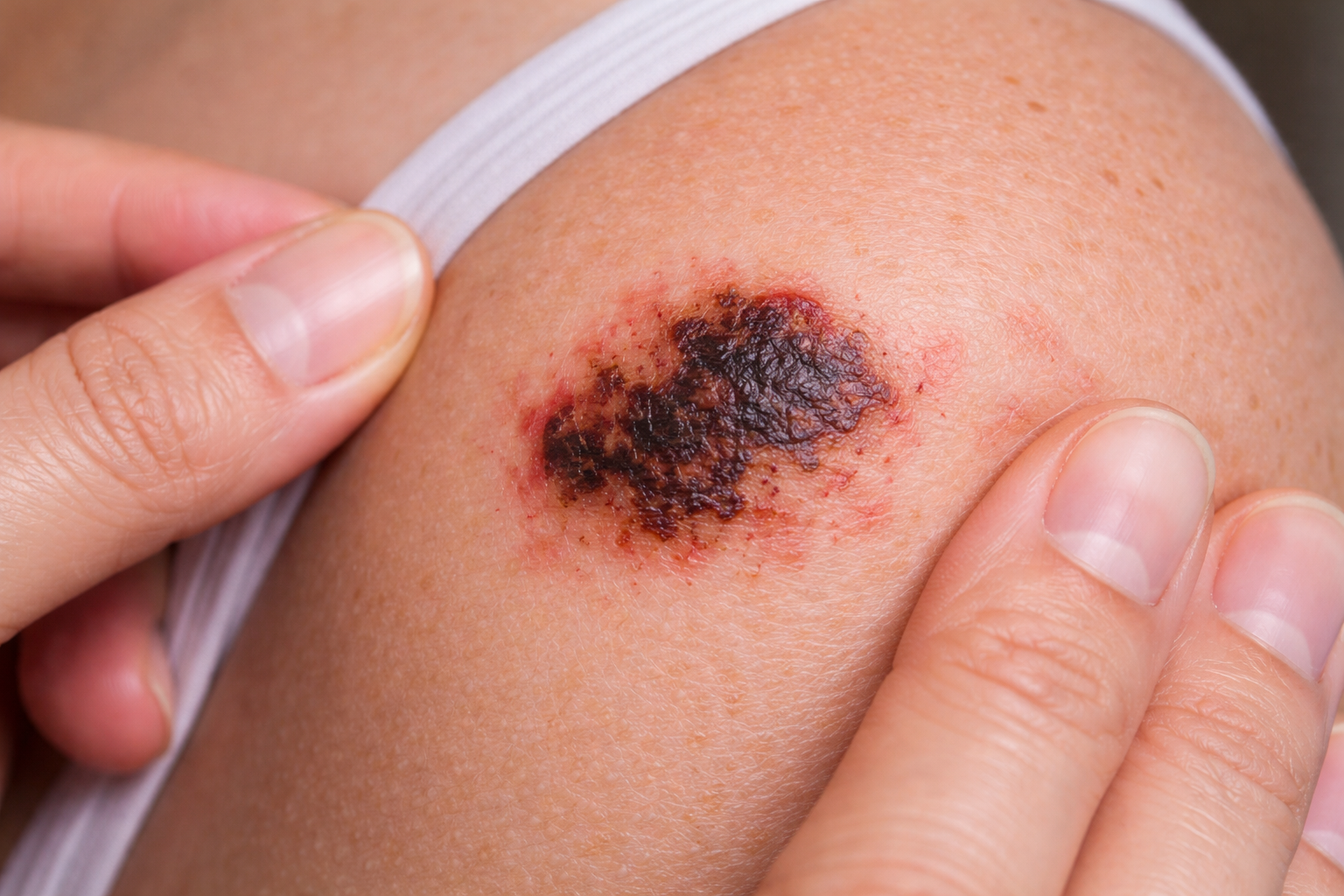
The most practical way to think about it is this: a stable mole is usually less concerning than a mole that is new, changing, unusual, or clearly unlike your other spots. Major dermatology and cancer organizations consistently describe skin cancer warning signs in those terms, especially when a mole changes in size, shape, color, border, or symptoms such as itching or bleeding.
A normal mole often keeps a fairly consistent pattern. It may be present for years with little obvious difference in appearance. By contrast, one of the most important warning signs of melanoma is a new growth or a change in an existing mole. The American Cancer Society and NHS both emphasize that a new mole or a changing mole can be a sign that needs medical attention.
That does not mean every changing spot is skin cancer. Benign moles can sometimes evolve, and many skin changes turn out to be noncancerous. But when it comes to early detection, the goal is not to diagnose skin cancer at home. The goal is to recognize when a mole is behaving in a way that is not typical for you and get it checked promptly.
The ABCDE rule: the easiest framework to remember
The most widely used guide for judging a suspicious mole is the ABCDE rule. It is used by organizations such as the American Cancer Society, the American Academy of Dermatology, and NHS-linked cancer guidance because it gives people a simple way to assess visible warning signs.
A is for Asymmetry
If one half of the mole does not match the other half, that is a warning sign. A typical benign mole is often more even and balanced in shape. A melanoma may look lopsided or uneven when mentally divided in half.
B is for Border
A concerning mole may have borders that are irregular, ragged, scalloped, blurred, or poorly defined. Ordinary moles tend to have smoother, clearer edges. When the outline starts looking messy or uncertain, that deserves attention.
C is for Color
A healthy-looking mole is often fairly uniform in color. A suspicious mole may contain multiple shades, such as different browns, black, tan, or even areas of red, white, blue, or pink. Uneven color is one of the classic clues that a mole should not be ignored.
D is for Diameter
Traditionally, a mole larger than 6 millimeters across, about the size of a pencil eraser, is considered more concerning. But this is not a hard rule. Major sources note that melanomas can sometimes be smaller than that, which means size alone should never be your only filter.
E is for Evolving
This may be the most important letter of all. If a mole is changing in size, shape, color, height, texture, or symptoms, that is a key warning sign. The Skin Cancer Foundation specifically notes that any evolution, including new bleeding, itching, or crusting, can be concerning.
The “ugly duckling” clue people often miss
Not every skin cancer fits the ABCDE checklist perfectly. That is why dermatologists also use another idea called the ugly duckling sign. This means a mole or spot looks noticeably different from the rest of your moles. If most of your moles are small, round, and evenly colored, but one looks darker, bigger, stranger, or more irregular, that spot deserves extra attention.
This is an especially useful concept because many people know their own skin pattern better than they realize. Even without memorizing every letter of ABCDE, they often sense that one mole just looks “off.” That instinct is worth taking seriously.
Changes on a mole’s surface matter too
When people think about suspicious mole changes, they often focus only on shape and color. But the surface of a mole can also offer important clues. Authoritative cancer guidance notes that warning signs can include scaliness, oozing, crusting, bleeding, or spread of pigment beyond the mole’s border. A mole that becomes itchy or painful can also be concerning.
This matters because skin cancer does not always announce itself with dramatic size changes first. Sometimes the earliest clue is that a mole that used to be quiet and flat suddenly becomes irritated, crusty, or starts bleeding without obvious injury.
New moles in adulthood deserve more attention
Many ordinary moles appear during childhood or young adulthood. A new spot appearing later in life can deserve closer scrutiny. Scottish NHS referral guidance specifically notes that a new mole developing in a person aged 40 or over is a reason to suspect melanoma more seriously.
That does not mean every new spot after 40 is cancer. But it does mean a new pigmented lesion in midlife or later should not be brushed off automatically as “just another mole.”
Skin cancer is not always melanoma
When people hear “mole change,” they often think only of melanoma. Melanoma is the most serious skin cancer commonly associated with changing moles, but it is not the only form of skin cancer. The American Cancer Society notes that basal cell carcinoma and squamous cell carcinoma are more common than melanoma and can also show up as suspicious skin changes.
That is important because not every early skin cancer looks like a classic dark mole. Some may appear as a sore that does not heal, a scaly patch, a crusted bump, or a spot that keeps changing in texture. So while the ABCDE rule is extremely useful, it is not the whole story. Any new, changing, or unusual lesion that persists deserves attention.
What makes a mole change more concerning
A mole becomes more concerning when the change is not subtle and stable, but clearly progressive. Some of the strongest warning patterns include:
A mole that is getting bigger, becoming more irregular, darkening, developing multiple colors, starting to itch, bleeding, crusting, or becoming obviously different from surrounding moles should be checked promptly. NHS-linked regional cancer guidance describes those exact kinds of changes as melanoma warning signs.
Another strong clue is speed. A mole or spot that changes quickly is more concerning than one that has looked the same for years. Dermatology guidance around the ugly duckling sign also notes that rapid growth or obvious change can be worrisome.
How to check your skin more usefully
Skin self-checks do not need to be obsessive to be effective. The key is consistency. Look for spots that are new, changing, or unusual. Use a mirror for hard-to-see areas or ask someone you trust to help check the back, scalp, or other difficult locations. NHS advises checking your skin for unusual changes and getting symptoms checked as soon as possible.
Photos can help too. If you are unsure whether a mole is actually changing, comparing it with an older photo can make a difference. Many people do not notice slow change until they have a visual reference point.
When to get a mole checked
The safest rule is simple: do not wait for a mole to become dramatic. If a mole is new, changing, bleeding, crusting, itching, painful, or clearly unlike your others, it is worth having it examined. NHS says it is important to get symptoms of melanoma checked as soon as possible.
This does not mean assuming the worst. Most suspicious spots are not melanoma. But the point of early detection is exactly that: catching the important cases before they have time to progress.
Final thoughts
When people talk about early skin cancer signs in terms of mole changes, they are really talking about pattern recognition. The most useful questions are not “Is this spot ugly?” or “Is it bigger than every other mole?” The more important questions are:
Is it new? Is it changing? Is it asymmetrical, irregular, or multicolored? Is it bleeding, itching, or crusting? Does it look different from all the others?
That is why the ABCDE rule remains so useful. It gives people a practical language for noticing changes early. And when you combine it with the ugly duckling sign, you get an even better standard: a mole that is evolving or standing out is a mole worth taking seriously.
In the end, early skin cancer detection is less about fear and more about attention. Most moles are harmless. But a changing mole is one of the clearest signs your skin may be asking for a closer look.
Hi, I’m the creator and editor behind ZestyHabit. I research everyday safety, first aid, and practical wellness topics using official guidance and reliable public sources, then turn that information into clear, realistic steps for daily life.
My goal is to help readers make safer, better-informed choices at home and beyond.