
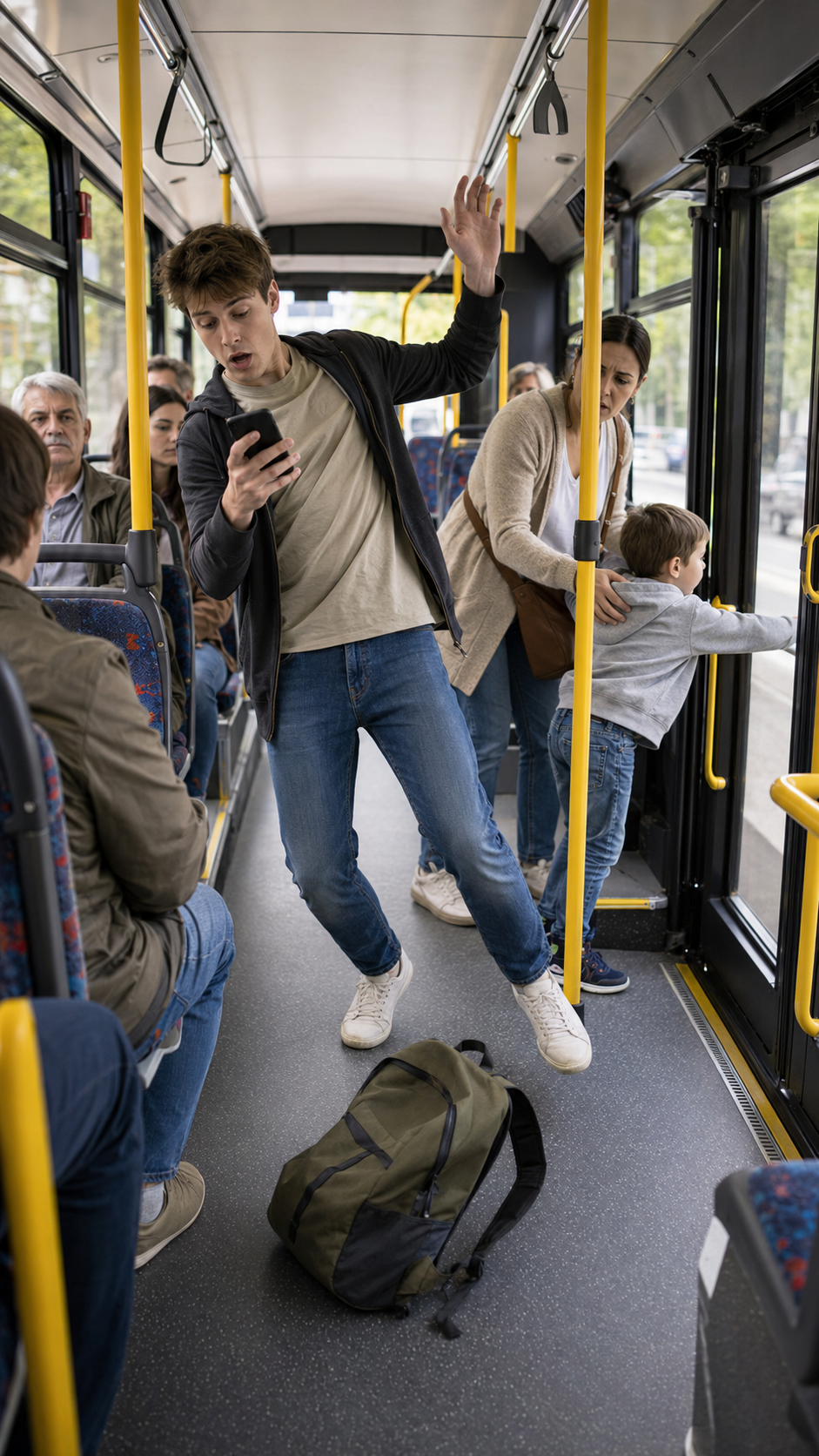

Discover the most dangerous behaviors to avoid on a public, school, or intercity bus, from distracting the driver to blocking emergency exits.
Buses are among the most convenient ways to travel. Millions of people use public buses, school buses, airport shuttles, and long-distance coaches every day without incident. However, a bus is still a moving vehicle, and ordinary behavior can become dangerous when the driver brakes suddenly, turns sharply, or responds to unexpected traffic.
Many bus injuries are not caused by dramatic crashes. A passenger may fall while walking down the aisle, lose balance because they are not holding a handrail, or get caught near a closing door. Loose luggage, distracted passengers, and blocked exits can also make an emergency more difficult to manage.
The good news is that most of these risks are easy to reduce. Understanding what not to do on a bus can protect you, other passengers, and the driver.
1. Do Not Distract the Bus Driver
One of the most dangerous things a passenger can do is distract the driver while the bus is moving. The driver must monitor traffic, pedestrians, cyclists, signals, mirrors, bus stops, and passengers near the doors—all at the same time.
Avoid starting unnecessary conversations with the driver, especially in heavy traffic. Never shout at the driver, argue about the fare while the bus is moving, or stand close enough to block the driver’s mirrors or view of the road.
If you need directions, ask a short question when the bus is stopped, if possible. For a longer problem, wait until you reach a terminal or another safe stopping point.
Loud fights, screaming, throwing objects, and playing music without headphones can also interfere with the driver’s concentration. On a school bus, uncontrolled passenger behavior is considered a genuine safety problem because the driver has to manage both the vehicle and the students. NHTSA training materials emphasize that driver distraction and loss of control over passenger behavior can put everyone at risk.
2. Do Not Stand Without Holding On
Standing passengers are particularly vulnerable when a bus accelerates, turns, or stops. Even an experienced rider may not be able to predict a sudden movement.
If you have to stand, hold a pole, strap, or handrail securely. Keep at least one hand available rather than carrying several bags in both arms. Stand with your feet slightly apart and face sideways or diagonally so that you can adjust your balance.
Do not lean against the doors. Bus doors may open at the next stop, and some have mechanisms that can move with little warning. You should also avoid standing in stairwells, on raised platforms, or beyond any safety line near the driver.
Whenever a seat becomes available, passengers who are pregnant, older, injured, traveling with a small child, or living with a mobility limitation should be given priority.
3. Do Not Walk Around While the Bus Is Moving
Walking down the aisle may seem harmless, but it becomes risky if the driver brakes suddenly. Whenever possible, wait until the bus has stopped before changing seats, retrieving luggage, or approaching the exit.
On a city bus, you may need to move toward the door before your stop. If so, use the handrails and move carefully. Do not run, push past other passengers, or expect the driver to wait while you rush from the back.
On a school bus or intercity coach, remain seated until the driver has stopped the vehicle and indicates that passengers may get up. NHTSA school-bus guidance advises students to stay seated until the bus stops and to avoid pushing or playing while exiting. NHTSA also recommends using handrails while getting on or off.
4. Do Not Block the Aisle, Doors, or Emergency Exits
Shopping bags, suitcases, strollers, sports equipment, and backpacks should never prevent people from moving through the bus.
A bag left in the aisle can become a tripping hazard during an ordinary trip. In an emergency, it can delay an evacuation. Items placed near a door may also interfere with passengers who need to exit quickly or with people using mobility equipment.
Store your belongings in the designated luggage area, under your seat, or securely on your lap. Do not leave heavy objects on an overhead rack if they could fall during a sudden maneuver. Never tie luggage to a door, handrail, or emergency-release mechanism.
Federal school-transportation guidance states that baggage should be secured so aisles, doors, and emergency exits remain unobstructed. NHTSA also notes that luggage racks should be able to retain their contents during a crash or abrupt maneuver.
5. Do Not Tamper With Doors or Emergency Equipment
Emergency windows, roof hatches, alarms, fire extinguishers, and door-release handles are designed for serious situations. Activating them as a joke can distract the driver, create panic, or leave the equipment damaged when someone truly needs it.
Never attempt to force a regular door open while the bus is moving. Do not press emergency buttons unless there is a legitimate danger, such as a fire, medical emergency, threatening situation, or instruction from the driver.
It is useful to notice where emergency exits are located when you board, especially on a long-distance coach. However, follow the operating company’s instructions and do not experiment with the equipment.
6. Do Not Ride Without Using an Available Seat Belt
Many city buses do not provide passenger seat belts, but intercity coaches, minibuses, airport shuttles, and some school buses do. If a belt is available, use it throughout the trip.
Do not assume that a large vehicle makes a seat belt unnecessary. A belt can help keep you in your seat during sudden braking, a collision, or a rollover. Make sure it lies flat across your body and is not twisted.
Children should use the restraint required for their age, size, vehicle type, and local regulations. Do not improvise by sharing one seat belt between two people or placing a small child on your lap while you are belted in.
7. Do Not Put Your Head, Hands, or Objects Outside a Window
Open windows can make a bus feel more comfortable, but nothing should extend outside the vehicle.
A passenger’s hand, head, phone, selfie stick, or other object could strike a sign, tree branch, pole, vehicle, or roadside structure. The gap between the bus and another object may be much smaller than it appears.
Children should be reminded not to throw anything from the window. A small object can injure a cyclist, pedestrian, or driver and may cause a traffic accident.
Never climb, sit, or lean heavily against an open window. If a window appears damaged or unsafe, move away and notify the driver when it is safe to do so.
8. Do Not Smoke, Vape, or Use an Open Flame
Smoking and vaping are prohibited on most buses, but the risk is more than an issue of etiquette. Buses are enclosed spaces with fabric, plastic, electrical components, and passengers’ belongings. A cigarette, lighter, or match can start a fire or cause a burn.
Do not light candles, use portable cooking equipment, or handle fireworks inside a bus. Flammable liquids, leaking fuel containers, and other hazardous materials should never be brought aboard unless the operator specifically permits and safely accommodates them.
Avoid spraying strong aerosols, perfumes, or cleaning products as well. Other passengers may have asthma, allergies, or respiratory sensitivities, and the bus may have limited ventilation.
9. Do Not Fight, Harass, or Play Dangerous Pranks
Physical fights are particularly dangerous inside a moving vehicle. A person who is pushed may fall into another passenger, strike a hard surface, or interfere with the driver.
Horseplay can be just as hazardous. Do not run through the aisle, wrestle, throw objects, pull someone out of a seat, or pretend to open an emergency exit. Never pressure another passenger into participating in a prank.
Harassment, unwanted touching, threats, and bullying can quickly create an unsafe environment. If you experience or witness serious misconduct, move to a safer area and alert the driver or transit staff. Call the local emergency number when there is an immediate threat. Transit authorities generally advise passengers to stay alert, seek assistance from an employee, and follow staff or emergency personnel instructions during an incident. MTA
10. Do Not Become Completely Unaware of Your Surroundings
Listening to music, watching videos, or sleeping is common during a bus ride. However, extremely loud headphones or total absorption in a phone can prevent you from noticing announcements, an approaching stop, a safety warning, or unusual behavior nearby.
Keep the volume low enough to hear important instructions. Secure your phone when standing or walking rather than looking down at the screen. “Distracted walking” inside a moving bus can easily result in a fall.
Stay aware of your belongings, especially near doors. A phone, bag, or loose strap can be caught as passengers enter and leave. Long drawstrings and dangling accessories should also be kept close to your body.
11. Do Not Rush On or Off Before the Bus Is Ready
Wait until the bus has come to a complete stop and the doors are fully open before boarding or exiting. Do not chase a departing bus, strike its side, or attempt to force your way through closing doors.
Use the handrail and watch the height of the step and the gap between the bus and curb. Rain, ice, snow, and wet shoes can make the entrance slippery.
After leaving, move away from the door so other passengers can exit. Do not immediately walk in front of the bus unless the traffic situation and local rules make it safe. The driver may not be able to see a person standing very close to the vehicle.
Children need extra supervision around buses. NHTSA advises children to wait away from the curb, board only after the bus has stopped and the driver permits it, and take several steps away after exiting. NHTSA
12. Do Not Ignore Instructions During an Emergency
If there is smoke, a collision, a medical emergency, or another serious problem, try to remain calm. Listen to the driver and emergency responders rather than acting on rumors or following a panicked crowd.
Do not automatically open an emergency exit if doing so would expose passengers to traffic, fire, deep water, or another hazard. The safest action may be to stay inside temporarily, depending on the situation.
If an evacuation is ordered, leave bags and other nonessential belongings behind. Move quickly without pushing, assist children or people who need help when it is safe, and go to the location directed by responders. Once outside, keep away from traffic and do not return to the bus for personal items.
For a medical emergency, notify the driver immediately. Call the local emergency number if necessary and follow instructions from the dispatcher. Do not move an injured person unless they face an immediate danger, and do not give medication unless you are qualified and know it is appropriate.
A Simple Bus Safety Checklist
Before and during every bus journey:
- Wait for the bus to stop before boarding or exiting.
- Use handrails and available seat belts.
- Keep aisles, doors, and emergency exits clear.
- Secure bags, strollers, and other belongings.
- Avoid distracting the driver.
- Keep your body and possessions inside the vehicle.
- Stay aware of announcements and surroundings.
- Follow the driver’s instructions during an emergency.
- Report dangerous behavior rather than confronting someone physically.
Safe Bus Travel Depends on Everyone
Most bus safety rules are simple, but they matter because conditions can change in seconds. A driver may have to brake for a pedestrian, avoid another vehicle, or turn unexpectedly. Sitting properly, holding a handrail, securing your luggage, and respecting emergency equipment can prevent a routine journey from becoming a serious accident.
Which dangerous bus behavior do you see most often, and is there a safety rule you wish more passengers would follow? Share your experience in the comments so other readers can learn from it.

Hi, I’m the creator and editor behind ZestyHabit. I research everyday safety, first aid, and practical wellness topics using official guidance and reliable public sources, then turn that information into clear, realistic steps for daily life.
My goal is to help readers make safer, better-informed choices at home and beyond.


