

A car cabin air filter is easy to forget, but leaving it unchanged for too long can affect airflow, odors, allergies, and driving comfort. Here’s how to know when it needs attention and how to make replacement a simple routine.
There are certain car maintenance tasks people remember because the car basically nags them.
Low fuel? The light comes on.
Oil change? The sticker on the windshield quietly judges you every time you start the car.
Tire pressure? Some cars make a whole dashboard announcement about it.
But the cabin air filter? That poor thing is usually forgotten until the air coming from the vents starts smelling like damp socks, old leaves, or a mystery nobody wants to investigate.
Most drivers know their car has an engine air filter. Fewer think much about the filter that cleans the air coming into the cabin. It is not flashy. It does not make the car faster. You cannot see it while driving. But if you spend a lot of time commuting, running errands, sitting in traffic, or driving with kids, pets, or allergies, it matters more than it gets credit for.
A cabin air filter helps trap dust, pollen, leaves, soot, and other particles before they blow through the vents. Some filters also have activated carbon to help reduce odors and certain fumes. Over time, though, the filter gets dirty. That is its job. The problem starts when it keeps doing that job long after it is full.
And many of us are guilty of that.
What a Cabin Air Filter Actually Does
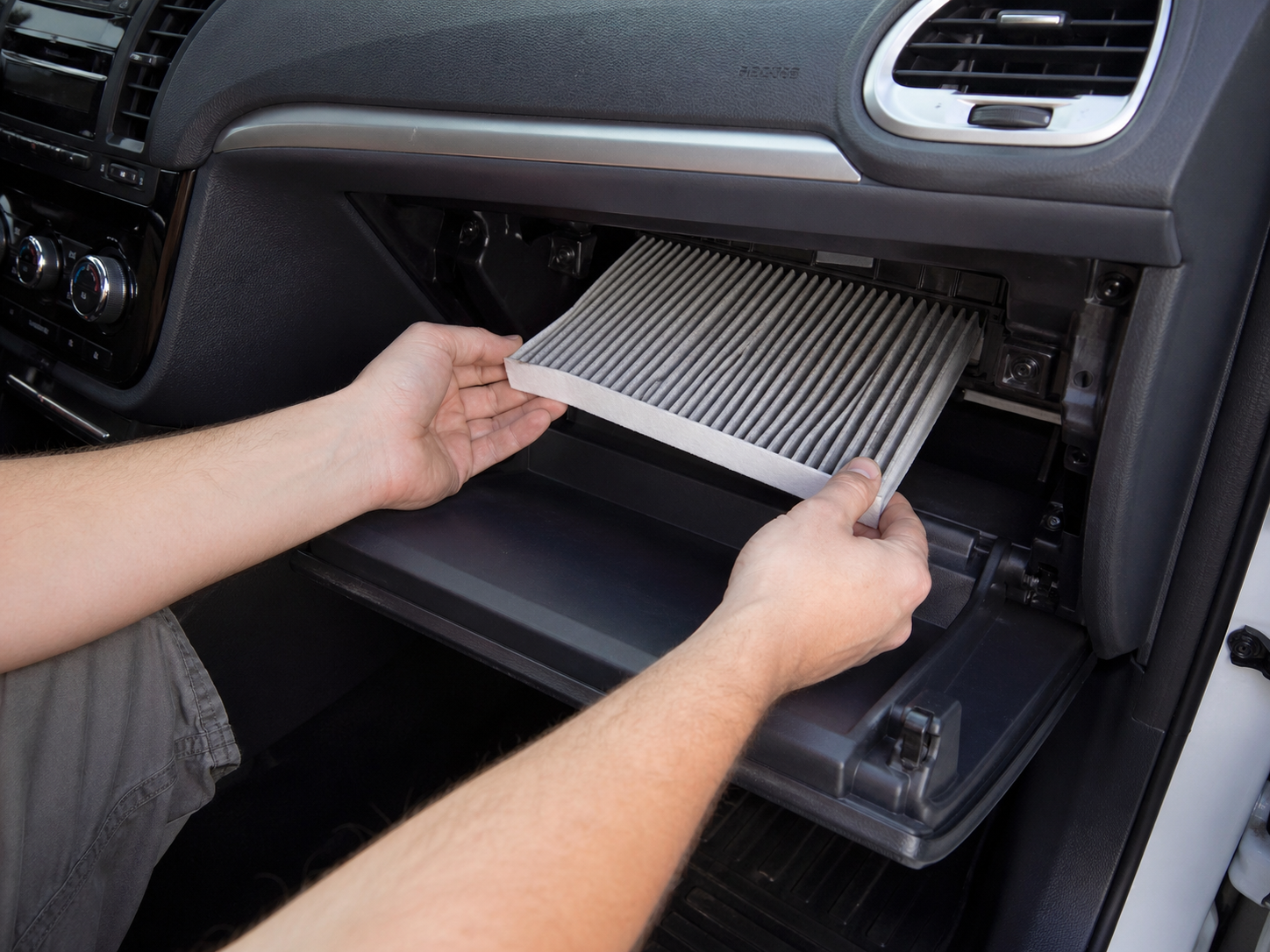
The cabin air filter sits inside your vehicle’s HVAC system. HVAC is just the heating, ventilation, and air conditioning system. In many cars, the filter is behind the glove box, though the exact location depends on the vehicle.
When outside air enters your car through the ventilation system, it passes through the filter before reaching the cabin. The filter catches things you probably do not want to breathe in or have floating around the dashboard.
Dust.
Pollen.
Road debris.
Leaves.
Mold spores.
Tiny bits of soot from traffic.
Insects, if life has been especially rude.
If you use recirculation mode, the system may also keep pulling cabin air through the system again, depending on the design. Either way, the filter plays a quiet role in how fresh, strong, and clean the airflow feels.
It is not the same as an air purifier in your living room, and it does not make a car a sealed bubble from pollution. But a clean filter can make the air inside the car feel noticeably better, especially during allergy season or in heavy traffic.
Why People Forget It
Cabin air filters are easy to ignore because the decline is gradual.
The air does not usually go from fresh to terrible overnight. It gets weaker little by little. A faint musty smell comes and goes. The fan seems louder than before. The windshield takes longer to defog. You turn the AC up one more notch without thinking.
Then one day you climb into the car after it sat in the sun, turn on the air, and get hit with a smell that makes you question every life choice leading to that moment.
Because the filter is hidden, it is not like worn wiper blades or dirty floor mats. You are not reminded visually. Unless you have a very organized maintenance schedule, it can quietly pass its replacement date by months. Sometimes years.
And if you bought a used car, who knows when the last owner replaced it? Maybe last season. Maybe during a presidential administration you barely remember.
Signs Your Cabin Air Filter May Be Overdue

A dirty cabin air filter does not always announce itself clearly, but there are clues.
The Airflow Feels Weak
If the fan is on high but the air coming through the vents feels unimpressive, the filter may be clogged.
A dirty filter makes it harder for air to pass through. The blower motor has to work harder, and the cabin may take longer to cool down or warm up.
Of course, weak airflow can have other causes too. The fan, ducts, vents, or AC system itself could be involved. But the filter is one of the easiest things to check first.
There Is a Musty or Dusty Smell
A stale smell when the AC or heater starts can come from several places, including moisture in the HVAC system. But an old cabin filter packed with dust, leaves, and debris can definitely add to the problem.
The smell might be strongest when you first turn on the air. It may fade after a minute, which tricks you into ignoring it.
That little “ugh” every time the fan starts is still a sign.
Allergies Feel Worse in the Car
If you sneeze more in the car, get itchy eyes after driving, or feel congested during certain seasons, the cabin filter may be part of the issue.
A fresh filter will not cure allergies. It will not personally defeat spring pollen like a tiny superhero behind your glove box. But a clogged or old filter can allow more irritants through or make the air feel dusty and stale.
During pollen season, this becomes more noticeable.
The Windows Fog More Easily
A clogged filter can reduce airflow through the defroster vents, which may make it harder to clear foggy windows.
Fogging can also happen because of moisture, weather, temperature differences, or leaks. Still, if defrosting has become slow and annoying, the cabin filter is worth checking.
The Fan Sounds Louder
If you keep turning the fan higher because the air feels weak, the system may sound louder than usual. Sometimes debris near the filter or blower can also create odd noises.
A leaf stuck somewhere in the system can make a fluttering sound that is both harmless and deeply irritating. Cars are talented that way.
How Often Should You Replace It?
Many vehicles recommend replacing the cabin air filter roughly every 12,000 to 15,000 miles, or about once a year, but the best schedule depends on the car and driving conditions. Your owner’s manual is the most reliable place to check.
Some drivers need replacement more often.
If you drive in dusty areas, heavy traffic, wildfire smoke regions, construction zones, or high-pollen environments, the filter may get dirty faster. If you park under trees, leaves and debris can also find their way into the intake area. If you often drive with pets, the cabin environment may get dusty and hairy faster too.
A once-a-year habit is a reasonable starting point for many people.
A simple idea: check it when you change the oil in spring or before summer heat arrives. AC problems always feel more dramatic when it is 94 degrees and the steering wheel is trying to cook your hands.
Why Waiting Too Long Can Become a Problem
Not replacing a cabin air filter for a long time usually will not destroy your car overnight. This is not a movie scene where the dashboard starts smoking because you forgot a filter.
But it can make daily driving less comfortable and may put extra strain on the ventilation system.
Poor Airflow Makes the Cabin Less Comfortable
A clogged filter restricts airflow. In summer, the car may take longer to cool. In winter, it may take longer to warm up or defog.
That can make the AC feel weak even when the system itself is working. People sometimes assume the AC needs expensive repair when the first problem is simply that air cannot move easily through a dirty filter.
That is not always the case, but it is a nice possibility to rule out before panicking.
Dust and Pollen Build Up More Easily
An old filter may not trap particles as effectively as a clean one. If it is packed with debris or damaged, more dust can circulate into the cabin.
This can make the dashboard dusty, the air feel stale, and allergy symptoms more noticeable for some people.
For families with kids, older adults, or anyone with asthma or respiratory sensitivity, keeping the cabin air system in decent shape is a small but worthwhile habit.
Odors Can Linger
Old filters can hold onto odors from dampness, smoke, pollution, pets, food, or mildew. Once a filter smells bad, spraying air freshener over the problem is usually not satisfying.
Then you just have “old wet leaves with vanilla breeze,” which is not an improvement.
Replacing the filter is often a better first step than trying to perfume the vents.
The Blower Motor May Work Harder
When air struggles to move through a clogged filter, the blower motor may have to work harder. That does not mean one late filter change will ruin it, but long-term restriction is not ideal.
Think of it like trying to breathe through a scarf full of dust. Possible? Maybe. Pleasant? No.
Your car’s ventilation system would also prefer not to.
The Filter Can Get Gross Faster Than You Expect
If you have never seen an old cabin air filter, it can be weirdly satisfying and slightly horrifying.
A clean one is usually white, gray, or charcoal-colored, depending on the type. A dirty one may be dark, dusty, crammed with leaves, or full of little bits of debris. Sometimes it looks like the car has been storing autumn inside the dashboard.
This is especially common if the car is parked outdoors under trees. Leaves and organic debris can sit near the air intake and break down over time. Moisture can make the smell worse.
A filter that looks dirty is doing its job, but after a point, it needs retirement. We thank it for its service and move on.
Can You Replace It Yourself?
In many cars, yes.
Cabin air filter replacement is one of the more beginner-friendly car maintenance tasks. Often, it involves opening the glove box, releasing a couple of tabs, sliding out the old filter, and sliding in a new one with the airflow arrow facing the correct direction.
That said, some vehicles make it more annoying. A few require removing panels or working in an awkward footwell position that makes you question the designer’s kindness.
Before trying it, look up your specific year, make, and model. A short video can help, but make sure it matches your vehicle. Filters also come in different sizes, so do not guess.
If you are not comfortable doing it, a mechanic, dealership, quick-lube shop, or auto parts store may be able to help. Just know that cabin air filter replacement is often marked up at service shops, so it is worth checking the filter price first.
Sometimes the DIY version costs little and takes ten minutes. Sometimes paying someone else is worth not crawling around your glove box in a parking lot. Both are valid.
Regular Filter vs. Carbon Filter
When shopping, you may see standard cabin filters and activated carbon cabin filters.
A regular filter mainly focuses on trapping particles like dust, pollen, and debris.
An activated carbon filter may also help reduce certain odors and gases. It can be useful if you drive in traffic, near industrial areas, or if smells bother you easily.
There are also higher-efficiency filters marketed for smaller particles. These may be helpful, but make sure they are compatible with your vehicle. A filter that is too restrictive may reduce airflow in some systems.
The most expensive option is not automatically the best. A good-quality filter that fits properly and gets changed on schedule is usually better than an expensive one left in place forever.
Do Not Ignore the Air Intake Area
Replacing the filter helps, but the surrounding area matters too.
Leaves and debris can collect near the base of the windshield where outside air enters the vehicle. If that area is always packed with leaves, your filter may clog faster.
Every now and then, clear leaves, pine needles, and dirt from around the windshield cowl area. Be gentle and avoid forcing debris deeper into vents. If you wash the car, pay attention to that area.
This tiny habit can reduce musty smells and help the ventilation system breathe better.
Recirculation Mode Is Helpful, But Not Magic
Many drivers use recirculation mode when they want the car to cool faster or when passing through smoke, dust, or strong odors.
That is useful. Recirculation can reduce how much outside air enters the cabin for a while. But it does not replace filter maintenance.
If the filter is already dirty, recirculating air through a stale system will not make things fresh. Also, using recirculation constantly can sometimes contribute to moisture buildup or fogging, depending on conditions.
Use it when it helps. Turn it off when you need fresh air or defogging. And still replace the filter.
What About Mold in the AC System?
A musty smell is often blamed on the cabin filter, and sometimes that is fair. But moisture inside the evaporator or HVAC system can also cause odors.
If replacing the filter helps only a little, the system may need additional cleaning. Some people use AC evaporator cleaners made for cars, while others have a mechanic handle it.
A helpful habit is to turn off the AC but leave the fan running for a few minutes before parking, especially in humid climates. This may help dry out some moisture in the system. It is not a cure-all, but it can reduce that damp smell for some drivers.
Also, check that the AC drain is not clogged if you notice water inside the car, damp carpets, or persistent mildew odor. That is not something to ignore.
A Simple Maintenance Routine That Actually Sticks
The easiest way to avoid forgetting the cabin filter is to attach it to something you already do.
Replace or check it once a year, maybe at the start of spring.
Check it before summer if you use AC heavily.
Check it before allergy season if pollen bothers you.
Check it after wildfire smoke exposure, dusty road trips, or long periods driving through construction zones.
Write the replacement date on the filter edge with a marker if it is visible when removed. Or keep a note in your phone with the date and mileage.
This is the kind of maintenance that becomes easy once it is routine. The hard part is remembering it exists.
A Few Everyday Clues From Real Driving
Here is a very normal scenario.
You get in the car on a hot afternoon. The AC starts blowing, but the first ten seconds smell stale. You wrinkle your nose, then forget about it once the car cools down.
A week later, you notice the fan has to be on level four instead of level two. You blame the weather.
Then your passenger says, “Does your car smell weird?”
Rude, but maybe useful.
That is the moment to check the filter.
Another common scenario: spring hits, pollen covers the windshield, and suddenly every drive makes your nose itch. You clean the outside of the car, but the cabin filter is still holding last year’s pollen, dust, and road grime.
Replacing it will not turn the car into a sterile mountain cabin, but it may make the air feel better.
When a Filter Change Is Not Enough
A cabin air filter is important, but it is not responsible for every air-related problem.
If the AC is not cold, there may be a refrigerant leak, compressor issue, electrical problem, or other system fault.
If airflow is still weak after replacing the filter, the blower motor, fan resistor, vents, ducts, or blend doors may need attention.
If you smell burning, chemicals, fuel, exhaust, or coolant, do not treat it as a filter issue. Get the car checked.
If the carpet is wet or there is a persistent mold smell, moisture may be entering or not draining correctly.
A filter is a good first step, not a universal fix.
Why This Habit Matters More Than It Seems
Most people spend more time in their cars than they realize.
Commuting. School drop-off. Grocery runs. Road trips. Waiting in parking lots. Sitting in traffic with the fan blowing directly at your face.
The air inside that small space matters. Not in a dramatic, fear-based way. Just in a practical comfort way.
A clean cabin air filter can help the HVAC system move air better, reduce dust and pollen inside the car, limit some odors, and make driving feel fresher. For people with allergies, asthma, or sensitivity to smells, that small improvement can be very noticeable.
It is not glamorous maintenance. Nobody brags at dinner about replacing a cabin air filter.
But it is one of those quiet habits that makes daily life a little better.
A Calm Final Thought
Forgetting the car AC filter is easy because it is hidden, cheap-looking, and not very dramatic. But leaving it unchanged for too long can make your car’s air feel stale, dusty, weak, or unpleasant.
The fix is usually simple: check the owner’s manual, replace the filter on a reasonable schedule, clear leaves from the air intake area, and pay attention when airflow or smell changes.
You do not need to become a car expert.
Just remember that the air coming through the vents passes through something. And every so often, that something deserves to be replaced.

Hi, I’m the creator and editor behind ZestyHabit. I research everyday safety, first aid, and practical wellness topics using official guidance and reliable public sources, then turn that information into clear, realistic steps for daily life.
My goal is to help readers make safer, better-informed choices at home and beyond.


