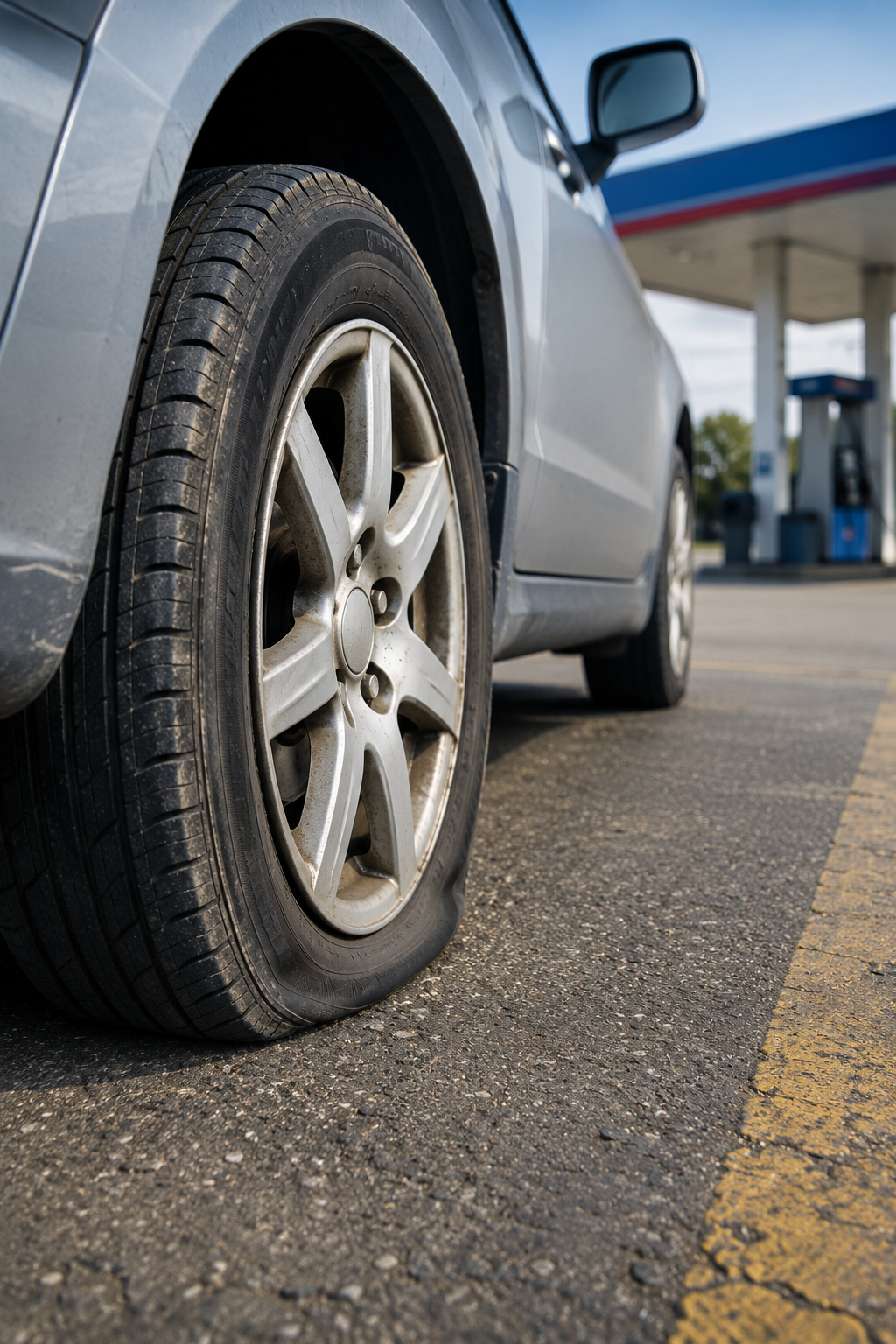
Why Low Tire Pressure Can Lead to Bigger Problems Than You Think
Minjin Park
·
Low tire pressure can affect handling, braking, fuel economy, tire wear, and everyday driving safety. Learn why it matters, how to spot warning signs, and simple tire pressure habits every driver should know.
Tire pressure is one of those car maintenance details that is easy to ignore. Most drivers know it matters, but it does not always feel urgent. If the car still starts, the tires still look “mostly fine,” and the dashboard warning light is not flashing, it is tempting to keep driving and deal with it later.
Your tires are the only parts of your vehicle that actually touch the road. They support the weight of the car, help you steer, absorb bumps, grip the pavement, and play a major role in braking. When the air pressure is too low, the tire cannot hold its shape the way it was designed to. That affects almost everything about how your car feels and responds.
Low tire pressure does not always cause an immediate emergency. Sometimes it starts quietly: a tire wears unevenly, the car feels slightly sluggish, or your fuel mileage drops a little. Over time, though, underinflated tires can build heat, wear out faster, reduce control, and increase the risk of tire damage.
The good news is that this is one of the simplest car safety habits to manage. You do not need to be a mechanic. You just need to know what to look for, how to check your pressure, and when to take a low tire seriously.
What Tire Pressure Actually Does
Tire pressure is the amount of air inside your tire, usually measured in PSI, which stands for pounds per square inch. That air pressure helps the tire keep its proper shape while carrying the weight of the vehicle.
When a tire has the right amount of air, the tread meets the road evenly. The sidewalls flex the way they are supposed to. The tire can roll smoothly, respond to steering, and handle normal bumps in the road.
When the pressure is too low, the tire becomes softer. More of the tire may flatten against the pavement. The sidewalls bend more than they should. The vehicle may still move, but the tire is working harder with every mile.
That extra stress is why low tire pressure can create problems beyond just an annoying warning light.
Why Low Tire Pressure Is a Bigger Deal Than It Looks
It Makes the Tire Overwork
A properly inflated tire rolls with less resistance. An underinflated tire has to flex more as it turns. That repeated flexing creates extra heat and strain inside the tire.
Think of bending a paper clip back and forth. One bend is not a big deal. But if you keep bending it over and over, the metal weakens. Tires are obviously built differently, but the basic idea is similar: too much repeated stress can weaken the tire over time.
This does not mean a slightly low tire will instantly fail. But driving for days or weeks with low pressure puts extra wear on the tire’s structure.
It Can Cause Heat Buildup
Heat is one of the biggest concerns with underinflated tires. When a tire flexes too much, it generates heat. At highway speeds or on hot days, this heat can build even faster.
This is why low tire pressure is especially concerning during summer road trips, long commutes, or heavy driving. A tire that is already underinflated may be working harder at the exact time it needs to be strongest.
Too much heat can contribute to tire damage, tread separation, or a blowout. While not every low tire leads to this kind of serious problem, the risk increases when underinflation is ignored.
It Reduces Steering Control
Low tire pressure can make your car feel less responsive. You might notice that the steering feels heavy, vague, or slower than usual. The vehicle may not turn as sharply or may feel like it is dragging.
This can matter during everyday situations, such as changing lanes, avoiding debris, turning into a driveway, or driving through a curve. Good tire pressure helps the car respond predictably.
When pressure is low, the tire may squirm more under the weight of the vehicle. That makes handling less crisp, especially if only one tire is low.
It Can Affect Braking
Your tires help transfer braking force to the road. If the tire shape is not right, the contact with the road may not be as effective.
Low pressure can increase stopping distance in some conditions, especially if the tire is badly underinflated or the road is wet. The difference may not be obvious during slow neighborhood driving, but it can become more important at higher speeds or in sudden stops.
Most drivers do not get to choose when they need to brake quickly. That is why tire pressure matters before the situation happens.
It Makes Tires Wear Out Faster
Underinflated tires often wear unevenly. The outer edges of the tread may wear faster because the tire is flattening and flexing too much. This shortens tire life and can make the car less stable.
Tires are not cheap, so low pressure is not just a safety issue. It can also become a money issue.
A tire that should have lasted much longer may need replacement early simply because it was driven underinflated for too long.
It Hurts Fuel Economy
When tires are low, your car has to work harder to move. The engine uses more energy to overcome the extra rolling resistance.
That can reduce fuel economy. You may not notice it after one short drive, but over weeks and months it can add up. If you are already watching gas prices, tire pressure is one of the easiest things to check.
Properly inflated tires help your car roll more efficiently.
Why Tire Pressure Drops Over Time
Normal Air Loss
Tires naturally lose air little by little over time. Even a healthy tire can lose pressure gradually. This is why checking tire pressure only when something feels wrong is not enough.
A tire can be low without looking flat.
Temperature Changes
Cold weather can lower tire pressure. Many drivers notice the tire pressure warning light coming on during the first cold mornings of fall or winter.
That does not always mean there is a puncture. Sometimes it simply means the air inside the tire contracted as the temperature dropped. Still, the tire should be checked and adjusted to the recommended pressure.
Temperature swings can also happen during seasonal changes, mountain driving, or long trips between different climates.
Small Leaks
A nail, screw, damaged valve stem, or poor seal around the wheel can cause slow air loss. The tire may not go flat overnight, but it may lose pressure every few days.
Slow leaks are easy to ignore because the car still seems drivable. But topping off the same tire again and again without finding the cause is not a long-term fix.
Impact Damage
Hitting potholes, curbs, or road debris can damage a tire or wheel. Sometimes the pressure loss happens quickly. Other times, it becomes a slow leak.
If your tire pressure drops after hitting something, it is worth having the tire inspected.
Common Warning Signs of Low Tire Pressure
The Dashboard Tire Pressure Light Comes On
Many modern vehicles have a tire pressure monitoring system, often called TPMS. When the system detects low pressure, a warning light appears on the dashboard.
The light often looks like a horseshoe-shaped symbol with an exclamation point inside.
Do not ignore this light. It may be a simple fix, but it is still telling you that at least one tire needs attention.
The Car Feels Sluggish or Heavy
Low tire pressure can make the car feel like it takes more effort to move. Steering may feel heavier, and acceleration may feel less smooth.
This can be subtle, especially if all four tires are low. You may not notice until you check the pressure.
The Vehicle Pulls to One Side
If one front tire is lower than the other, the car may pull slightly to one side. This can also be caused by alignment or brake issues, but tire pressure is one of the first things to check.
The Tire Looks Slightly Flat
A seriously low tire may visibly sag at the bottom. But visual checks can be misleading. Some tires look normal even when they are several PSI low.
Use your eyes as a clue, not as the final answer.
Uneven Tread Wear
If the edges of the tire tread are wearing faster than the center, low pressure may be part of the problem. Uneven wear can also come from alignment, suspension issues, or driving habits, so it is worth getting a professional opinion if the pattern looks unusual.
Lower Gas Mileage
If you are filling up more often than usual, low tire pressure may be one of several possible reasons. It is an easy thing to check before assuming something bigger is wrong with the vehicle.
Common Mistakes Drivers Make
Waiting Until the Tire Looks Flat
A tire does not have to look flat to be underinflated. By the time it looks obviously low, it may already be far below the recommended pressure.
Relying only on appearance is one of the most common mistakes.
Using the Number Printed on the Tire Sidewall
The number on the tire sidewall is not usually the recommended pressure for everyday driving. It often shows the maximum pressure the tire can handle, not what your vehicle needs.
The correct recommended pressure is usually found on a sticker inside the driver’s door jamb or in the owner’s manual.
Checking Tire Pressure After Driving
Tire pressure should usually be checked when tires are cold, meaning the car has been parked for a while or driven only a short distance. Driving heats up the tires and can temporarily raise the pressure reading.
If you check after a long drive, the reading may not reflect the normal cold pressure.
Ignoring the Spare Tire
Many drivers forget about the spare tire until they need it. A spare tire with low pressure is not very helpful during a roadside problem.
If your vehicle has a spare, include it in your occasional pressure checks.
Only Checking Tires Before Long Trips
Checking before a road trip is smart, but tire pressure matters during normal weekly driving too. Daily commutes, school drop-offs, grocery runs, and short errands all depend on properly inflated tires.
Monthly checks are a practical habit for many drivers.
How to Check Tire Pressure
Checking tire pressure is simple once you have done it a few times.
Step 1: Find the Recommended PSI
Look for the tire information sticker inside the driver’s door area. It usually lists the recommended pressure for front and rear tires. Sometimes front and rear tires have different recommendations.
You can also check the owner’s manual.
Step 2: Use a Tire Pressure Gauge
A basic tire pressure gauge is inexpensive and easy to keep in the glove box. Digital gauges are simple to read, but pencil-style gauges also work.
Remove the valve cap from the tire, press the gauge firmly onto the valve stem, and read the pressure.
Step 3: Add Air If Needed
Many gas stations have air pumps. Some are free, and some require payment. Add air in short bursts, checking the pressure as you go.
Avoid overfilling. If you add too much, most gauges have a small tool or button that lets you release a little air.
Step 4: Replace the Valve Cap
After checking or filling the tire, put the valve cap back on. It helps keep dirt and moisture away from the valve stem.
Step 5: Recheck Regularly
Make tire pressure checks part of your routine. Once a month is a good general habit, and it is also smart to check before long drives or when the weather changes sharply.
What to Do When the Tire Pressure Light Comes On
If your tire pressure warning light comes on, find a safe time and place to check the tires. Do not assume the light is wrong just because the car feels normal.
First, check all four tires with a gauge. If one tire is much lower than the others, inspect it visually for nails, screws, cuts, or obvious damage.
If the pressure is only slightly low in all tires during cold weather, adding air to the recommended level may solve the problem. Some vehicles require a short drive or reset procedure for the warning light to turn off.
If the same tire keeps losing air, have it checked by a tire shop or mechanic. A slow leak may be repairable, but it should not be ignored.
Why Low Tire Pressure Is More Risky on Highways
Highway driving puts more stress on tires than slow city driving. Tires rotate faster, heat builds more quickly, and there is less room for error if something goes wrong.
An underinflated tire on the highway may flex heavily at high speed. If the weather is hot, the car is loaded with passengers or luggage, or the tire is already worn, the risk increases.
Before a long highway trip, checking tire pressure is one of the simplest things you can do. It takes only a few minutes and can help prevent delays, poor fuel mileage, and tire trouble.
How Low Tire Pressure Affects Wet Weather Driving
Wet roads already reduce traction. Low tire pressure can make handling feel less stable and may affect how the tread contacts the road.
Good tread depth matters, but so does proper inflation. A tire that is too low may not channel water as effectively as it should. This can make the car feel less predictable in rain.
Before rainy seasons or long drives through changing weather, checking pressure is a practical safety step.
Tire Pressure and Heavy Loads
If you are carrying extra weight, your tires work harder. This includes road trips with luggage, moving boxes, tools, camping gear, or multiple passengers.
Low tire pressure plus a heavy load is not a good combination. The tires flex more, heat up more, and may wear faster.
Some vehicles list different pressure recommendations for heavy loads. Check your owner’s manual if you often carry extra weight.
Should You Inflate Tires to the Maximum PSI?
In most cases, no. The maximum PSI on the tire sidewall is not the same as the recommended pressure for your vehicle.
Overinflating tires can also cause problems. The ride may feel harsh, the center of the tread may wear faster, and handling may feel different.
The best everyday approach is to use the vehicle manufacturer’s recommended pressure, not a random guess and not the sidewall maximum.
Practical Tire Pressure Habits for Everyday Drivers
Keep a Gauge in the Car
A small tire gauge is one of the easiest tools to own. It does not take up much space and can save you from guessing.
Check Tires When They Are Cold
Try checking pressure in the morning before driving or after the car has been parked for several hours.
Make It Monthly
Pick a regular day, such as the first weekend of the month, to check tire pressure. Pair it with another routine habit like filling gas, washing the car, or checking oil.
Pay Attention to Weather Changes
When temperatures drop, tire pressure often drops too. If the first cold morning brings a warning light, check your tires rather than ignoring it.
Look for Repeated Loss
If one tire keeps needing air, there is probably a reason. Do not keep topping it off forever without inspection.
A Simple Real-Life Example
Imagine you drive to work every day and one tire is slowly losing air. At first, it is only a little low. The car still feels fine, so you ignore the tire pressure light.
Over the next two weeks, the tire gets softer. It flexes more on the highway, wears more along the edges, and makes the car use slightly more fuel. Then you hit a pothole on the way home. Because the tire is already underinflated, it is less able to handle the impact.
Now instead of adding a few pounds of air early, you may be dealing with a damaged tire, a repair bill, or being stuck waiting for roadside help.
That is why low tire pressure matters. Small problems are easier to fix before they become bigger ones.
When to Get Professional Help
You do not need a mechanic every time your tires are slightly low. But some situations deserve a closer look.
Have a tire checked if:
One tire keeps losing air
You see a nail, screw, or cut
The tire has a bulge or sidewall damage
The tread wear looks uneven
The car pulls to one side
The tire pressure light keeps returning
The tire went very low or flat
You hit a pothole or curb and pressure dropped afterward
A tire shop can often find leaks quickly. Some repairs are simple, but sidewall damage or severe wear may mean replacement is needed.
Conclusion
Low tire pressure may seem like a small inconvenience, but it can lead to bigger problems if ignored. Underinflated tires work harder, build more heat, wear out faster, reduce fuel economy, and can affect steering and braking.
The good news is that tire pressure is easy to manage. Check the recommended PSI on the driver’s door sticker, use a simple gauge, fill tires when they are cold, and pay attention when the warning light comes on.
A few minutes of maintenance can protect your tires, improve everyday driving, and help you avoid preventable problems on the road. Tire pressure is not just a car-care detail. It is one of those small safety habits that quietly makes every drive a little better.
Hi, I’m the creator and editor behind ZestyHabit. I research everyday safety, first aid, and practical wellness topics using official guidance and reliable public sources, then turn that information into clear, realistic steps for daily life.
My goal is to help readers make safer, better-informed choices at home and beyond.