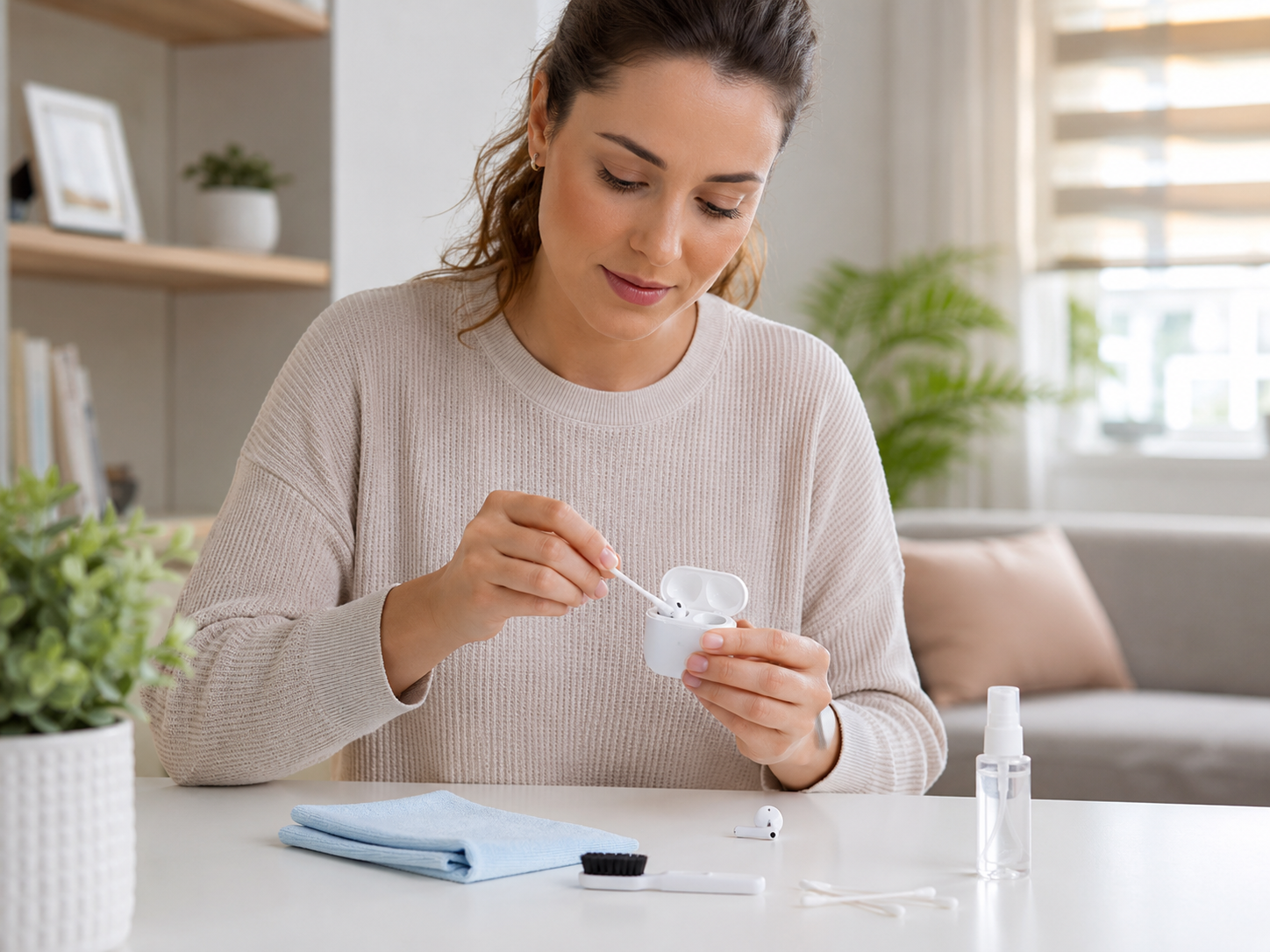
Earbuds collect earwax, sweat, skin oil, dust, and pocket lint faster than most people realize. Here is why cleaning them matters and how to do it without making the habit feel like a chore.
Earbuds are one of those items that feel clean because they are small.
They sit in a case. They look sleek. They do not seem dirty in the same way a gym towel or kitchen sponge looks dirty. So it is easy to pop them in during a walk, take a call, wear them at the gym, toss them into a bag, and not think much about them again.
But earbuds live a strange little life.
They go into your ears, where there is warmth, wax, skin oil, and moisture. Then they go into a pocket, backpack, desk drawer, car console, or charging case. Sometimes they get touched with hands that just opened a door, handled a phone, paid at a checkout screen, or grabbed a subway pole.
Then, a few hours later, back into the ears they go.
It sounds a bit unpleasant when you spell it out. That is probably why most of us do not spell it out.
Earbuds Collect More Than Earwax
Earwax is the obvious thing people notice. A little yellowish buildup on the silicone tip, a dark speck near the speaker mesh, or a waxy shine after wearing them for a while.
But earwax is only part of the story.
Earbuds can also collect:
sweat
dead skin cells
facial oil
hair products
dust
lint
makeup
sunscreen
bacteria from hands and surfaces
grime from the charging case
If you wear earbuds while exercising, the buildup can happen even faster. Sweat gets around the ear tips and speaker mesh. If you put the earbuds back into the case while they are still damp, that moisture gets trapped in a small, dark space.
That is not exactly a spa retreat for your ears.
Your Ears Are Not Dirty, But They Are Not Sterile Either
It is worth saying this clearly: earwax is normal. Your body makes it for a reason.
Earwax helps protect the ear canal by trapping dust and debris. It also has a role in keeping the ear from drying out too much. So the goal is not to treat earwax like some terrible flaw. Everyone has it.
The issue is what happens when earbuds press against the ear canal repeatedly and collect that wax, oil, and moisture without being cleaned.
Dirty earbuds can reintroduce old buildup back near your ear. They can also block airflow, trap moisture, and create irritation. For people who already deal with sensitive skin, eczema around the ears, frequent ear infections, or heavy sweating, neglected earbuds can become a real annoyance.
Not always dramatic. Just enough to cause itching, soreness, a weird smell, or that unpleasant “my ear feels blocked” feeling.
The Charging Case Can Be Part of the Problem
Most people wipe the earbuds only when they see visible gunk.
Almost nobody thinks about the case.
The case seems clean because it is where the earbuds “belong.” But if dirty earbuds go into the case every day, the inside of the case starts collecting residue too. Dust and lint can settle into the little wells. Wax and oil can transfer from the earbuds. The lid opens and closes with whatever was on your fingers.
If you clean the earbuds but never clean the case, you may be putting clean earbuds back into a dirty little garage.
The case also matters because many people carry it everywhere. It sits in bags, pockets, cup holders, gym lockers, and nightstands. A white case may show grime quickly, but darker cases can hide it for weeks.
A quick wipe inside the case once in a while makes a bigger difference than you might expect.
Dirty Earbuds Can Affect Sound Quality
This is usually what finally gets people to clean them.
A favorite song suddenly sounds quieter in one ear. A podcast feels muffled. You turn up the volume and wonder if the battery is dying. Sometimes the problem is not the speaker itself. It is buildup blocking the mesh.
Earwax and dust can clog the tiny openings where sound comes out. Even a thin layer can change the sound. The highs may feel dull. Bass can get muddy. One side may sound weaker than the other.
Then people turn the volume higher, which is not ideal for hearing health.
So cleaning earbuds is not only about hygiene. It is also about keeping the sound clear without constantly raising the volume.
Sweat Makes Everything Worse
Earbuds used at the gym deserve extra attention.
During a workout, sweat runs around your ears. It can mix with oil, sunscreen, hair products, and skin cells. If your earbuds seal tightly, moisture can sit there longer than it normally would.
Afterward, many people do the most natural thing in the world: they pop the earbuds back into the case and forget about them.
The problem is that damp earbuds inside a closed case do not dry well. The case may protect them from getting lost, but it also keeps moisture around. Over time, this can lead to odor, residue, and a generally grimy feeling.
A simple fix is to let earbuds air out for a few minutes after a sweaty workout before closing them in the case. Wipe the tips first if they feel damp. It does not have to be fancy. Even a clean, dry cloth helps.
Sharing Earbuds Is Not as Harmless as It Feels
Sharing one earbud for a song, a video, or a quick call feels casual. People do it all the time.
But from a hygiene standpoint, earbuds are personal items. They touch earwax, skin, and moisture. Sharing them can transfer bacteria, oils, and debris from one person’s ear to another.
Is sharing earbuds once an emergency? No. Most people will be fine.
But making a habit of it is not great, especially if one person has ear irritation, an infection, or visible buildup on the earbuds. If you do share, at least wipe the earbud before and after. It may feel a little awkward, but it is less awkward than pretending the earbud did not just visit someone else’s ear canal.
Ear Irritation Can Sneak Up Slowly
Dirty earbuds do not always cause a clear, immediate problem.
Sometimes irritation builds gradually. A little itching after a long listening session. Slight tenderness at the outer ear. A feeling of dampness. Skin that gets flaky around the ear opening. A mild odor from the ear tips.
It is easy to blame the weather, shampoo, allergies, or wearing earbuds too long. Any of those could be involved. But if your earbuds are rarely cleaned, they deserve suspicion too.
Tight-fitting earbuds can also create friction. Add sweat and old residue, and the skin may get irritated faster. People who wear earbuds for hours while working, studying, commuting, or sleeping may notice this more.
Your ears are skin. They do not love being sealed up all day with dirty silicone.
Sleeping With Earbuds Can Add to the Issue
A lot of people sleep with earbuds. White noise, rain sounds, audiobooks, podcasts, calming playlists — totally understandable.
But sleeping with earbuds creates a few hygiene concerns.
They stay in your ears for hours. Your ears may sweat against the pillow. The earbuds can press into the skin. If they are not clean, residue sits there all night. If you remove them half-asleep and drop them into the sheets, they may pick up lint, hair, skin flakes, or whatever else lives in bedding between laundry days.
Again, not glamorous. Very normal, though.
If you sleep with earbuds regularly, cleaning them should be more frequent. Also, give your ears breaks when you can. Overuse can make irritation more likely, especially with in-ear designs that seal tightly.
Why a Quick Shirt Wipe Is Not Enough
Most people have done it: notice something on an earbud, rub it against a shirt, and call it clean.
That might remove a visible smudge, but it does not really clean the ear tip, speaker mesh, seams, or case. It may even push wax deeper into the mesh if you press too hard.
Earbud cleaning needs to be gentle but intentional. You are not scrubbing a pan. You are cleaning tiny electronics.
The goal is to remove surface grime without forcing moisture into the speaker or charging contacts.
How Often Should You Clean Earbuds?
There is no perfect schedule for everyone, because usage varies.
If you wear earbuds daily, a quick wipe every few uses is reasonable. If you use them at the gym, wipe them after sweaty sessions. If you see wax or feel the sound getting muffled, clean them sooner. If you share them, clean them immediately.
For many people, a small weekly cleaning routine works well. Pick a time that already exists in your life. Sunday night. After laundry. Before charging devices. While wiping your phone screen.
The best cleaning schedule is the one you will actually do.
A Simple Way to Clean Earbuds Safely
Start by removing the silicone or foam tips if your earbuds have them.
Silicone tips can usually be rinsed with water and mild soap, then dried completely before reattaching. Do not put them back while damp. Foam tips are trickier and may not handle water well, so check the manufacturer’s guidance.
For the earbud body, use a soft, dry cloth. A cotton swab can help around edges, but be careful near the speaker mesh. Do not push wax into the holes. A soft, dry brush can loosen debris from the mesh. Some people use a clean, dry toothbrush reserved only for this purpose.
For stubborn grime, lightly dampen a cloth with a small amount of isopropyl alcohol, but avoid soaking anything. Keep liquid away from speaker openings, microphones, and charging contacts unless your device instructions say otherwise.
Clean the charging case with a dry cloth or cotton swab. For tight spots, a dry brush can help. Be gentle around charging pins.
Then let everything dry fully before placing the earbuds back in the case.
That drying step matters. A clean but damp earbud is still not what you want in your ear.
What Not to Do
Do not run the earbuds under water unless the manufacturer specifically says they can handle it. Water-resistant does not always mean washable.
Do not spray cleaner directly onto earbuds. Sprays can send liquid into openings.
Do not use sharp objects to dig wax out of the mesh. It is tempting, especially when you see one stubborn spot, but you can damage the mesh or push debris further in.
Do not use too much alcohol on rubber, silicone, or coated surfaces. A little on a cloth is different from soaking parts.
Do not put earbuds back in the case while wet. This one is easy to forget, and it can undo your cleaning effort.
The Ear Tips May Need Replacing
Sometimes cleaning is not enough.
Silicone tips can get stretched, discolored, sticky, or torn. Foam tips can break down and hold onto grime more stubbornly. If the ear tips look worn or never feel clean even after washing, replacing them is a good idea.
Fresh tips can improve comfort, fit, sound quality, and hygiene. They are usually cheaper than replacing the whole device.
This is especially worth considering if you use earbuds heavily every day. Ear tips are the part that touches your body most directly. They do not need to last forever.
Clean Earbuds Also Start With Clean Storage
A clean earbud can get dirty quickly if it is thrown loose into a bag.
Bags and pockets are full of lint, crumbs, dust, and random tiny debris. The case helps, but the case also needs to stay reasonably clean. Try not to place loose earbuds directly on gym benches, bathroom counters, airplane trays, or car cup holders.
Yes, life happens. Sometimes you put an earbud down in a weird place because your hands are full and your coffee is about to spill. But making the case the default storage spot helps reduce the grime.
Just remember to clean the case too.
Your Phone Is Part of the Same Habit
Earbuds and phones are a pair. You touch your phone, adjust your earbuds, tap the case, answer a call, touch your face, repeat.
If you clean your earbuds but never wipe your phone, you are only handling part of the hygiene loop. Phone screens collect plenty of residue from hands and surfaces. A quick screen wipe now and then makes sense, especially if you use your phone while eating, commuting, cooking, or working out.
This does not mean you need to become obsessive. It just means small personal tech items get handled constantly, and they benefit from regular cleaning.
When Ear Symptoms Need Attention
Cleaning earbuds can help prevent irritation, but it is not a cure for every ear problem.
If you have ear pain, drainage, hearing loss, ringing, swelling, dizziness, or symptoms that keep coming back, it is better to talk with a healthcare professional. Do not try to solve a possible ear infection by cleaning your earbuds and hoping for the best.
Also, avoid putting cotton swabs deep into your ears to “clean more.” That can push wax deeper or irritate the ear canal. Earbud hygiene and ear canal cleaning are different things.
Clean the device. Be gentle with your ears.
A Realistic Earbud Cleaning Routine
Here is a routine that does not require a personality change.
After workouts, wipe the earbuds and let them dry before closing the case.
Once a week, remove the tips, clean them properly, brush the speaker mesh gently, and wipe the case.
Once in a while, check the tips for wear and replace them if they look tired.
Keep a small microfiber cloth or cleaning swab near where you charge your earbuds. Convenience matters. If the supplies are in a drawer across the house, the cleaning will probably not happen. If they are sitting next to the charger, you might actually do it.
That is usually how real habits work. Not with a grand plan. Just by making the better option slightly easier.
Final Thoughts
Earbuds are easy to forget because they are small, familiar, and part of daily life. But they sit in your ears, collect sweat and wax, travel through pockets and bags, and return to a charging case that may not be as clean as it looks.
You do not need to panic over them. You also do not need to pretend they clean themselves.
A quick wipe after sweaty use, a weekly deeper clean, and a little attention to the case can make your earbuds feel fresher, sound better, and be kinder to your ears. It is a small habit, but it touches something you use almost every day. That makes it worth doing.
Hi, I’m the creator and editor behind ZestyHabit. I research everyday safety, first aid, and practical wellness topics using official guidance and reliable public sources, then turn that information into clear, realistic steps for daily life.
My goal is to help readers make safer, better-informed choices at home and beyond.