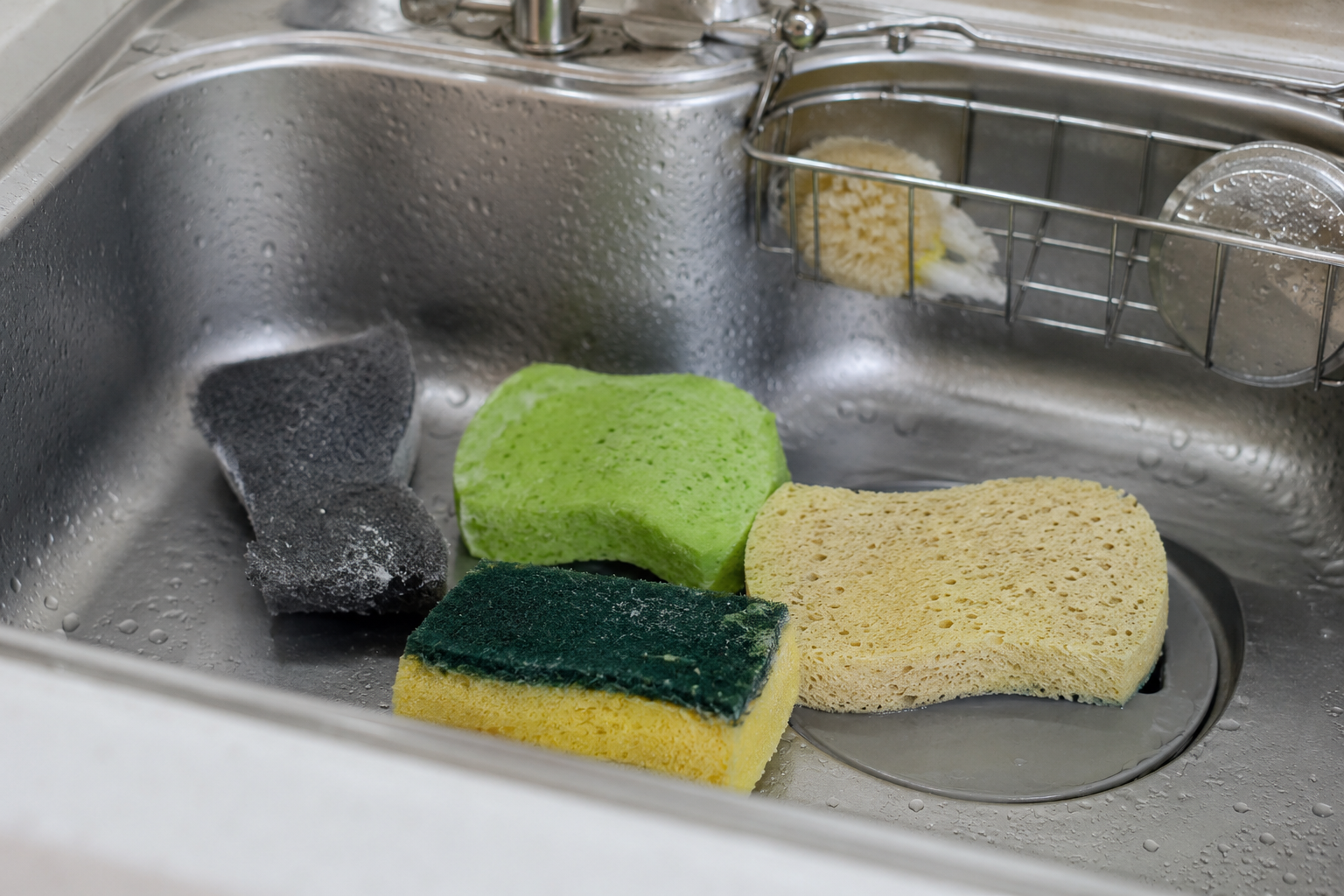
Why Leaving a Wet Sponge Out Can Be Riskier Than You Think
Minjin Park
·
A wet kitchen sponge can quickly become a hiding place for germs, odors, and cross-contamination. Learn why sponge care matters and simple ways to keep your kitchen safer.
The Small Kitchen Habit Most of Us Don’t Think About
Most of us use a kitchen sponge without giving it much thought. We scrub a few plates, wipe a cutting board, rinse the sponge quickly, and leave it sitting near the sink. It seems harmless enough.
After all, the sponge looks clean. It smells fine most of the time. And it is used with soap, so it must be safe, right?
Not always.
A wet sponge is one of those everyday household items that can quietly become a problem when it stays damp for too long. The issue is not that every sponge is “dangerous” or that you need to panic every time you wash dishes. The real problem is that sponges are almost perfect little homes for moisture, food bits, and bacteria.
When a sponge stays wet on the counter or in the bottom of the sink, it can hold onto tiny pieces of food and kitchen grime. Over time, that damp environment can lead to unpleasant smells, slime, moldy spots, and the spread of germs from one surface to another.
The good news is that this is easy to manage. With a few simple habits, you can keep your sponge cleaner, help it dry faster, and know when it is time to throw it away.
Why a Wet Sponge Can Become a Problem
Sponges Hold Water Very Well
A kitchen sponge is designed to soak things up. That is exactly what makes it useful for washing dishes and wiping spills. But that same absorbent texture also means it stays wet for a long time, especially if it is left flat on the counter, inside the sink, or under a pile of dishes.
Moisture matters because many germs grow better in damp places. Add warmth, food residue, and poor airflow, and a sponge can become a cozy spot for bacteria and odor-causing buildup.
This does not mean a sponge instantly becomes unsafe the moment it gets wet. It means the way you store it after use matters.
A sponge that is rinsed, squeezed out, and allowed to dry has a much better chance of staying fresh than one that sits soaked overnight.
Food Particles Get Trapped Inside
Even when you rinse a sponge, tiny bits of food can remain inside the holes and fibers. Think about what a sponge touches during a normal day:
A plate with leftover egg.
A pan with oil.
A cutting board with vegetable scraps.
A countertop with crumbs.
A sink with splashed dishwater.
Those little particles can get trapped deep inside the sponge. If the sponge stays wet, the trapped food can start to smell and may support bacterial growth.
This is why a sponge can sometimes smell sour even after it looks clean. The odor is often a sign that the inside of the sponge is not as fresh as the outside appears.
It Can Spread Mess Instead of Cleaning It
One of the biggest concerns with a wet or dirty sponge is cross-contamination. That simply means germs or residue from one place can be moved to another.
For example, someone might use the same sponge to wipe up liquid near raw chicken packaging, then later use it to clean a dinner plate or wipe the kitchen table. Even if that was not intentional, it can happen easily in a busy kitchen.
A sponge can also pick up germs from the sink area, then spread them to handles, counters, cups, or utensils.
This is why sponge care is not just about keeping things smelling nice. It is also about keeping kitchen routines cleaner and safer.
Everyday Situations Where This Matters
After Cooking Meat, Poultry, or Seafood
Raw meat, poultry, and seafood require extra care in the kitchen. If juices splash onto the counter or sink area, it is better to clean them with disposable paper towels or a dedicated washable cloth rather than your everyday dish sponge.
The mistake many people make is using the same sponge for everything. They rinse it, add soap, and assume it is fine.
Soap helps clean, but a sponge that has touched raw meat juices should not go right back to washing cups, baby bottles, lunch containers, or fresh produce bowls.
A safer habit is to use paper towels for raw meat spills, clean the surface properly, and keep your regular dish sponge for dishes only.
When the Sponge Sits in the Sink Overnight
A sponge left in the sink often stays wet for hours. It may sit in dirty dishwater, touch food scraps, or get buried under plates and utensils.
By morning, it may still look normal, but it has spent the night in a warm, damp, low-airflow space.
If this happens once in a while, it is not the end of the world. But if it is your everyday routine, your sponge will likely smell bad faster and need replacing more often.
A simple fix is to rinse it well, squeeze out as much water as possible, and place it somewhere with airflow before you go to bed.
When One Sponge Cleans the Whole Kitchen
Many homes have one sponge that does everything. It washes dishes, wipes counters, cleans the sink, scrubs the stovetop, and sometimes even handles pet bowls.
That is convenient, but it can also spread residue around the kitchen.
A better system is to separate tasks. Use one sponge or brush for dishes, a separate cloth for counters, and a different tool for the sink or other messy jobs. You do not need a complicated setup. Even using different colors can help your family remember what each one is for.
Common Sponge Mistakes People Make
Leaving It Flat on the Counter
A sponge left flat on the counter dries slowly because one side stays pressed against a surface. Moisture gets trapped underneath, and the sponge may develop a musty smell.
Instead, place it upright in a holder with drainage. A simple rack, suction cup holder, or small dish with holes can help air move around it.
The goal is not perfection. The goal is to keep it from sitting in a puddle.
Keeping It “Until It Falls Apart”
Some people keep a sponge for weeks or months because it still looks usable. But appearance is not always a good measure of cleanliness.
If the sponge smells bad, feels slimy, has dark spots, or looks worn out, it is time to replace it. A sponge does not need to be falling into pieces before it gets tossed.
For many busy kitchens, replacing a sponge every week or two is a reasonable habit. If you cook often, wash many dishes by hand, or use the sponge heavily, you may need to replace it sooner.
Using the Same Sponge for Pet Bowls
Pet bowls can carry saliva, food residue, and odors. Washing them with the same sponge used for family dishes is not ideal.
If you hand-wash pet bowls, consider using a separate sponge, brush, or cloth just for that task. Store it separately and let it dry fully between uses.
This small separation can make the kitchen feel cleaner and more organized.
Ignoring the Smell
A sour or musty sponge smell is not something to “wash through.” It usually means the sponge has buildup inside.
You can try sanitizing a sponge if it is still fairly new and in good condition. But if the smell comes back quickly, replacing it is the better choice.
A sponge is inexpensive compared to the amount of surfaces and dishes it touches every day.
Warning Signs Your Sponge Needs to Go
It Smells Sour, Musty, or Rotten
Odor is one of the clearest signs. If your sponge smells bad even after rinsing, it is time to toss it.
Do not wait until the smell spreads to your hands, dishes, or sink.
It Feels Slimy
A sponge should not feel slick or slimy after rinsing. Slime can be a sign of buildup, trapped food, or microbial growth.
If it feels unpleasant to touch, replace it.
It Has Dark Spots or Moldy Areas
Black, green, gray, or fuzzy spots are a strong sign that the sponge should be thrown away. Do not try to save a moldy sponge for “one more day.”
It Is Falling Apart
A sponge that is crumbling, tearing, or shedding pieces will not clean well. Worn sponges also trap debris more easily.
When it starts breaking down, it is done.
Simple Steps to Keep a Sponge Cleaner
Rinse It Thoroughly After Each Use
After washing dishes, rinse the sponge under running water to remove soap, food bits, and grease. Work the sponge with your fingers so water moves through the inside.
A quick splash is not always enough. Give it a real rinse.
Squeeze Out as Much Water as Possible
This is one of the easiest and most important habits. A sponge that is dripping wet will take much longer to dry.
After rinsing, squeeze it firmly until it is no longer holding much water. This takes only a few seconds but makes a big difference.
Store It Where Air Can Reach It
Do not leave the sponge sitting in the sink, inside a bowl, or under dishes. Put it in a place where water can drain and air can circulate.
A sponge holder near the sink is helpful. Choose one that lets the sponge stand up or rest without sitting in collected water.
Let It Dry Between Uses
The sponge does not have to become bone dry every single time, but it should not stay constantly soaked. If your sponge is always wet, it is more likely to smell and wear out quickly.
If you cook a lot and use your sponge many times a day, consider keeping two sponges and rotating them so each has more time to dry.
Should You Sanitize a Sponge?
Sanitizing can help reduce germs, but it does not make a sponge last forever. It also does not fix a sponge that is already smelly, slimy, moldy, or falling apart.
Think of sanitizing as a short-term maintenance habit, not a replacement for regular replacement.
Dishwasher Method
If your sponge is dishwasher-safe, you can place it on the top rack and run it through a hot wash and heated dry cycle. The heated dry part matters because drying helps reduce moisture.
Do not put sponges with questionable materials, loose pieces, or heavy grease buildup into the dishwasher unless you are sure they are safe for that use.
Microwave Method
Some people sanitize wet sponges in the microwave, but this must be done carefully. The sponge should be completely wet, and it should not contain metal or metallic scrub material.
A dry sponge can become a fire risk in the microwave. If you are not sure what your sponge is made of, skip this method and use another option.
Also, be careful when removing it. A microwaved sponge can be very hot.
Sanitizing Solution
Some households use a diluted bleach solution for sanitizing kitchen items. If you do this, follow the product label directions carefully, use proper ventilation, and never mix bleach with other cleaners.
After sanitizing, rinse as appropriate and allow the sponge to dry.
Again, if the sponge is old or smells bad, replacement is usually the simpler and safer choice.
Better Alternatives for Some Kitchen Jobs
Dish Brushes
Dish brushes tend to dry faster than sponges because they hold less water. They are useful for plates, pans, and general dishwashing.
Many brushes can also go through the dishwasher, depending on the material.
Washable Dishcloths
Dishcloths can work well if you wash them often. The key is not to leave them wet in a ball near the sink.
Hang them open to dry, and wash them regularly in hot water if the fabric allows. Keep several on hand so you can switch to a clean one easily.
Paper Towels for Messy Spills
For raw meat juices, pet messes, or greasy spills, paper towels can be a practical option. Use them to remove the mess first, then clean and sanitize the surface as needed.
This keeps your dish sponge from becoming the tool that touches everything.
A Simple Sponge Routine for a Cleaner Kitchen
You do not need a complicated system. Here is a realistic routine that works for many homes:
After each use, rinse the sponge well.
Squeeze it until it is no longer dripping.
Store it upright in a holder that drains.
Keep it away from raw meat cleanup.
Use a separate tool for the sink, pet bowls, and heavy messes.
Sanitize it regularly if you want to extend freshness.
Replace it when it smells, feels slimy, looks stained, or becomes worn.
For many households, replacing the sponge every one to two weeks is a simple habit that prevents a lot of guesswork.
If you cook daily, have kids, pack lunches, wash bottles, or prepare raw meat often, you may want to replace it more frequently.
Small Habits Make the Biggest Difference
Kitchen safety is often about small routines, not dramatic changes. A wet sponge may seem like a tiny detail, but it touches many things your family uses every day.
The goal is not to be afraid of your kitchen sponge. The goal is to stop treating it like it cleans itself.
A sponge needs rinsing, drying, and replacing just like any other cleaning tool. When it stays wet for too long, it can hold odors, trapped food, and germs. When it dries properly and gets replaced on time, it becomes much less of a concern.
So tonight, after the dishes are done, take a few extra seconds. Rinse the sponge. Squeeze it out. Stand it up where air can reach it.
That small habit can help keep your sink area fresher, your dishes cleaner, and your kitchen routine a little safer every day.
Hi, I’m the creator and editor behind ZestyHabit. I research everyday safety, first aid, and practical wellness topics using official guidance and reliable public sources, then turn that information into clear, realistic steps for daily life.
My goal is to help readers make safer, better-informed choices at home and beyond.