

If dust, strong smells, or mold make your chest feel tight, your cleaning routine may need a softer approach. Here’s a practical home-cleaning plan for sensitive bronchial tubes and irritated airways.
Some people can walk into a freshly cleaned room and think, “Ah, smells clean.”
Other people walk into that same room and immediately cough.
If your airways are sensitive, cleaning is a strange little balancing act. You want less dust, less mold, less pet hair, and fewer irritants floating around. But the act of cleaning itself can stir everything up. Add a lemon-scented spray, a bleachy bathroom, or an overenthusiastic vacuum, and suddenly the thing that was supposed to help your breathing is making your throat scratchy.
This is why people with sensitive bronchial tubes need a cleaning routine that is less “deep-clean the whole house until it sparkles” and more “reduce triggers without declaring war on your lungs.”
Indoor triggers can include dust mites, mold, pet dander, smoke, and certain pollutants, and these can worsen symptoms for people with asthma or sensitive airways. The EPA lists dust mites, mold, secondhand smoke, and pet dander among common asthma triggers found indoors. Cleaning products can also be part of the problem, since some release chemicals such as VOCs that may contribute to respiratory symptoms, headaches, or allergic reactions.
So the goal is not to clean more aggressively. It is to clean more thoughtfully.
Start With the Air, Not the Floor
When your breathing is easily irritated, the first question is not “What cleaner should I use?”
It is, “What am I putting into the air?”
Dusting with a dry cloth can send particles floating. Spraying cleaner into the air can create a scented mist you end up breathing. Vacuuming with a weak filter can blow fine dust around the room. Even shaking out a blanket can start a little dust storm, which feels unfair when you were just trying to be responsible.
A better routine begins with controlling what gets airborne.
Open a window if outdoor air quality is decent and pollen is not a problem for you that day. Turn on the bathroom fan when cleaning the shower or toilet. Use the kitchen exhaust fan when cleaning around the stove. Avoid spraying products directly into the air. Spray onto a cloth instead, or choose a liquid cleaner you can apply gently.
On high-pollen days, wildfire smoke days, or days when outdoor air quality is poor, opening the windows may backfire. In that case, ventilation might mean using exhaust fans or an air purifier rather than inviting the outside world in.
This is the annoying truth of airway-sensitive cleaning: the “right” choice can change by season, weather, and your own triggers.
Choose Cleaning Products That Do Not Fight Your Lungs
A home does not need to smell like pine trees, ocean breeze, lavender fields, or a fake citrus grove to be clean.
For sensitive airways, unscented or fragrance-free products are often easier to tolerate. Strong scents can be irritating even when they are marketed as natural. “Essential oil” does not automatically mean gentle. Some people do fine with them; others cough within ten seconds. Your lungs get a vote here.
The American Lung Association warns that cleaning supplies and household products can release VOCs and other chemicals, and these may contribute to respiratory problems or allergic reactions. Products that may be irritating include aerosol sprays, chlorine bleach, oven cleaners, rug cleaners, and some scented detergents. That does not mean every product in your cabinet is dangerous. It means you should be picky.
Keep the product list short
You probably do not need fifteen separate bottles under the sink.
A practical set might include:
- fragrance-free dish soap
- a gentle all-purpose cleaner
- baking soda for scrubbing
- diluted vinegar for some mineral buildup or glass cleaning, when tolerated
- hydrogen peroxide for some disinfecting tasks, if appropriate for the surface
- disposable gloves
- microfiber cloths
Do not mix cleaning chemicals. This matters. Bleach mixed with ammonia or acids can create dangerous fumes. Even vinegar and bleach should not be combined. If you use bleach for a specific reason, use it carefully, dilute it according to the label, ventilate well, and do not layer it with other products.
For normal weekly cleaning, most homes do not need heavy disinfecting everywhere. Cleaning away dust, grime, and moisture is often the bigger win.
Dust Without Creating a Dust Cloud
Dust is sneaky. It lands on shelves, lampshades, baseboards, blinds, ceiling fans, picture frames, electronics, and the top of the refrigerator where no one wants to look.
For sensitive airways, dry dusting is usually not the friendliest method. A dry feather duster may look charming, but it often just relocates dust from the shelf to the air.
Use a slightly damp microfiber cloth instead. Not soaking wet. Just damp enough to grab dust. Work from higher surfaces down to lower ones, because gravity is rude and reliable.
Start with ceiling fan blades, high shelves, and window ledges. Then move to tables and counters. Floors come last.
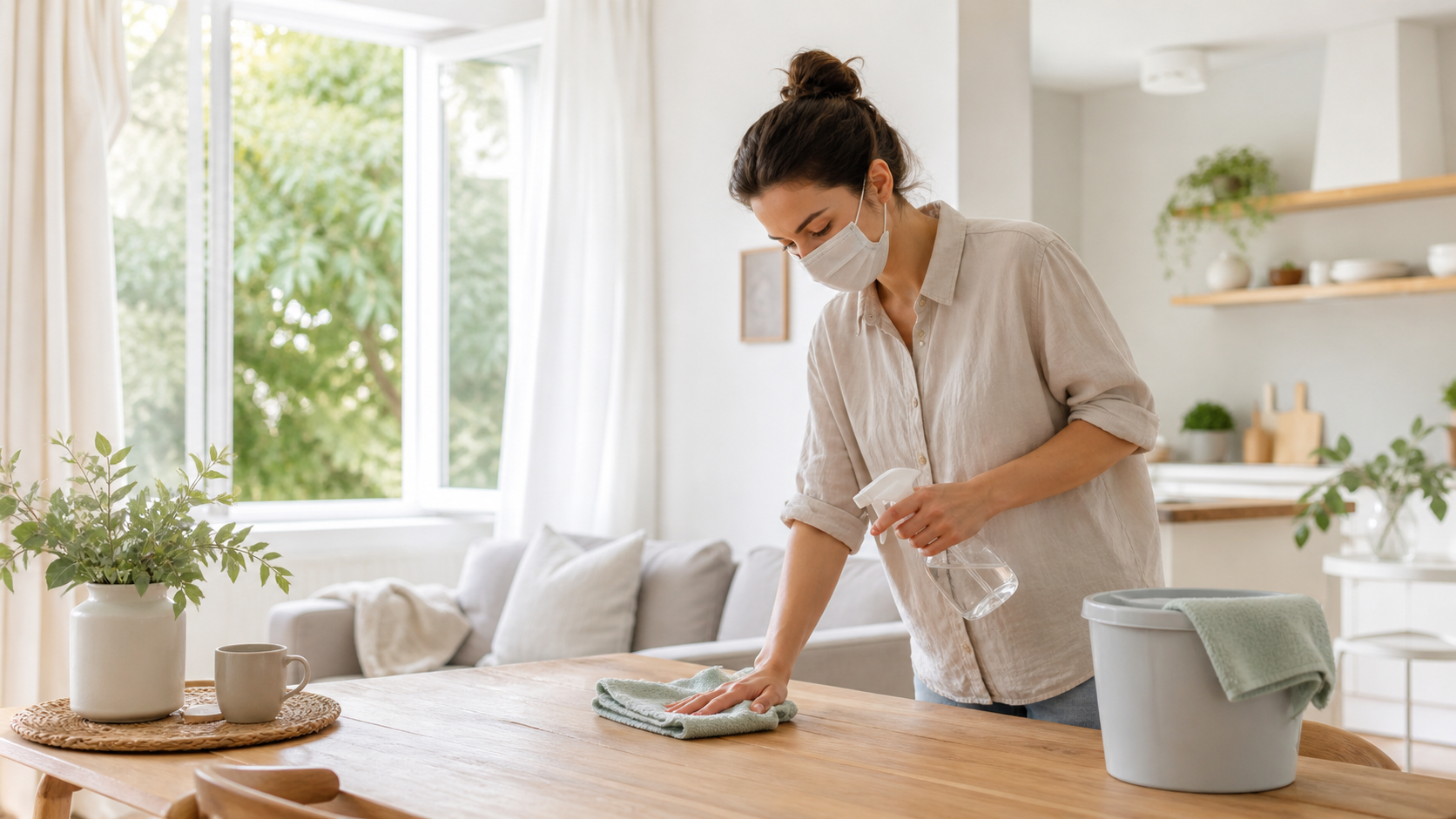
If dusting makes you cough, wear a well-fitting mask while cleaning. You do not need to make it a dramatic medical event. Sometimes a mask is simply a tool, like gloves or a step stool. Use what helps.
Do not forget the places that quietly collect dust
Bedrooms are a big one. Dust mites are commonly found in bedding, pillows, blankets, carpets, upholstered furniture, and stuffed toys, and they can trigger allergy and asthma symptoms in some people. The EPA specifically recommends washing bedding and vacuuming regularly to reduce bedroom dust triggers.
That means the bedroom deserves more attention than the decorative shelf in the hallway. You spend hours breathing there every night.
Wash sheets weekly if you can. Use hot water if the fabric allows and if dust mites are a known trigger for you. Wash pillowcases often. Keep extra blankets in closed storage rather than piled on a chair collecting dust. If you use lots of throw pillows, be honest: are they decorative, or are they little dust museums?
No judgment. I have met a decorative pillow or two. But sensitive airways may not love them.
Vacuum Smarter, Not Harder
Vacuuming can help remove dust, pet hair, crumbs, and allergens. It can also stir up particles if the vacuum is not well sealed or the filter is poor.
A vacuum with a HEPA filter is often recommended for people dealing with allergy or asthma triggers because it can capture finer particles more effectively. CDC archived asthma guidance notes that HEPA-filter vacuuming can help remove allergens and may reduce asthma symptoms for some people.
If a new vacuum is not in the budget, work with what you have. Empty the dust bin outside if possible. Replace or clean filters as directed. Move slowly rather than racing across the carpet like you are late for a flight. Quick vacuuming can leave plenty behind.
Hard floors are often easier for sensitive airways than wall-to-wall carpet because they can be damp-mopped. If you have carpet, focus on regular vacuuming, especially in bedrooms and high-traffic areas.
Let dust settle before sleeping
Try not to do intense dusting and vacuuming right before bed. Even careful cleaning can stir up particles for a while. If your bedroom is sensitive territory, clean it earlier in the day so the air has time to settle before you sleep.
This tiny timing change can make a surprising difference.
Control Moisture Before Mold Gets Comfortable
Mold likes moisture. Bathrooms, basements, window frames, under sinks, and laundry areas are common trouble spots.
The CDC advises that people with asthma and other lung conditions should avoid buildings with visible or smelled mold or water leaks, because mold exposure can be risky for respiratory health. For everyday home care, the takeaway is simple: do not let moisture sit around.
Run the bathroom fan during and after showers. Wipe down shower walls if they stay wet for a long time. Fix leaks quickly. Do not ignore musty smells. Keep humidity under control, especially in basements or damp rooms.
If you see a small patch of mildew on a shower curtain, clean it promptly or replace the curtain. If mold covers a large area, keeps coming back, or is linked to water damage, it may be time to get professional help. Scrubbing a big mold problem yourself can stir spores into the air, and that is not a great activity for sensitive lungs.
Laundry can be part of moisture control
Do not leave wet laundry sitting in the washer for hours. It happens to everyone, of course. You start a load, answer one message, and somehow it is the next morning.
But damp fabric can develop a musty smell quickly. Rewash if needed. Dry towels fully before folding them. Hang bath mats where they can actually dry. A bath mat that stays damp all week is basically inviting trouble.
Make the Bedroom the Clean-Air Zone
If cleaning the whole house feels overwhelming, start with the bedroom.
That is where your body spends a long stretch of time recovering. A cleaner bedroom will not fix every breathing issue, but it is a good place to reduce exposure.
Keep the room simple enough to clean. Fewer fabric-covered surfaces usually means less dust. Wash bedding regularly. Vacuum or mop under the bed. Wipe nightstands. Keep laundry from piling up in dusty heaps. If pets sleep in the bed and you are sensitive to dander, that may be worth reconsidering, even if the pet strongly disagrees.
I know. Pets never vote in favor of boundaries.
If you use an air purifier, the bedroom is often the most practical place to put it. Choose one sized for the room, and replace filters as directed. An air purifier with a dirty, forgotten filter is not doing heroic work in the corner.
Build a Routine That Does Not Exhaust You
A sensitive-airway cleaning routine should not require one giant Saturday cleaning marathon.
Marathon cleaning stirs up too much dust, uses too many products at once, and leaves you tired. When you are tired, you cut corners. Then maybe you use a strong spray because it feels faster. Then your throat burns. Not ideal.
A smaller rhythm works better.
Daily: keep irritants from building up
Open or ventilate the bathroom after showers, if outdoor conditions allow.
Wipe kitchen counters with a damp cloth.
Keep shoes near the door to reduce what gets tracked inside.
Put laundry where it can dry, not in damp piles.
Take out trash before smells become noticeable.
These little tasks are not glamorous. They are just easier than fighting a week’s worth of buildup.
Weekly: reduce dust and fabric triggers
Wash sheets and pillowcases.
Dust with a damp microfiber cloth.
Vacuum carpets and rugs slowly.
Damp-mop hard floors.
Clean bathroom surfaces with ventilation.
Check for damp spots, leaks, or musty smells.
This is enough for many homes. You can add more when needed, but this basic rhythm covers the big triggers without turning cleaning into a second job.
Monthly: look at the hidden places
Clean or replace HVAC filters according to your system’s instructions.
Vacuum upholstered furniture.
Wash washable curtains or dust blinds.
Check under sinks for leaks.
Clean behind furniture if dust collects there.
Look at vents, window tracks, and baseboards.
Monthly tasks are where a lot of airway triggers hide. They are also easy to forget because they do not scream for attention the way dirty dishes do.
Pet Hair and Dander Need a Plan
Pets are family, but pet dander can be a real trigger.
If you have sensitive bronchial tubes, pet cleaning is not about loving your animal less. It is about managing the environment so everyone can live together more comfortably.
Vacuum pet areas often. Wash pet bedding. Brush pets outside if possible, or have someone else do it if brushing triggers symptoms. Keep pets out of the bedroom if nighttime symptoms are a problem. Use washable covers on favorite furniture spots.
A lint roller near the couch is a small but mighty thing. Not fancy. Very useful.
Also, avoid heavily scented pet sprays or deodorizing powders. They may make the room smell better for a few minutes, but fragrance can irritate sensitive airways.
Be Careful With Candles, Incense, and Air Fresheners
A room can smell nice and still be irritating.
Candles, incense, plug-in air fresheners, room sprays, and heavily scented wax melts can bother sensitive airways. For some people, smoke or fragrance is an immediate cough trigger.
A cleaner option is to remove the source of odor rather than cover it. Take out trash. Clean the sink drain. Wash the pet blanket. Open a window when conditions are good. Use the range hood while cooking.
If you like scent, try keeping it occasional and mild, then pay attention to your body. If you always cough after lighting a candle, the candle is not your friend, no matter how cozy it looks.
Kitchen Cleaning Without the Harsh Cloud
Kitchens collect grease, crumbs, food smells, and moisture. They need regular cleaning, but not necessarily aggressive chemicals.
Wipe spills quickly so they do not harden into a scrubbing project. Use the range hood while cooking, especially when frying or searing food. Clean the stovetop after it cools. Empty crumbs from the toaster. Keep the sink area dry enough that mold and odors do not settle in.
For stubborn grease, a little dish soap and warm water often does more than people expect. Let it sit for a few minutes before scrubbing. Patience is a cleaning product too, just not one sold in bottles.
Avoid oven cleaners unless you truly need them and can ventilate very well. Those fumes can be rough.
Bathroom Cleaning Without Burning Your Nose
Bathrooms are where many people reach for the strongest products. It makes sense emotionally. Bathrooms feel like they should be blasted clean.
But for sensitive lungs, blasting is not always wise.
Clean more often with gentler products so grime does not build up to the point where you feel forced to use something harsh. Run the fan. Leave the door open if possible. Apply cleaner to a cloth or sponge instead of spraying it into the air. Rinse surfaces well.
If you must use a stronger product for mold or disinfecting, follow the label exactly. Never mix products. Give yourself ventilation and breaks. Better yet, ask someone else to handle that specific task if it reliably triggers your symptoms.
There is no prize for suffering through a bleach cloud.
Track What Sets You Off
Sensitive airways can be oddly personal.
One person reacts to dust. Another reacts to pine cleaner. Someone else is fine with vacuuming but coughs around laundry fragrance. You may not know your pattern until you watch it for a while.
Keep a simple note for two weeks. Nothing complicated.
Write down what you cleaned, what product you used, whether windows were open, and how you felt afterward. You might notice that bathroom spray bothers you, but dish soap does not. Or that vacuuming is fine if you wear a mask and leave the room afterward. Or that your symptoms flare every time you change the bedding, which could point toward dust mites as a trigger.
The CDC recommends identifying and avoiding asthma triggers as part of asthma control, along with following prescribed medicine plans when applicable. Even if you do not have asthma, the same idea is useful: notice patterns, then adjust.
When Cleaning Is Not Enough
Sometimes a clean routine helps, but symptoms keep showing up.
If you are coughing often, wheezing, feeling chest tightness, waking at night with breathing symptoms, or needing to avoid normal activities, it is worth talking with a healthcare professional. You may need evaluation for asthma, allergies, reflux, chronic sinus issues, or another condition.
Cleaning can reduce triggers. It is not a replacement for medical care.
This is especially true if symptoms are new, worsening, or tied to shortness of breath. Do not try to solve everything with a mop and a fragrance-free spray bottle.
A Realistic Routine You Can Actually Keep
Here is the version I would give a friend who wants a cleaner home but cannot turn life into a cleaning project.
Keep the bedroom simple and wash bedding weekly.
Use damp cloths instead of dry dusters.
Vacuum slowly with the best filter you can manage.
Mop hard floors instead of sweeping dust into the air.
Choose fragrance-free products when possible.
Ventilate bathrooms and kitchens.
Fix moisture problems quickly.
Avoid scented cover-ups like sprays, incense, and strong candles if they trigger you.
Clean in small rounds instead of one exhausting marathon.
That is plenty. Really.
A home for sensitive airways does not have to look perfect. It just needs fewer airborne irritants, less dust buildup, less dampness, and fewer chemical clouds. Some weeks you will do the whole routine. Other weeks you will wash the sheets, wipe the counters, and call that a victory.
That still counts.
The point is not to create a spotless house. The point is to make the air inside your home feel easier to live with. A little less coughing while folding laundry. A bedroom that feels calmer at night. A bathroom that gets cleaned without making your eyes water. Those are small changes, but when breathing is involved, small changes can feel very big.

Hi, I’m the creator and editor behind ZestyHabit. I research everyday safety, first aid, and practical wellness topics using official guidance and reliable public sources, then turn that information into clear, realistic steps for daily life.
My goal is to help readers make safer, better-informed choices at home and beyond.


[…] routine cleaning, wash the tray thoroughly with warm water and dish soap, rinse it, and let it air-dry completely. […]
[…] Window tracks are often overlooked during routine cleaning. […]