
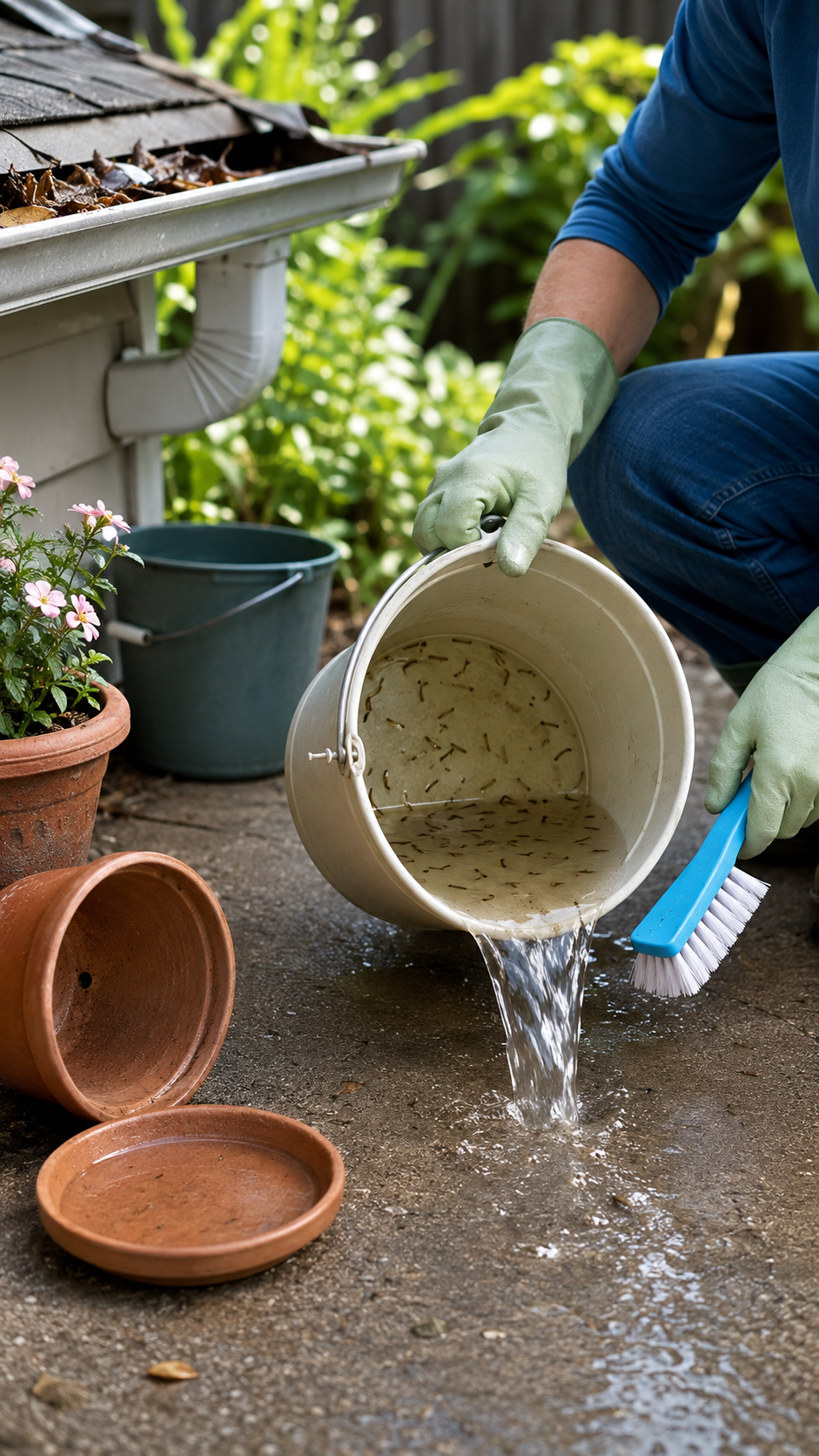

Learn where mosquito larvae live, how to identify hidden breeding sites, and the safest ways to remove larvae and prevent mosquitoes around your home.
Mosquitoes buzzing around the yard may seem to appear overnight, but they usually begin life much closer to home than people realize. A clogged gutter, a forgotten bucket, or even a flowerpot saucer can produce a surprising number of adult mosquitoes.
The good news is that mosquitoes are much easier to control while they are still larvae. They cannot fly away, hide in vegetation, or enter your home. They are confined to water, which gives you an opportunity to interrupt their life cycle before they become biting adults.
Effective mosquito control does not necessarily require constant spraying. It begins with learning where mosquito larvae live, inspecting your property regularly, and dealing with standing water in a safe and practical way.
Understanding the Mosquito Life Cycle
Mosquitoes pass through four stages:
- Egg
- Larva
- Pupa
- Adult
The larval and pupal stages take place in water. Adult female mosquitoes lay eggs either directly on water or along the damp walls of containers that are likely to fill with water later.
When the eggs hatch, the larvae live beneath the surface and feed on microorganisms and organic matter. They frequently rise to the surface to breathe. Because of their quick, wriggling movement, mosquito larvae are sometimes called “wigglers.”
After growing and molting several times, larvae become pupae. Pupae remain in the water but do not feed. Adult mosquitoes eventually emerge from them and fly away.
This process can happen remarkably quickly. According to the Centers for Disease Control and Prevention, some Aedes mosquitoes can develop from egg to adult in approximately seven to ten days. That is why a container left outside after one rainstorm may become a mosquito nursery before the following weekend.
What Do Mosquito Larvae Look Like?
Mosquito larvae are small, slender, worm-like organisms that move through water with a noticeable jerking or wriggling motion. Depending on their age and species, they may be difficult to see unless you look closely.
To inspect a container, stand still and watch the water for a moment. You may see tiny creatures hanging near the surface. If you tap the side of the container or cast a shadow over the water, the larvae often dive downward rapidly.
Mosquito pupae look different. They are usually shorter, thicker, and comma-shaped. They may tumble through the water when disturbed. Finding pupae means adult mosquitoes could emerge very soon, so the water should be managed immediately.
Not every small organism in outdoor water is a mosquito. However, if you see multiple wrigglers repeatedly rising toward the surface in stagnant water, mosquito larvae are a strong possibility.
Where Do Mosquito Larvae Live?
Mosquito larvae require water, but they do not necessarily need a pond, swamp, or large puddle. Many common mosquitoes use small artificial containers around homes.
The CDC explains that larvae and pupae generally develop in water with little or no flow. Different mosquito species prefer different environments, so both clean rainwater and dirty, organic-rich water can become breeding sites.
Buckets, Watering Cans, and Garden Containers
Buckets are among the most common backyard breeding sites because they are often left upright after gardening or cleaning. Watering cans, wheelbarrows, storage bins, and unused planters can create the same problem.
Even when a container appears almost empty, the small amount of water remaining at the bottom may be enough for certain mosquitoes to lay eggs.
Flowerpot Saucers
A flowerpot saucer can hold water for several days, particularly in a shaded location. Soil, fallen leaves, fertilizer, and plant debris add organic material that may make the water more attractive to mosquitoes.
Check both outdoor and indoor plants. Mosquitoes that enter a house may use vases or overwatered plant saucers as breeding sites.
Birdbaths and Pet Water Bowls
There is nothing wrong with providing water for birds or pets, but water that remains undisturbed can support mosquito development.
Birdbaths are especially likely to become breeding sites when they contain leaves, algae, or droppings. Outdoor pet bowls may also be overlooked if they are placed in a shaded corner of the yard.
Old Tires
Tires hold rainwater extremely well. Their dark color helps warm the water, while their curved interior prevents it from evaporating quickly. Leaves and other debris can collect inside, creating a protected habitat for larvae.
Unused tires should be recycled, disposed of properly, or stored under cover where they cannot collect rain.
Clogged Rain Gutters
Leaves, twigs, and dirt can prevent gutters from draining completely. The standing water may be difficult to see from the ground, allowing mosquitoes to reproduce unnoticed above the house.
Inspect gutters and downspouts, especially after storms. Correct sagging sections and remove blockages so that water drains freely.
Toys and Outdoor Equipment
Plastic toys, toy trucks, swing seats, portable basketball bases, tarps, and playground equipment can trap small pools of water. A folded tarp may contain several hidden pockets, each capable of supporting larvae.
Store toys under cover or turn them upside down when they are not being used.
Trash Cans and Recycling Containers
Open trash cans, discarded cups, bottles, and recycling bins can collect rainwater. Lids with recessed handles may also hold enough water to attract mosquitoes.
Keep containers tightly covered and make drainage holes where appropriate, without damaging bins or creating leakage problems.
Pool Covers and Neglected Swimming Pools
A maintained, filtered swimming pool is generally not an ideal mosquito habitat. A neglected pool, however, can become a major breeding site.
Water collecting on top of a pool cover also deserves attention. Remove it after rain, keep the cover properly tensioned, and maintain the pool according to the manufacturer’s instructions.
Small inflatable and kiddie pools should be emptied, cleaned, dried, and stored upside down when they are not in regular use.
Rain Barrels and Water Storage Tanks
Rain barrels provide useful water for gardens, but adult mosquitoes may enter through uncovered openings. Install a tight lid and cover inlets and overflow openings with fine mesh that mosquitoes cannot pass through.
Inspect the screen periodically for holes, loose edges, and accumulated debris.
Drains, Ditches, and Low Areas
Blocked yard drains, storm drains, roadside ditches, poorly graded lawns, and leaking irrigation systems can create persistent water. Mosquitoes may also reproduce around septic systems if covers, vents, or pipes are damaged.
Some of these problems are beyond routine homeowner maintenance. Contact the appropriate utility, property manager, public works department, or mosquito control program if water continues to collect in an area you cannot safely access or repair.
Tree Holes and Natural Depressions
Water can collect in tree cavities, bamboo stems, dense leaf clusters, and depressions in rocks. These natural containers may be difficult to eliminate without damaging plants or wildlife habitat.
If a tree cavity holds water repeatedly, consult an arborist before filling or altering it. Avoid drilling into or sealing a healthy tree without professional guidance.
How to Eliminate Mosquito Larvae
The best treatment depends on whether the water can be removed.
Empty the Water
If the container is not needed, pour out the water onto dry ground where it will be absorbed rather than forming another puddle. Turn the container upside down or place it under cover afterward.
Do not dump polluted water into streams, ponds, or storm drains. If the container contains chemicals, sewage, fuel, or an unknown substance, contact local waste or environmental authorities for disposal instructions.
Scrub the Container
Pouring out the water removes larvae and pupae, but it may not remove every egg. Some Aedes mosquito eggs adhere firmly to container walls above the waterline and can survive dry conditions for months.
Scrub the inside surface, especially around the previous waterline. Rinse the container and allow it to dry thoroughly before using it again.
This is why the CDC recommends that homeowners empty and scrub, rather than simply empty, water-holding objects once a week. Its home mosquito-control guidance also recommends turning over, covering, or discarding unnecessary containers.
Refresh Necessary Water Sources
For birdbaths, outdoor animal bowls, and similar items, replace the water regularly and scrub away slime or algae.
Do this at least weekly and more often during hot weather. Pet water should be refreshed daily for cleanliness and animal health, regardless of mosquito activity.
Improve Drainage and Water Movement
Repair leaking faucets and irrigation lines, clear clogged gutters, and correct areas where water remains after rain. Avoid overwatering the lawn or garden.
Fountains and pond aerators may make some water features less attractive to mosquitoes by keeping the surface moving. However, water movement alone should not replace maintenance. Clean pumps, filters, edges, and stagnant pockets where larvae might survive.
Cover Stored Water
Tightly cover rain barrels, cisterns, buckets, and other water-storage containers. If a solid lid is not practical, use fine wire or insect mesh with openings smaller than an adult mosquito.
The cover must fit without gaps. A loosely draped screen may still allow mosquitoes to reach the water.
When Should You Use a Mosquito Larvicide?
Larvicides are products designed to kill mosquito larvae before they become adults. They may be useful for standing water that cannot be safely drained, covered, circulated, or removed.
Common homeowner products include mosquito dunks, bits, granules, and tablets. Some contain Bacillus thuringiensis israelensis, usually abbreviated as Bti. Larvae consume Bti, which specifically affects susceptible fly larvae.
The U.S. Environmental Protection Agency reports that Bti can be effective against developing mosquito larvae and does not pose a health risk to people when used as directed. However, products have different approved uses. A product intended for a decorative pond may not be approved for a cistern, drinking-water container, or animal watering system.
Always follow the label exactly. Use only an EPA-registered larvicide in the United States, apply the stated amount, observe reapplication instructions, and keep the packaging for future reference. Never assume that adding extra product will improve the result.
For large ponds, wetlands, drainage systems, or extensive infestations, contact a licensed pest professional or local mosquito control agency. Large-scale treatment requires correct identification, dosage, timing, and environmental precautions.
Mosquito-Control Methods to Avoid
Several homemade remedies circulate online, including pouring bleach, detergent, cooking oil, essential oils, or other household chemicals into standing water.
These substances may harm plants, pets, beneficial insects, fish, amphibians, and water quality. They may also be ineffective at the concentration used. Do not place a chemical in water unless the product label specifically authorizes that use.
Outdoor foggers and adult mosquito sprays are not substitutes for removing breeding sites. They may temporarily kill some flying adults, but they do not necessarily reach eggs or larvae in hidden containers. If the standing water remains, another generation can quickly appear.
Bug zappers are also unlikely to solve a breeding problem. The most reliable starting point is still source reduction: find the water, empty or manage it, and prevent it from returning.
Create a Weekly Mosquito Inspection Routine
A weekly ten-minute inspection is often more effective than waiting until mosquitoes become unbearable. Walk around the property and examine anything that might hold water.
A simple routine might include:
- Emptying and scrubbing birdbaths and plant saucers
- Checking buckets, toys, tarps, and wheelbarrows
- Clearing leaves from drains and gutters
- Inspecting rain-barrel screens and lids
- Removing water from pool covers
- Looking for leaks around hoses and irrigation systems
- Checking shaded areas where evaporation is slow
- Discarding cups, cans, tires, and unnecessary containers
Inspect again after heavy rain, lawn watering, or a storm. Ask neighbors to do the same, because mosquitoes do not respect property lines.
When to Contact a Mosquito Control Professional
Professional help may be appropriate when mosquitoes remain abundant despite regular source removal, when larvae are present in storm drains or wastewater, or when standing water covers a large area.
You should also report abandoned swimming pools, illegal tire dumping, damaged septic systems, and persistent public drainage problems to the appropriate local authority.
If local health officials announce mosquito-borne disease activity, follow their recommendations promptly. Continue using an EPA-registered insect repellent, maintain window and door screens, and wear clothing that reduces exposed skin. Larval control is valuable, but it works best as part of a broader mosquito-prevention plan.
Final Thoughts
Getting rid of mosquito larvae is less about finding one powerful spray and more about removing dozens of small opportunities for mosquitoes to reproduce. Emptying, scrubbing, covering, and maintaining water-holding objects can interrupt their life cycle before they become biting adults. What hidden mosquito breeding site have you found around your home—a gutter, planter, tire, toy, or something completely unexpected? Share your experience and mosquito-control tips in the comments below.

Hi, I’m the creator and editor behind ZestyHabit. I research everyday safety, first aid, and practical wellness topics using official guidance and reliable public sources, then turn that information into clear, realistic steps for daily life.
My goal is to help readers make safer, better-informed choices at home and beyond.


