Why Every Family Should Set Up an Emergency Contact Plan Before It’s Needed
Minjin Park
·
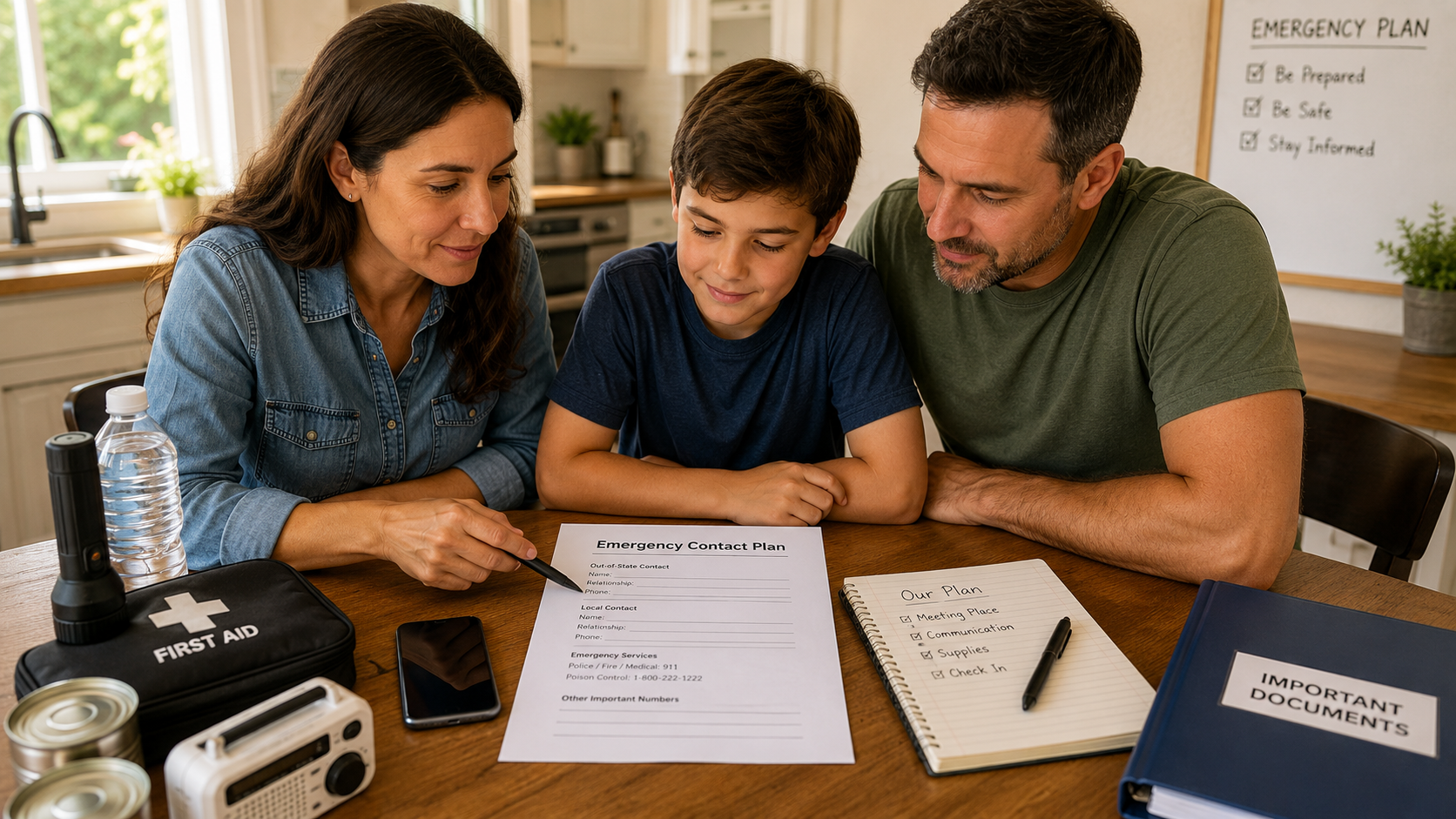
A family emergency contact plan can feel unnecessary until something goes wrong. Here’s why it matters, what it should include, and how to make one without turning it into a complicated project.
Most families have at least one person who says, “We should really write this stuff down.”
Then everyone nods.
And nothing happens.
Not because people are careless. Usually, it is the opposite. Life is already full. There are work schedules, school pickups, grocery lists, doctor appointments, bills, group chats, and someone always asking where the charger went.
A family emergency contact plan sounds like one of those serious adult tasks that belongs in a binder somewhere. Important, yes. Urgent? Not today.
Until it is.
A storm knocks out power. A parent goes to the hospital. A child gets sick at school. A phone dies during travel. An older relative does not answer. Someone is in a car accident. A neighborhood evacuation alert goes out while family members are in different places.
In those moments, the question is not just, “Who should we call?”
It becomes, “Who knows what to do?”
That is why having a family emergency contact network planned ahead of time matters. It is not about expecting the worst every day. It is about lowering confusion when people are already scared, rushed, or overwhelmed.
Emergencies Make Simple Things Harder
On a normal day, finding someone’s phone number seems easy.
You open your phone. Search a name. Tap call.
But emergencies are not normal days.
Your phone might be dead, lost, locked, damaged, or out of service. You may be shaken up and unable to think clearly. A child may need help from an adult who does not know your family. A hospital, school, neighbor, or coworker may need to reach someone quickly.
Stress also changes how people behave. Even organized people forget obvious things under pressure. They call the wrong person first. They forget where documents are. They assume someone else has already been told. They text five people at once, then nobody knows who is actually responsible.
A contact plan does not remove the fear from an emergency. Nothing does.
But it gives people a path to follow when their brain is not at its best.
That is the whole point.
A Family Emergency Contact Plan Is Not Just a Phone List
A basic list of names and numbers is helpful. But a real contact plan goes a little further.
It answers questions like:
Who should be called first? Who is the backup if that person does not answer? Who can pick up the kids? Who has a spare key? Who knows medical information? Who should be contacted if family members are separated? Where should everyone meet if home is not safe? Who is out of state and less likely to be affected by the same local emergency?
That last one is easy to overlook. During a local disaster, calls and texts may be spotty in the affected area. An out-of-town contact can sometimes serve as a central check-in person. Instead of everyone trying to reach everyone else, each person contacts one trusted relative or friend outside the area.
It sounds almost too simple, but simple is exactly what works when things are messy.
A plan should be easy enough that a tired teenager, a worried grandparent, or a neighbor helping in a hurry could understand it.
Why Relying on Memory Is Risky
A lot of families run on memory.
Mom knows the pediatrician. Dad knows the insurance details. Grandma knows the cousin’s new number. One sibling knows the alarm code. Someone knows which hospital takes the insurance, but nobody remembers who.
This works until the person who “knows everything” is the one unavailable.
Every family has informal information managers. They remember birthdays, prescriptions, school forms, passwords, appointment dates, and who is allergic to what. It is useful, but it also creates a weak point.
If all the important details live in one person’s head, the family is more vulnerable than it realizes.
Writing things down is not a sign that you do not trust each other. It is a way of sharing the load.
And honestly, nobody should have to be the family search engine during a crisis.
The Problem With Phones Doing All the Work
Smartphones make us feel prepared because they hold so much information.
Then the battery drops to 2%.
Or the screen breaks. Or the phone is locked. Or there is no signal. Or a child has no idea how to access the emergency contact list. Or an older relative has the numbers saved under nicknames nobody else understands.
Phones are useful. They should absolutely be part of the plan.
But they should not be the whole plan.
A printed copy matters. Maybe it goes on the fridge, in a school backpack, in a glove compartment, near a landline if you still have one, or inside a family emergency folder. Some families keep a small laminated card in wallets or bags.
It does not need to look beautiful. This is not a Pinterest project. It just needs to be readable, current, and easy to find.
If the only copy of your emergency information is inside a locked phone, it may not help the person who needs it most.
Kids Need More Than “Call Mom”
Children often know to call a parent in an emergency. That is a good start, but it may not be enough.
What if Mom is in a meeting and cannot answer? What if Dad is driving? What if both parents are affected by the same emergency? What if the child is with a babysitter, coach, teacher, or friend’s parent?
Kids need a simple chain.
For younger children, that may mean memorizing one parent’s number and knowing which trusted adult to ask for help. For older kids, it may mean having a small card with primary contacts, backup contacts, allergies, and pickup permissions.
They should also know which adults are allowed to pick them up from school or activities. This matters more than people think. During a stressful event, schools and childcare centers usually cannot release a child to a random person just because that person says, “I’m a family friend.”
Make sure emergency contacts are updated with the school, daycare, camp, sports team, and any regular caregiver.
And please, check the names once in a while. Many parents have old contacts listed from three years ago. Someone moved. Someone changed numbers. Someone is no longer close to the family. It happens.
Older Relatives May Need Their Own Version
Emergency contact plans are not only for households with young kids.
A parent living alone, a grandparent with medical conditions, or an older neighbor you help regularly should have clear contact information available. That includes family contacts, doctors, medication lists, allergies, preferred hospital, pharmacy, insurance basics, and any important care instructions.
This can feel delicate. Some older relatives do not like the idea of being “managed.” Understandably so. Nobody wants to feel like a project.
The conversation may go better if you frame it as practical, not controlling.
Something like: “I want to make sure the right people can be reached quickly if you ever need help. Can we write down a few contacts and medical details just in case?”
Keep it respectful. Keep it simple.
The goal is not to take away independence. It is to make sure independence does not turn into isolation during a crisis.
When Family Members Are Spread Out
Modern family life is not always neat.
One parent works across town. Another travels. Kids may be at school, sports, part-time jobs, or a friend’s house. Adult siblings may live in different states. Divorced or blended families may have multiple households, custody schedules, and different emergency contacts.
This is exactly why a contact plan helps.
During a crisis, people should not have to debate who calls whom. The plan can clarify who contacts the school, who checks on grandparents, who updates relatives, who handles pets, and who has access to important documents.
For separated or co-parenting families, it is especially useful to be clear and civil about emergency communication. Even if the relationship is not easy, the child should not be stuck in the middle of confusion.
A simple shared list can prevent a lot of frantic messages.
You do not need a perfect family dynamic to make a good emergency plan. You just need enough clarity for people to act.
Pets Count Too
Pets are often forgotten in emergency planning until the last minute.
Then suddenly someone is asking, “Who can get the dog?” or “Does anyone have the cat carrier?” or “Wait, where is the vaccination record?”
If your family has pets, include them in the plan.
Write down the vet’s contact information, feeding needs, medications, hiding spots, carrier location, and who can take them if you cannot get home. If a neighbor or friend has a spare key and is willing to help, confirm that ahead of time.
Do not assume someone can take your pet during an emergency. Allergies, leases, other animals, and travel distance can all get in the way.
A little planning protects the animal and saves your family from one more layer of panic.
What Should Be on the List?
A family emergency contact list should be short enough to use quickly but complete enough to be useful.
Start with the basics:
Primary family contacts with phone numbers Backup contacts nearby One out-of-town contact Doctors, pediatrician, pharmacy, and dentist if needed School, daycare, workplace, or caregiver numbers Neighbor or building manager contact Insurance information location, not necessarily every detail Medical alerts, allergies, and important medications Preferred hospital or urgent care Pet care contacts Meeting place if home is unsafe Backup meeting place outside the neighborhood
For privacy, you may not want every copy to include sensitive medical or insurance information. That is fine. You can write, “Full medical list is in the red folder in the kitchen drawer,” or “Medication list is in Dad’s wallet.”
The plan should point people to the right information without exposing more than necessary.
Keep It Boring and Easy to Read
Emergency plans do not need clever formatting.
Actually, clever can be a problem.
Use large, clear text. Put the most important numbers at the top. Avoid long paragraphs. Label people by relationship and role, not just name.
For example:
“First call: Maria Lopez, Mom, 555-123-4567” “Backup pickup: Daniel Kim, Uncle, 555-555-2190” “Out-of-town contact: Ruth Parker, Aunt, 555-777-8899”
This is much better than a mysterious list of names where nobody knows who is who.
If you have children, use language they can understand. If you have older relatives with vision problems, print it larger than you think you need to. If someone in the home speaks another language more comfortably, consider making a version in that language too.
Emergency information should not require detective work.
The Awkward Conversations Are Worth Having
Some parts of emergency planning can feel uncomfortable.
Who should make decisions if someone is unconscious? Who has access to the house? Who can pick up the children? Who should not be contacted? Where are important documents? What happens if parents are traveling?
These conversations may feel heavy at first. But they are much easier to have while everyone is calm than during an actual emergency.
You do not have to cover everything in one dramatic family meeting. In fact, please do not trap everyone at the dinner table for a two-hour disaster lecture. That is how people start staring into their mashed potatoes.
Start with one practical question.
“Who should be our out-of-town contact?” “Who can pick up the kids if we cannot?” “Where should we keep a printed emergency list?” “Who has a spare key?”
Small decisions build a real plan.
Update It Before It Gets Stale
An emergency contact plan is only useful if it stays current.
People move. Phone numbers change. Kids change schools. Doctors retire. Neighbors relocate. Friendships shift. Work schedules change. Medical needs change.
A good habit is to review the list twice a year. Some people do it when changing clocks for daylight saving time. Others do it at the start of the school year or every January.
Pick a time you will actually remember.
The review does not have to be a big task. Check the phone numbers. Confirm the backup people are still willing. Update school and medical contacts. Print a fresh copy if needed.
A stale emergency list can create false confidence. You think you have a plan, but the number at the top belongs to someone who moved to Arizona and no longer checks voicemail.
Digital Copies Help, But Share Them Thoughtfully
A shared digital version can be useful. Families may keep a note, document, or contact card that everyone can access.
Just be thoughtful about privacy.
Do not put highly sensitive details in a shared document unless you are comfortable with everyone who can open it. Be careful with passwords, full Social Security numbers, detailed insurance images, or medical records. For many families, the better approach is to list where those items are stored rather than putting everything in the document itself.
You can also save important contacts under clear names in phones:
“Emergency – Aunt Lisa” “Emergency – Neighbor Sam” “Kids School Main Office” “Poison Control” “Vet – Maple Animal Clinic”
The label matters. In a stressful moment, nobody wants to remember whether “Lisa B.” is the aunt, the coworker, or the woman from the old soccer team.
A Plan Reduces the Burden on One Person
In many families, one person quietly carries the emergency knowledge.
They know the school pickup code. They know where the insurance cards are. They know the medication schedule. They know which neighbor has the spare key. They know who panics, who is reliable, and who should be called only after coffee.
That person may be very capable.
They are still one person.
A family contact plan spreads the responsibility. It gives others enough information to help instead of waiting for instructions. It also protects the person who usually handles everything from becoming the single point of failure.
This is not only practical. It is kind.
Being prepared is often less about dramatic survival skills and more about not making one tired family member hold the whole system together.
Real-Life Moments Where It Matters
Think about a few ordinary situations.
A teenager gets a concussion during soccer practice, and the coach cannot reach either parent right away. An elderly parent falls, and a neighbor needs to call someone who knows their medications. A storm closes roads while one parent is at work and the children are at two different schools. Someone’s phone dies at the airport during a travel delay. A babysitter needs urgent permission for medical care. A family member is hospitalized, and relatives need one person to coordinate updates.
None of these situations are rare movie-level disasters. They are the kind of things that happen in normal communities to normal people.
A contact plan makes these moments less chaotic.
It does not make them easy. But it gives everyone a starting point.
How to Make One This Week
Do not overcomplicate it.
Take fifteen or twenty minutes and write the first version. It can be imperfect.
Choose two or three primary contacts. Add backup contacts. Pick one out-of-town person. Write down school, doctor, pharmacy, and workplace numbers. Add allergies, medications, and important notes if needed. Decide where copies will live.
Then tell the people on the list.
This part is important. Someone should not find out they are your emergency contact during the emergency.
Ask: “Would you be comfortable being listed as a backup contact for us?” Most people will say yes. Some may say no because of distance, work, health, or availability. Better to know now.
Once the plan exists, you can improve it later.
A rough plan is still better than the perfect plan you never make.
Prepared Does Not Mean Paranoid
Some people avoid emergency planning because they do not want to feel anxious.
That is understandable. Nobody wants to spend their free time imagining car accidents, hospital calls, storms, or family separation.
But a contact plan does not have to be fear-based.
Think of it like keeping a spare tire, labeling a medicine bottle, or writing down a recipe someone else may need. It is a simple support for a stressful moment.
Most days, you will not need it. That is the best-case scenario.
But if the day comes when someone does need it, the small effort you made earlier can feel enormous.
A Little Clarity Can Calm a Lot of Panic
Family emergencies are hard enough without people scrambling for phone numbers, passwords, pickup names, or medical details.
A clear contact plan gives your family a basic structure when emotions are high. It helps children, older relatives, caregivers, schools, neighbors, and family members know who to reach and what to do next.
It does not need to be perfect. It does not need to be fancy. It just needs to exist, be easy to find, and be updated once in a while.
Set it up before you need it.
Then let it sit quietly in the background, doing what good preparation often does: making life a little safer without demanding attention every day.
Hi, I’m the creator and editor behind ZestyHabit. I research everyday safety, first aid, and practical wellness topics using official guidance and reliable public sources, then turn that information into clear, realistic steps for daily life.
My goal is to help readers make safer, better-informed choices at home and beyond.