
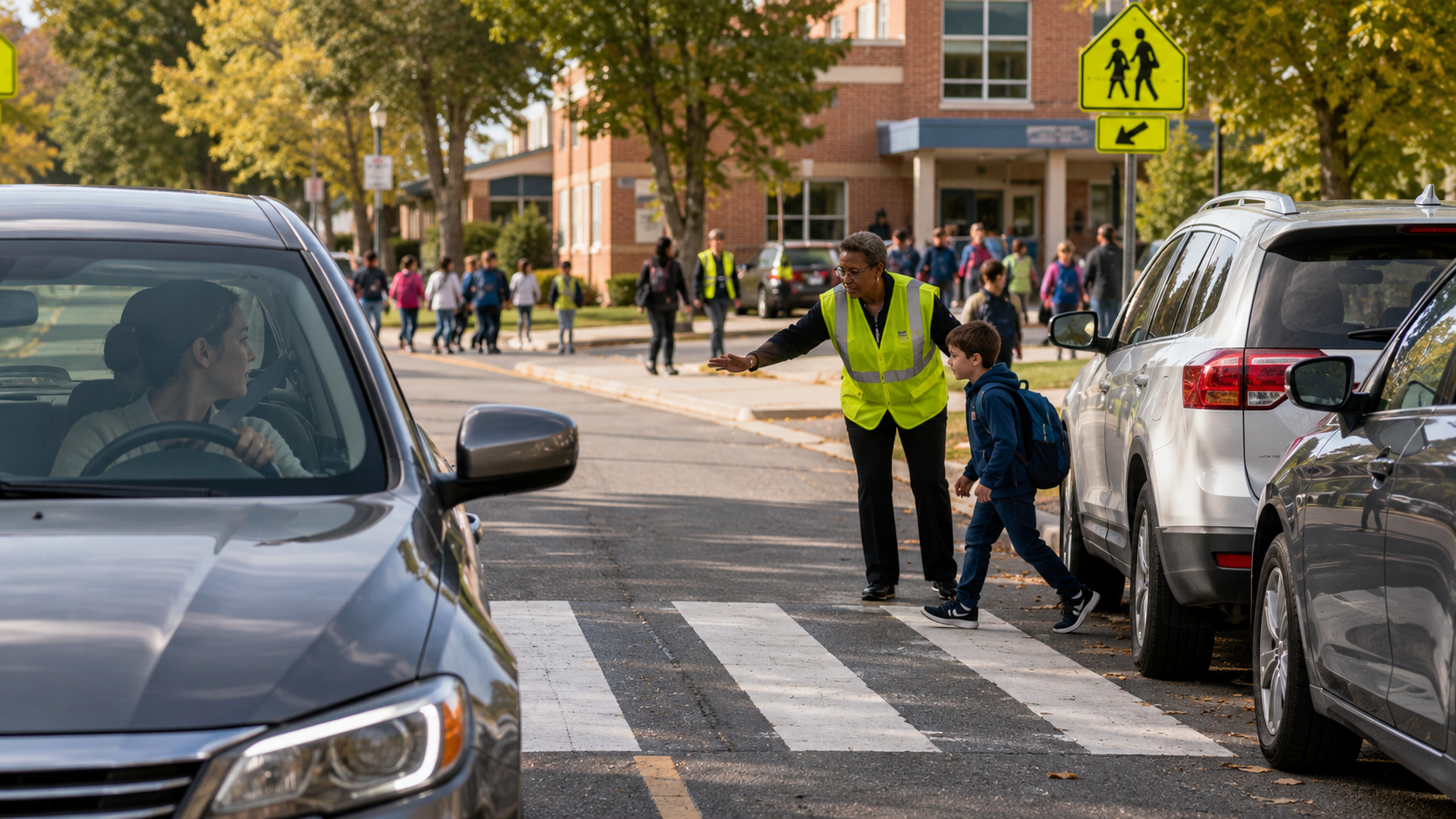
Children can move unpredictably near schools, buses, and crosswalks. Learn simple, practical habits drivers and families can use to reduce sudden dart-out accidents in school zones.

Introduction
School zones are some of the most familiar places in everyday driving. You pass the same streets, the same crosswalks, the same drop-off line, and the same flashing signs. Because the routine feels normal, it is easy to relax a little too much.
But school zones are also places where small surprises happen quickly.
A child may run between parked cars. A backpack may swing into the roadway. A student may chase a dropped water bottle. A parent may wave from across the street, and a child may suddenly move toward them without looking. These moments are not always caused by bad behavior. Children are still learning distance, speed, attention, and traffic awareness.
That is why school zone safety depends on adult habits. Drivers, parents, caregivers, school staff, and even nearby neighbors all play a role in making the area calmer and more predictable.
This does not mean driving through a school zone should feel scary. It simply means we should treat it as a place where extra patience and attention matter. A few simple habits can reduce the chance of sudden dart-out accidents and make school arrival and dismissal safer for everyone.
Why Children Suddenly Run Into the Road
Children do not judge speed like adults
Adults usually understand that a car that looks far away can still arrive quickly. Children may not judge that as well. They may see a car coming but believe they have enough time to cross.
This is especially true for younger children, but older kids can make the same mistake when they are distracted, excited, or rushing.
A child’s decision may not match what a driver expects. That is why drivers need to slow down early and prepare for movement before it happens.
Kids focus on one thing at a time
A child may be thinking about finding a parent, catching up with a friend, getting to the bus, or retrieving something dropped on the ground. When their attention locks onto that goal, they may stop noticing traffic.
For example, a child who sees their caregiver across the street may run toward them before checking both directions. A student who drops a folder may step off the curb to grab it. A child who is late may hurry across a driveway without looking.
These are normal child behaviors, which is exactly why adults need to anticipate them.
School zones are busy and distracting
School areas often combine cars, buses, bicycles, scooters, pedestrians, strollers, crossing guards, delivery vehicles, and parked cars in one small space. Everyone is trying to arrive, leave, or keep moving.
That mix creates distractions. A driver may be watching the crossing guard but miss a child near a parked SUV. A parent may be helping one child with a backpack while another child steps toward the curb. A student may be looking at a phone while walking behind a vehicle.
The more activity in one place, the more important it becomes to slow the whole environment down.
Why This Matters in Everyday Life
School zone safety is not only about the few minutes before and after school. Many school areas are also near playgrounds, sports fields, libraries, churches, parks, daycare centers, and neighborhoods where children walk after hours.
A driver may pass through a school zone while commuting to work. A parent may be rushing to drop off before a meeting. A teen driver may be picking up a younger sibling. A neighbor may be backing out of a driveway during dismissal.
These are ordinary daily moments. That is why prevention needs to be realistic. Most people do not need complicated rules. They need calm routines that work even when mornings are busy.
The goal is simple: make it easier for drivers to see children, easier for children to behave predictably, and easier for everyone to avoid rushed decisions.
Common Places Where Dart-Out Accidents Can Happen
Between parked cars
Parked cars create blind spots. A child standing between two vehicles may be almost invisible to a driver until the child steps out.
This is especially common near drop-off areas, apartment streets near schools, and side streets where parents park during pickup.
Drivers should treat rows of parked cars near schools as a warning sign. If you cannot see between vehicles, assume someone small could appear.
Around school buses
School buses are large, and children may cross in front of them, behind them, or near the sides. Drivers should be especially careful around buses, bus stops, and children gathering nearby.
Even when the bus is not directly loading or unloading, the area around it can be unpredictable. Kids may be excited, talking, waving, or moving in groups.
At crosswalks
Crosswalks are designed to help pedestrians cross, but they still require attention. A child may enter suddenly, especially if they think drivers will automatically stop.
Drivers should slow down before reaching a crosswalk, not only when someone is already in it. Parents and caregivers should remind children to stop, look, and wait for clear signals before crossing.
Near driveways and parking lots
School parking lots can be tricky because vehicles move in many directions. Cars pull in, back out, turn around, and stop unexpectedly. Children may walk between vehicles or cut across lanes to reach a door.
Low-speed areas still require attention. A slow-moving vehicle can still create risk if the driver does not see a child nearby.
Near playgrounds and sports fields
Children leaving a playground or sports practice may be tired, excited, or focused on friends. Balls, toys, and sports equipment can also roll into the street.
If you see a ball roll into the road, expect that a child may follow. Slow down and stay alert.
Warning Signs Drivers Should Watch For
Children gathered near the curb
A group of children near the curb is a sign to slow down. Even if no one is crossing yet, one child may step forward suddenly.
Children in groups can distract each other. They may laugh, push, chase, or move without noticing the road.
Parked cars with doors opening
An opening door near a school may mean a child is getting out. The child may step around the door and into the street.
Watch for movement inside parked vehicles, brake lights, backpacks, and adults leaning into back seats.
Parents waving or calling
If a parent or caregiver calls to a child from across the street, the child may run toward that voice. Drivers should be extra cautious when they see adults waving, calling, or gesturing near pickup areas.
Rolling objects
A ball, lunchbox, water bottle, paper, or toy rolling into the road can be followed by a child. Do not assume the object is harmless just because it is small.
Children looking the wrong way
A child may look toward a friend or parent instead of toward traffic. If a child’s body is angled toward the street, slow down and prepare for movement.
Practical Tips for Drivers in School Zones
Slow down before you reach the busy area
Do not wait until you are right beside the school entrance to slow down. Begin reducing speed early when you see school signs, buses, crosswalks, parked cars, or children nearby.
Slower speed gives you more time to notice details and respond calmly.
Scan side to side, not just straight ahead
Many drivers focus on the lane directly in front of them. In school zones, it helps to scan wider.
Look at sidewalks, parked cars, crosswalks, bus stops, school entrances, and driveways. Watch for movement, not just people already in the road.
Keep extra space from the car ahead
Tailgating in a school zone is stressful and unnecessary. The car in front of you may stop suddenly for a child, crossing guard, bus, or parent.
Leave enough space so you can brake gently instead of reacting at the last second.
Avoid distractions completely
A school zone is not the place to check a message, adjust a playlist, eat breakfast, or search for something in the passenger seat. Even a short glance away can make you miss a child stepping off the curb.
Put the phone away, keep both eyes moving, and treat the area as a high-attention zone.
Be patient with drop-off lines
Drop-off and pickup lines can feel slow and frustrating. But impatience leads to risky choices, such as passing other cars, stopping in the wrong place, or rushing through a crosswalk.
Give yourself a few extra minutes when possible. A calm driver makes the whole area safer.
Make eye contact when you can
If a child or parent is near a crosswalk, eye contact can help confirm that you see each other. Do not rely on it completely, but use it as one more signal.
If you are not sure what a child is about to do, slow down and wait.
Practical Tips for Parents and Caregivers
Teach children to stop at the curb every time
A simple rule works best: stop at the curb, look both ways, and wait before crossing.
Children need repetition. They may know the rule in theory but forget when excited or distracted. Practice it on normal walks, not only when traffic is heavy.
Use the same drop-off spot when possible
Predictability helps. If children know where they will be dropped off and picked up, they are less likely to run across traffic unexpectedly.
Choose a spot that allows children to exit on the sidewalk side when possible. Avoid letting children out in the middle of the street or across from the school if they will be tempted to run over.
Do not call children across the street
It may feel natural to wave or call out, but a child may run toward you without checking traffic. Instead, meet them on the same side of the street or direct them to use a crosswalk with adult guidance.
Keep younger children close
Hold hands with young children near school traffic, parking lots, and crosswalks. Even children who usually listen well can move suddenly when excited.
Talk about “hidden cars”
Teach children that if they cannot see the driver, the driver may not see them. This is especially important around parked cars, buses, SUVs, and delivery trucks.
A helpful phrase is: “Stop where you can see and be seen.”
Common Mistakes That Increase Risk
Assuming school zones are safe because cars are slow
Lower speeds help, but they do not remove risk. Children can still be hard to see, and drivers can still be distracted.
Everyone should treat school zones as active spaces where sudden movement is possible.
Letting kids cross between parked cars
Crossing between parked cars may save a few steps, but it makes children harder to see. Use marked crosswalks whenever possible.
Parking in rushed or unofficial spots
Stopping in a no-parking area, double-parking, or blocking visibility can create confusion for other drivers and pedestrians. Even if it feels convenient, it may make the area less predictable.
Relying only on crossing guards
Crossing guards help organize traffic, but they cannot control every movement nearby. Drivers and pedestrians still need to stay alert.
Allowing phone use while walking
Children and teens looking at phones may not notice traffic, driveways, or crossing signals. Encourage kids to put phones away near roads and parking lots.
A Simple School Zone Safety Routine
For drivers
As you approach a school area, slow down early. Check mirrors, then scan sidewalks, crosswalks, parked cars, and driveways. Cover the brake lightly if children are nearby. Avoid passing, rushing, or changing lanes unnecessarily.
If you see a child near the curb, assume they might step out. If you see a ball or object enter the road, assume a child may follow. If visibility is blocked, slow down even more.
Once you leave the school zone, continue watching for children on nearby side streets.
For families
Before leaving home, remind children of one simple safety rule for the day. At drop-off, let them exit on the safer side when possible. At pickup, meet them in a predictable place. Avoid calling them across traffic.
On walks, practice stopping at curbs and looking both ways. Praise careful behavior so children understand that safe habits matter.
Real-Life Examples
Imagine a driver passing a school during afternoon pickup. Cars are parked along both sides of the street. A child suddenly appears from between two SUVs, trying to reach a parent across the road. A slower speed and wider scanning could give the driver more time to respond.
Or picture a parent double-parked because they are running late. Their child gets out on the traffic side and walks around the car. Other drivers may not expect a child to appear there. A safer drop-off routine would reduce the confusion.
Another common scene happens near a playground. A ball rolls into the street, and a child steps forward without thinking. Drivers who recognize rolling objects as warning signs are better prepared to slow down.
These examples are not unusual. They are the kinds of everyday moments that school zone habits are meant to prevent.
When to Be Extra Careful
Be especially alert during morning arrival, afternoon dismissal, after-school activities, sports practices, bad weather, and low-light conditions.
Rain, snow, fog, and glare can make children harder to see. Hoods, umbrellas, and backpacks can also block a child’s view. During winter, children may move more slowly or slip near curbs. During warm weather, more children may walk, bike, or play outside after school.
Also be careful during the first weeks of a school year. Families are still learning routines, traffic patterns may be different, and younger students may be adjusting to walking near school traffic.
How Schools and Neighborhoods Can Help
While individual habits matter, the environment matters too. Schools and neighborhoods can support safer behavior with clear signage, visible crosswalks, organized drop-off areas, and good communication with families.
Parents can help by following school traffic instructions, even when the line feels slow. Neighbors can keep sidewalks clear and avoid blocking visibility near corners. Drivers can respect crossing areas and avoid using school streets as shortcuts during busy times.
Small community habits add up. A calmer school zone is easier for everyone to understand.
Conclusion
Sudden dart-out accidents in school zones are often caused by ordinary moments: a child rushing to a parent, a ball rolling into the street, a parked car blocking the view, or a driver looking away for just a second.
The best prevention is not fear. It is preparation, patience, and predictable habits.
Drivers can slow down early, scan widely, avoid distractions, and expect children to move unexpectedly. Parents and caregivers can teach children to stop at curbs, use crosswalks, avoid running across the street, and stay visible. Schools and neighborhoods can support safer routines by keeping traffic patterns clear and calm.
School zones are shared spaces. When adults create a slower, more predictable environment, children have more room to make safe choices as they learn.
A few extra seconds of patience can make the school day safer for everyone.

Hi, I’m the creator and editor behind ZestyHabit. I research everyday safety, first aid, and practical wellness topics using official guidance and reliable public sources, then turn that information into clear, realistic steps for daily life.
My goal is to help readers make safer, better-informed choices at home and beyond.


