Is It Dangerous to Leave Your Phone Charger on the Bed?
Minjin Park
·
Leaving a phone charger on a bed, blanket, or pillow may seem harmless, but soft surfaces can trap heat and increase safety risks. Here’s what to know and how to charge your phone more safely at home.
The Everyday Charging Habit Most People Don’t Think About
Most of us charge our phones wherever it feels convenient.
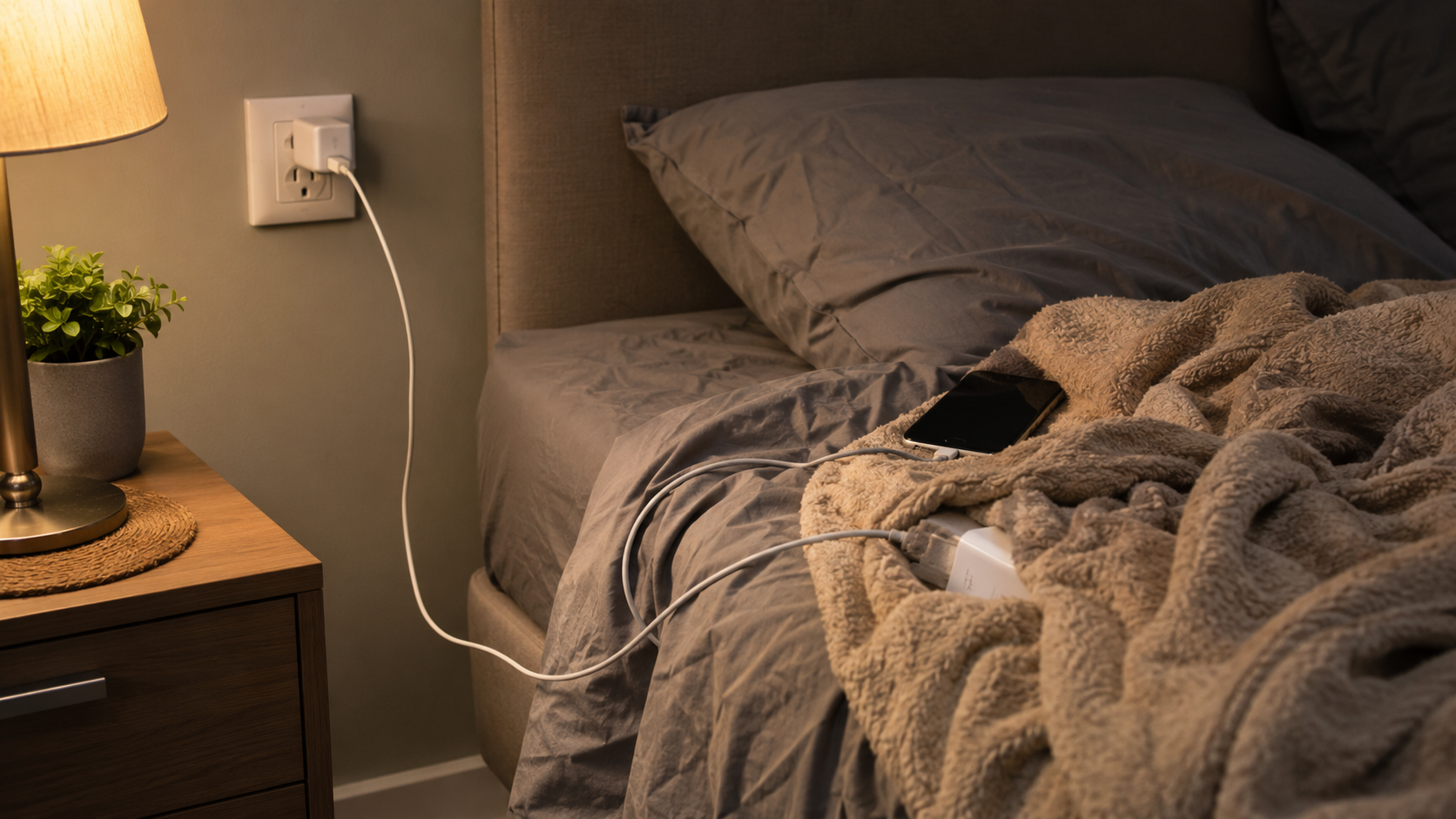
On the nightstand. On the couch. Under a blanket while watching TV. Beside the pillow before falling asleep. Sometimes the phone is plugged in, the charger is warm, and the cable is half-buried in bedding without anyone giving it much thought.
After all, phone chargers are small. They are used every day. They do not look dangerous.
But the question is fair: is it dangerous to leave a phone charger on a bed or blanket?
The honest answer is: it can be.
A phone charger sitting on a bed does not automatically mean something bad will happen. Most normal phone charging is uneventful. But soft surfaces like blankets, pillows, comforters, and mattresses can trap heat around the charger, phone, cable, and battery. That can make a minor heat issue worse, especially if the charger is damaged, low-quality, covered, overloaded, or left unattended for long periods.
This is one of those household safety topics where the goal is not panic. It is simply building a better habit.
Charging your phone on a hard, flat, open surface is a small change, but it can reduce unnecessary risk in a very practical way.
Why Phone Chargers Get Warm in the First Place
A Little Warmth Can Be Normal
When a phone charger is plugged in and actively charging a device, it may feel slightly warm. That does not always mean something is wrong.
Chargers convert electricity from the wall into the type of power your phone battery can use. During that process, some energy becomes heat. Fast chargers may feel warmer than older, slower chargers because they move more power in a shorter time.
Your phone can also get warm while charging, especially if you are using it at the same time.
For example, your phone may heat up more if you are:
Streaming video
Playing games
Using GPS navigation
Video calling
Downloading large files
Charging with a thick case on
Charging in a warm room
Mild warmth is common. The concern starts when heat cannot escape.
Soft Bedding Traps Heat
A bed is comfortable for people, but it is not a great place for electronics.
Blankets, comforters, pillows, sheets, and mattresses are soft and insulating. That means they can hold heat in instead of letting it spread out.
When a charger or phone rests on a hard surface, air can circulate more easily. Heat can move away from the device. But when the same charger is lying on a blanket, tucked under a pillow, or pressed into bedding, the heat may stay trapped around it.
That is when something ordinary can become less safe.
A charger that would only feel slightly warm on a desk may become noticeably hotter when covered by a blanket.
The Main Risk: Heat Buildup
Heat Is the Part You Should Pay Attention To
The biggest concern with leaving a charger on a bed is not that the charger is sitting there by itself. The concern is heat buildup.
Heat can come from several places:
The wall adapter
The charging cable
The phone battery
The phone case
A loose or damaged plug
A poor-quality charger
A blocked charging area
When heat has nowhere to go, temperatures can rise. In some cases, that can damage the charger, cable, or phone. In more serious situations, it can increase the risk of melting, smoke, or fire.
Again, this does not mean every charger on a bed is an emergency. But it does mean the habit is not ideal.
If you charge your phone every night in bed, under blankets, or next to your pillow, you are adding a risk that is easy to avoid.
Why the Bed Is a Bad Charging Spot
Bedding Can Cover the Charger Without You Noticing
One reason beds are risky is that things move around.
You plug in your phone and place it beside you. Then you pull up the blanket. You roll over. A pillow shifts. A corner of the comforter lands on the charger. The cable slips between the sheets.
By the time you fall asleep, the phone or adapter may be partially covered.
You may not notice until morning.
That is different from charging on a desk or nightstand, where the charger and phone are more likely to stay visible and uncovered.
Beds Are Filled With Flammable Materials
Bedding is usually made of fabric, foam, cotton, polyester, or other soft materials. These are not things you want directly around overheating electronics.
A properly working charger should not ignite bedding. But if something is wrong — a damaged cable, counterfeit charger, overheating battery, or loose connection — the bed is one of the worst places for that problem to happen.
A small electrical problem on a tile floor or desk is still bad. A small electrical problem buried in a blanket is worse.
You May Be Asleep When Something Goes Wrong
Many people charge their phones overnight. That is convenient, but it also means you are not awake to notice early warning signs.
You may miss:
A burning smell
A charger getting unusually hot
A cable sparking
A phone battery swelling
A buzzing sound
Smoke from a damaged adapter
If your phone is charging on bedding while you sleep, you are less likely to catch a problem early.
That is why safer overnight charging habits matter.
Common Mistakes People Make With Phone Chargers
Sleeping With the Phone Under a Pillow
This is one of the biggest habits to avoid.
Some people keep their phone under a pillow so they can hear the alarm, hide the screen light, or keep it close while sleeping. But under a pillow, heat has very little room to escape.
If the phone is charging at the same time, the risk increases.
A phone under a pillow can get warmer than expected, especially with a thick case or fast charger. It can also bend the cable sharply, putting stress on the connector.
A better option is to place the phone on a nightstand or small tray beside the bed.
Leaving the Charger Brick on the Blanket
Many people focus only on the phone and forget about the wall adapter.
The charger brick can also get warm. If it is resting directly on a blanket, trapped between bedding, or covered by clothing, it may not cool properly.
Try to keep the charger adapter plugged into the wall and resting in open air, not lying inside the bed.
Using Damaged Charging Cables
A frayed cable is not just ugly. It can be unsafe.
If the outer covering is cracked, wires are exposed, the cable only works at a certain angle, or the connector feels loose, replace it.
Damaged cables can create poor electrical contact, heat, and sparks. When that happens near bedding, the risk is higher.
Buying Very Cheap Unknown Chargers
A charger does not need to be expensive, but it should be from a reputable brand and appropriate for your phone.
Very cheap, poorly made, or counterfeit chargers may lack reliable safety protections. They may overheat more easily or fail in unsafe ways.
Using a low-quality charger on a bed or couch is a bad combination: more heat risk, less ventilation, and more flammable material nearby.
Charging While Using Heavy Apps
Using your phone while charging is common. But heavy use can increase heat.
Watching a movie, gaming, or video chatting in bed while the phone is plugged in can warm both the phone and charger. Add a thick blanket or pillow underneath, and the heat can build faster.
If your phone already feels hot, unplug it and let it cool on a hard surface.
Warning Signs You Should Not Ignore
You do not need to be an electronics expert to spot basic warning signs.
Unplug the charger and stop using it if you notice:
The charger feels very hot
The phone feels unusually hot
The cable smells burnt
The charger makes buzzing or crackling sounds
The cable is frayed or cracked
The plug feels loose in the outlet
The phone battery looks swollen
The charger has discoloration or melted spots
Charging starts and stops repeatedly
You see sparks when plugging it in
A charger should not smell burnt. It should not be too hot to touch. It should not make strange sounds. And the cable should not look damaged.
When in doubt, replace the charger or cable. It is usually not worth taking a chance with a questionable charging accessory.
Is Overnight Charging Bad?
Overnight Charging Is Common, But Location Matters
Many modern phones have battery management features that help control charging. So the issue is not simply “overnight charging is always bad.”
The bigger issue is where and how you charge overnight.
Charging overnight on a clear nightstand with a good-quality charger is very different from charging overnight under a pillow, tangled in blankets, or on a soft mattress.
If overnight charging is part of your routine, focus on making the setup safer.
Use a hard surface. Keep the charger uncovered. Avoid damaged cables. Do not place the phone under bedding. Keep it away from anything that traps heat.
Give the Phone Breathing Room
Phones and chargers do not need a fan blowing on them, but they do need basic airflow.
A good charging spot is:
Flat
Hard
Dry
Uncovered
Away from pillows and blankets
Away from liquids
Easy to see and reach
A nightstand, desk, dresser, shelf, or small bedside tray is better than the bed itself.
What About Wireless Chargers?
Wireless chargers can also create heat.
In fact, wireless charging may feel warmer than cable charging in some situations because energy is transferred through coils. If the phone is not aligned properly, or if there is a thick case, metal object, card, or magnet in the way, extra heat can build up.
Wireless chargers should also be used on a hard, flat surface.
Avoid placing a wireless charging pad on a bed or blanket. The pad and phone both need ventilation. A wireless charger covered by bedding can become warmer than expected.
Also, do not place coins, keys, metal cards, or magnetic accessories between the phone and charger. That can create heating issues.
What About Charging on the Couch?
A couch is not much better than a bed.
Couch cushions, throws, and pillows can also trap heat. The charger or phone can slip between cushions where you may not see it. Cables can get bent, crushed, or pulled.
If you charge your phone while relaxing on the couch, try placing it on a side table instead of directly on the cushions.
Also, be careful with recliners. A cable caught in the moving parts of a recliner can become damaged quickly.
How to Charge Your Phone More Safely
Use a Hard Surface
The simplest improvement is to charge your phone on a hard, open surface.
Good options include:
Nightstand
Desk
Dresser
Kitchen counter
Side table
Charging station
Shelf
Avoid soft surfaces like:
Beds
Pillows
Blankets
Couch cushions
Rugs
Piles of clothes
Towels
This one habit solves many heat-related concerns.
Keep Chargers Uncovered
Do not place chargers under blankets, clothes, pillows, papers, or bags.
If a charger is plugged in behind furniture, make sure it is not pressed tightly against fabric or trapped where heat cannot escape.
A charger should have space around it.
Use the Right Charger
Use chargers and cables that match your device’s needs. Choose reputable brands and avoid suspiciously cheap accessories with poor build quality.
If your phone supports fast charging, use a charger designed for it. If you are not sure, stick with the charger recommended by the phone manufacturer or a trusted certified alternative.
Replace Damaged Cables Early
A cable that is fraying, cracking, bending sharply, or exposing wires should be replaced.
Do not wrap damaged areas with tape and keep using the cable as if nothing happened. Tape may hide the damage, but it does not truly fix the electrical problem.
Remove Thick Cases If the Phone Gets Hot
Some phone cases trap heat more than others.
If your phone often gets hot while charging, try removing the case during charging. This can help heat escape more easily.
This is especially useful if you use a thick protective case, wallet case, or magnetic case.
Avoid Charging in Direct Sunlight
Heat from the environment matters too.
Do not charge your phone on a windowsill in direct sun, inside a hot car, or near a heater. Starting with a hot environment makes it harder for the phone and charger to stay cool.
Do Not Charge Near Liquids
This is a different safety issue, but still important.
Avoid charging near cups, sinks, bathtubs, wet counters, or damp towels. Water and charging equipment do not belong together.
In bedrooms, this often means keeping your water bottle away from the charging area.
A Simple Bedtime Charging Routine
If you charge your phone overnight, try this simple routine:
First, plug the charger directly into a wall outlet or a safe, properly used power strip.
Second, place the phone on a nightstand or hard tray.
Third, make sure the phone, cable, and charger are not covered by blankets, pillows, or clothing.
Fourth, check that the cable is not sharply bent or stretched.
Fifth, keep the phone away from the edge of the bed so it does not fall and pull the cable.
This takes less than a minute, but it makes your setup much safer.
What Parents Should Teach Kids and Teens
Children and teenagers often charge devices in bed. Phones, tablets, headphones, smartwatches, and handheld gaming devices may all end up tangled in blankets.
A good family rule is simple:
Devices charge on a table, not under a pillow.
This is easier to follow if each person has a clear charging spot. A small bedside tray, desk corner, or family charging station can help.
Parents do not need to scare kids about chargers. Just explain that electronics can get warm and need space to cool down.
When to Stop Using a Charger Immediately
Stop using a charger right away if it:
Gets too hot to touch
Has a burning smell
Has melted plastic
Sparks repeatedly
Makes crackling sounds
Has exposed wires
Charges only when bent at an angle
Causes the phone to overheat often
Looks swollen, cracked, or damaged
Unplug it carefully if it is safe to do so. Replace it with a reliable charger.
Do not keep a questionable charger around “just in case.” It is too easy for someone else in the house to use it later without knowing.
The Main Idea: Let Heat Escape
The main reason not to leave a phone charger on a bed is simple: soft bedding traps heat.
A charger or phone that might stay reasonably cool on a desk can become hotter when surrounded by blankets, pillows, or fabric. Add a damaged cable, cheap adapter, thick case, or overnight charging, and the risk becomes more meaningful.
You do not have to stop charging your phone at night. You just need to give it a safer place to charge.
Final Thoughts
Leaving a phone charger on the bed may seem harmless, but it is not the best habit. Beds, blankets, and pillows can trap heat around chargers and phones, especially during overnight charging or heavy phone use.
The safer choice is easy: charge your phone on a hard, flat, open surface. Keep chargers uncovered, replace damaged cables, avoid cheap unknown adapters, and pay attention to warning signs like unusual heat, burning smells, buzzing, or melted plastic.
Everyday safety does not always require big changes. Sometimes it is as simple as moving your phone from the blanket to the nightstand before you fall asleep.
Hi, I’m the creator and editor behind ZestyHabit. I research everyday safety, first aid, and practical wellness topics using official guidance and reliable public sources, then turn that information into clear, realistic steps for daily life.
My goal is to help readers make safer, better-informed choices at home and beyond.