Why Going Without Water Gets Hard Fast — and How to Prepare Emergency Drinking Water Without Overcomplicating It
Minjin Park
·
Water is easy to take for granted until the tap stops working. Here’s why even a short water outage can become stressful, and how to build a practical emergency water supply at home.
It comes out of the faucet. It fills the coffee maker. It rinses rice, washes hands, cleans a scraped knee, helps swallow medicine, and keeps the dog’s bowl from looking sad in the corner.
Then one day, the water stops.
Maybe there is a boil water advisory after a storm. Maybe a pipe bursts nearby. Maybe the power goes out and your well pump stops working. Maybe wildfire, flooding, freezing weather, or a plain old city water main break turns your normal kitchen into a place where the tap makes weird noises and gives you nothing useful.
You can improvise a meal. You can wear yesterday’s hoodie. You can skip laundry.
But water is different.
Going without safe water gets hard quickly because it touches almost every ordinary part of the day. Drinking is the obvious one, but it is not the only one. You need water for basic hygiene, cooking, pets, baby formula, cleaning bottles, taking medication, flushing in some situations, and cooling down when the weather is hot.
That is why emergency water prep is not just for people with underground bunkers and very intense flashlights.
It is regular household maintenance.
Boring? A little.
Useful? Very.
Why the Body Does Not Handle Water Shortages Well
The human body can tolerate a lot of inconvenience. It cannot tolerate dehydration for very long.
Water helps regulate temperature, move nutrients, support digestion, cushion joints, and keep blood volume where it needs to be. When you do not get enough, the effects can show up in small ways first: headache, dry mouth, dizziness, fatigue, dark urine, constipation, or feeling oddly cranky for no clear reason.
And honestly, dehydration crankiness is real. Nobody becomes their best self while thirsty, overheated, and trying to find a working store.
The risk gets higher for babies, older adults, pregnant people, people with certain medical conditions, and anyone who is sick with vomiting, diarrhea, or fever. Hot weather also changes the math. So does physical work, like cleaning up after a storm or carrying supplies upstairs.
The Centers for Disease Control and Prevention recommends storing at least 1 gallon of water per person per day for 3 days for drinking and sanitation. That is a starting point, not a magic amount that works perfectly for every family in every situation. People may need more in hot climates, during illness, or for medical needs.
One gallon sounds like a lot until you actually use it.
A few cups for drinking. Some for cooking. Some for brushing teeth. Some for washing hands. Maybe a little for the cat. Suddenly that gallon does not look so generous.
The First Day Without Water Feels Manageable — Until It Doesn’t
At first, a water outage may not feel urgent.
You think, “It’ll probably be back soon.”
Then you try to make coffee and remember coffee needs water. You reach for pasta and remember boiling water is involved. You touch raw chicken and realize handwashing is not optional. Someone asks where the clean water bottle went. The dog starts staring at the empty bowl like you personally betrayed him.
By evening, the small inconveniences stack up.
This is why emergency water preparation matters most before you are stressed.
When stores are crowded, shelves are empty, and everyone is suddenly trying to buy the same cases of bottled water, even a simple task becomes annoying. Preparing water in advance is not about expecting disaster every day. It is about removing one major problem from a bad day.
A few stored containers at home can turn “we have no water” from a household crisis into “okay, this is inconvenient, but we can handle tonight.”
That difference matters.
How Much Emergency Water Should You Store?
The basic rule is simple: at least 1 gallon per person per day for 3 days.
So if you live alone, that means at least 3 gallons. For two people, 6 gallons. For a family of four, 12 gallons. Add pets. Add extra if you live somewhere hot, have medical needs, are mixing baby formula, or want a more comfortable buffer.
Many emergency preparedness guides use three days as the minimum because it is easier for people to start there. But if you have space and budget, building toward a longer supply can be helpful.
Do not let the “perfect” amount stop you from storing anything.
Three gallons tucked in a closet is better than a beautifully planned emergency setup that exists only in your imagination. Start small. Add a gallon or two during normal grocery trips. Put the date on containers. Store them somewhere you will remember.
Emergency prep works better when it feels like a normal errand, not a dramatic life overhaul.
Bottled Water Is the Easiest Place to Start
Commercially bottled water is the simplest option for most households.
It is sealed, convenient, and easy to hand to someone during an outage. It also does not require you to clean and sanitize containers yourself. The CDC recommends unopened commercially bottled water as the safest and most reliable emergency water supply.
Store it in a cool, dark place if you can. Keep it away from gasoline, paint, pesticides, cleaning chemicals, and anything with strong fumes. Plastic can pick up odors, and you do not want your emergency drinking water living next to lawn chemicals like they are roommates.
Avoid storing water in direct sunlight or in a hot garage if you have a better option. Heat is not kind to plastic over time.
If space is tight, spread it out. A few bottles under the bed, a small case in a closet, a gallon in the pantry, another in the car only if your climate allows safe storage. Apartment living makes emergency storage less glamorous, but it is still possible.
What About Filling Your Own Containers?
Filling your own containers can work, but the container matters.
Use food-grade water storage containers when possible. They are made for this job and are usually easier to clean and seal properly. Do not use containers that previously held milk or fruit juice, even if you wash them. Sugars and proteins can cling to the plastic and encourage bacterial growth.
Also, never store drinking water in containers that held chemicals. That should sound obvious, but emergencies make people creative in ways that are not always wise.
If you are storing tap water in clean containers, label them with the date. Keep them sealed. Store them somewhere cool and dark. The CDC recommends replacing stored non-commercial water every 6 months.
If you use a large container with a spigot or wide opening, be careful when taking water out. Use a clean scoop every time if a scoop is needed. Dirty hands and dirty cups can contaminate clean water surprisingly fast.
Safe water can become unsafe after storage if you handle it carelessly.
Emergency Water Is Not Just for Drinking
When people calculate water needs, they often imagine only drinking.
But during a water outage, you quickly realize drinking is just one category.
You may need water to wash hands after using the bathroom. You may need it to clean a baby bottle, rinse a wound, take medication, prepare instant oatmeal, wipe down a counter, or brush your teeth. If someone in the house uses medical equipment that needs cleaning, water becomes even more important.
Pets need water too. Dogs and cats do not care that the city posted an update saying service may return “soon.” They need their bowls filled.
If you have a baby, emergency water planning should be more careful. Formula preparation requires safe water, clean bottles, and clean hands. That is not something you want to figure out during an outage with a crying baby and a phone battery at 12%.
Think through your actual household.
Do you have pets? Do you take daily medication? Do you use powdered formula? Does anyone have kidney disease, diabetes, swallowing problems, or a condition where hydration matters more? Does your home rely on electricity to pump water?
Your water plan should fit the life you really live, not a generic checklist from a fridge magnet.
What to Do During a Boil Water Advisory
A boil water advisory can be confusing because the water may still come out of the tap. It looks normal. It may even smell normal. But it may not be safe to drink without treatment.
If officials tell you to boil water, follow local instructions. In general, the CDC says that if safe bottled water is not available, boiling is a common way to make water safer from germs. Bring water to a rolling boil and follow the recommended boiling time for your situation and altitude.
Use boiled or bottled water for drinking, brushing teeth, preparing food, making ice, washing dishes by hand, and giving water to pets, unless your local advisory says otherwise.
The awkward part is remembering all the little places water sneaks into your day.
Ice cubes. Coffee makers. Water filters. Rinsing fruit. Filling a humidifier. Making a sports drink. Brushing a toddler’s teeth.
A boil water advisory is not just about drinking a glass of tap water. It changes the whole kitchen routine.
When Boiling Is Not Enough
Boiling is useful for germs. It does not fix every water problem.
The CDC warns that water contaminated with fuel, toxic chemicals, or radioactive material cannot be made safe by boiling or disinfecting.
This is important after floods, industrial accidents, chemical spills, or situations where officials specifically warn against using tap water. Boiling contaminated water can sometimes make chemical concentration worse as water evaporates.
That is one of those facts people do not want to learn during the emergency itself.
If authorities say “do not use” the water, take that seriously. Use bottled water or another approved source. Follow local emergency guidance because the exact risk depends on what entered the water system.
A filter pitcher is not a magic shield either. Many household filters improve taste or reduce certain contaminants, but they are not all designed for emergency contamination. Read the filter label before assuming it solves the problem.
Disinfecting Water When You Cannot Boil It
If you cannot boil water, disinfecting may be an option in some situations. This is usually for water that may contain germs, not water contaminated by chemicals or fuel.
The CDC and EPA both provide emergency water disinfection guidance, including the use of unscented household liquid chlorine bleach when boiling is not possible. The exact amount depends on the bleach concentration and the condition of the water, so it is important to follow current label directions or official guidance rather than guessing.
This is not the time to use scented bleach, splashless bleach, color-safe bleach, or cleaning products with extra additives. Those are not meant for drinking water disinfection.
Water purification tablets can also be useful in an emergency kit, especially for evacuation bags or camping-style backup plans. Check expiration dates and instructions. Some tablets need a certain contact time before the water is safe to drink.
The big point is simple: have instructions before you need them.
Print them. Screenshot them. Keep them with your supplies. During a power outage, your internet may not cooperate just because you suddenly became interested in water treatment chemistry.
Do Not Forget Water for Hygiene
A few gallons of drinking water help, but hygiene can get messy during an outage.
Hand sanitizer is useful, but it does not replace all handwashing. Wet wipes can help with quick cleanup. Paper plates can reduce dishwashing. Trash bags, disposable gloves, and a basic cleaning plan can make things less unpleasant.
If you know a storm is coming, fill clean containers, pots, or a bathtub with water for flushing or washing. Do not treat bathtub water as drinking water unless you have stored it in a clean, food-safe way and can make it safe. But for flushing toilets or basic cleaning, non-drinking water can be useful.
This is where people who have lived through outages get very practical very fast.
Drinking water is precious. Do not waste it flushing if you have other water available for that job.
Separate your supplies mentally: drinking and cooking water on one side, utility water on the other.
Label things if there is any chance of confusion.
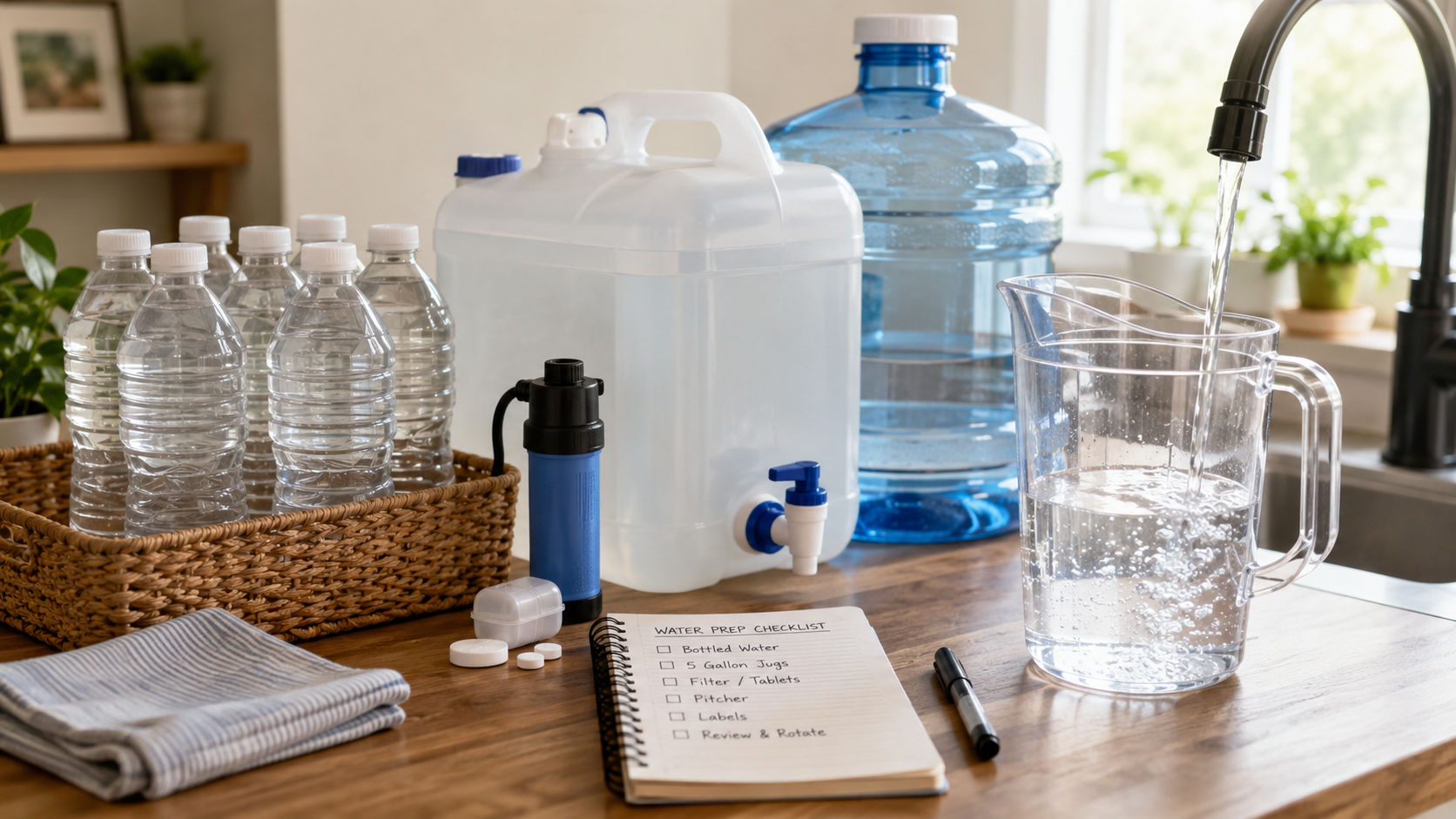
Build a Small Water Kit Around the Water
Water itself is the main thing, but a few small items make it easier to use safely.
Keep a manual can opener if your emergency food includes cans. Store disposable cups or clean reusable bottles. Have a flashlight near the water storage area. Keep hand sanitizer, wipes, and paper towels nearby.
A small bottle of plain, unscented household bleach may be useful for disinfection, but only if you know how to use it safely and it is not expired. Bleach loses strength over time, and not all bleach products are appropriate for water treatment.
Water purification tablets are small and easy to store. A camping filter may help in some situations, though filters vary widely in what they remove. Do not buy a filter and assume it handles every emergency.
The best emergency supplies are the ones you understand before the lights go out.
Rotate Without Making It a Whole Project
Emergency water only helps if it is still there and still usable.
Pick a simple rotation habit. Check it twice a year, maybe when clocks change or when you test smoke alarms. Look for leaks, broken seals, strange smells, or damaged containers. Replace stored tap water every 6 months if you filled it yourself. For commercially bottled water, follow the manufacturer’s date and storage guidance.
Do not hide water so well that you forget it exists.
I say this with respect for every “very organized” closet that has somehow swallowed a flashlight, three batteries, and a packet of crackers from 2019.
Put supplies somewhere boring and accessible.
A pantry floor. A closet shelf. Under a bed. A labeled bin.
The less dramatic the system, the more likely you are to maintain it.
A Practical Starter Plan
Start with a three-day supply.
Count people and pets. Multiply by at least 1 gallon per person per day. Add pet water. Add extra if your climate is hot or your household has medical needs.
Buy commercially bottled water or fill proper food-grade containers. Store them away from heat, sunlight, and chemicals. Put a reminder on your calendar to check them.
Print or save emergency water instructions from reliable sources like the CDC, EPA, or your local health department. Keep them with your supplies.
Add a few support items: hand sanitizer, wipes, disposable cups, purification tablets if appropriate, and a clean way to pour or dispense water.
That is enough to begin.
You can improve the system later. Longer supply, better containers, more organized storage, backup purification. But the first step is simply having water before you need water.
Calm Preparation Beats Panic Buying
Emergency water prep is not about being scared every time it rains.
It is about admitting that normal systems sometimes stop working. Pipes break. Storms happen. Power fails. Cities issue advisories. Stores run out.
Having water stored at home gives you breathing room.
You do not have to rush to the store with everyone else. You do not have to wonder whether the last case of bottled water is worth arguing over in aisle seven. You do not have to drink questionable tap water because you did not have a backup.
Water is basic, which is exactly why it is easy to overlook.
Set aside a small supply. Check it now and then. Make sure everyone in the household knows where it is.
Then let it sit quietly in the background, doing what good preparation does best: making a hard day a little less hard.
Hi, I’m the creator and editor behind ZestyHabit. I research everyday safety, first aid, and practical wellness topics using official guidance and reliable public sources, then turn that information into clear, realistic steps for daily life.
My goal is to help readers make safer, better-informed choices at home and beyond.