
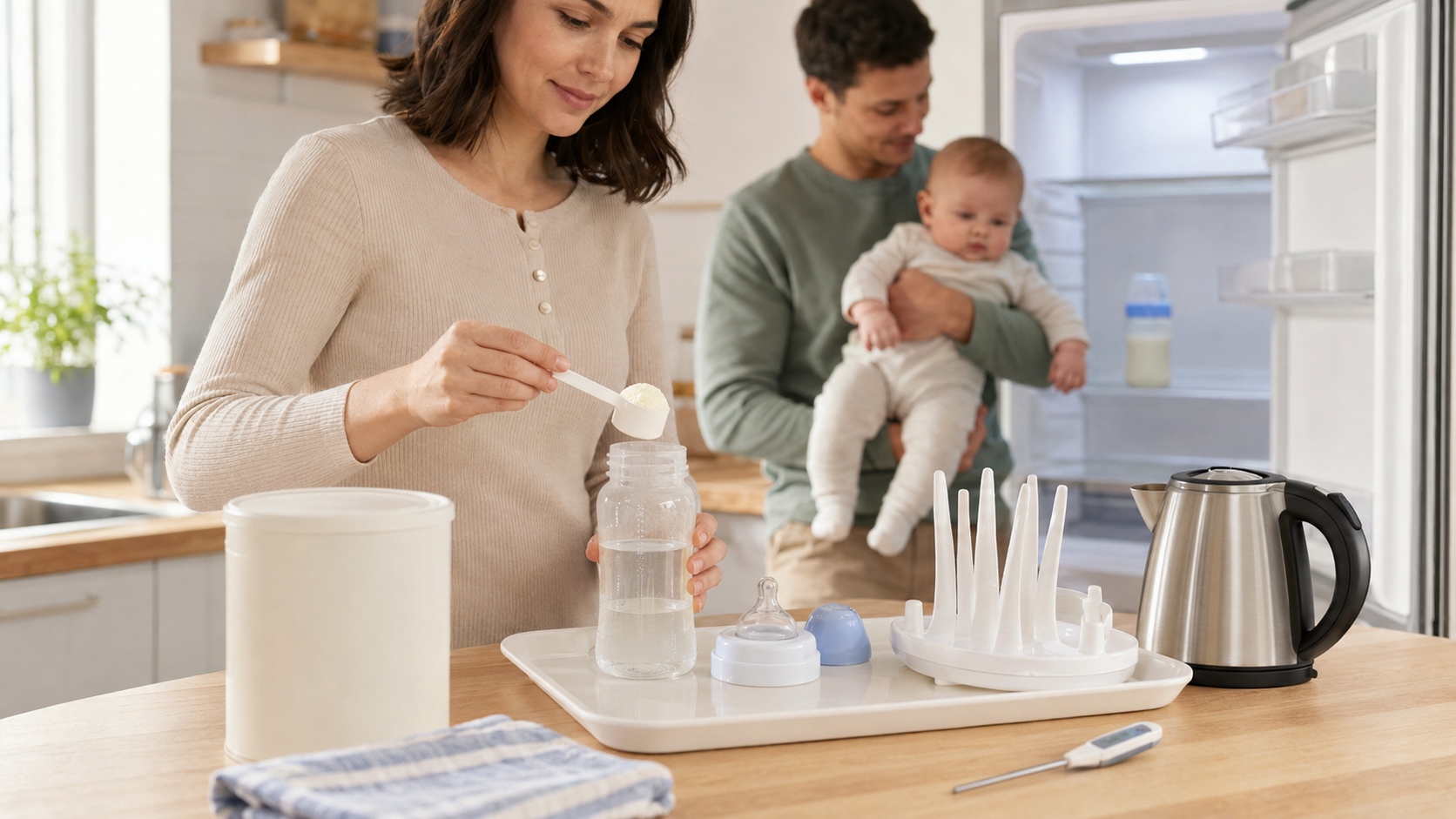

Learn how to prepare, store, refrigerate, warm, and discard baby formula safely, including special precautions for newborns and premature babies.
Preparing a bottle of infant formula may feel like a simple routine, especially after you have done it several times a day for weeks. However, small details—such as adding powder before water, saving an unfinished bottle, or placing a wet scoop back in the container—can affect a baby’s nutrition and expose the formula to harmful bacteria.
Infants have developing immune systems, so food-handling practices that might create only a minor risk for an adult can be much more serious for a baby. Extra care is particularly important for infants younger than two months, babies born prematurely, and those with weakened immune systems.
Safe formula feeding begins with the manufacturer’s instructions. Different products have different scoop sizes, mixing ratios, and storage directions. Never assume that the directions from one brand or product apply to another.
The following guide explains how to prepare and store powdered formula, liquid concentrate, and ready-to-feed formula as safely as possible.
Understand the Three Types of Infant Formula
Infant formula is generally sold in three forms.
Powdered Infant Formula
Powdered formula must be measured and mixed with water. It is often convenient and economical, but the powder is not sterile. It may contain small amounts of bacteria before the container is opened, or germs may enter from hands, scoops, counters, sinks, bottles, or water during preparation.
The CDC warns that powdered infant formula can contain germs such as Cronobacter. Although infections are rare, they can be severe or life-threatening in young infants. CDC
Liquid Concentrate
Liquid concentrate is sterile before opening but must be diluted with the exact amount of safe water stated on the label. Do not serve concentrate without adding the required water.
The FDA describes liquid concentrate as typically being mixed with an equal amount of water, but caregivers should always follow the specific product instructions. FDA
Ready-to-Feed Formula
Ready-to-feed formula requires no water or mixing. It is sterile before opening and is generally the safest formula option for babies at higher risk of serious infection.
Never dilute ready-to-feed formula. Adding water changes its nutritional concentration and may introduce contamination.
Check the Formula Before Using It
Before opening a container, inspect it carefully. Do not use formula if the package is leaking, swollen, badly dented, rusted, punctured, or missing its label or lot code.
Check the “Use By” date. This is not merely a suggestion about taste. It is the date through which the manufacturer guarantees the product’s nutrient content and quality. Do not feed expired formula to a baby.
The powder or liquid should look and smell normal for that product. If you notice an unusual odor, discoloration, clumping caused by moisture, broken packaging, or another unexpected change, stop using it and contact the manufacturer.
Check current FDA or CPSC recall information when you hear about a possible formula problem. Compare the product name, lot number, package size, and expiration date rather than discarding every product from the same brand.
Wash Your Hands and Prepare a Clean Workspace
Wash your hands with soap and water for at least 20 seconds before preparing formula, touching bottle parts, or feeding the baby. Wash again after using the bathroom, changing a diaper, handling raw food, or touching a pet.
Clean the preparation surface before placing bottles or formula containers on it. Counters, sinks, dishcloths, phones, and appliance buttons can all carry germs.
Avoid placing bottle parts directly in the kitchen sink. Sink surfaces and drains may contain bacteria. When washing by hand, use a clean basin reserved for infant feeding equipment.
Keep the formula container dry. Water entering a container of powder can allow bacteria to grow. Do not submerge the container or rinse its interior.
Clean and Sanitize Bottles Properly
Take bottles apart completely before cleaning. Separate the nipple, cap, collar, valve, vent, and any other removable components so milk residue cannot remain trapped between them.
Before first use, follow the manufacturer’s sterilization instructions. The FDA recommends boiling bottles, nipples, caps, rings, and valves for five minutes before their first use when the items can safely be boiled. FDA
After each feeding, wash the parts in a dishwasher using hot water and a heated drying or sanitizing cycle when the manufacturer permits it. If washing by hand:
- Use a dedicated clean basin.
- Wash each part with hot, soapy water.
- Use a clean brush reserved for infant feeding items.
- Rinse thoroughly.
- Allow everything to air-dry completely.
Do not dry bottle parts with a used kitchen towel, which may transfer germs. Place them on a clean drying rack or unused paper towel.
Daily sanitizing is particularly important for babies younger than two months, babies born prematurely, and babies with weakened immune systems. Ask the child’s healthcare provider whether additional precautions are appropriate.
Use Water From a Safe Source
Use safe drinking water to mix powdered formula or liquid concentrate. In many areas, safe tap water can be used according to the formula label. If you have concerns about public water, a private well, plumbing, lead, or a local boil-water advisory, contact the local health department or the baby’s healthcare provider.
Ordinary bottled water is not necessarily sterile. The FDA notes that bottled water is germ-free only when the label specifically says it is sterile. Handle regular bottled water as you would safe tap water.
Do not use water contaminated with chemicals, fuel, toxins, or heavy metals. Boiling can kill many microorganisms, but it cannot remove many chemical contaminants and may concentrate some of them.
During floods, hurricanes, water-main breaks, or other emergencies, follow local public-health instructions. Ready-to-feed formula can be especially useful when safe water or adequate cleaning facilities are unavailable.
Measure the Water First
When preparing powdered formula, pour the exact amount of water into the clean bottle first. Then add the exact number of level scoops directed on the label.
Always use the scoop supplied with that particular formula. Scoops from different brands or product lines may hold different amounts.
Adding powder before water can make the final mixture too concentrated because the powder displaces some of the water. Guessing, packing the scoop, using a kitchen spoon, or adding an “extra scoop for nutrition” can also create an unsafe concentration.
Too little water can place excessive strain on a baby’s kidneys and digestive system and may contribute to dehydration. Too much water reduces calories and nutrients and can cause dangerous electrolyte disturbances.
Never stretch a formula supply by diluting bottles. If obtaining enough formula is difficult, contact the child’s healthcare provider, a local assistance program, or WIC rather than changing the mixing ratio.
Step-by-Step Powdered Formula Preparation
For most healthy, full-term babies, the CDC states that powdered formula can generally be prepared with safe tap water according to the manufacturer’s directions. CDC
A basic preparation routine is:
- Wash your hands thoroughly.
- Clean and sanitize the preparation surface.
- Confirm that the bottle and its parts are clean.
- Check the formula’s label and expiration date.
- Measure the exact amount of safe water into the bottle.
- Add the exact number of level scoops.
- Close the formula container immediately.
- Cap the bottle and shake it as directed.
- Feed promptly or refrigerate immediately.
- Discard the bottle according to safe time limits.
Do not stir with a spoon unless the product directions specifically instruct you to do so. Introducing another utensil creates another opportunity for contamination.
Extra Precautions for Higher-Risk Babies
Powdered formula is not sterile. The CDC recommends extra precautions for babies who:
- Are younger than two months
- Were born before 37 weeks of pregnancy
- Have a weakened immune system
When possible, consider using sterile ready-to-feed liquid formula for these babies. Liquid concentrate is another option, although safe water is still needed for dilution.
If powdered formula must be used, current CDC guidance recommends boiling water and allowing it to cool for no longer than about five minutes before mixing. The water should still be very hot—around 158°F or 70°C—so it can kill germs such as Cronobacter that may be present in the powder.
Measure the hot water into a clean bottle, add the exact amount of powder, cap, and shake. Cool the bottle to a safe feeding temperature by holding it under cool running water or placing it in an ice bath. Prevent cooling water from entering the bottle or touching the nipple.
Specialty metabolic or medical formulas may have different temperature requirements because excessive heat can damage certain nutrients. Always follow the label and the baby’s medical team rather than applying general instructions to a prescribed specialty formula.
How Long Can Prepared Formula Sit Out?
Formula time limits begin during preparation—not when you happen to notice the bottle.
According to the CDC:
- Use prepared formula within two hours of preparation.
- Once feeding begins, use it within one hour.
- If feeding will not begin within two hours, refrigerate the bottle immediately.
- Use refrigerated prepared formula within 24 hours.
- Discard any formula remaining after the baby has fed from the bottle.
The one-hour feeding limit is important because saliva enters the bottle through the nipple. Bacteria can then multiply in the nutrient-rich formula. Refrigerating the leftover bottle does not make it safe for another feeding.
Do not pour leftover formula into a fresh bottle or return it to a larger batch. If you are unsure how long a bottle has been sitting out or refrigerated, throw it away.
A simple labeling system can help. Write the preparation time on a piece of tape placed on the bottle, especially when multiple caregivers or bottles are involved.
Storing Opened Powdered Formula
Once opened, keep powdered formula in its original container with the lid tightly closed. Store it indoors in a cool, dry location.
Do not refrigerate or freeze powdered formula. Refrigeration can introduce condensation and moisture, while freezing may affect product quality.
Most powdered formulas should be used within one month after opening, but the label takes priority. Write the opening date on the lid so you do not have to rely on memory.
Keep the scoop clean and completely dry. Do not leave it on the counter, in the sink, or on a wet bottle rack. If it falls or becomes dirty, wash it as you would a bottle part and allow it to air-dry completely before returning it to the container.
Do not transfer powder into an unmarked jar or decorative container. The original package contains the preparation directions, expiration date, lot number, recall information, and correct scoop.
Storing Opened Liquid Formula
Ready-to-feed and liquid-concentrate containers must be refrigerated after opening unless the label states otherwise.
Cover the opened container properly, store it in the coldest main section of the refrigerator rather than the door, and use it within the manufacturer’s specified time. Many liquid products have shorter storage periods after opening than caregivers expect, so check the label every time you use a new product.
Formula poured into a bottle but untouched by the baby may be refrigerated under the product’s storage instructions. Once the baby has drunk from it, however, the remaining formula must be discarded within one hour of the feeding’s start.
Do not freeze prepared or liquid formula. Freezing may cause its components to separate and change its quality.
Is It Necessary to Warm Formula?
Formula does not need to be warmed. Babies can safely drink it at room temperature or cold if it has been stored and prepared correctly.
If your baby prefers warm formula, place the capped bottle under warm running water or in a container of warm water. Make sure water cannot enter the bottle or touch the nipple.
Never microwave formula. Microwaves heat unevenly and can create hot spots capable of burning a baby’s mouth and throat even when the bottle feels cool.
Before feeding, swirl or shake the bottle as directed and place a few drops on the inside of your wrist. It should feel warm, not hot.
Do not leave a bottle in a warmer for an extended period. Warming time counts toward the formula’s safe room-temperature limit.
Preparing Formula for Travel
Ready-to-feed formula is often the simplest and safest choice when traveling because it does not require mixing water with powder. Use unopened individual containers when possible and bring clean bottles or feeding nipples.
For powdered formula, carry premeasured powder in a clean, dry container and safe water separately. Mix one bottle immediately before feeding. Do not add powder to water hours in advance and carry the warm bottle at room temperature.
Prepared formula can be transported in an insulated cooler with sufficient frozen ice packs, but it must remain properly chilled and be used within the safe refrigerated period. Discard it if it has not stayed cold or if you cannot determine how long it has been unrefrigerated.
Never leave formula in a parked vehicle. Car interiors can become dangerously hot or cold, and unopened formula should be stored in a stable, dry indoor environment.
Formula Preparation Mistakes to Avoid
Some of the most common unsafe practices include:
- Adding more or less water than the label directs
- Using a scoop from another formula
- Saving formula left after a feeding
- Microwaving a bottle
- Keeping prepared formula at room temperature too long
- Refrigerating an opened powder container
- Returning a wet scoop to the powder
- Topping off a used bottle with fresh formula
- Using expired or recalled products
- Preparing homemade infant formula
- Adding cereal, sugar, medicine, or supplements without medical direction
- Ignoring different instructions after switching products
Homemade formula is particularly dangerous. The FDA advises against it because recipes may contain unsafe nutrient levels and may become contaminated. Babies have been hospitalized with serious nutritional imbalances after receiving homemade mixtures. FDA
Create a Routine Every Caregiver Can Follow
Safe formula preparation should not depend on one person remembering every detail. Post the product instructions near the preparation area and make sure parents, grandparents, babysitters, and childcare workers use the same process.
Keep a marker beside the formula container for recording the opening date and use labels for refrigerated bottles. When changing brands or formula types, read the new directions from the beginning rather than assuming the ratio is unchanged.
The essential rules are simple: keep everything clean and dry, use safe water, measure water before powder, follow the exact ratio, refrigerate promptly, and discard leftovers after feeding.
Which formula-storage or preparation rule was most surprising to you, and what system helps your family keep track of bottle times? Share your experience in the comments to help other parents make feeding routines safer and easier.

Hi, I’m the creator and editor behind ZestyHabit. I research everyday safety, first aid, and practical wellness topics using official guidance and reliable public sources, then turn that information into clear, realistic steps for daily life.
My goal is to help readers make safer, better-informed choices at home and beyond.


