
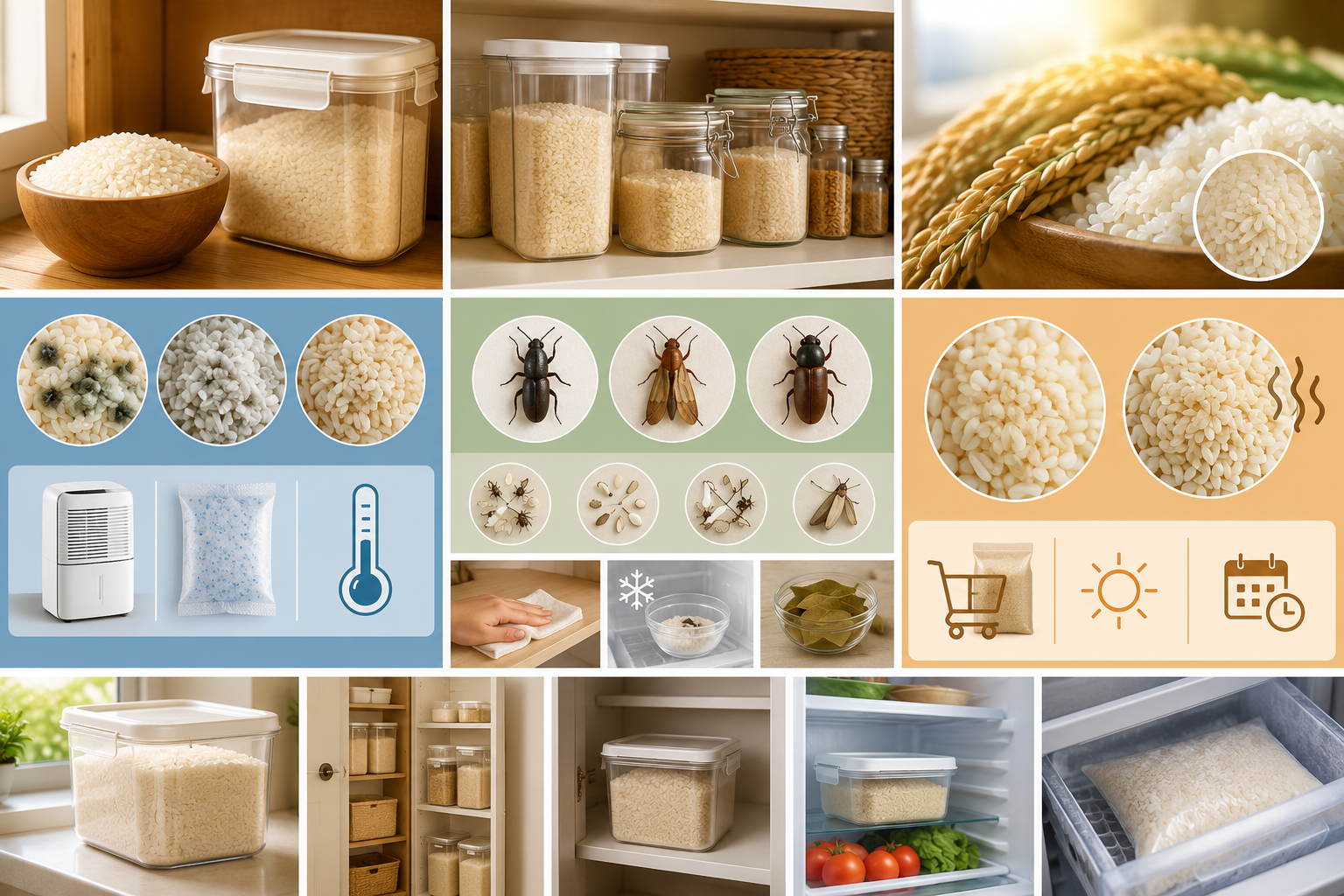

Learn how to store white rice in the pantry to prevent moisture damage, pantry pests, stale flavors, and rancidity while preserving quality.
White rice is one of the easiest pantry staples to store. It is inexpensive, versatile, and far more shelf-stable than brown rice because most of its oil-rich bran layer has been removed. Still, “shelf-stable” does not mean indestructible.
A bag of rice left near a humid stove, stored in a loosely folded package, or forgotten at the back of a warm cabinet can develop unpleasant odors, attract insects, or absorb enough moisture to support mold growth. Even when the rice remains technically edible, poor storage may leave it tasting stale and cooking unevenly.
Fortunately, proper white rice storage is simple. The basic formula is to keep it cool, dry, clean, dark, and tightly sealed. This guide explains how to store white rice in the pantry, which containers work best, how to prevent rice weevils and pantry moths, and when old rice should be discarded.
Why White Rice Stores Better Than Brown Rice
A whole grain of rice contains a hull, a bran layer, a germ, and a starchy center called the endosperm. During the production of white rice, the hull, bran, and most of the germ are removed. The grain is then polished, leaving mainly the starchy endosperm.
This process removes fiber and some nutrients, but it also removes much of the natural oil that causes brown rice to deteriorate relatively quickly. As a result, white rice is less vulnerable to rancidity and can retain acceptable quality for a much longer period.
However, white rice can still be damaged by:
- Moisture and condensation
- Pantry insects
- Excessive heat
- Oxygen exposure over long periods
- Strong odors
- Mold or contaminated storage containers
- Repeated handling with wet or dirty utensils
The original package may provide adequate protection for short-term storage, but it is rarely the best choice once opened.
The Three Main Risks to Pantry-Stored White Rice
1. Moisture and Humidity
Dry white rice contains too little available moisture for most bacteria to multiply under normal pantry conditions. The situation changes when water enters the package.
Humidity, condensation, a damp measuring cup, or a small kitchen spill can cause rice grains to clump. Persistent moisture may eventually support mold growth and produce sour, musty, or fermented odors.
The FDA notes that grains can be affected by molds capable of producing mycotoxins during production or storage. Rice is among the grains that may be susceptible to certain mold toxins, making visibly moldy or suspiciously damp rice unsuitable for consumption. Do not try to rinse mold away and cook the rice. If mold is suspected, discard the entire affected batch.
Humidity is especially important in tropical and subtropical climates. A cabinet may appear dry while regularly being exposed to steam from a rice cooker, dishwasher, kettle, or boiling pots. For this reason, the cabinet directly above the stove is usually a poor place to store rice.
2. Pantry Pests
Rice weevils, grain beetles, flour beetles, and Indianmeal moths can infest dry rice. An infestation does not always begin in a dirty kitchen. Eggs or insects may already be present somewhere along the production, transportation, retail, or storage chain.
Pantry pests can also enter packages after purchase. Thin plastic bags, cardboard boxes, paper sacks, folds, and loosely sealed seams provide limited protection. According to the University of Minnesota Extension’s pantry pest guidance, some insects can enter unopened paper, cardboard, thin plastic, foil, and cellophane packages.
Common warning signs include:
- Small reddish-brown or black beetles in the rice
- Tiny holes in the package
- Fine powder collecting at the bottom
- Larvae or worm-like insects
- Silk webbing between grains
- Moths flying around the pantry
- Caterpillars or cocoons on nearby walls and ceilings
Once pests spread beyond the original bag, they can infest pasta, flour, cereal, spices, nuts, dried fruit, pet food, and other dry products.
3. Oxidation, Staleness, and Rancidity
True rancidity is less common in white rice than in brown rice because white rice contains relatively little fat. Nevertheless, long exposure to oxygen and heat can gradually reduce its quality. Small amounts of residual oils may oxidize, while the rice can also absorb odors from its surroundings.
Old or poorly stored white rice may smell like:
- Cardboard
- Old cooking oil
- Paint or crayons
- Dust
- A damp basement
- Chemicals or strongly scented pantry products
A stale odor does not always mean the rice will cause food poisoning, but it is a clear sign that quality has declined. Rice should have a mild, neutral aroma. If the odor is unpleasant or unusual, replacing it is usually the sensible choice.
The Best Containers for White Rice
After opening the retail package, transfer white rice to a clean, completely dry, food-grade container with a tight-fitting lid.
Good options include:
- Glass jars with gasketed or screw-top lids
- Heavy-duty food-storage containers
- Food-grade plastic buckets with airtight lids
- Stainless-steel or food-safe metal containers
- Mylar-type bags designed for food storage
- Vacuum-sealed bags for portioned storage
Glass is particularly convenient because it does not absorb odors and allows you to inspect the rice without opening the container. Heavy-duty plastic is lighter and less likely to break, making it practical for larger quantities.
Avoid using trash bags, paint buckets, industrial containers, or containers that previously held detergent, chemicals, or non-food products. Odors and chemical residues may migrate into food. Utah State University Extension recommends using only food-grade packaging for dry staples such as rice.
An airtight container does more than keep bugs out. It also limits the rice’s exposure to humid air, kitchen odors, dust, and accidental spills.
Where to Store Rice in the Pantry
Choose the coolest, driest, and darkest practical location in your kitchen or pantry.
An ideal spot is:
- Away from the stove, oven, dishwasher, and refrigerator exhaust
- Away from water pipes and sinks
- Protected from direct sunlight
- Off the floor, especially a concrete floor
- Away from cleaning chemicals and strongly scented products
- Maintained at a reasonably stable temperature
Heat speeds up quality loss, while fluctuating temperatures can encourage condensation inside inadequately sealed packages. A lower interior shelf in a climate-controlled room is generally better than a cabinet above the stove.
If your home is persistently hot and humid, consider storing frequently used rice in a small airtight pantry container and keeping the remaining supply in an airtight container in the refrigerator or freezer. When removing cold rice, allow the sealed container to reach room temperature before opening it. This reduces the chance of warm, humid air condensing on the cold grains.
How to Transfer and Store White Rice Properly
Follow this simple process whenever you open a new bag.
Step 1: Inspect the Package
Before buying or opening rice, check for punctures, loose seams, moisture stains, webbing, insects, or unusual discoloration. Avoid damaged packages.
Step 2: Prepare the Container
Wash the container if necessary, rinse it thoroughly, and let it dry completely. Even a small amount of trapped water can compromise dry rice. Do not pour new rice into a container that is still damp from washing.
Step 3: Inspect the Rice
Pour the rice into a clean bowl or tray if you want to examine it closely. Look for live insects, larvae, webbing, clumps, discoloration, or a musty odor.
Step 4: Fill and Seal
Transfer the rice using a clean, dry scoop. Close the lid firmly after every use. Do not leave the container open while cooking, particularly when steam is rising nearby.
Step 5: Label the Container
Write the rice variety and purchase or opening date on the container. If you keep jasmine, basmati, sushi, or long-grain rice, labeling also prevents mix-ups.
Step 6: Rotate Your Supply
Use the oldest rice first. If you buy a new bag before finishing the previous one, avoid automatically pouring fresh rice on top of old rice. Finish and clean the container first, or keep the batches separate.
This “first in, first out” system prevents forgotten rice from remaining at the bottom for years.
How Long Does White Rice Last in the Pantry?
For ordinary household storage, properly sealed white rice can generally maintain good quality for about one to two years after opening. Utah State University Extension specifically advises using opened stored rice within one to two years.
The exact period depends on temperature, humidity, packaging, cleanliness, and the rice’s condition when purchased. A printed “best by” date is mainly a quality guide rather than an automatic expiration date. Rice that has passed the date may still be usable if it has remained dry, pest-free, odor-free, and properly sealed.
Specially packaged white rice can last much longer. Utah State University Extension reports that polished rice stored in oxygen-free containers under appropriate conditions may retain quality for decades. That type of long-term storage requires suitable food-grade packaging, controlled moisture, oxygen absorbers, and cool conditions. It should not be confused with leaving a half-open supermarket bag in a kitchen cabinet.
For most households, buying an amount that can be used within several months is easier and more reliable than creating a decades-long emergency storage system.
Should You Freeze Rice to Prevent Bugs?
Freezing can be useful when you have an older unopened package and are concerned about hidden pantry pest eggs. University of Minnesota Extension recommends freezing uncertain dry foods at 0°F (-18°C) for at least four days to kill pantry insects and their eggs.
Place the rice in a sealed, freezer-safe package before freezing. Afterward, keep it sealed until it returns to room temperature. Opening a cold bag immediately may allow condensation to form on the grains.
Freezing is a preventive treatment, not a good rescue method for visibly infested rice. If you find live insects, larvae, webbing, an unpleasant odor, or extensive damage, discard the rice and inspect nearby dry foods.
What to Do If You Find Bugs in Rice
Remove the infested package from the kitchen promptly and place it in a sealed trash bag. Check every nearby dry product, including unopened paper and cardboard packages.
Then:
- Empty the affected shelf.
- Vacuum corners, peg holes, joints, and shelf edges.
- Dispose of the vacuum contents outside the home.
- Wipe the shelves and allow them to dry.
- Return only inspected food in tightly sealed containers.
- Monitor the area for beetles, moths, larvae, and webbing.
Do not spray insecticide inside food packages or rely on pesticide sprays as the main solution. Sprays cannot eliminate insects protected inside packages, and food exposed to insecticide must be discarded.
Bay leaves, cloves, garlic, and mint are also unreliable pest controls. A clean pantry, regular inspection, stock rotation, and sturdy sealed containers are far more effective.
When Should You Throw White Rice Away?
Discard uncooked white rice if you notice:
- Visible mold
- Dampness that cannot be explained
- Persistent clumping caused by moisture
- Live insects, larvae, or webbing
- Rodent droppings or damaged packaging
- Chemical contamination
- Sour, musty, oily, or otherwise abnormal odors
- Yellow, green, black, or pink discoloration
- Water damage from a leak or flood
Do not taste questionable raw rice to determine whether it is safe. Cooking may kill many living organisms, but it does not reliably reverse rancidity, remove chemical contamination, or eliminate every toxin that may have formed during improper storage.
Common White Rice Storage Mistakes
The most frequent mistakes are surprisingly simple:
- Keeping an opened bag closed only with a clip
- Storing rice above a hot, humid stove
- Using a measuring cup that is wet
- Mixing old and new rice repeatedly
- Buying more rice than the household can rotate
- Assuming an unopened cardboard box is insect-proof
- Reusing a container without washing and drying it
- Keeping rice near detergent, onions, spices, or other strong odors
- Ignoring a pantry moth because the rice itself appears normal
Correcting these habits can make a greater difference than buying an expensive storage system.
Quick White Rice Storage Checklist
For dependable everyday storage:
- Buy intact packages from a reliable retailer.
- Inspect the rice before storing it.
- Use a clean, dry, food-grade airtight container.
- Keep the container in a cool, dark, dry location.
- Use only dry scoops and measuring cups.
- Label each container with the purchase or opening date.
- Use older rice before newer rice.
- Inspect the pantry periodically for pests and moisture.
- Discard rice with mold, pests, contamination, or abnormal odors.
Final Thoughts
White rice is naturally durable, but its quality depends on how it is handled after it enters your home. An airtight container and a cool, dry pantry location protect it from its biggest enemies: humidity, insects, heat, and household odors. With basic inspection and sensible stock rotation, most families can keep white rice fresh without complicated equipment or elaborate preservation methods.
How do you currently store rice in your kitchen—its original bag, a glass jar, a plastic container, or a large rice dispenser? Have you ever dealt with rice weevils, pantry moths, or moisture damage? Share your experience and your best rice-storage tip in the comments below.

Hi, I’m the creator and editor behind ZestyHabit. I research everyday safety, first aid, and practical wellness topics using official guidance and reliable public sources, then turn that information into clear, realistic steps for daily life.
My goal is to help readers make safer, better-informed choices at home and beyond.


