
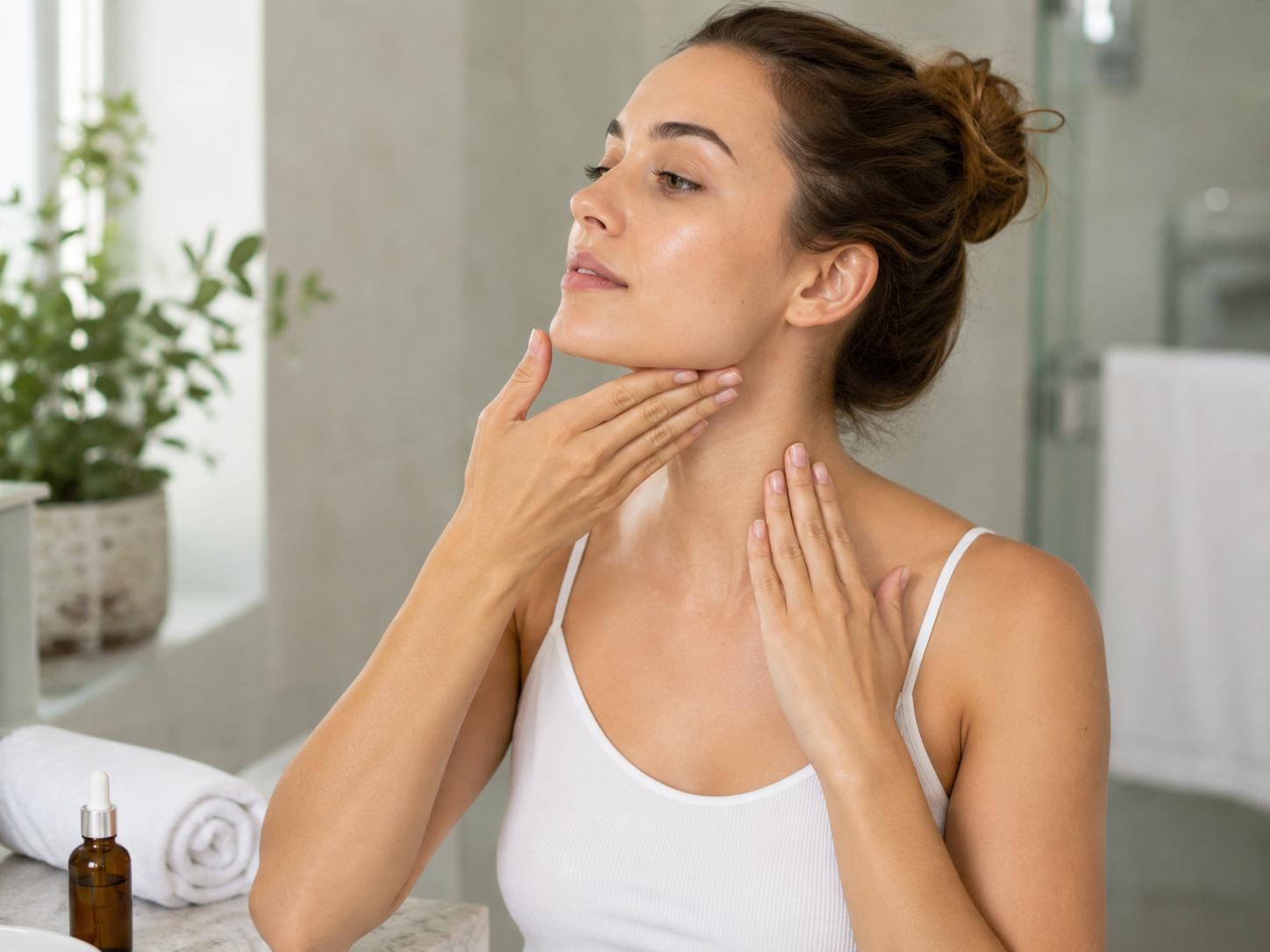

Lymphatic massage sounds a little more serious than it feels.
The name makes it seem like something that belongs in a spa menu, a wellness clinic, or a very expensive facial treatment where someone whispers the word “detox” while charging you too much money. But at its most basic, lymphatic massage is just a gentle way of helping the face and body feel less puffy, less heavy, and a little more refreshed.
And when it comes to beauty care, that can matter.
Not because lymphatic massage magically changes your face shape overnight. It doesn’t. Not because it “melts fat” or removes toxins in some dramatic way. That’s where the internet gets a little too excited.
But when done gently and consistently, lymphatic massage can support a cleaner, brighter, more rested-looking appearance. Especially if you often wake up with puffiness, dullness, facial tension, or that slightly swollen morning face that makes you wonder what happened while you were sleeping.
Let’s talk about what lymphatic massage actually is, why people use it in beauty routines, and how to do it without overdoing it.
What Is Lymphatic Massage?
Lymphatic massage is a very light massage technique that focuses on encouraging the movement of lymph fluid.
Lymph is a fluid in the body that helps carry waste, excess fluid, and immune-related materials through the lymphatic system. Unlike blood, which is pumped by the heart, lymph moves more slowly and relies on body movement, breathing, and muscle activity.
In beauty care, people usually talk about lymphatic massage for the face, neck, jawline, or legs. The goal is not to force anything out of the body. It is more about reducing the look and feel of fluid retention and encouraging a fresher appearance.
The important word here is gentle.
Lymphatic massage is not deep tissue massage. It is not supposed to hurt. It is not supposed to leave your face red, bruised, or sore. If you are pressing so hard that your skin is dragging aggressively, you are probably doing too much.
Your lymph system is not hiding under concrete.
It does not need to be attacked.
Why Lymphatic Massage Became Popular in Beauty Care

Part of the popularity comes from the instant visual effect.
After a gentle facial massage, the face can look a little less puffy. The jawline may look more defined for a while. The skin may look slightly brighter because you’ve increased circulation through touch and movement. The face can also feel more relaxed, especially if you hold tension in your jaw, forehead, or around your eyes.
It’s subtle, but noticeable enough that people keep doing it.
There’s also something satisfying about it. Skincare can feel very product-heavy sometimes. Cleanser, toner, serum, moisturizer, sunscreen, masks, exfoliants, treatments… it can become a shelf full of bottles and still somehow feel incomplete.
Lymphatic massage is different. It is a technique. It makes you slow down for a few minutes. You’re not just applying another product and hoping for the best. You’re actually paying attention to your face.
That alone can make it feel like care.
And honestly, a lot of beauty routines could use more of that.
Puffiness Is the Main Reason People Try It
The most common reason people try lymphatic massage is puffiness.
Morning puffiness can happen for many reasons: salty food, alcohol, crying, poor sleep, allergies, sleeping flat, hormonal changes, dehydration, or simply the way your body holds fluid overnight.
The face may look swollen around the eyes, cheeks, jawline, or under the chin. Sometimes it disappears after a few hours. Sometimes it lingers and makes you look more tired than you feel.
Lymphatic massage may help reduce the look of this puffiness by encouraging fluid movement.
It will not solve every cause of swelling. If your face is suddenly swollen, painful, or uneven, that is not a beauty-care issue and should be checked properly. But for normal morning puffiness, a few minutes of gentle massage can be helpful.
Think of it as waking your face up.
Not sculpting a new face. Just helping the one you have look a little more awake.
It Can Help the Face Look Cleaner and More Defined
A “clean impression” in beauty care often comes from small details.
Less puffiness around the eyes.
A softer jawline without heaviness.
Skin that looks less dull.
A face that looks more rested.
A neck area that doesn’t look tight or congested.
Lymphatic massage can help with that kind of subtle freshness.
When excess fluid sits in the face, features can look slightly blurred. The cheekbones may look less visible. The jawline may look softer. The eyes may look smaller or heavier. This is not fat gain. It is often just fluid and temporary swelling.
A gentle massage can help the face look a bit more lifted and clear for the day.
But the effect is usually temporary. That’s important.
If you do lymphatic massage in the morning and your face looks less puffy, that doesn’t mean you permanently changed your face structure. It means you helped move fluid and relaxed the area. The result may last for hours, not forever.
And that’s fine.
Not every beauty habit has to be permanent to be useful. Some are just part of looking fresh today.
The Neck Matters More Than People Think
A lot of people massage only the face and forget the neck.
But in lymphatic-style facial massage, the neck is important because lymph drainage pathways are closely connected to the neck and collarbone area. If you only massage your cheeks but ignore the neck, it’s a little like tidying the room but blocking the doorway.
You don’t need to know every anatomical detail to do a simple routine. Just remember that facial massage usually works better when you include the neck gently.
Many routines start around the collarbone and sides of the neck before moving to the face. This can help prepare the area and make the massage feel more complete.
Also, from a beauty point of view, the neck is part of the overall impression. A relaxed neck and jawline can make the face look cleaner and more elegant. Tension in the jaw and neck can make the lower face look heavier or tighter.
The face does not end at the chin, even though skincare routines often act like it does.
Lymphatic Massage Is Not the Same as Face Slimming
This is where we need to be honest.
Lymphatic massage can temporarily reduce puffiness. It can help the face look more refreshed and slightly more defined. But it does not burn facial fat. It does not permanently shrink your cheeks. It does not change your bone structure.
Some before-and-after photos online look dramatic because of lighting, angles, facial expression, posture, or temporary fluid movement. That doesn’t mean the massage is useless. It just means we should keep expectations normal.
If your face looks puffy in the morning, massage may help.
If your goal is permanent facial fat loss, massage is not the tool for that.
And honestly, it’s better not to treat your face like something that constantly needs to be reduced. Beauty care should make you feel more comfortable and polished, not like your natural face is a problem.
A cleaner impression does not mean a smaller face at any cost.
It means fresh, balanced, cared-for.
Gentle Pressure Is the Whole Point
One of the biggest mistakes people make with facial massage is pressing too hard.
It feels logical. If a little pressure helps, more pressure must help more, right?
Nope.
The lymphatic system sits close to the surface, so lymphatic massage uses very light pressure. If you press too hard, you may irritate the skin, stretch it unnecessarily, or make redness worse. Strong rubbing can also aggravate acne, sensitivity, rosacea-prone skin, or a damaged skin barrier.
The movement should feel soft and comfortable.
Not painful.
Not scraping.
Not dragging.
Not like you’re kneading bread dough.
If your skin turns very red afterward, you may be using too much pressure or too much friction. A mild flush can happen because you’re touching the skin, but irritation is not the goal.
Your face is not a carpet stain.
You do not need to scrub it into submission.
Use Slip: Oil, Cream, or Gel
Never massage dry skin aggressively.
Dry rubbing can pull at the skin and create irritation. You need some kind of slip so your hands or tool glide smoothly.
This could be:
- facial oil
- cleansing balm
- moisturizer
- massage cream
- aloe gel
- hydrating serum with enough glide
Choose based on your skin type.
If you are acne-prone, be careful with heavy oils or rich balms that may clog pores. A light gel or non-comedogenic moisturizer may be better. If your skin is dry, a cream or facial oil may feel more comfortable. If your skin is sensitive, avoid heavily fragranced products.
The product is not there to perform a miracle. It is there to reduce friction.
A simple moisturizer can be enough.
You do not need a luxury massage oil unless you truly enjoy it.
Hands vs. Tools: Which Is Better?
You can do lymphatic massage with your hands, a gua sha tool, a roller, or other facial tools.
Your hands are honestly enough.
They are warm, flexible, easy to control, and free. You can feel how much pressure you are using. You can adjust naturally around your eyes, jawline, and neck.
Tools can be nice too. A cool facial roller may feel soothing in the morning. A gua sha tool can help with a more structured massage, especially around the jaw and cheek area. But tools also make it easier to press too hard if you’re not careful.
If you use a tool, use light pressure and plenty of slip. Clean the tool regularly. Do not scrape over active acne, irritated patches, sunburn, or broken skin.
Tools are optional.
Technique and gentleness matter more.
A fancy stone dragged too hard across dry skin is not skincare. It is a tiny facial punishment device.
A Simple Morning Lymphatic Massage Routine
You do not need a complicated 20-minute routine.
A few minutes can be enough.
Start with clean hands and a little moisturizer, oil, or gel. Use gentle pressure.
Begin at the collarbone area. Lightly sweep outward along the collarbones a few times.
Move to the sides of the neck. Stroke downward from under the ear toward the collarbone.
Then move to the jawline. Sweep from the chin toward the ear, then down the side of the neck.
For the cheeks, sweep from the center of the face outward toward the ears.
For under the eyes, use very light pressure. Move from the inner corner outward toward the temples. The eye area is delicate, so don’t drag.
For the forehead, sweep from the center outward toward the temples, then down the sides of the face and neck.
Finish by gently sweeping down the neck again.
That’s it.
The direction doesn’t need to become an obsession. The general idea is to move from the center of the face outward, then down toward the neck and collarbone.
Slow, light, and consistent is better than intense and rushed.
How Often Should You Do It?
You can do gentle lymphatic massage daily if your skin tolerates it.
But you don’t have to.
Some people like doing it every morning for puffiness. Others do it a few times a week. Some only do it before events, photos, or days when their face feels especially swollen.
The right frequency depends on your skin.
If your skin is sensitive, acne-prone, inflamed, or easily red, start with once or twice a week. Keep the pressure very light. Watch how your skin reacts.
If your skin feels irritated afterward, reduce the frequency or stop for a while.
Beauty routines should not make your skin worse just because they look elegant online.
When Not to Do Lymphatic Massage
Lymphatic massage is gentle, but it is not for every situation.
Avoid facial massage if you have:
- broken skin
- active infection
- painful cystic acne in the area
- sunburn
- a rash
- severe irritation
- fresh cosmetic procedures
- unexplained swelling
- fever or illness
- skin that hurts to touch
Also be cautious if you have certain medical conditions related to the lymphatic system, circulation, blood clots, or immune issues. In those cases, ask a medical professional before trying massage.
For normal beauty care, gentle massage is usually fine for many people. But swelling that appears suddenly, especially if it is one-sided, painful, or linked with breathing issues or allergic symptoms, is not something to massage away.
That needs proper care.
A puffy morning face after salty ramen is one thing.
Sudden facial swelling is another.
Lymphatic Massage and Acne-Prone Skin
If you have acne-prone skin, lymphatic massage can be helpful or irritating depending on how you do it.
Gentle massage may support circulation and help reduce puffiness. But rubbing over active pimples can make inflammation worse. Heavy oils can clog pores. Dirty tools can transfer bacteria. Too much pressure can irritate healing spots.
If you have active acne, massage around the area rather than directly over painful bumps. Use clean hands. Choose a product that your skin already tolerates. Do not use a new oil just because someone online said it gives a glow.
Acne-prone skin usually likes consistency.
It does not always enjoy surprise experiments.
Also, avoid massaging if you know you’ll start picking. Sometimes touching the face too much turns into squeezing, and then the whole routine goes downhill.
Lymphatic Massage and Jaw Tension
One underrated benefit of facial massage is how relaxing it can feel around the jaw.
Many people clench their jaw without realizing it. Stress, concentration, sleep habits, and even posture can make the jaw area feel tight. This can change how the lower face looks and feels. A tense jaw can make the face feel heavier, more rigid, or slightly swollen.
Gentle massage around the jawline and cheeks can help release some of that tension. It will not fix serious jaw problems, but it can make your face feel more relaxed.
If you grind your teeth or have jaw pain, a dentist or doctor may be more helpful. But for everyday tension, a light massage can be a nice part of your routine.
Sometimes a clean impression is not only about skin.
It’s also about looking less tense.
Very unfair that stress shows up on the face, but it does.
What About Body Lymphatic Massage?
Lymphatic massage is not only for the face.
Some people use it on the legs, arms, or body to reduce a heavy or swollen feeling. In beauty care, body lymphatic massage is often connected to smoother-looking skin, less puffiness, and a lighter feeling in the limbs.
The same rule applies: gentle pressure.
For legs, people often massage upward toward the torso. For arms, toward the armpit area. But if you have significant swelling, pain, varicose veins, circulation problems, or medical conditions, do not rely on beauty massage. Get proper guidance.
For everyday body care, a gentle massage while applying lotion after a shower can be enough. It improves product application, encourages body awareness, and makes the skin feel softer.
Not everything needs to be a full spa ritual.
Sometimes it’s just lotion, slow hands, and two quiet minutes.
Hydration, Sleep, and Salt Still Matter
Lymphatic massage can help with puffiness, but it works best when your everyday habits support it.
If you sleep poorly, eat very salty foods late at night, drink alcohol, barely move all day, or don’t drink enough water, puffiness may keep coming back. Massage can help temporarily, but it won’t completely override lifestyle factors.
This doesn’t mean you need to live perfectly.
Nobody wants a beauty routine that bans joy and snacks.
But if your face is puffy every morning, look for patterns. Does it happen after salty dinners? Late nights? Crying? Allergies? Sleeping face-down? Long flights? Hormonal changes?
Once you know your triggers, massage becomes one tool, not the whole solution.
A clean impression usually comes from a combination of small habits.
Annoying, but manageable.
Cold Tools Can Help, But Don’t Overdo It
Cold rollers, chilled gua sha tools, and even cold spoons can help reduce morning puffiness temporarily. The cool temperature can make the face feel refreshed and may help with the look of swelling.
But very cold tools should not be pressed hard into the skin. Don’t use ice directly for too long. Extreme cold can irritate the skin, especially if you have sensitivity, rosacea-prone skin, or broken capillaries.
A cool tool is enough.
You do not need to freeze your cheekbones into submission.
Use cold as a gentle helper, not a shock treatment.
Lymphatic Massage Before Makeup
This is one of the most practical ways to use it.
A short massage before makeup can help the face look less puffy and make the skin feel more awake. It can also help moisturizer spread evenly and improve the look of the base.
But timing matters.
If you use too much oil before foundation, makeup may slide or separate. If you massage too hard, your skin may become red right before you apply makeup. If you don’t let skincare settle, foundation may pill.
For makeup prep, keep the massage short and light. Use a moisturizer or gel that absorbs well. Give the skin a few minutes before applying sunscreen or foundation.
The goal is fresh skin, not a slippery face.
There is a difference.
The “Clean Impression” Is About More Than a Sharp Jawline
When people talk about looking clean or polished, they often focus on facial shape. A sharper jawline, less puffiness, smaller face, lifted cheeks.
But a clean impression is also about skin condition and overall freshness.
A face can look clean and put-together when the skin is hydrated, calm, and not overly irritated. The eyes look less tired. The neck looks cared for. The jawline looks relaxed. Makeup sits better. There is a little more brightness to the complexion.
Lymphatic massage can support that.
Not by changing who you are, but by helping your face look less stagnant and tired.
That may sound subtle, but beauty is often subtle. Tiny improvements add up.
Freshness is usually more convincing than perfection.
Common Mistakes With Lymphatic Massage
The first mistake is pressing too hard. This can irritate the skin and make redness worse.
The second mistake is doing it on dry skin. Always use slip.
The third mistake is expecting permanent face slimming. The effects are usually temporary and related to puffiness.
The fourth mistake is using dirty tools. Clean rollers and gua sha stones regularly.
The fifth mistake is massaging over inflamed acne, rashes, or broken skin.
The sixth mistake is doing too much. A long, aggressive massage every day is not necessarily better. Your skin may prefer three gentle minutes.
Beauty routines should feel supportive.
If your face feels sore afterward, it was too much.
A Simple Weekly Routine for a Fresher Look
If daily massage feels like too much, make it a simple weekly care habit.
Once or twice a week, after cleansing, apply a comfortable cream or oil. Spend a few minutes massaging the neck, jawline, cheeks, and forehead. Keep your pressure light. Follow with moisturizer if needed.
On mornings when you feel puffy, do a shorter version before sunscreen and makeup.
You can also pair it with habits you already have. While applying moisturizer. While using cleansing balm at night. After a shower. Before a sheet mask. While watching something calm.
The best routine is the one you’ll actually repeat.
A perfect routine you do once is less useful than a simple routine you enjoy.
So, Is Lymphatic Massage Worth It for Beauty Care?
Yes, if your expectations are realistic.
Lymphatic massage can help reduce the look of puffiness, make the face feel lighter, support a fresher appearance, relax facial tension, and help skincare application feel more intentional. It can be especially useful in the morning, before makeup, or whenever your face feels swollen or tired.
But it is not magic.
It does not permanently reshape your face. It does not burn fat. It does not replace sleep, hydration, skincare, sunscreen, or medical care when swelling is unusual.
The best way to use lymphatic massage is gently and consistently. Start with the neck. Use light pressure. Give your skin slip. Avoid irritated areas. Keep tools clean. Stop if your skin reacts badly.
For a cleaner impression, you don’t always need more products.
Sometimes you just need a few quiet minutes, clean hands, and a little patience with your own face.
And honestly, that might be one of the nicest parts of the routine.

Hi, I’m the creator and editor behind ZestyHabit. I research everyday safety, first aid, and practical wellness topics using official guidance and reliable public sources, then turn that information into clear, realistic steps for daily life.
My goal is to help readers make safer, better-informed choices at home and beyond.


