Frostbite Prevention and First Aid: How to Protect Your Skin in Extreme Cold
Minjin Park
·
Winter weather can be beautiful, but cold temperatures can become dangerous more quickly than many people realize. Frostbite does not happen only to mountain climbers or people stranded in blizzards. It can affect someone shoveling snow, waiting for roadside assistance, working outdoors, skiing, hiking, or simply walking outside without adequate protection.
Frostbite occurs when the skin—and sometimes the tissue beneath it—freezes. Fingers, toes, ears, cheeks, the chin, and the tip of the nose are especially vulnerable because they are exposed easily and are farther from the body’s warm core.
The good news is that many frostbite injuries are preventable. The key is to dress correctly, stay dry, recognize early warning signs, and leave the cold before numbness makes it difficult to notice that something is wrong. If frostbite does occur, gentle and appropriate rewarming can help prevent additional damage.
This guide explains how to prevent frostbite, recognize its early symptoms, provide safe first aid, and know when emergency medical care is needed.
Important: Suspected frostbite should be evaluated by a healthcare professional. Call 911 for severe symptoms, suspected hypothermia, confusion, breathing problems, or an emergency in which the person cannot reach medical care safely.
Frostbite is a freezing injury caused by exposure to cold temperatures. As the body becomes cold, blood vessels near the skin narrow to conserve heat for vital organs. This reduces circulation to exposed and distant body parts.
If exposure continues, ice crystals can form in and around the tissue. Blood vessels and cells may be damaged, especially during prolonged exposure or repeated freezing and thawing.
According to the CDC’s frostbite guidance, frostbite can cause permanent damage, and severe cases may lead to amputation. However, getting out of the cold during the earliest stage—often called frostnip—may prevent lasting injury.
Frostnip vs. Frostbite
Frostnip is the mildest form of freezing injury. The skin may feel painfully cold, tingle, sting, or become numb. It may look pale or red, depending on the person’s natural skin tone. Frostnip generally does not cause permanent tissue damage if the area is protected and rewarmed promptly.
True frostbite is more serious. The skin may become firm, waxy, unusually pale, grayish, blue, or blotchy. As the injury progresses, the affected area can become hard and completely numb. Swelling and blisters may develop after rewarming.
You may not be able to determine how deep an injury is by looking at it immediately. Frostbite can continue to change for hours or days, which is one reason professional medical evaluation is important.
Early Warning Signs of Frostbite
The first symptoms can be easy to ignore. Watch for:
Painful cold or aching
Tingling or a pins-and-needles sensation
Stinging or burning
Redness or unusual paleness
Reduced sensation
Clumsiness when using the fingers
Skin that feels colder than surrounding areas
More serious warning signs include:
Complete numbness
Firm, hard, or waxy skin
White, gray, blue, purple, or blotchy discoloration
Significant swelling
Loss of movement or coordination
Clear, milky, or blood-filled blisters
Blackened skin
Changes in color can be more difficult to recognize on brown or black skin. Rather than relying only on color, also check for changes in temperature, firmness, sensation, swelling, and movement.
The NHS advises seeking emergency care for hard, frozen skin, loss of feeling with swelling, or fluid-filled blisters.
Who Is at Greater Risk?
Anyone can develop frostbite, but the risk is higher for people who:
Stay outside for long periods
Wear wet, tight, or inadequate clothing
Have poor circulation
Have diabetes, peripheral artery disease, or Raynaud’s disease
Smoke or use nicotine
Are very young or elderly
Are exhausted, dehydrated, or undernourished
Have previously experienced frostbite
Take medications that affect circulation or awareness
Cannot recognize or communicate cold-related symptoms
Use alcohol or drugs before cold exposure
Alcohol creates a particularly dangerous situation. It may make the skin feel warm while the body continues losing heat, and it can interfere with judgment. Someone who has been drinking may stay outside longer or fail to notice numbness.
How to Prevent Frostbite
Prevention begins before you step outside. Check both the air temperature and wind chill, since strong wind can remove body heat much faster than still air.
Dress in loose layers
Several loose layers provide better insulation than one tight, heavy garment. A practical system includes:
A moisture-wicking base layer
An insulating middle layer
A wind-resistant and waterproof outer layer
Avoid relying on cotton next to the skin during extended cold-weather activities. Cotton absorbs moisture and can remain wet, causing the body to lose heat. Wool and many synthetic outdoor fabrics retain insulation more effectively when damp.
Layers should be loose enough to allow circulation. Tight sleeves, gloves, socks, and boots may restrict blood flow to the hands and feet.
Protect every vulnerable area
Wear an insulated hat, a scarf or neck gaiter, and a face covering when conditions are severe. Protect the ears, cheeks, chin, and nose rather than assuming a warm coat is enough.
Mittens are generally warmer than gloves because the fingers share heat. If you need dexterity, consider thin liner gloves beneath insulated mittens so your skin is not completely exposed when you remove the outer layer.
Wear warm socks and insulated, water-resistant boots with enough room to move your toes. Adding too many socks can make boots tight and reduce circulation, which may increase frostbite risk instead of lowering it.
Stay dry
Wet clothing accelerates heat loss. Snow can enter boots and gloves, while sweat can dampen clothing from the inside.
Remove a layer before intense activity makes you sweat heavily. Replace wet socks, gloves, and other clothing as soon as possible. Carrying dry spares can make a major difference during hiking, winter sports, outdoor work, or roadside emergencies.
Take regular warming breaks
Do not wait until your hands or feet are numb. Move indoors or into a heated shelter at regular intervals. Use the break to check your fingers, toes, ears, and face.
Travel companions should check one another as well. A person may not realize that a cheek, ear, or nose is beginning to freeze because numbness reduces the warning sensation.
Eat, drink, and pace yourself
The body needs energy to produce heat. Eat regular meals and carry high-energy snacks during long outdoor activities. Drink water even when you do not feel especially thirsty.
Avoid alcohol before and during cold exposure. Do not depend on caffeine alone for hydration, and avoid exhausting yourself to the point that you cannot return to shelter.
Plan for unexpected delays
A short winter drive can turn into hours outdoors after a breakdown. Keep an emergency kit in your vehicle containing:
Tell someone where you are going when hiking, skiing, fishing, or traveling through an isolated area. Check the forecast and adjust your plans when extreme cold, high winds, or winter storms are expected.
Initial First Aid for Suspected Frostbite
If you think someone has frostbite, act promptly but gently.
1. Get out of the cold
Move into a warm building, vehicle, tent, or other protected shelter. Block the wind if immediate indoor shelter is unavailable.
Remove wet clothing and replace it with loose, dry layers. Wrap the person in blankets while keeping the frostbitten area protected from pressure and friction.
2. Check for hypothermia
Frostbite can occur at the same time as hypothermia, a dangerous drop in core body temperature. Signs include:
Intense or uncontrollable shivering
Confusion
Slurred speech
Unusual drowsiness
Fumbling hands
Poor coordination
Slow or shallow breathing
Loss of consciousness
Hypothermia is the more immediate threat. Call 911 and concentrate on gently warming the person’s core—the chest, neck, head, and groin—while following the emergency dispatcher’s instructions.
Do not give food or drinks to someone who is confused, very drowsy, vomiting, or unconscious.
3. Remove constricting items
Remove rings, watches, tight gloves, boots, and other restrictive objects before swelling develops. Do not force off anything that cannot be removed easily.
Handle the frozen area carefully. Avoid unnecessary bending, squeezing, or pressure.
4. Do not walk on frostbitten feet
Walking on frozen toes or feet can damage already vulnerable tissue. Keep the person still and arrange transportation whenever possible.
The CDC specifically advises avoiding walking on frostbitten feet or toes unless it is absolutely necessary.
5. Do not thaw the area if it might freeze again
Only begin active rewarming when you can keep the injured part warm afterward. A freeze-thaw-refreeze cycle can cause much greater tissue damage.
If you are stranded outdoors and cannot prevent refreezing, protect the area with loose, dry insulation and seek evacuation. The U.S. military’s cold-weather injury guidance similarly warns that once tissue is thawed, it must not freeze again.
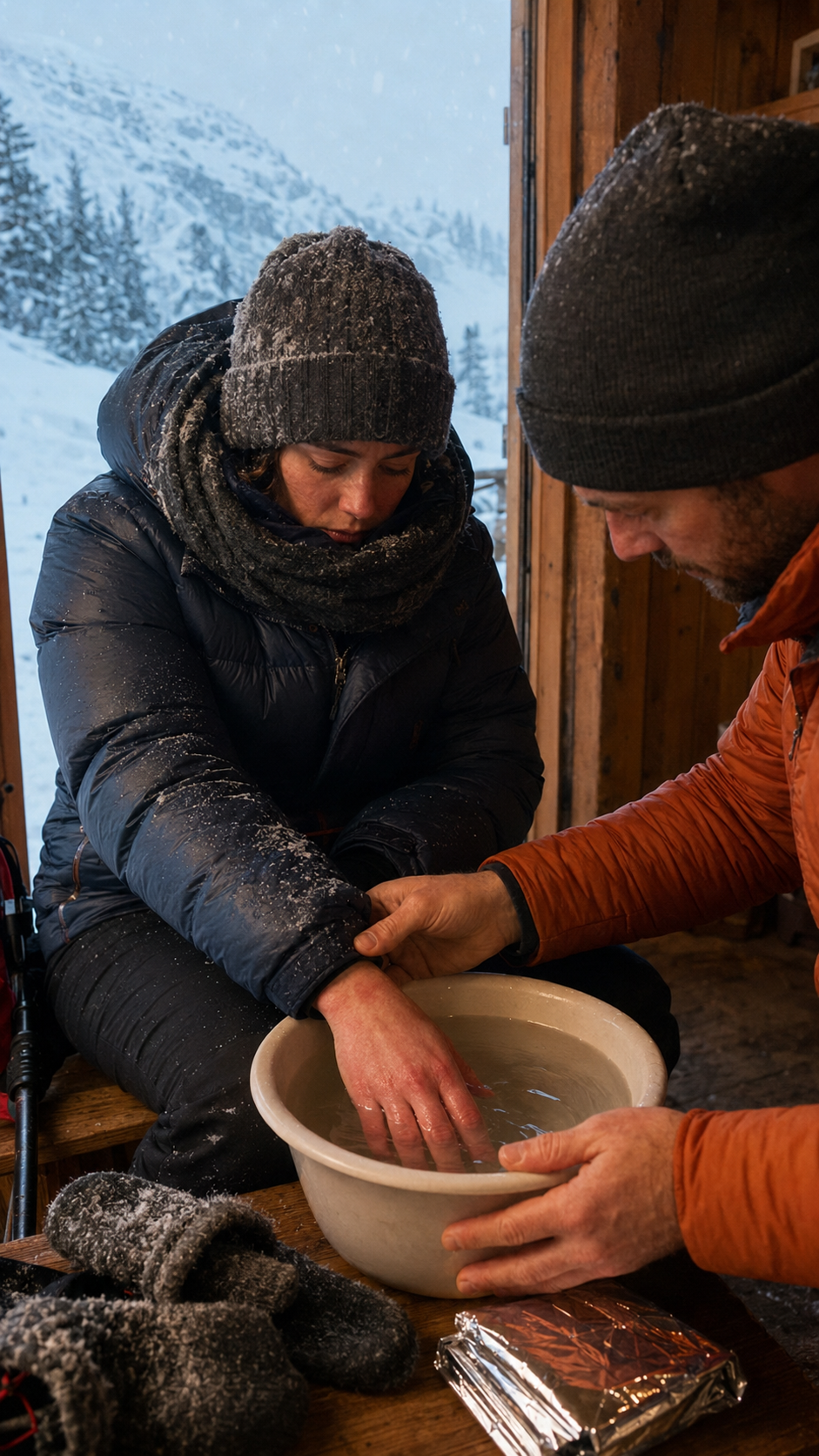
6. Rewarm gently
If medical help is not immediately available and refreezing can be prevented, place the affected area in warm—not hot—water. The water should feel comfortably warm when tested with an uninjured hand.
Continue gentle rewarming for approximately 20 to 30 minutes or until the skin becomes softer and normal color begins returning. Maintain the water temperature by adding warm water carefully, but never pour it directly onto the injured skin.
If water is unavailable, body heat can help with small areas. Frostbitten fingers can be placed in the armpits. A companion may gently warm a cheek, nose, or ear with dry, warm hands.
Rewarming may be painful. This does not necessarily mean the process is causing harm, but severe or persistent pain requires medical attention.
7. Cover and protect the area
After rewarming, gently pat the skin dry. Apply a loose, sterile, nonstick dressing if available. Place clean gauze between frostbitten fingers or toes so they do not rub together.
Do not wrap the area tightly. Elevating an injured hand or foot may help limit swelling, but avoid pressure and unnecessary movement.
8. Seek medical care
Except for very mild frostnip that resolves completely, frostbite should be examined by a healthcare professional. Modern treatments may improve circulation and help preserve tissue when severe frostbite is treated quickly.
Do not wait for the skin to turn black. Deep tissue damage may be present well before dramatic color changes appear.
What Not to Do for Frostbite
Several traditional remedies can make the injury worse.
Do not rub or massage the skin. Ice crystals and fragile tissue can be damaged by friction.
Do not rub the area with snow. This adds cold exposure and can injure or contaminate the skin.
Do not use a radiator, fireplace, heating pad, hair dryer, heat lamp, or car heater. Numb skin can burn without the person realizing it.
Do not break blisters. Blisters help protect the tissue beneath them.
Do not apply ointment, oil, butter, or home remedies.
Do not drink alcohol to “warm up.”
Do not walk on a thawed frostbitten foot unless survival makes it unavoidable.
When to Call 911
Call 911 or seek emergency care immediately when:
The skin is hard, waxy, or frozen
There is widespread numbness or loss of movement
Blisters develop
The skin becomes blue, gray, purple, or black
The face or a large area is affected
Pain remains severe after rewarming
The person cannot travel safely
Hypothermia is suspected
The person is confused, drowsy, unconscious, or breathing abnormally
Children, older adults, and people with diabetes or circulation problems should receive prompt medical evaluation even when the injury initially appears limited.
The Most Important Lesson
Frostbite often becomes serious because numbness convinces people that the problem is improving. In reality, losing sensation is a warning to leave the cold immediately. Protect exposed skin, wear loose and dry layers, take warming breaks, and use a buddy system in extreme weather.
If frostbite is suspected, get to shelter, check for hypothermia, remove wet and constricting items, avoid rubbing, and rewarm the area gently only when refreezing can be prevented. Most importantly, seek medical advice rather than trying to judge the injury entirely at home.
Have you ever experienced frostnip or unexpectedly severe cold while traveling or enjoying an outdoor activity? What winter item do you always carry for protection? Share your experience and cold-weather safety tips in the comments below.
Hi, I’m the creator and editor behind ZestyHabit. I research everyday safety, first aid, and practical wellness topics using official guidance and reliable public sources, then turn that information into clear, realistic steps for daily life.
My goal is to help readers make safer, better-informed choices at home and beyond.